You’re watching TV, cooking dinner, or working from home, and there it is again. That annoying flicker. If you’ve been asking yourself why do my lights keep flickering, you’re not alone. It’s one of the most common electrical complaints we hear from homeowners across the Greater Phoenix Metro Area, and the answer isn’t always straightforward.
Sometimes it’s as simple as a loose bulb. Other times, it’s a warning sign of something more serious happening behind your walls, like faulty wiring or an overloaded electrical panel. The tricky part is knowing the difference between a quick fix and a genuine safety hazard that needs professional attention right away.
At AZ DC Electric, our licensed electricians diagnose and resolve flickering light issues in Scottsdale, Mesa, Chandler, and throughout the Valley every week. Below, we’ve broken down the five most common causes of flickering lights, what you can safely check on your own, and when it’s time to call a pro.
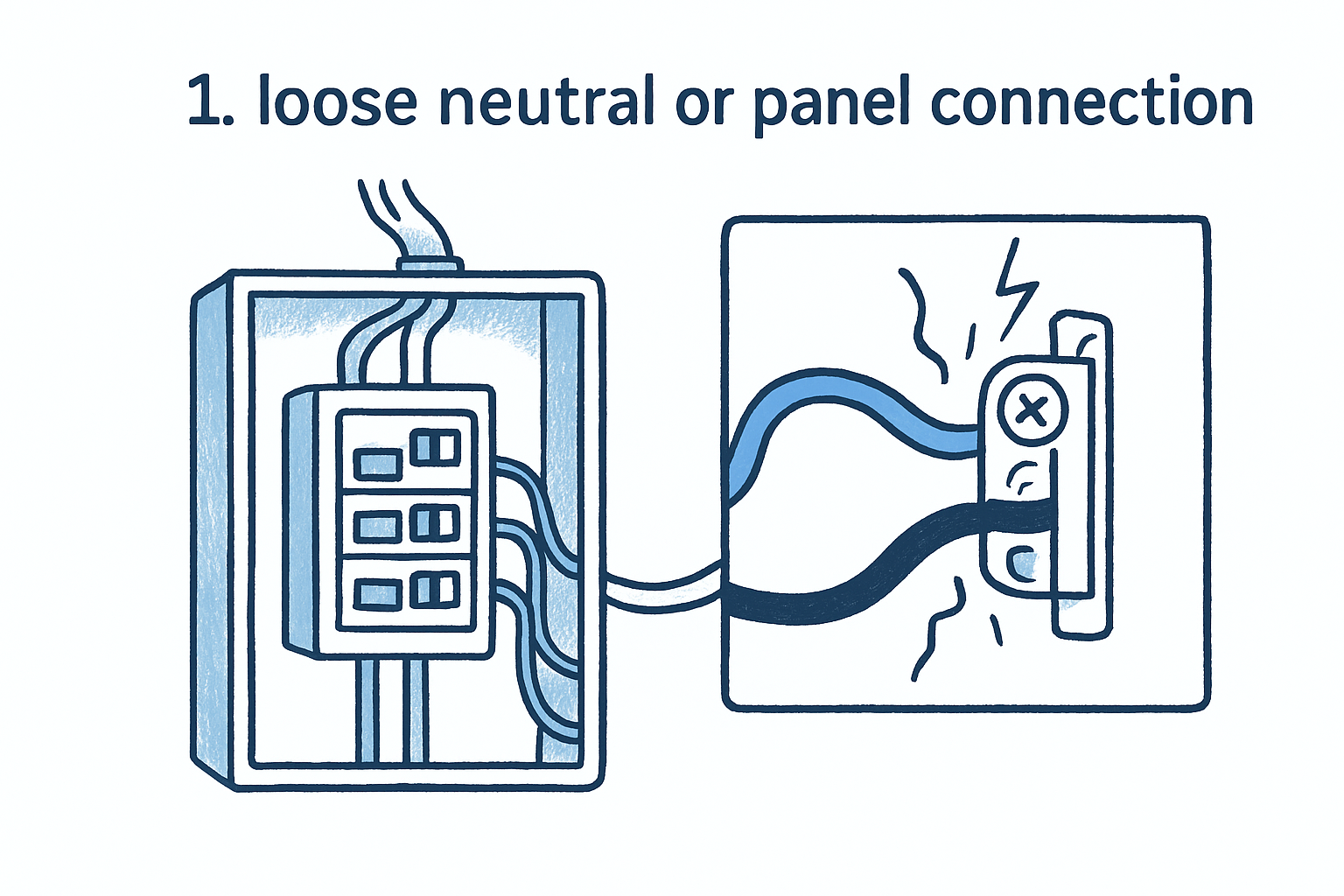
1. Loose neutral or panel connection
A loose neutral wire or a failing connection inside your electrical panel is one of the most serious answers to why do my lights keep flickering. This issue often produces random, widespread flickering that doesn’t follow any clear pattern, and it can affect multiple rooms or circuits at the same time.
Symptoms that point to this cause
If flickering happens across several rooms simultaneously, or if lights dim and brighten in waves without any obvious trigger, a loose neutral connection is a strong suspect. You might also notice lights burning unusually bright at certain moments, which signals unstable voltage reaching your fixtures.
Why it happens and why it can be dangerous
Over time, wire connections inside your panel can loosen due to thermal expansion and contraction from daily heating and cooling cycles. A poor neutral connection forces electricity to seek alternate return paths, which creates dangerous arcing inside your panel. That arcing produces heat and can start an electrical fire inside your walls before you see any visible warning sign.
A loose panel connection is not a wait-and-see problem. It is a fire hazard that needs professional attention immediately.
What you can check safely
You can safely walk through your home and note which lights are flickering and in which rooms. If the flickering is widespread and not limited to one fixture or one room, write that down before calling an electrician. Do not open your electrical panel, touch any wiring, or attempt to tighten connections yourself, as contact with live panel components is extremely dangerous.
How an electrician fixes it
Your electrician will shut off power, inspect every connection inside your panel, and tighten or replace any terminals that show signs of loosening, corrosion, or heat damage. In some cases, the neutral connection at the utility weatherhead also needs attention, which requires coordinating with your utility provider.
What it usually costs to fix
A panel inspection and connection tightening typically runs $150 to $300 in the Phoenix area. If damaged breakers or wiring need replacement, costs can reach $400 to $600 depending on the scope of work.
2. Overloaded circuit or big appliance startup
When a large appliance kicks on, it draws a sudden surge of current that can pull voltage away from nearby circuits. This is one of the most common answers to why do my lights keep flickering, and it’s usually less dangerous than a loose panel connection, though it still warrants attention.
Symptoms that point to this cause
Flickering that happens right when your HVAC system, refrigerator, or washing machine starts up is the clearest indicator. The lights dip briefly and recover within one or two seconds after the appliance reaches its operating speed.
Why it happens and why it can be dangerous
Every circuit has a rated amperage limit. Motor-driven appliances temporarily draw two to three times their normal current at startup, leaving other devices on the circuit starved for voltage. Repeated overloading degrades wiring insulation over time and raises the risk of a tripped breaker or an overheated wire.
If your breaker trips alongside the flickering, treat that as an overload that needs prompt professional attention.
What you can check safely
Track which appliance is running each time the lights flicker. If the pattern repeats consistently with one machine, you’ve identified your likely cause and have useful information ready for your electrician.
How an electrician fixes it
Your electrician can install a dedicated circuit for the high-draw appliance, which eliminates voltage competition with your lighting and other devices on the shared line.
What it usually costs to fix
Adding a dedicated circuit typically costs $200 to $400 in the Phoenix area, depending on panel access and wire run length.
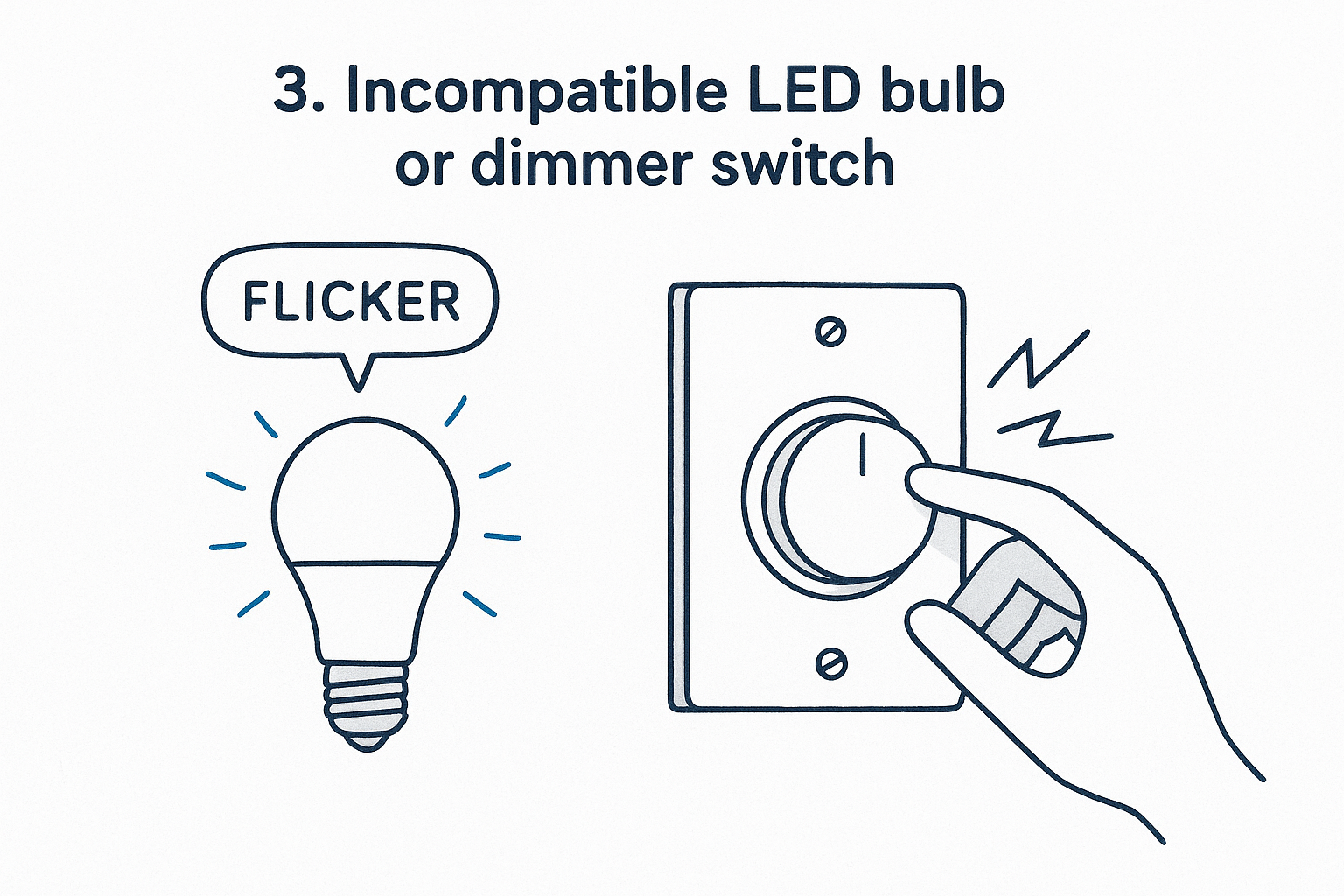
3. Incompatible LED bulb or dimmer switch
If your flickering is limited to one specific fixture, the culprit is often something as simple as the wrong bulb or a dimmer switch that wasn’t designed for LED technology. This is one of the easier answers to why do my lights keep flickering, and it’s usually a straightforward fix.
Symptoms that point to this cause
Flickering that stays contained to a single fixture or room and gets worse when you adjust the dimmer is the clearest sign. You might also notice a buzzing sound from the fixture alongside the flicker, which confirms the dimmer and bulb aren’t communicating properly.
Why it happens and why it can be dangerous
Most older dimmer switches were built for incandescent bulbs, which work very differently than LEDs. When you pair an LED bulb with an incompatible dimmer, the switch can’t regulate the low wattage properly, causing rapid on-off cycling that shows up as a visible flicker. While this rarely creates a fire hazard, it shortens bulb life significantly and puts unnecessary strain on your fixture over time.
Check the dimmer’s packaging for an LED compatibility rating before buying a replacement.
What you can check safely
Try swapping the bulb first. Replace it with one explicitly rated for dimmable use. If the flicker continues after the bulb swap, the dimmer switch itself is the likely problem.
How an electrician fixes it
Your electrician will install an LED-compatible dimmer switch and confirm that all wiring connections are secure and properly rated for the fixture load.
What it usually costs to fix
Dimmer switch replacement typically costs $75 to $150 in the Phoenix area, including parts and labor.
4. Failing switch, outlet, or light fixture
A worn-out switch, damaged outlet, or failing light fixture can produce flickering that feels random but actually has a very specific location. Unlike the causes above, this one is usually confined to a single point in your home, which makes it easier to isolate once you know what to look for. If you keep asking yourself why do my lights keep flickering in just one room, this cause is worth checking first.
Symptoms that point to this cause
Flickering that only affects one specific fixture or lamp and doesn’t change when other appliances run is the clearest indicator. You might also notice the flicker gets worse when you wiggle the light switch or shift the lamp cord where it meets the outlet.
Why it happens and why it can be dangerous
Switches and outlets wear out over time from repeated use. Loose internal contacts inside a switch or outlet create a poor connection that causes voltage to fluctuate at that single point. That arcing connection generates heat and can damage the wiring inside your wall, creating a localized fire risk.
If a switch feels warm to the touch or sparks when you flip it, stop using it and call an electrician immediately.
What you can check safely
Test whether the flicker follows one specific switch or outlet by plugging a lamp into a different outlet and comparing the results.
How an electrician fixes it
Your electrician will replace the faulty switch, outlet, or fixture and inspect the surrounding wiring for heat damage and loose connections.
What it usually costs to fix
Replacing a switch or outlet typically costs $75 to $150 in the Phoenix area, including parts and labor.
5. Utility voltage swings and outside issues
Sometimes the answer to why do my lights keep flickering has nothing to do with your home’s wiring at all. Voltage fluctuations originating from your utility provider can travel straight into your fixtures before you have any chance to intervene.
Symptoms that point to this cause
Flickering that hits every light in your home at the same time, with no appliance startup as a trigger, points strongly to a source outside your property. You might also notice that neighbors on your street are experiencing the same problem, which confirms the issue is coming from the utility grid rather than your panel or wiring.
Why it happens and why it can be dangerous
Power lines, transformers, and utility equipment wear out over time or take damage from storms, vehicle accidents, or excessive grid demand. Inconsistent incoming voltage doesn’t just flicker your lights; it can also cause permanent damage to sensitive electronics like computers and smart appliances connected throughout your home.
If flickering starts during or immediately after a storm, contact your utility provider before calling an electrician.
What you can check safely
Two quick steps help you confirm an outside source:
- Call APS or SRP to report a voltage issue and check for active outage notices in your area.
- Ask a neighbor if they’re seeing the same flickering to rule out anything specific to your property.
How an electrician fixes it
Your electrician can install a whole-home surge protector to shield your devices from incoming voltage swings while the utility resolves the upstream problem.
What it usually costs to fix
Whole-home surge protection typically costs $200 to $400 installed in the Phoenix area.
What to do next
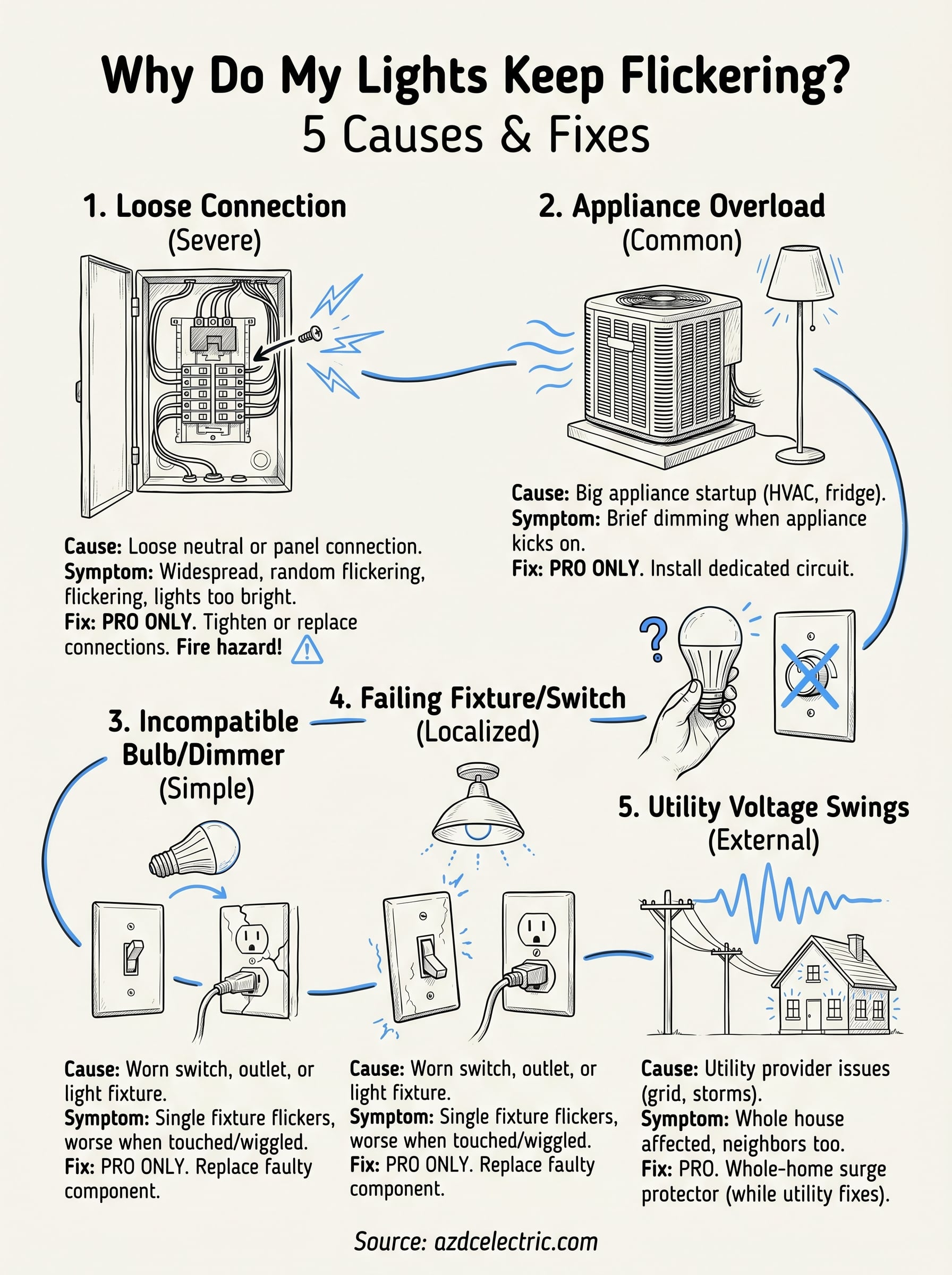
Now that you know the five most common answers to why do my lights keep flickering, you can make a smarter call about your next step. If the problem is limited to one fixture and a bulb or dimmer swap fixes it, you’re done. If the flickering affects multiple rooms, follows appliance startups, or you notice anything warm, sparking, or buzzing near a switch or panel, stop treating it as a minor nuisance.
Those symptoms point to wiring or panel issues that carry a real fire risk, and that’s not something to leave unresolved. AZ DC Electric serves homeowners throughout Scottsdale, Mesa, Chandler, and the Greater Phoenix Metro Area with upfront pricing, a 5-year workmanship guarantee, and no call-out fees. If you’re ready to get to the bottom of your flickering lights, schedule an electrical inspection with AZ DC Electric and get a licensed technician on-site fast.