You flip a switch, and your LED bulbs start strobing like a haunted house prop. It’s annoying, it’s distracting, and it makes you wonder: why do LED lights flicker, and should you actually be worried? The short answer is that flickering usually points to a specific, fixable problem, but ignoring it can sometimes signal a real safety issue hiding behind your walls.
LED flickering typically comes down to things like incompatible dimmer switches, loose wiring, voltage fluctuations, or the way the bulb itself regulates power. Some causes are a quick DIY fix. Others need a licensed electrician to diagnose properly. At AZ DC Electric, we troubleshoot and resolve LED lighting issues across the Greater Phoenix Metro Area every week, so we know exactly which problems homeowners run into most often.
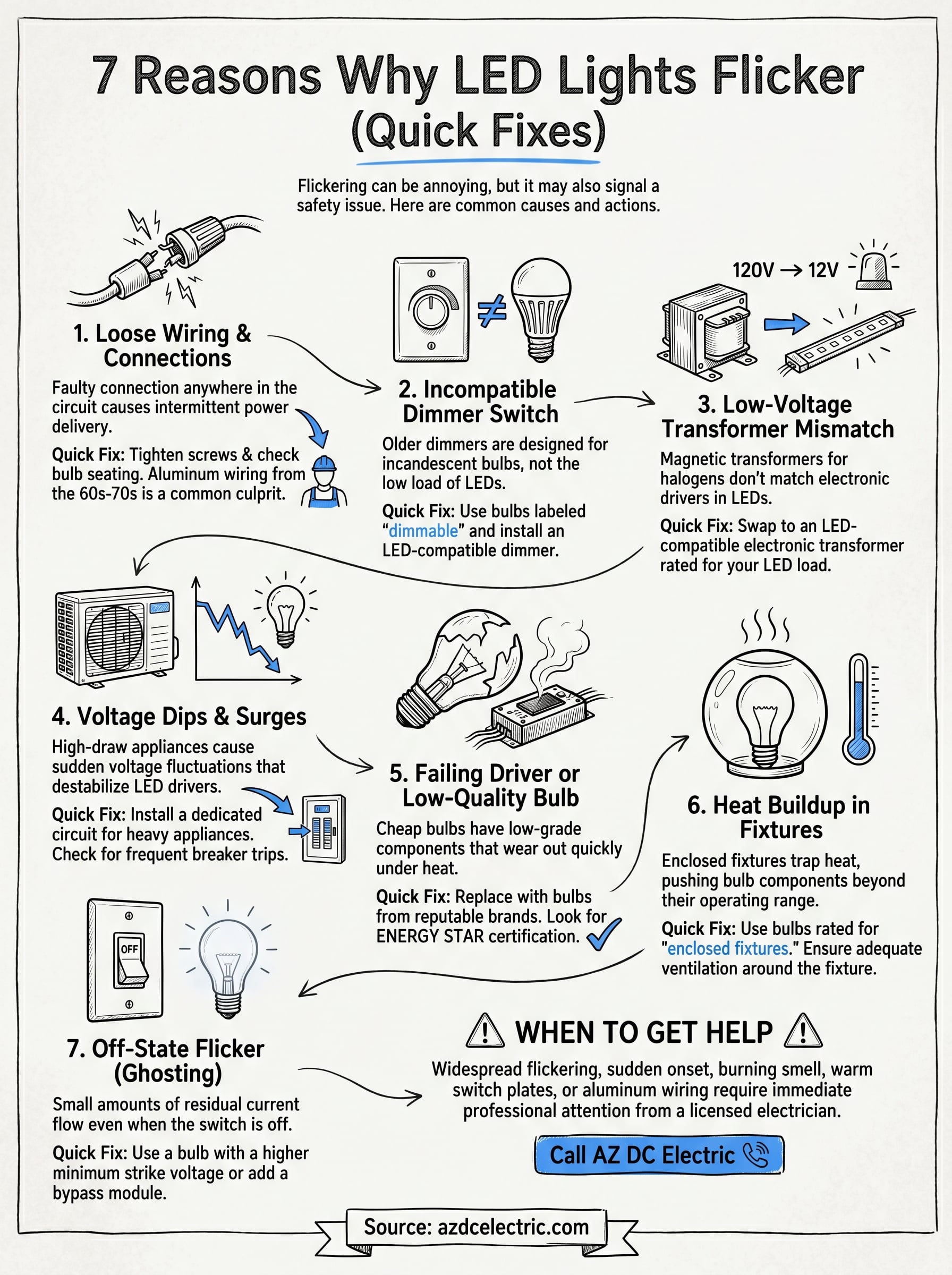
Below, we’ll walk you through seven common reasons your LED lights flicker and what you can do about each one.
1. Loose wiring or a failing connection
Loose wiring is the most serious cause of LED flickering, and it deserves your immediate attention. A faulty connection anywhere in the circuit can cause intermittent power delivery to your bulbs, which shows up as flickering or rapid on-off cycling.
What you’ll notice
Your light flickers randomly or constantly, even if only one fixture in a room is affected. You might also notice flickering that gets worse when other appliances kick on nearby, or a light that flickers only after the fixture has been on for a few minutes.
Why it happens
Wiring connections loosen over time from thermal expansion and contraction as wires heat and cool with normal use. Poor workmanship during original installation can leave connections that were never fully secure. In older Phoenix-area homes, aluminum wiring from the 1960s and 70s is a known culprit because it expands and contracts more than copper, which accelerates loosening at junction points.
A loose wire doesn’t just cause flickering. It creates a high-resistance connection that generates heat, which is a leading cause of electrical fires in residential homes.
Quick fixes you can try now
Start with the simplest checks first:
- Turn off the breaker for that circuit and remove the bulb to check if it’s seated correctly in the socket.
- Tighten the fixture’s mounting screws if the fixture itself feels loose.
- If you have a plug-in lamp that flickers, try a different outlet to rule out a localized problem.
When to call a licensed electrician
Call a licensed electrician if the flickering is sudden, affects multiple fixtures, or if you notice any burning smell, discoloration around outlets, or a warm switch plate. These signs point to a wiring fault that requires professional diagnosis before it becomes a fire hazard.
How to prevent it next time
Ask your electrician to use anti-oxidant compound on all connections if your home has aluminum wiring, and schedule a home electrical safety inspection every few years. Catching loose connections early is far cheaper than dealing with the damage they cause if left unaddressed.
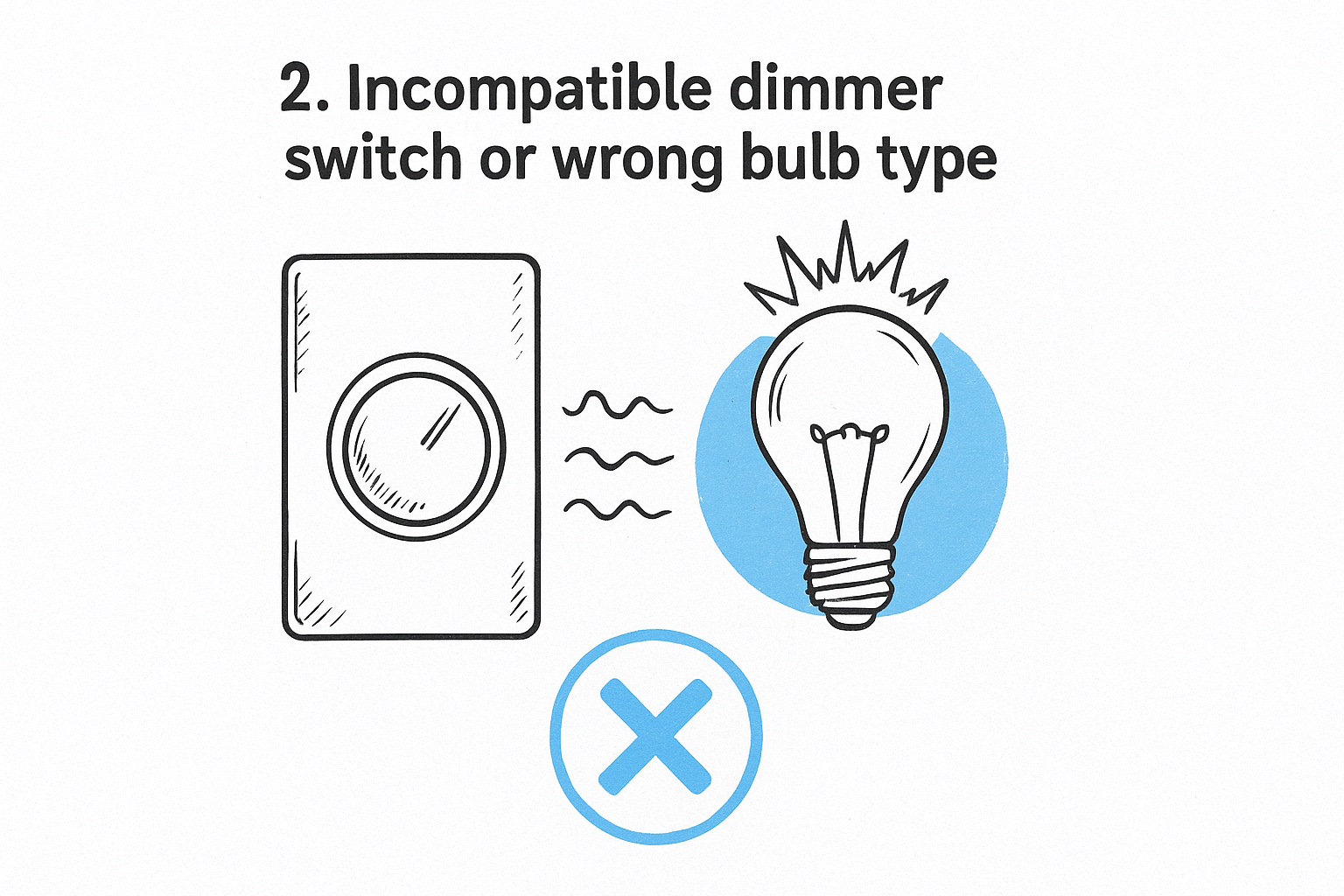
2. Incompatible dimmer switch or wrong bulb type
One of the most common answers to why do LED lights flicker is a mismatch between your dimmer switch and your bulbs. Most older dimmer switches were designed for incandescent bulbs that draw far more power than LEDs, and that gap in power requirements creates an unstable signal your LED interprets as a flicker.
What you’ll notice
Your lights flicker mainly when dimmed below full brightness, often at a specific point on the dial. You might also hear a faint buzzing sound from the switch or the bulb itself, especially at lower dim levels.
Why it happens
Traditional dimmers reduce brightness by rapidly cutting power to the bulb. Incandescent bulbs handled this without issue, but LEDs require a minimum load threshold to operate smoothly. When your dimmer delivers less current than the LED driver needs, the bulb flickers instead of dimming evenly.
Pairing an LED bulb with an incandescent dimmer shortens the lifespan of both the switch and the bulb over time.
Quick fixes you can try now
- Replace your current bulbs with options explicitly labeled "dimmable" on the packaging.
- Check your dimmer’s compatibility list, which most manufacturers publish on their website, and confirm it supports LED minimum load requirements.
When to call a licensed electrician
Call an electrician to install an LED-compatible dimmer switch if you are not comfortable working inside your switch box.
How to prevent it next time
Always buy dimmable-rated LED bulbs and pair them with a dimmer that specifies a minimum load compatible with LED wattage from day one.
3. Transformer or driver mismatch in low-voltage lighting
Low-voltage LED systems, such as recessed can lights and under-cabinet strips, rely on a transformer or driver to convert your home’s standard 120V power into the lower voltage the LEDs need. When those components don’t match properly, flickering is the first symptom you’ll see.
What you’ll notice
Flickering in low-voltage setups tends to be consistent and rhythmic rather than random. You may also notice it across an entire zone of lights rather than just one bulb, which is a strong clue that the driver or transformer is the shared problem.
Why it happens
Older magnetic transformers were built for halogen or incandescent low-voltage bulbs that draw significantly more current than LEDs. When you swap those bulbs out for LEDs without replacing the transformer, the driver receives an unstable power signal. This is one underappreciated answer to why do LED lights flicker in otherwise newer-looking fixtures.
A transformer running below its minimum load rating will flicker and overheat, shortening both its own lifespan and the lifespan of your bulbs.
Quick fixes you can try now
- Check your transformer’s minimum and maximum wattage rating and compare it against the total wattage of your LED bulbs.
- Swap in an LED-compatible electronic transformer rated specifically for LED minimum loads.
When to call a licensed electrician
Call an electrician if your transformer is hardwired into the ceiling or wall and requires opening the junction box to replace it safely.
How to prevent it next time
When you install any new LED low-voltage lighting, confirm upfront that the driver or transformer is rated and designed specifically for LED loads.
4. Voltage dips, surges, or an overloaded circuit
Your home’s electrical system is designed to deliver a steady 120V supply, but that voltage can dip or spike when large appliances draw power suddenly. Those fluctuations push LEDs outside their stable operating range, causing the flickering you see throughout a room or your entire home.
What you’ll notice
Flickering tends to happen at a specific moment, right when your HVAC unit, refrigerator, or washing machine kicks on. You might notice it across multiple fixtures or circuits simultaneously, which sets this cause apart from a single loose connection or bad bulb.
Why it happens
LEDs are more sensitive to voltage instability than traditional bulbs because their drivers regulate power within a narrow band. When a large appliance creates a sudden load on your panel, the available voltage drops briefly, and that dip is a direct answer to why do LED lights flicker in otherwise well-maintained homes.
Repeated voltage dips can degrade your LED drivers faster than normal, shortening bulb lifespan significantly.
Quick fixes you can try now
- Confirm whether high-draw appliances share a circuit with your lighting, and reduce the load where possible.
- Check if your circuit breaker trips frequently, since that confirms the circuit is consistently overloaded.
When to call a licensed electrician
Call an electrician if voltage fluctuations are frequent or severe, because persistent instability can damage sensitive electronics throughout your home beyond just your lights.
How to prevent it next time
A licensed electrician can install a dedicated circuit for heavy appliances and evaluate whether your panel has enough total capacity to handle your home’s current demand without causing recurring voltage drops.
5. A failing LED driver or a low-quality bulb
Not every flickering problem traces back to your home’s wiring or switches. Sometimes the bulb itself is the problem, either because the internal LED driver has failed or because the bulb was poorly manufactured from the start.
What you’ll notice
Flickering that affects only one fixture, even after you’ve ruled out wiring and dimmer issues, often points to the bulb. The flicker may start intermittently and then become constant as the driver degrades further.
Why it happens
Every LED bulb contains a driver circuit that converts AC power into DC current. Cheap bulbs use low-grade capacitors that wear out quickly under heat and load, which directly answers why do LED lights flicker in bulbs that are relatively new.
A bulb rated for 25,000 hours by a budget manufacturer often fails well before that mark due to substandard internal components.
Quick fixes you can try now
- Swap the suspect bulb into a different fixture to see if the flickering follows it.
- Replace it with a bulb from a reputable brand with clear wattage specifications and verified reviews.
When to call a licensed electrician
Call an electrician if replacing the bulb doesn’t stop the flickering, because the socket or fixture wiring may be the actual fault.
How to prevent it next time
Buy bulbs that carry ENERGY STAR certification, which requires independent testing of driver quality and rated lifespan before a product earns that label.
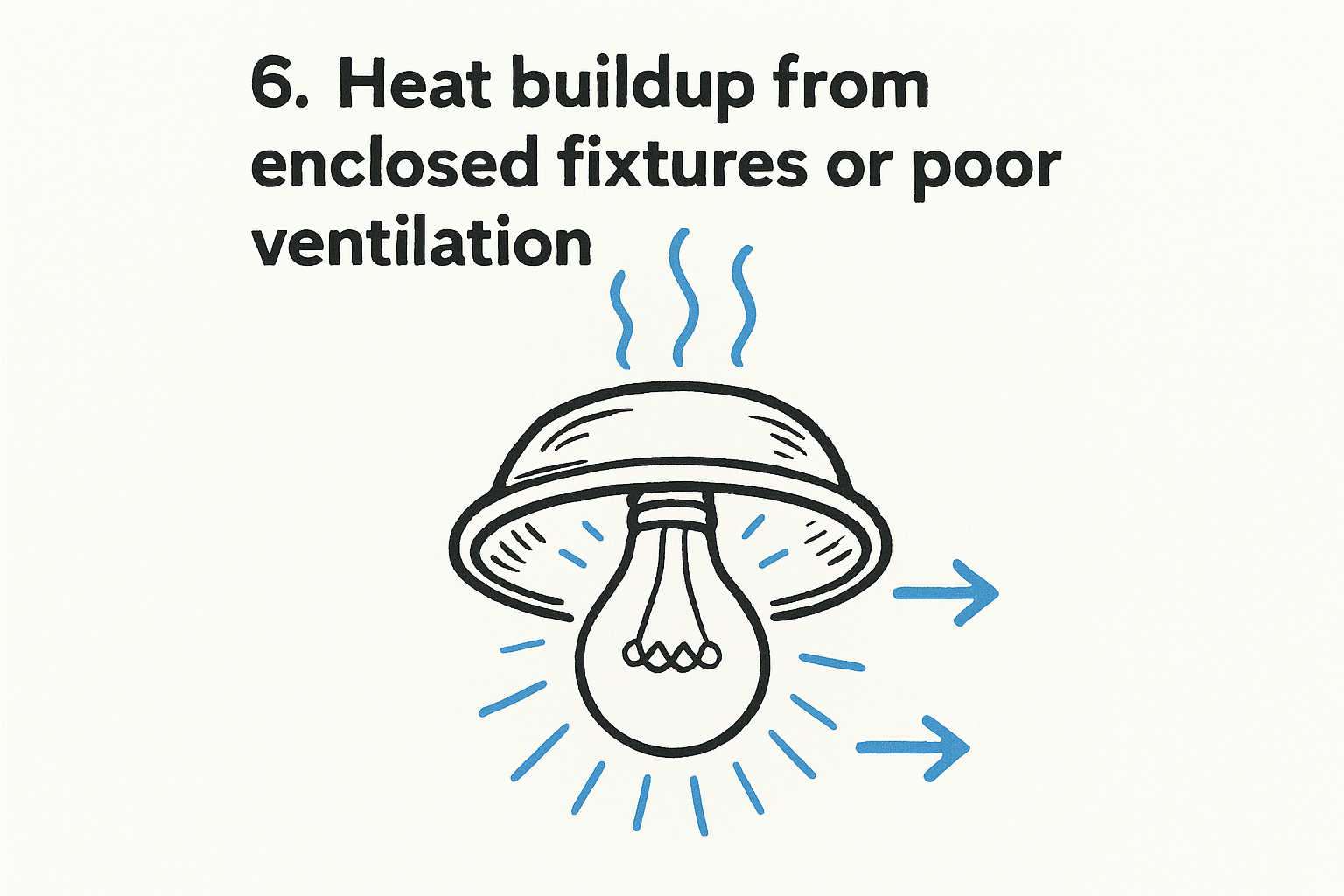
6. Heat buildup from enclosed fixtures or poor ventilation
LEDs are far more efficient than incandescent bulbs, but they still generate heat at the base of the bulb where the driver circuit sits. When a fixture traps that heat with no airflow to dissipate it, internal components get pushed beyond their stable operating temperature range and the bulb begins to flicker.
What you’ll notice
Flickering that starts after the light has been on for 15 to 30 minutes is the clearest sign of a heat problem. Your light may perform normally at first, then begin strobing steadily as the fixture’s internal temperature climbs.
Why it happens
LED drivers contain small capacitors and resistors that throttle output or shut down entirely when they overheat. Enclosed globe fixtures, recessed cans with airtight housings, and tightly sealed outdoor fixtures all trap heat around the bulb base. This thermal stress directly explains why do LED lights flicker in fixtures that look perfectly functional from the outside.
Running a bulb rated for open fixtures inside an enclosed fixture can cut its rated lifespan in half or more.
Quick fixes you can try now
- Check your bulb’s packaging for an "enclosed fixture rated" label and swap it for one that carries that rating.
- Remove any insulation blocking airflow around recessed can housings in your attic space.
When to call a licensed electrician
Call an electrician if your recessed cans lack IC-rated housings or if replacing fixtures with better-ventilated options requires new wiring.
How to prevent it next time
Always confirm the open or enclosed fixture rating printed on the bulb box before you buy. Fixtures with built-in heat sinks and adequate spacing around the socket keep thermal issues from becoming a recurring problem.
7. Off-state flicker or glowing when the switch is off
You switch the light off and walk away, but the bulb continues to glow faintly or pulse with a slow flicker. This is one of the stranger answers to why do LED lights flicker, and it almost always traces back to how your switch or circuit handles residual current.
What you’ll notice
Your LED gives off a dim glow or slow pulse even when the wall switch is in the off position. The effect is usually subtle enough that you only spot it in a dark room, but it confirms that current is still reaching the bulb when it should not be.
Why it happens
Many standard wall switches interrupt only one wire in the circuit, leaving a small amount of current flowing through the neutral path. Some smart switches and dimmers also bleed a tiny amount of power to keep their internal electronics active, and LEDs are sensitive enough to react with a glow or flicker.
This is not a normal operating condition and can indicate a wiring configuration that needs professional review.
Quick fixes you can try now
- Replace the bulb with one rated for a higher minimum strike voltage, since some LED models are far less sensitive to residual current.
- Install a Zener diode bypass module if the bulb manufacturer offers one for your specific fixture type.
When to call a licensed electrician
Call an electrician if the switch is wired incorrectly, such as when the hot wire runs to the fixture instead of the switch leg, since that fault requires proper rewiring to resolve safely.
How to prevent it next time
Buy LED bulbs from brands that specify anti-flicker or ghost-current resistance in their technical documentation, and confirm with your electrician that all switch legs follow standard wiring practice from the start.
When you should stop troubleshooting and get help
Understanding why do LED lights flicker is useful, but some causes go beyond what you can safely fix on your own. If flickering is widespread across multiple fixtures or circuits, appears suddenly without any changes you made, or comes with a burning smell, warm switch plates, or discoloration around outlets, stop and call a licensed electrician.
Your home’s wiring and panel also warrant professional attention if you have aluminum wiring from the 1960s or 70s, an aging or undersized electrical panel, or breakers that trip more than once in a short period. These are not flickering problems with a simple bulb swap as the answer. They are signs of a system that needs a proper diagnosis.
At AZ DC Electric, we handle LED lighting issues across the Greater Phoenix Metro Area with upfront pricing, no dispatch fees, and a 5-year workmanship guarantee. Schedule a home electrical inspection with AZ DC Electric and get a clear answer fast.