A single power surge can destroy thousands of dollars worth of appliances, electronics, and HVAC equipment in a fraction of a second. Arizona’s monsoon season brings lightning strikes, and the Phoenix Metro Area’s aging grid infrastructure adds another layer of risk. If you’ve been researching whole house surge protector installation cost, you’re already thinking ahead, and that’s the right move.
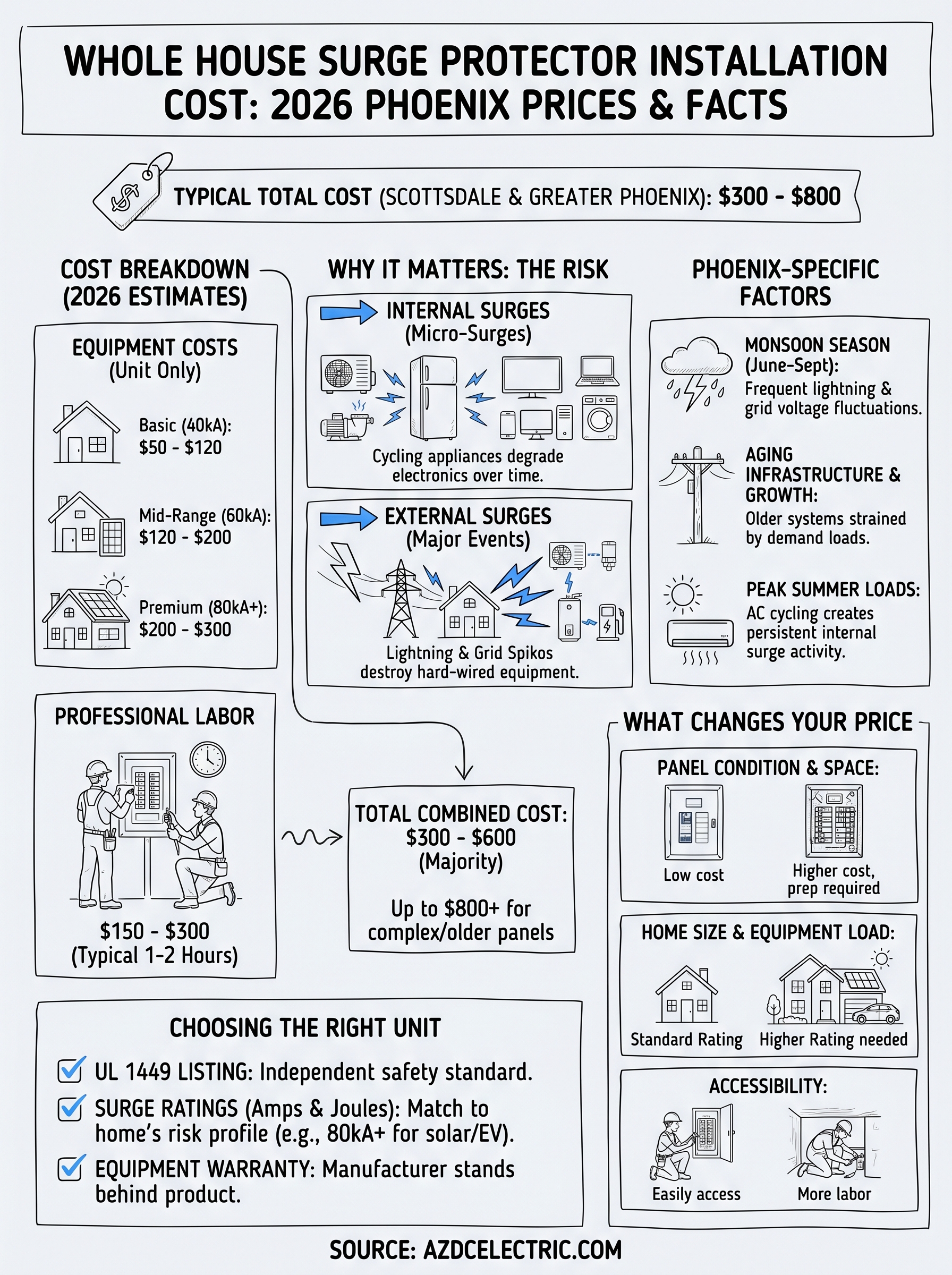
Most homeowners in the Scottsdale and Greater Phoenix area can expect to pay somewhere between $300 and $800 total, depending on the unit, the condition of their electrical panel, and labor. But that range shifts based on several real-world factors that are worth understanding before you book the work.
At AZ DC Electric, we install whole house surge protectors across the Valley every week. This article breaks down current 2026 pricing for both equipment and professional installation, walks through the variables that push costs up or down, and helps you decide whether the investment makes sense for your home. Everything here reflects what we actually see on the job, not recycled national averages.
Why whole-home surge protection matters
Power surges are invisible and fast. A single event lasting less than a millisecond can send voltage spikes of several thousand volts through your home’s wiring, frying anything plugged in or hardwired to your electrical system. Understanding what you’re protecting against makes it easier to evaluate the whole house surge protector installation cost as a practical investment rather than just another home expense.
What a power surge actually does
Most people picture lightning when they think about surges, but the majority of damaging surges actually originate inside your own home. Every time a large appliance like an air conditioner, refrigerator, or pool pump cycles on and off, it creates a small voltage spike. Over time, these repeated micro-surges degrade the internal components of your televisions, smart appliances, HVAC systems, and computers just as steadily as a single large event would. The damage often goes unnoticed until something simply stops working.
A whole-house surge protector catches these internal surges at the panel before they ever reach your devices, which is something a power strip cannot do.
External surges from the utility grid, downed power lines, or nearby lightning strikes hit with far more force. These events can permanently damage hard-wired appliances like your water heater, HVAC unit, and electric vehicle charger, none of which you can protect with a simple outlet strip.
Arizona’s specific risk factors
Phoenix sits in one of the most electrically active monsoon corridors in the country. During monsoon season, ground-level lightning strikes and rapid voltage fluctuations from the grid are common occurrences from roughly June through September. The Valley’s rapid growth and aging infrastructure also means many older neighborhoods are running on electrical systems that weren’t built to handle today’s demand loads.
Utility grid switching events during peak summer cooling periods add further stress to your home’s wiring. Phoenix homes run air conditioning nearly year-round, which means your equipment cycles on and off constantly, creating persistent internal surge activity. Protecting your investment in high-value systems like HVAC equipment, solar inverters, and EV chargers makes the case for surge protection especially strong here.
Typical whole house surge protector installation cost
Breaking this cost into two parts, equipment and labor, gives you a clearer picture of where your money goes and where you have room to adjust.
Equipment costs
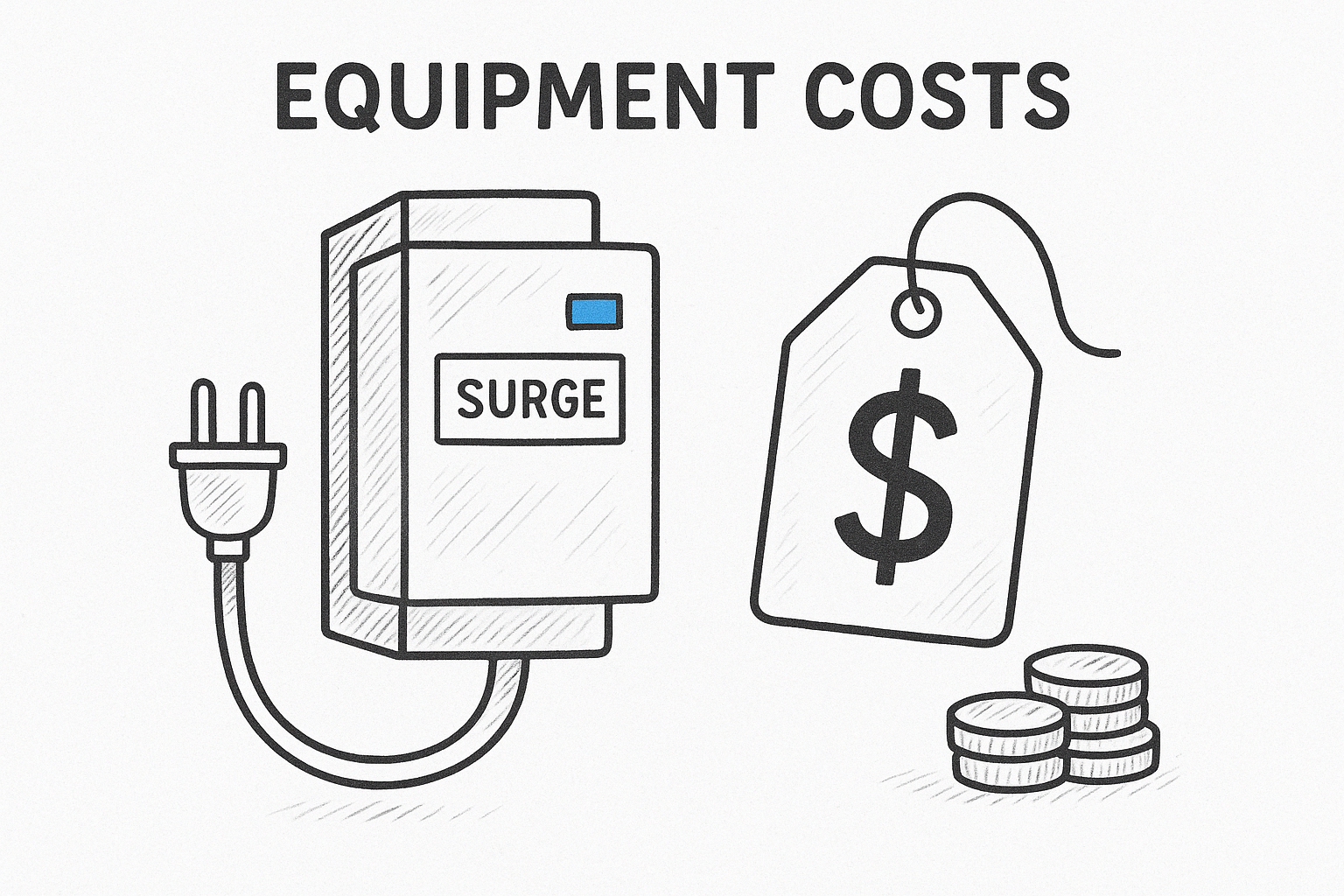
The surge protector unit itself typically runs between $50 and $300, depending on the protection rating and brand. Entry-level units rated around 40,000 amps of surge capacity cover basic protection for most homes. Higher-end units rated at 80,000 amps or more offer stronger protection and are worth considering if your home runs solar panels, an EV charger, or high-end HVAC equipment. Both options mount directly to your electrical panel.
| Unit Type | Surge Rating | Equipment Cost |
|---|---|---|
| Basic whole-house SPD | 40,000A | $50 – $120 |
| Mid-range whole-house SPD | 60,000A | $120 – $200 |
| Premium whole-house SPD | 80,000A+ | $200 – $300 |
Labor and total combined cost
Professional installation labor in the Phoenix Metro Area typically adds $150 to $300 on top of the equipment price. Most installs take one to two hours, assuming your panel is accessible and in good working condition. That puts the realistic total for whole house surge protector installation cost between $300 and $600 for the majority of homes in Scottsdale and surrounding areas.
If your panel is older or lacks an open breaker slot, expect the labor portion to increase since additional prep work may be required before the unit can be mounted.
What changes your final price in Phoenix
The range of $300 to $800 for whole house surge protector installation cost isn’t arbitrary. Several specific variables push your final number toward the lower or higher end of that range, and most of them relate to the current condition of your electrical panel.
Panel condition and available space
Your electrical panel is where the surge protector mounts, so its condition directly affects labor time. If your panel has an open breaker slot and is up to code, installation stays straightforward and labor costs stay low. Panels that are full, outdated, or show signs of wear may require additional prep work before the unit can be installed safely, pushing your total higher.
If your home still runs on a Federal Pacific or Zinsco panel, a full panel upgrade is worth discussing before adding surge protection.
Home size and equipment load
Larger homes with more circuits and high-draw appliances like multiple HVAC units, a pool pump, or an EV charger benefit from a higher-rated surge protection device, which costs more upfront but covers significantly more equipment value. Phoenix homes running solar inverters add further complexity, since these systems require compatible SPD specifications to function correctly.
Panel accessibility matters too. If your panel sits in a tight utility space or has an outdated enclosure, the job takes longer, and that added time shows up directly in your final labor quote.
What installation includes and how long it takes
When you book a whole house surge protector installation, you’re not just paying for a device to be screwed into a wall. A proper install involves inspecting your panel, selecting the correct mounting location, and wiring the unit directly into your electrical system so it can respond to surges before they reach any circuit in your home.
What the electrician does on-site
Your electrician starts by assessing your panel to confirm there’s an available double-pole breaker slot and that the panel is safe to work with. The surge protector mounts directly to the panel enclosure and connects through that dedicated breaker. Once wired, the technician tests the unit to confirm it reads correctly and that no existing circuits were affected during the process.
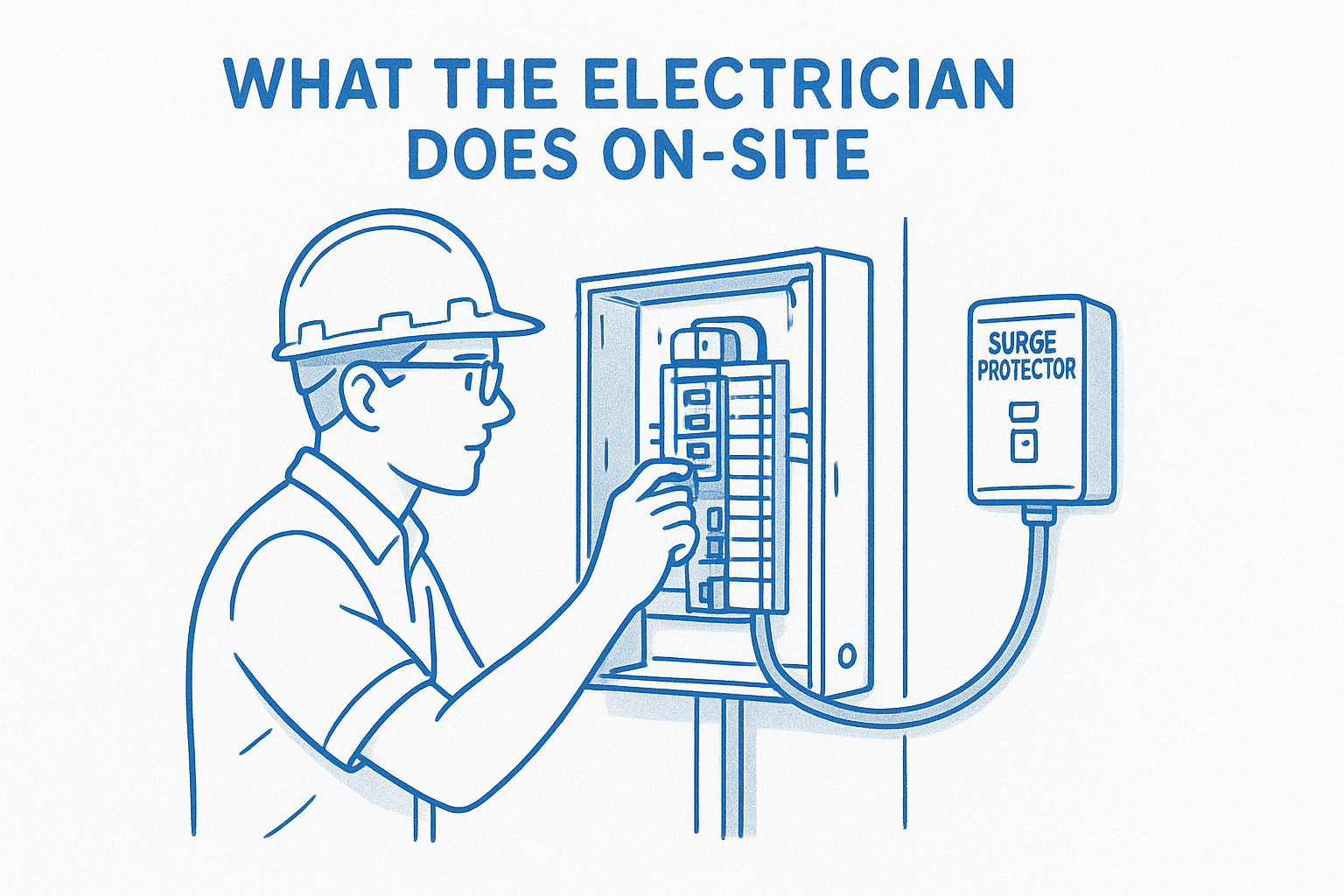
A licensed electrician will also flag any panel issues discovered during the inspection, giving you a complete picture of your system’s condition before leaving.
Timeline and what to expect
Most whole house surge protector installation cost quotes assume a straightforward job that takes one to two hours from arrival to completion. That window covers the inspection, mounting, wiring, and final testing. You don’t need to vacate your home, and in most cases power is only interrupted for a short period while the breaker connections are made.
If your panel needs additional prep work, such as clearing space or addressing a wiring concern, the job can extend to two to three hours. Your electrician should communicate this clearly before starting any work.
How to choose the right whole-house surge protector
Picking the right unit affects both how well your home is protected and how the whole house surge protector installation cost fits your budget. Not every unit delivers the same level of protection, and buying a unit that’s undersized for your home’s equipment load means paying for installation twice when you upgrade later.
Check the joule and amp ratings
Your first priority is matching the surge protection rating to your home’s actual risk profile. For most standard Phoenix homes, a unit rated at 40,000 amps covers everyday protection needs. If you run solar panels, an EV charger, or multiple HVAC systems, step up to a unit rated at 80,000 amps or higher to cover the full equipment value at risk.
Joule ratings matter too: look for a unit rated at 1,000 joules or above for whole-home use, as lower-rated units wear out faster under repeated surge activity from cycling appliances.
Look for UL listing and warranty coverage
Always verify the unit carries a UL 1449 listing, which is the recognized standard for surge protective devices in the United States. This listing confirms the unit has passed independent safety and performance testing rather than relying on manufacturer claims alone.
Beyond the safety listing, a strong equipment protection warranty signals that the manufacturer stands behind the product. Some units include coverage for connected equipment up to a specified dollar amount, which adds real value when you’re protecting high-cost appliances, HVAC systems, and EV charging hardware.
Next steps for protecting your home
You now have a clear picture of what drives whole house surge protector installation cost and what to expect from the process. The decision comes down to a straightforward calculation: a few hundred dollars upfront versus thousands in potential equipment replacement costs from a single surge event. Phoenix homeowners running HVAC systems, EV chargers, or solar panels carry a higher risk profile and stand to benefit the most from acting quickly.
Start by checking your panel’s age and condition before you book the work. If it’s been more than 10 years since your last electrical inspection, that’s worth addressing at the same time. Combining a panel check with surge protector installation keeps your costs efficient and gives you a complete picture of your home’s electrical health.
Ready to get your home protected? Contact AZ DC Electric to schedule a whole house surge protector installation with upfront pricing and no call-out fees.