GFCI outlets exist for one reason: to cut power before electricity travels through water, and through you. If you’ve ever wondered where are GFCI outlets required in your home, the answer comes straight from the National Electrical Code (NEC), which specifies exact locations based on moisture exposure and shock risk.
The problem is, many Phoenix-area homes, especially those built before the code expanded its requirements, are missing GFCI protection in spots that now demand it. A bathroom outlet from 1990 might have been code-compliant then, but today’s NEC standards cover far more ground than most homeowners realize. At AZ DC Electric, we see this gap regularly during home electrical safety inspections across Scottsdale, Mesa, Chandler, and the greater Phoenix metro.
Below, we break down the five residential locations where the NEC requires GFCI outlets, why each one matters, and how to tell if your home meets current standards.
1. Kitchens
If you’re trying to understand where GFCI outlets are required in your home, the kitchen tops the list. Water, appliances, and countertop surfaces share close quarters here, which is exactly why the NEC puts strict rules on which outlets need protection and where.
What the NEC requires in kitchens
The NEC requires GFCI protection on all receptacles that serve countertop surfaces in a kitchen. That covers any outlet within reach of a sink, regardless of whether it sits directly above one. The code also mandates GFCI protection for receptacles located within 6 feet of a kitchen sink, which pulls in outlets you might not expect, like those on a nearby wall or kitchen island.
If your kitchen was wired before 1978, it likely has no GFCI protection on countertop circuits at all, since that requirement did not exist yet.
Which kitchen outlets people miss
Many homeowners focus on the outlet directly above the sink and assume everything else is covered. Outlets on a kitchen island are a frequent gap, especially in homes remodeled before 2014, when island receptacle rules became more specific. Outlets near a wet bar or secondary prep sink also fall under GFCI requirements and get overlooked during inspections.
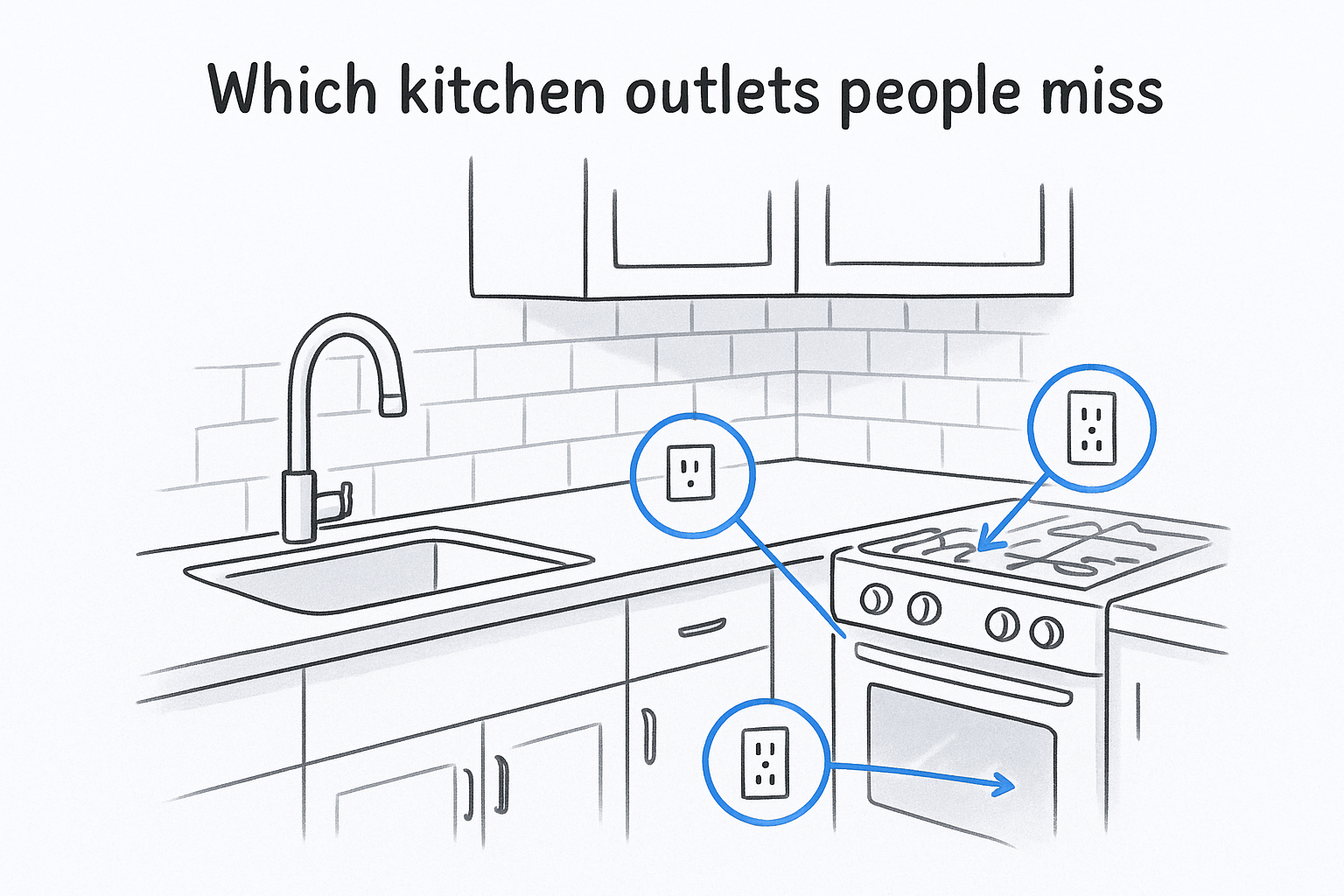
- Outlets on kitchen islands and peninsulas
- Receptacles within 6 feet of any kitchen sink
- Outlets near wet bars or beverage stations inside the kitchen
How to confirm you have GFCI protection
You can test your existing outlets using the TEST and RESET buttons built into a GFCI receptacle. Press TEST, and the outlet should lose power. Press RESET, and power should return. If your kitchen outlets lack these buttons and are not wired downstream from a GFCI, they are not protected and need an upgrade.
2. Bathrooms
Bathrooms are one of the most frequently cited locations where GFCI outlets are required by the NEC. Water and electricity share tight quarters here every day, making every receptacle a potential shock hazard without proper protection.
What the NEC requires in bathrooms
The NEC requires GFCI protection on all receptacles in bathrooms, with no distance-from-sink exceptions. This rule covers every outlet in the room, including half baths and powder rooms that homeowners often overlook during upgrades.
Unlike kitchens, bathroom GFCI rules do not depend on how far an outlet sits from the sink. Every receptacle in the room needs protection.
Common bathroom setups that still need GFCI
Older homes frequently have a single unprotected outlet near the vanity that was installed before current code took effect. Two spots that regularly get missed include:
- Outlets in guest suite or secondary bathrooms that share a circuit with a protected receptacle but are not wired downstream from it
- Receptacles positioned far from the sink in large master bathrooms
Troubleshooting a bathroom GFCI that keeps tripping
A GFCI that trips repeatedly points to moisture intrusion or a failing appliance on the circuit. Unplug every device and press the RESET button to check if the outlet holds on its own.
If it trips again with nothing plugged in, the receptacle itself is likely defective and needs a direct replacement rather than a reset.
3. Garages and accessory buildings
Garages rank among the most frequently cited locations where GFCI outlets are required under the NEC. Concrete floors, water exposure from vehicles, and portable power tools create shock hazards that make protection mandatory here, not optional.
What the NEC requires in garages and outbuildings
The NEC requires GFCI protection on all receptacles in garages and grade-level portions of unfinished accessory buildings. This covers detached garages, workshops, and storage structures with electrical service, regardless of how often you actually use them.
The 2020 NEC removed the previous exemption for dedicated refrigerator and freezer circuits in garages, so those outlets now need GFCI protection too.
Typical garage circuits that need protection
Most garage setups include workbench outlets and general-purpose wall receptacles along with circuits near the overhead door opener. Each of these falls under GFCI requirements.
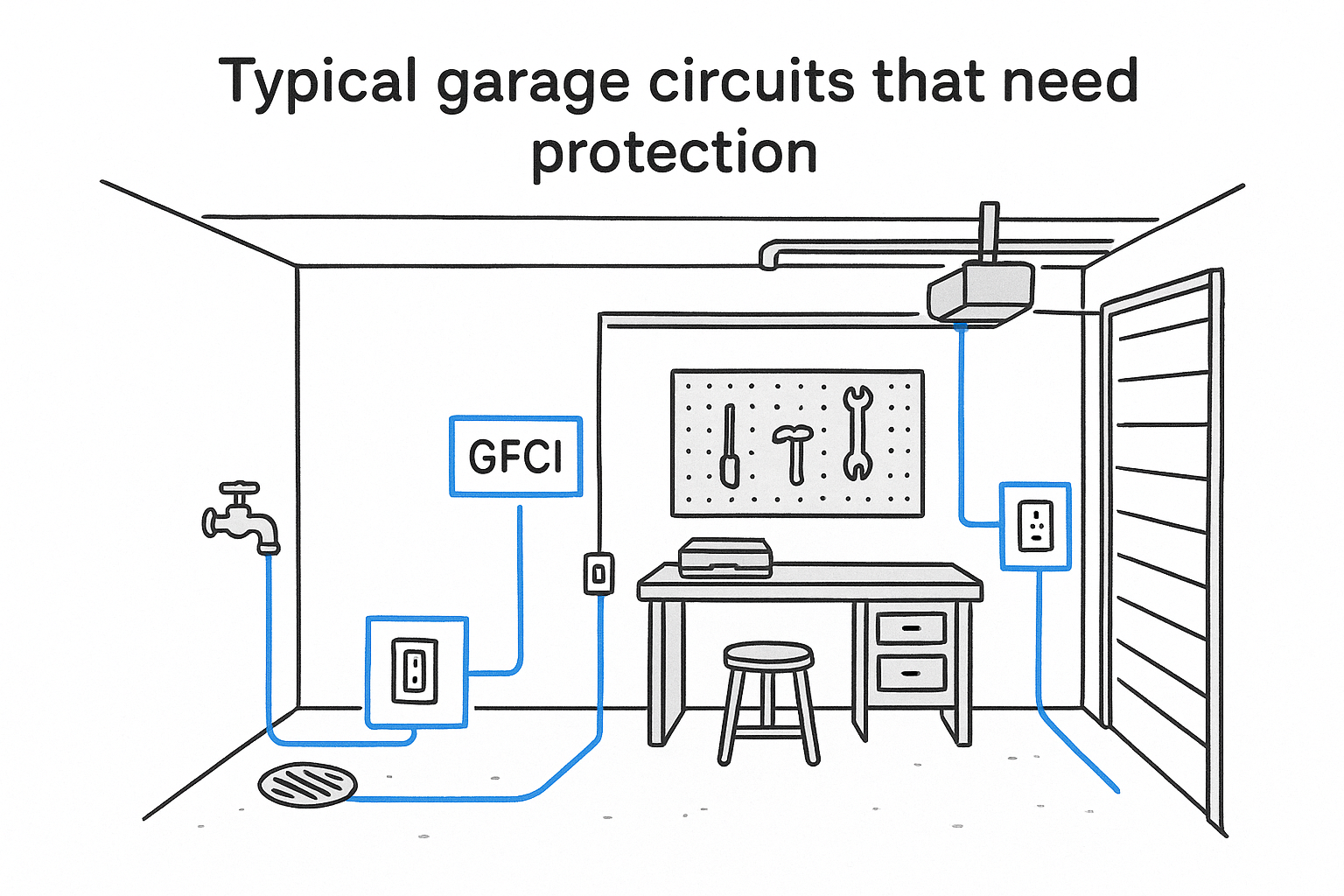
- Workbench receptacles along walls
- Outlets near floor drains or water sources
- Receptacles in detached workshops or storage sheds
When a GFCI breaker makes more sense than a receptacle
A GFCI breaker installed at the panel protects every outlet on that circuit at once, making it a practical choice when your garage has multiple receptacles spread across the space.
Using a single GFCI receptacle wired to protect downstream outlets works in simpler setups but requires careful wiring to ensure every connected point on that circuit is actually covered.
4. Laundry, basements, and utility areas
Laundry rooms, basements, and utility spaces are areas where GFCI outlets are required under the NEC, and they catch many homeowners off guard. These spaces combine moisture exposure with high-draw appliances, creating conditions that make proper shock protection essential.
What the NEC requires in laundry and utility spaces
The NEC mandates GFCI protection for all receptacles in laundry areas, regardless of whether a sink is present in the room. Basement receptacles also require protection, with a limited exception for outlets dedicated to specific equipment in finished, dry sections.
How sinks and unfinished spaces change the rules
Any receptacle within 6 feet of a utility sink in a basement or laundry area needs GFCI protection, even if the surrounding space is otherwise finished. Unfinished basements carry no exceptions – every outlet in those areas requires protection.
If your basement includes both finished and unfinished sections, treat every receptacle in the unfinished portion as requiring GFCI protection under the current NEC.
Common appliance outlets that now need GFCI
The 2020 NEC expanded requirements to cover dedicated appliance circuits in laundry and utility spaces that earlier code versions left out. Outlets you may need to upgrade include:
- Washing machine receptacles
- Utility sink area outlets
- Sump pump receptacles in unfinished basement areas
5. Outdoors, pools, spas, and hot tubs
Outdoor locations and water features represent some of the most hazardous spots where GFCI outlets are required by the NEC. Rain, irrigation runoff, and poolside activity expose every nearby receptacle to moisture year-round, making proper protection a code requirement and a genuine safety necessity.
What the NEC requires outdoors and near water
The NEC requires GFCI protection on all outdoor receptacles attached to a home or accessory structure, including those under covered patios and in backyard areas. Pool, spa, and hot tub circuits carry additional mandates, where all receptacles within 20 feet of the pool edge must be GFCI protected.
For spas and hot tubs, the NEC also requires GFCI protection on the equipment circuits themselves, not just the nearby receptacles.
Distance rules and other safety clearances to know
Any receptacle within 20 feet of a pool, spa, or hot tub requires protection. All exterior wall outlets on the home also fall under this requirement, regardless of distance from a water feature.
- Receptacles within 20 feet of pool or spa water
- All exterior wall-mounted outlets
What to upgrade first in older homes
Older Phoenix-area homes often have unprotected patio outlets that predate modern outdoor code requirements. Prioritize any receptacle near a pool, spa, or hot tub first, since those circuits carry the highest shock risk and receive the closest scrutiny during a home electrical safety inspection.
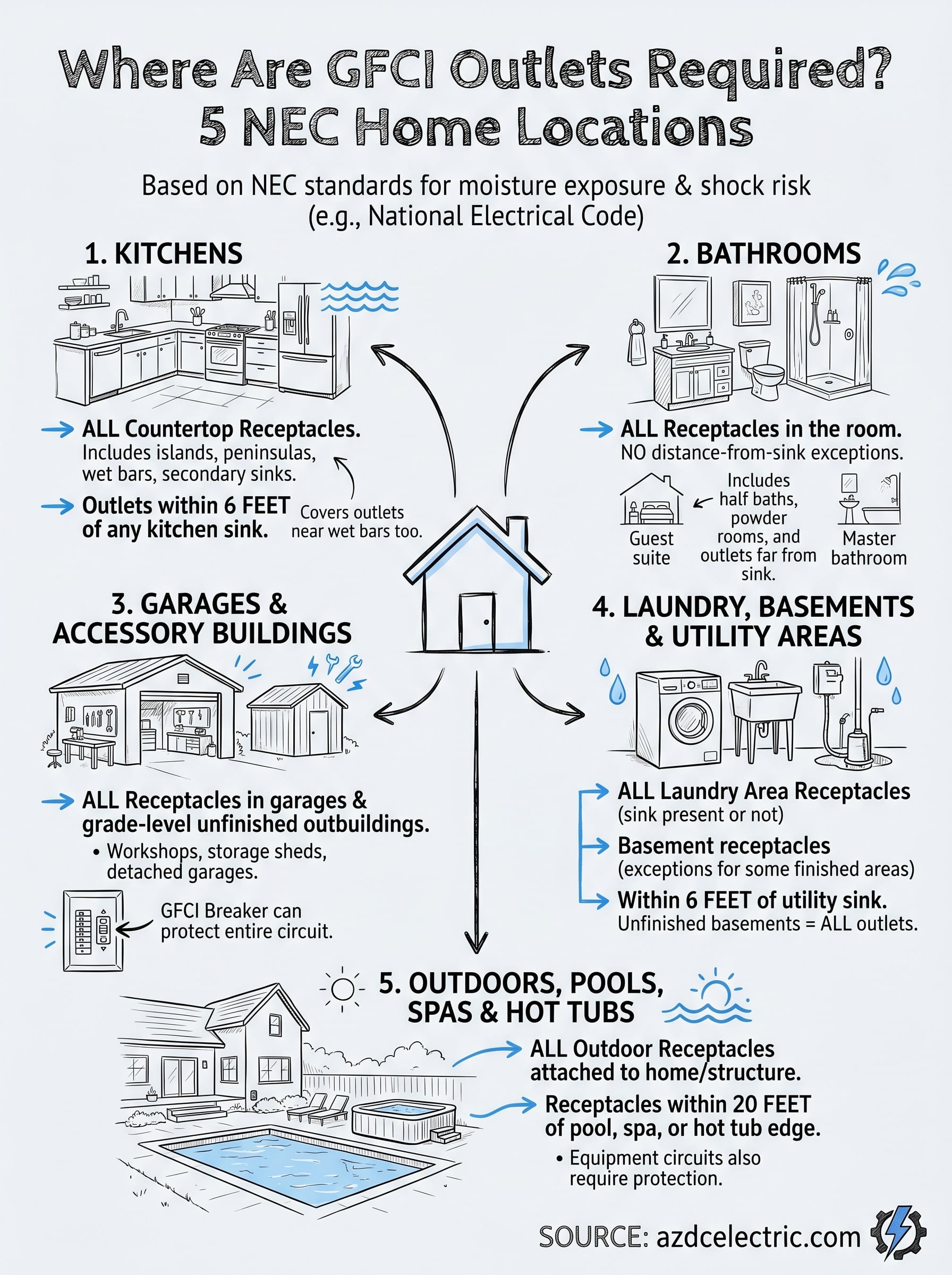
Quick recap
Now you know exactly where GFCI outlets are required by the NEC: kitchens, bathrooms, garages, laundry and utility areas, and outdoor spaces including pools and spas. Each location carries specific rules based on moisture exposure and shock risk, and the NEC has expanded those requirements with each new code cycle since 1971.
If your home was built before 2000, there’s a good chance at least one of these five areas lacks proper protection. Older wiring, outdated receptacles, and missed downstream connections are all common gaps that show up during inspections across the Phoenix metro. A single unprotected outlet near a sink or pool puts everyone in the home at risk.
Rather than guessing which outlets meet current standards, schedule a professional inspection to get a clear picture. The team at AZ DC Electric covers the entire Greater Phoenix area, identifies every missing GFCI location, and backs all work with a 5-year workmanship guarantee.