A flickering light might seem harmless. A tripping breaker might reset just fine. But behind those minor annoyances, there’s often a real problem hiding inside your walls. So, what is electrical repair, exactly? It covers a broad range of work, from replacing a faulty outlet to rewiring an entire circuit, and knowing what falls under that umbrella can save you time, money, and a potential safety hazard.
Not every electrical issue requires a licensed electrician, but more of them do than most homeowners realize. A loose switch plate is one thing. A breaker that won’t stop tripping or a burning smell near an outlet is something else entirely. The line between a quick DIY fix and a job that demands professional hands isn’t always obvious, and crossing that line without knowing it is where real danger starts.
This article breaks down the types of electrical repairs you’re most likely to encounter, what they typically cost, and exactly when it’s time to call a pro. At AZ DC Electric, we handle residential and commercial electrical repairs across the Greater Phoenix Metro Area, from emergency calls at 2 a.m. to scheduled panel upgrades, so the examples and guidance here come straight from what we see and fix every day.
Why electrical repair matters at home and work
Electrical systems don’t announce problems loudly. A worn wire inside a wall or a connector that’s worked loose over years can sit unnoticed until the damage becomes serious. That’s why understanding what is electrical repair really means isn’t just about fixing things that break. It’s about recognizing that every electrical issue, big or small, carries a real risk when you leave it unaddressed. Whether you own a home in Scottsdale or manage a commercial property in Mesa, your electrical system is under constant load, and wear accumulates whether you notice it or not.
The safety risks of ignoring electrical problems
Electrical fires are one of the most preventable home disasters, yet they remain one of the most common. According to the U.S. Fire Administration, electrical fires account for tens of thousands of residential fires each year, and a large share of them trace back to faulty wiring, overloaded circuits, and outdated electrical panels. The frustrating part is that many of those fires start months or even years after the original problem first develops. By the time you see smoke or smell something burning, the damage inside your walls may already be extensive.
Ignoring a frequently tripping breaker or a burning smell near an outlet is not just an inconvenience – it is a sign your system is already telling you something is wrong.
In a commercial setting, the stakes climb even higher. A power interruption from a failed circuit can shut down equipment, wipe unsaved data, and halt operations for hours. For businesses that depend on refrigeration, medical equipment, or continuous manufacturing processes, an unresolved electrical fault is not just a safety concern. It becomes a direct threat to revenue and liability exposure that compounds the longer it goes unfixed.
How electrical issues affect your property value and daily life
Unresolved electrical problems lower your home’s value more than most sellers expect. Home inspectors flag wiring issues, outdated panels, and missing ground fault protection as serious deficiencies. Buyers and their lenders pay attention to those findings. In competitive markets like the Phoenix metro area, a flagged electrical system can stall or kill a sale before it closes, and repairs negotiated mid-contract often cost more than they would have before listing.
On a daily basis, electrical problems make your space less comfortable and more expensive to operate. Flickering lights signal voltage fluctuations that quietly stress your appliances and shorten their lifespan. Overloaded circuits force you to constantly manage which devices you use and where, working around your electrical system rather than relying on it. That friction adds up fast, especially in households running multiple high-draw appliances.
Rental property owners face the same problem from a different direction. Tenants expect functioning electrical systems, and landlords carry a legal obligation to maintain safe living conditions. A faulty outlet or a panel that cannot handle modern electrical loads is not just a maintenance item on a to-do list. It can become a serious legal and financial liability if something goes wrong.
Taking electrical repairs seriously early protects your home, your finances, and every person who spends time in your space. Addressing a problem at the first sign is almost always a fraction of the cost you would pay after fire damage, failed equipment, or a dropped property sale.
How electrical repair works from start to finish
When you call an electrician, the process follows a predictable sequence that most homeowners never see explained clearly. Understanding what is electrical repair as a process, not just a result, helps you know what to expect before anyone shows up at your door. Every job moves through the same core stages, whether you’re dealing with a single bad outlet or a panel that needs a full replacement.
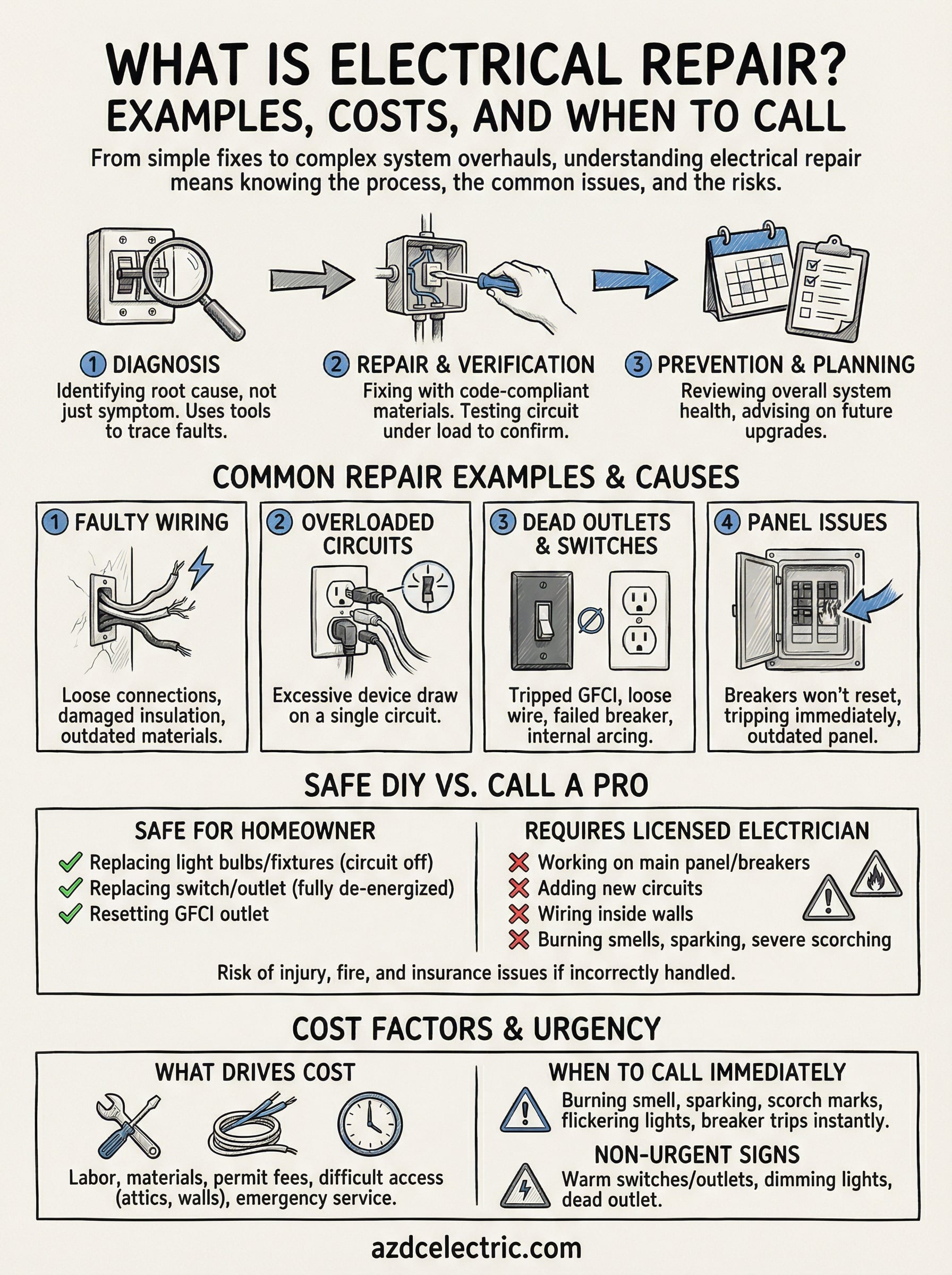
Diagnosis: finding the actual problem
Before any tools come out, a qualified electrician diagnoses the root cause rather than just the symptom you reported. A tripping breaker, for example, might point to an overloaded circuit, a short somewhere along a wire run, or a failing breaker that no longer holds its rated load. Your electrician will use voltage meters, load calculators, and visual inspection to trace the issue back to its source. Skipping this step and jumping straight to parts replacement wastes money and often leaves the real problem intact.
A symptom like a flickering light is the starting point of a diagnosis, not the answer to it.
The inspection phase can take anywhere from a few minutes to over an hour depending on how accessible your wiring is and how complex the system. Older homes with aluminum wiring or outdated panel configurations almost always require more investigation time because the original installation doesn’t match current code, and multiple issues often coexist.
The repair and verification process
Once your electrician identifies the problem, the actual repair work begins with materials matched to code requirements for your area. In Arizona, that means compliance with the National Electrical Code as adopted by the state and local jurisdictions. After completing the repair, a proper verification step tests the circuit under load to confirm the fix holds before the job closes out. A repair that works at zero load but fails under normal household draw is not a completed repair.
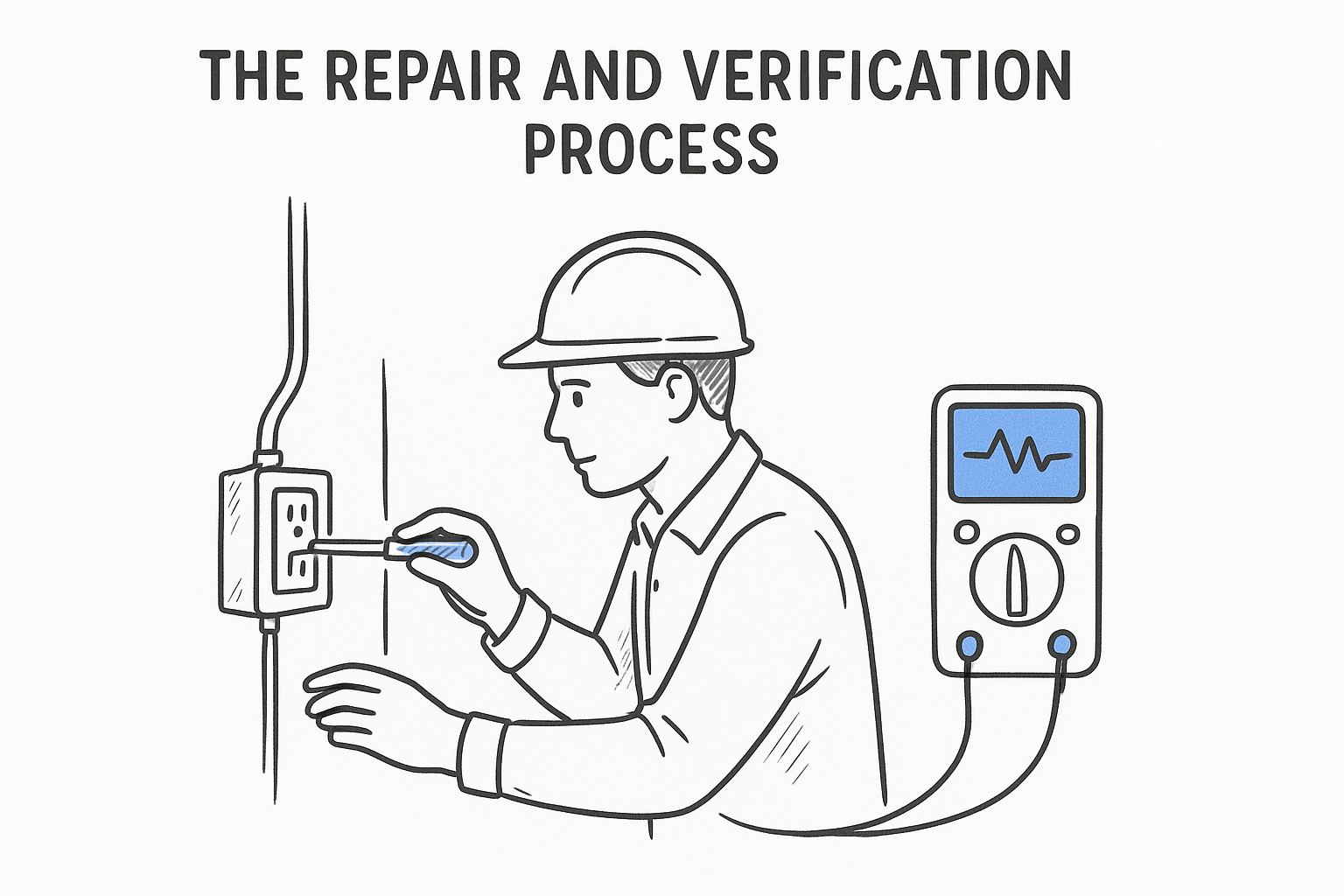
Your electrician should also walk you through what was found and what was fixed, along with whether anything else requires attention in the near term. That final conversation gives you a clear picture of your system’s current condition and helps you plan ahead without guessing.
Common electrical repair examples and causes
When you’re trying to understand what is electrical repair in practical terms, the best way is to look at the problems electricians fix most often. These aren’t rare edge cases; they’re the calls we take week after week across the Phoenix metro area, and most of them follow recognizable patterns that point to a handful of root causes.
Wiring and circuit faults
Faulty wiring is the most common root cause behind a wide range of electrical symptoms. Loose connections inside junction boxes vibrate free over time, especially in older construction where decades of thermal expansion and contraction have worked wire nuts and terminals out of position. Damaged or deteriorating wire insulation is another frequent culprit, particularly in homes built before the 1980s where wiring material and installation methods no longer meet current standards. Both problems create resistance at the fault point, which generates heat and eventually causes either circuit failure or a fire risk.
If your breaker trips repeatedly on the same circuit, that circuit is telling you there is a real fault somewhere along the wire run, not just an overload from plugging in too many devices.
Circuits can also fail from overloading, where the cumulative draw of every device on a single circuit exceeds what the wire gauge and breaker can safely handle. Adding a high-draw appliance to an already busy circuit is one of the most common ways homeowners unknowingly push their systems past safe limits.
Outlets, switches, and panel issues
Dead outlets are among the most reported residential electrical problems, and they stem from a few specific causes: a tripped GFCI receptacle on the same circuit, a loose wire at the outlet’s terminal, or a failed breaker. Switches that feel warm to the touch or spark when operated indicate internal arcing, which requires immediate replacement rather than continued use.
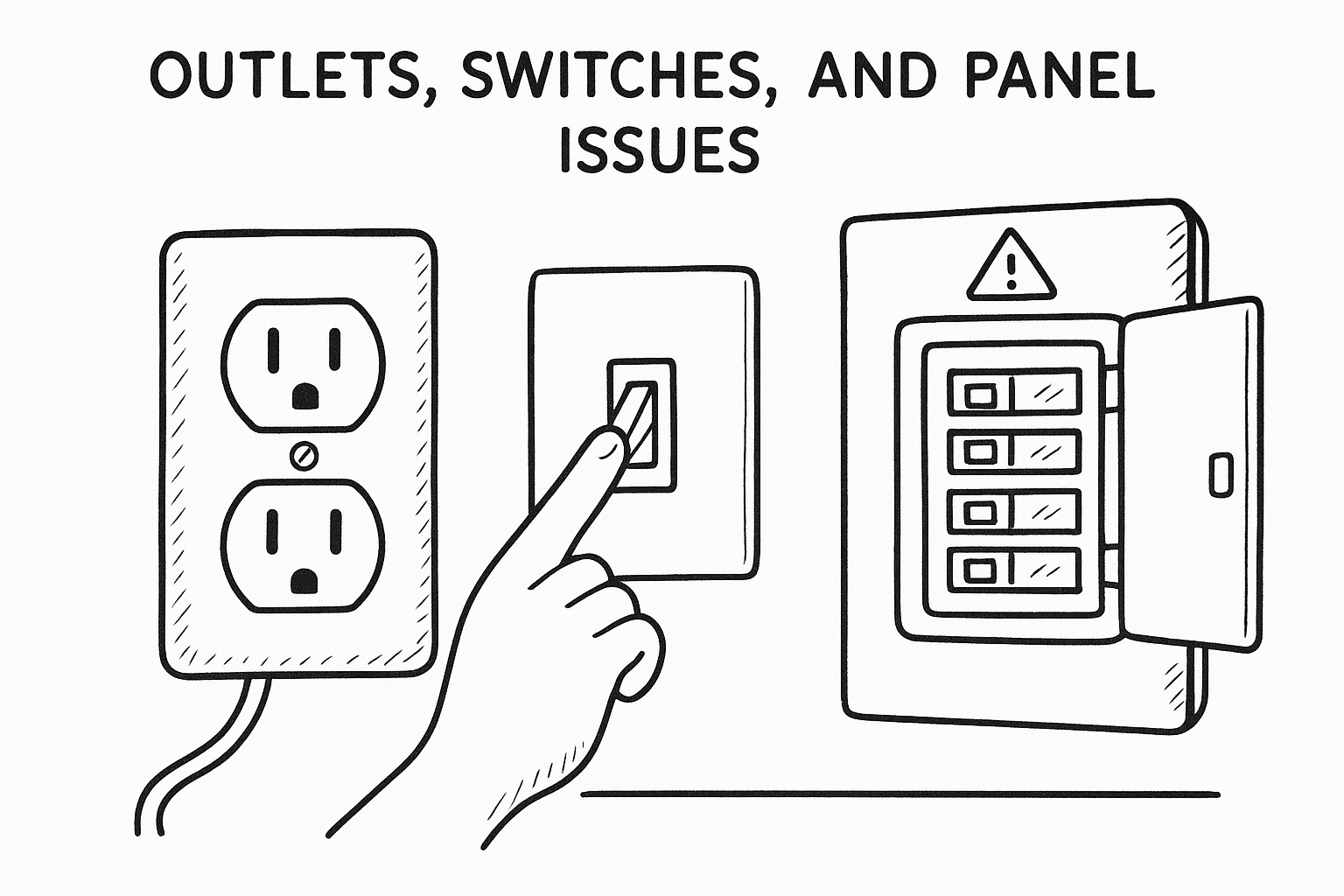
Panel-level problems show up as breakers that won’t reset, breakers that trip immediately under light load, and older fuse-based panels that simply can’t support the electrical demand of a modern home. Each of these panel symptoms points to a repair that goes beyond what a homeowner can safely handle without professional tools and licensing.
DIY vs professional repairs: what is safe
Part of understanding what is electrical repair means knowing where your role ends and where a licensed electrician’s begins. Some tasks are genuinely straightforward for a careful homeowner to handle. Others involve risks that go far beyond a bad outcome with a tool. The difference mostly comes down to whether you’re working on a device that can be fully isolated from power versus touching wiring or components that remain energized or connect directly to your panel.
What you can safely handle yourself
A handful of electrical tasks fall within reach for most homeowners who take basic precautions. These jobs are low-voltage or fully de-energizable before you touch anything, and they don’t require opening walls or interacting with your home’s wiring infrastructure.
Tasks that are generally safe for careful DIY:
- Replacing a light switch or outlet on a de-energized circuit you’ve confirmed off at the breaker with a non-contact voltage tester
- Swapping out a light fixture when the circuit is fully off
- Resetting a tripped GFCI outlet using the test and reset buttons on the face of the receptacle
- Replacing a light bulb, including fixtures with covers that require minor disassembly
Even on these tasks, always confirm the circuit is dead with a voltage tester before touching any wiring – flipping a breaker without verifying is not the same as confirming the power is off.
What requires a licensed electrician
Any work that involves your electrical panel, new circuit installation, or wiring inside walls moves into territory where unlicensed work creates serious legal, safety, and insurance exposure. In Arizona, work that goes beyond simple device swaps requires a licensed contractor by law, and homeowner insurance policies can deny claims for damage caused by unpermitted electrical work.
Call a licensed electrician for these situations:
- Breakers that trip repeatedly, won’t reset, or feel warm to the touch
- Any outlet or switch that sparks, smells like burning, or shows scorch marks
- Adding a new circuit for an appliance, EV charger, or home addition
- Panel replacements or upgrades, including adding breaker slots
- Wiring or rewiring during a remodel, regardless of how minor the renovation seems
Electrical repair costs in Phoenix and what drives them
When you’re trying to understand what is electrical repair from a budgeting perspective, the honest answer is that costs vary widely because the work itself varies widely. A simple outlet replacement runs far less than a panel upgrade, and a repair that requires opening walls costs more than one that stays accessible. Phoenix-area pricing follows national trends but stays competitive given the density of licensed contractors in the metro area, so you have leverage when you get multiple estimates.
Typical cost ranges for common repairs
Knowing general price ranges helps you recognize a fair estimate from an inflated one before any work begins. The table below covers the most common residential repairs we handle across Scottsdale, Mesa, Chandler, and surrounding areas.
| Repair Type | Typical Cost Range |
|---|---|
| Outlet or switch replacement | $75 – $200 |
| GFCI outlet installation | $100 – $250 |
| Circuit breaker replacement | $150 – $300 |
| Ceiling fan installation | $100 – $300 |
| Panel upgrade (100 to 200 amp) | $1,500 – $3,500 |
| New circuit installation | $300 – $800 |
| Whole-home rewire | $3,500 – $10,000+ |
These ranges assume standard access and no major code compliance issues – both factors that can shift the final number significantly.
What makes costs go up
Labor and material costs are the two primary cost drivers, but several other factors push final invoices higher than the base estimate. Permit fees apply to panel work and new circuit installations in most Phoenix-area jurisdictions, and those fees add to the project total. Homes built before 1980 often carry aluminum wiring or outdated panel configurations that require additional work to bring up to current code before a repair can proceed cleanly.
Access also affects cost directly. Wiring inside finished walls, attic spaces, or underground conduit runs takes longer to reach and repair than exposed wiring in a garage or utility room. Emergency calls outside business hours carry a premium as well, which is worth factoring into your decision on whether to call immediately or schedule the next available appointment.
When to call an electrician and what to expect
Knowing what is electrical repair at a practical level means recognizing the specific moments when a phone call beats any other option. Some symptoms are gradual and allow you to schedule a visit at your convenience. Others signal an active fault that puts your home or business at immediate risk, and those need same-day attention regardless of the time or day of the week.
Signs that cannot wait
Certain symptoms tell you the problem is already past the warning stage. A burning smell near any outlet, switch, or panel means something is overheating right now, not gradually. Sparking or visible scorch marks on electrical devices indicate arcing, which can ignite surrounding material quickly. Flickering lights across multiple rooms, a buzzing sound from your panel, or a breaker that trips immediately after you reset it all point to faults that compound the longer they run unaddressed.
If you smell burning or see scorch marks near any electrical component, shut off the circuit at the panel and call an electrician before using that circuit again.
Symptoms that warrant an urgent call, but not necessarily an emergency:
- Any outlet or switch that feels warm even when nothing is plugged in or switched on
- Breakers tripping on the same circuit more than once in a short window
- Lights dimming when large appliances cycle on, which signals a voltage drop issue
- Outlets that have stopped working without an obvious cause
What the service visit looks like
When your electrician arrives, the first thing they do is gather the full picture of your symptoms before touching any equipment. That conversation matters because the problem you noticed is often a downstream effect of something happening elsewhere in the circuit. A good technician asks about the history of the issue, what changed recently, and whether any other symptoms appeared at the same time.
After diagnosis, your electrician walks you through exactly what needs to be repaired and why, gives you the cost before work begins, and confirms the fix under load before closing out the job. At AZ DC Electric, that process applies to every call, whether it’s a single outlet replacement or a full panel upgrade across the Phoenix metro area.
Next steps
Understanding what is electrical repair gives you a clearer picture of your home’s needs and helps you make faster, smarter decisions when something goes wrong. Electrical problems don’t improve on their own, and the gap between a minor issue and a serious hazard closes faster than most homeowners expect.
If you noticed any of the symptoms covered in this article, the next step is straightforward: get a professional assessment before the problem grows. AZ DC Electric serves the entire Greater Phoenix Metro Area with licensed technicians, upfront pricing, and a 5-year workmanship guarantee on every job. There are no dispatch fees for most cities in the valley, and financing options are available for larger projects so cost doesn’t become a reason to delay a necessary repair.
Schedule your service visit or request a consultation directly through AZ DC Electric and get a clear answer on exactly what your system needs.