If you’ve ever installed new LED bulbs and noticed that colors in the room looked washed out or slightly off, the issue probably wasn’t the brightness, it was the CRI. Understanding what is CRI in LED lighting matters more than most people realize, especially when you’re choosing fixtures for your kitchen, bathroom, or workspace. A bulb with a poor CRI score can make a freshly painted wall look dull or skin tones appear unnatural, even if the light output and color temperature seem right.
CRI, or Color Rendering Index, measures how accurately a light source reveals the true colors of the objects it illuminates. It’s scored on a scale from 0 to 100, and the difference between an 80 CRI bulb and a 95 CRI bulb is something you’ll actually see and feel in your space. There’s also a specific metric called R9 that tracks how well a light renders saturated reds, a detail that matters more than you’d expect for residential and commercial applications alike.
At AZ DC Electric, we handle LED lighting installations across the Greater Phoenix Metro Area, from recessed lighting in kitchen remodels to full outdoor lighting setups. Our electricians help homeowners pick the right fixtures every day, and CRI is one of the first specs we discuss during consultations. This guide breaks down how CRI works, what ratings to look for, why R9 deserves your attention, and how to choose LED lighting that actually makes your home look its best.
Why CRI matters for LED lighting
LEDs changed home and commercial lighting dramatically, but they also introduced a new problem. Early LED bulbs were energy-efficient and long-lasting, but many produced light that made colors look flat, muddy, or artificial. CRI is the metric that explains exactly why. A bulb with a high CRI score produces light that closely mimics natural sunlight, so the colors around you look the way they actually are.
The real-world impact of low CRI
When you install a low-CRI bulb, the effects show up quickly in everyday tasks. Cooking in a kitchen lit by 70 CRI bulbs makes it harder to judge whether meat is fully cooked or whether produce looks fresh. In a bathroom, low CRI lighting distorts skin tones, which means what you see under those lights won’t match what you look like in natural daylight.
A CRI below 80 is generally considered poor for residential use because it visibly alters how colors appear throughout your home.
Your clothing, wall colors, artwork, and furniture all depend on accurate light to look their best. When the light source misrepresents color, it affects how you experience your own space every day.
Why LED-specific CRI matters
Not all light sources perform the same way, and understanding what is CRI in LED lighting specifically helps you make better buying decisions. Incandescent bulbs naturally score close to 100 CRI, but LEDs are engineered products, and CRI can vary significantly between manufacturers and product lines. Two bulbs with identical wattage and color temperature can produce noticeably different results based on CRI alone.
Paying attention to CRI also protects your investment in other ways. If you spend money on quality paint, countertops, or tile, low-CRI lighting undermines that investment by making those materials look cheaper than they are. Getting CRI right from the start saves you from replacing fixtures later.
How CRI is measured and what the numbers mean
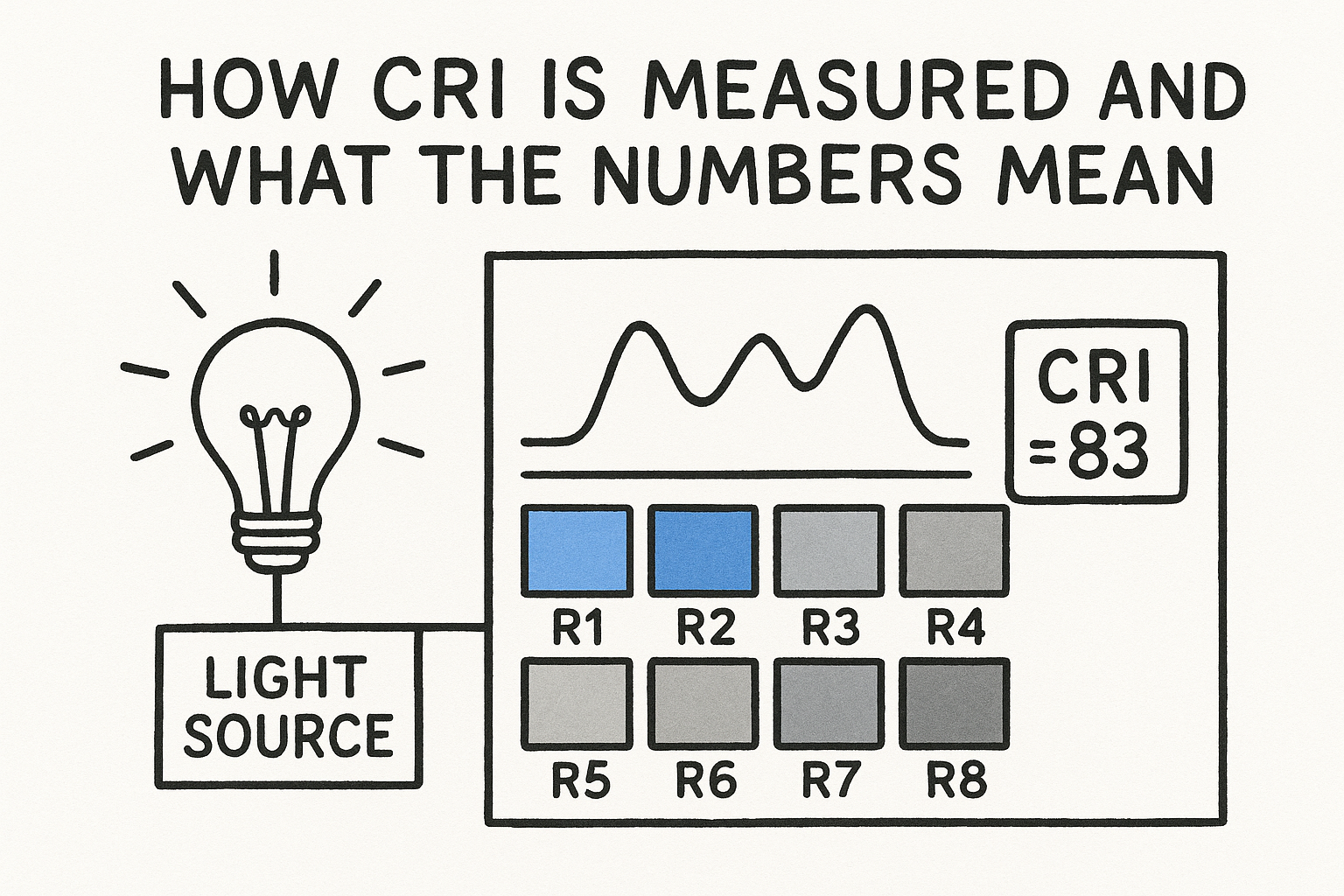
CRI is calculated by testing a light source against eight standardized color samples, labeled R1 through R8. Each sample represents a different color family, and the test scores how well the light renders each one compared to a reference source like natural daylight. The final CRI score is the average of all eight results, which is why it’s sometimes called Ra (average rendering index).
What the numbers actually tell you
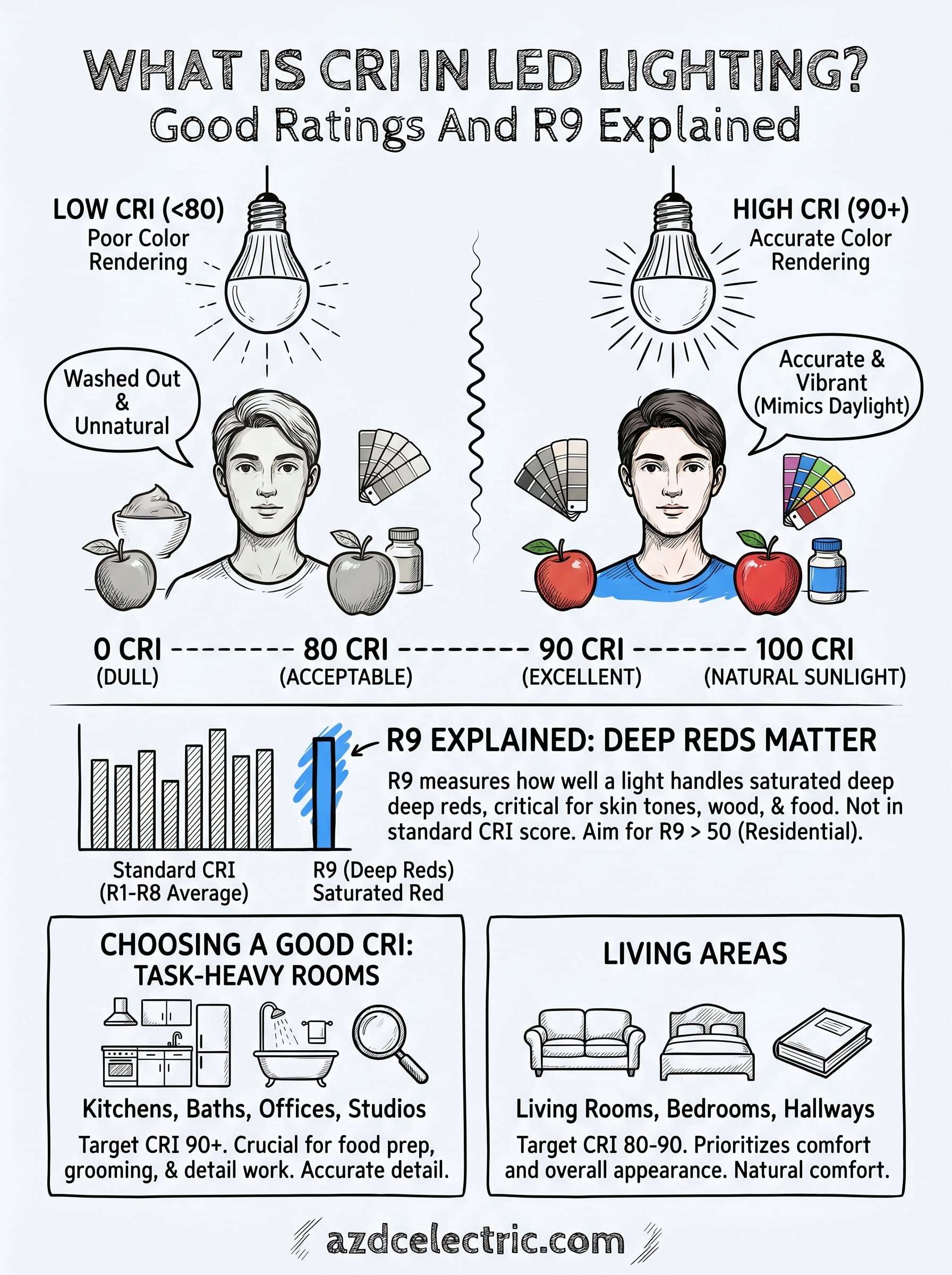
A score of 100 means the light renders colors identically to natural daylight. Scores between 90 and 100 fall in the high-CRI range and produce noticeably accurate, vibrant colors. Scores between 80 and 89 are acceptable for general residential use, while anything below 80 tends to make colors appear dull or incorrect in ways most people notice quickly.
Understanding what is CRI in LED lighting means recognizing that a single number summarizes how a bulb handles an entire range of colors, which is why that number carries real weight when you’re selecting fixtures.
Scores in the 70s or lower appear most often in commercial or industrial settings where color accuracy matters far less than raw efficiency and operating cost. For most homes, those scores simply aren’t good enough.
How to choose a good CRI for each space
The right CRI depends on what you do in a room and how much color accuracy matters there. Understanding what is CRI in LED lighting helps you match the right bulb to each space rather than guessing. As a general rule, the more detail-oriented the task, the higher the CRI you need.
Task-heavy rooms
Kitchens, bathrooms, and home offices require the most accurate light you can get. In these spaces, CRI 90 or higher lets you evaluate food, check your appearance, or read printed materials under light that closely matches daylight. Settling for CRI 80 in a kitchen often looks fine on paper but noticeably shifts how surfaces actually appear.
For task-heavy areas where color accuracy directly affects your decisions, CRI 95 or higher gives you the best results.
Living rooms and bedrooms
These spaces prioritize comfort over precision, so CRI 80 to 90 works well for most homeowners. You still want accurate color rendering to make furniture and wall colors look their best, but you don’t need the same level of detail as a bathroom or kitchen. Choosing CRI 80+ keeps costs reasonable while still delivering a quality result.
What R9 means and why it matters
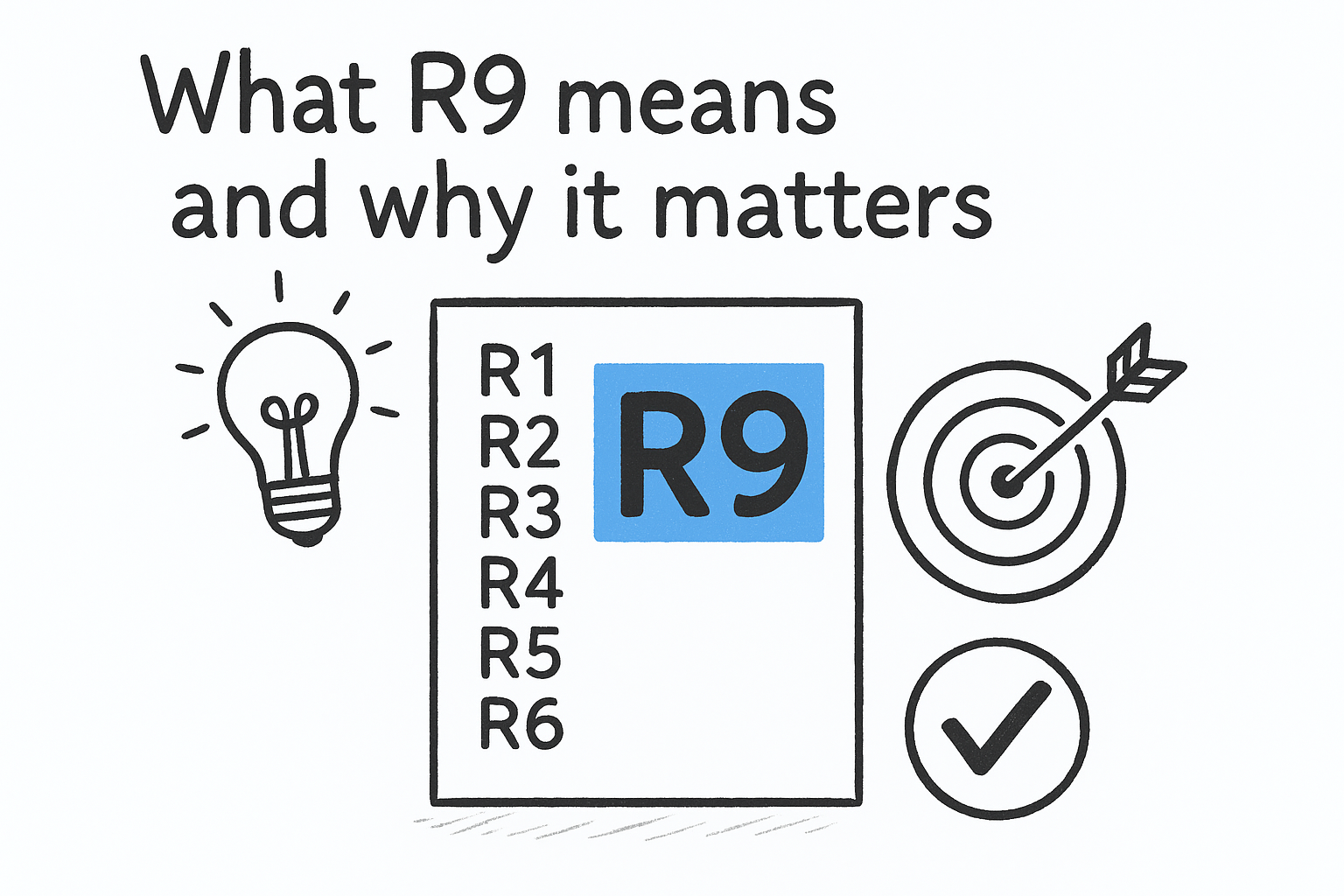
R9 is an extended color rendering score that measures how well a light source handles saturated deep reds. It sits outside the standard R1 through R8 range used to calculate a bulb’s CRI score, so a fixture can carry a CRI of 90 and still render reds inaccurately. Most manufacturers don’t list R9 on packaging, which makes it easy to miss entirely.
When you examine what is CRI in LED lighting closely, R9 explains why certain rooms feel slightly off despite a high overall CRI rating.
Why reds matter more than you think
Red tones appear in skin tones, wood cabinetry, warm paint colors, and fresh food, making low R9 a visible problem in kitchens and bathrooms especially. A bulb with a weak R9 value makes these surfaces look washed out or dull, even when the headline CRI number looks solid on paper.
What R9 score to target
For most residential lighting, aim for an R9 score above 50 as a minimum. Premium LED products regularly achieve R9 values above 90, which delivers accurate, vibrant results wherever color quality matters to you.
You can find R9 values in product spec sheets or on the manufacturer’s website, even when the packaging skips them. Checking this number alongside CRI before you buy helps you avoid fixtures that look fine in the store but fall short in your actual space.
Common CRI questions and buying pitfalls
When people start researching what is CRI in LED lighting, a few questions come up repeatedly. The most common one is whether a higher CRI always means a better bulb overall. The short answer is no. CRI measures color accuracy, but it doesn’t account for color temperature, lumen output, or fixture quality. A bulb can score 95 CRI and still produce light that feels too cool or too dim for your space.
Does a higher CRI always cost more?
Premium CRI bulbs do tend to carry a slightly higher price tag, but the gap has narrowed as LED technology has improved. You can find CRI 90+ options at reasonable price points from reputable manufacturers without overspending on standard fixtures.
Spending a little more on high-CRI bulbs upfront saves you the frustration of replacing fixtures that don’t perform the way you expected.
Buying pitfalls to watch out for
Packaging rarely lists R9, and CRI itself is sometimes buried in the fine print or missing entirely from the box. Always check the product spec sheet before purchasing, especially for task-heavy rooms like kitchens or bathrooms. Relying on wattage and lumens alone without checking CRI is one of the most common mistakes homeowners make when upgrading their lighting.
Quick recap and next steps
Understanding what is CRI in LED lighting gives you a real advantage when selecting fixtures for your home. CRI measures how accurately a light source renders colors compared to natural daylight, with scores above 90 delivering the best results for kitchens, bathrooms, and any space where color detail matters. For general living areas, CRI 80 or higher keeps colors looking natural without overspending on every single fixture.
Remember to check R9 alongside the headline CRI score before you buy, especially for rooms with warm finishes, wood cabinetry, or spaces where you regularly evaluate skin tones. Packaging often skips R9 entirely, so pulling up the product spec sheet saves you from installing a fixture that looks solid on paper but falls short in your actual space.
If you’re planning a lighting upgrade anywhere in the Greater Phoenix area, the team at AZ DC Electric can help you select and install the right fixtures from the start.