Your lights flicker, a breaker trips, or you smell something faintly electrical near an outlet, and you’re left wondering what’s actually happening inside your walls. Figuring out what causes power surges in a house matters because the wrong guess can leave your electronics, appliances, and even your home at risk. Some surges are quick nuisances that barely register, while others carry enough voltage to fry a refrigerator’s control board or spark a fire hazard behind drywall.
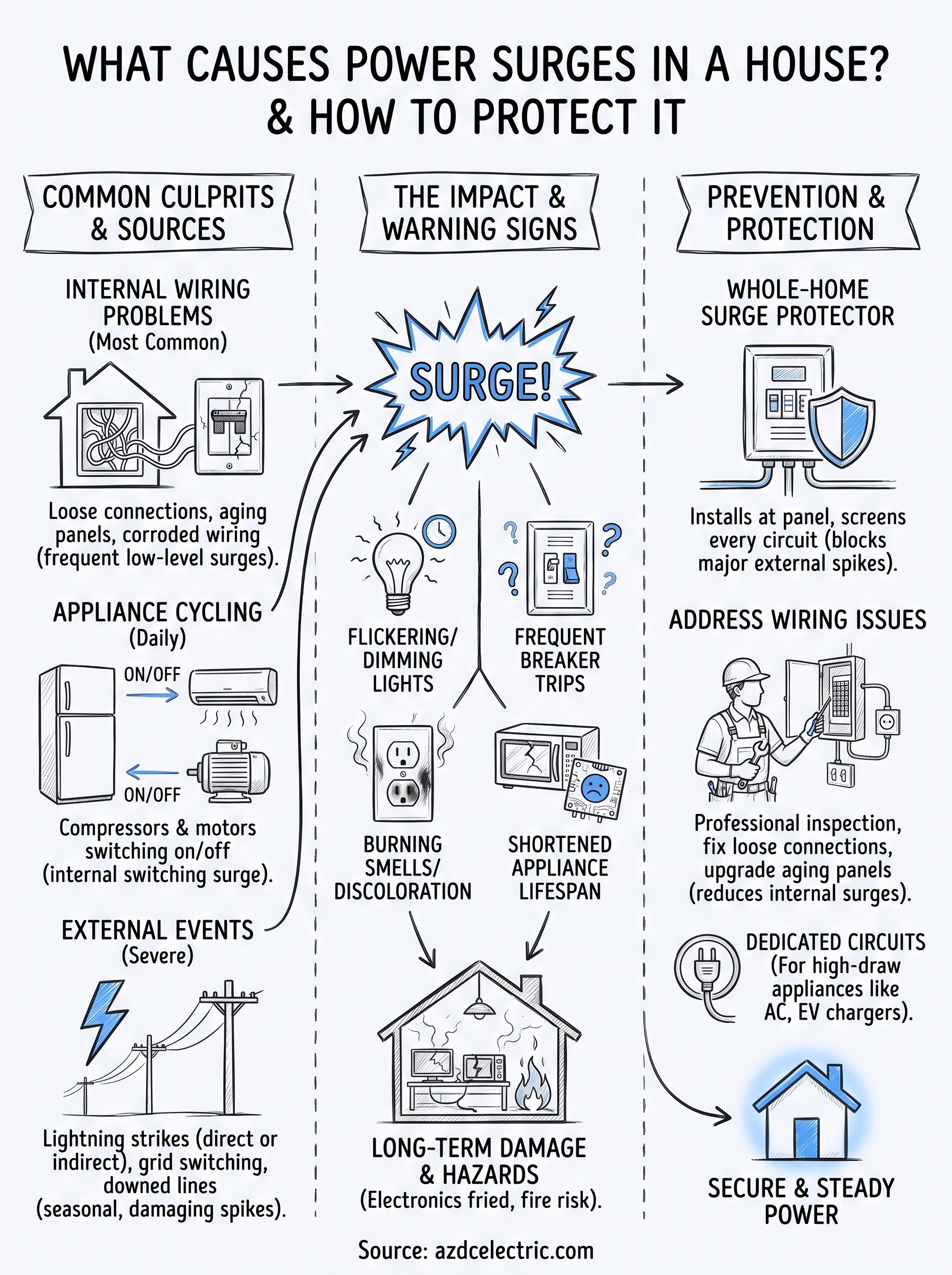
Most residential surges trace back to one of three sources: internal wiring problems, appliances cycling on and off, or outside events like lightning strikes and utility grid switching. A loose neutral connection, an aging panel, or a faulty breaker can generate repeated small surges that quietly damage equipment over months. Understanding the difference between a minor voltage spike and a dangerous surge is the first step toward protecting your home.
In this article, we’ll walk through the most common culprits behind house power surges, from overloaded circuits to lightning-induced spikes, and explain how a licensed electrician diagnoses each one. We’ll also cover practical prevention steps, including whole-home surge protection and panel inspections, so you know when a flickering light is a nuisance and when it signals a real electrical hazard worth calling a professional about.
Why power surges can be more than a minor annoyance
A power surge lasting a fraction of a second can still push voltage far beyond what your outlets are rated to handle. Standard household circuits run on 120 volts, but a surge can spike that number into the thousands for a brief instant, long enough to damage sensitive electronics, shorten the lifespan of appliance motors, and in rare cases start an electrical fire behind your walls. Repeated small surges do the most damage over time because they weaken insulation and solder joints without tripping a breaker or catching your attention.
Internal wiring problems are the most common trigger
Most surges in a typical Phoenix-area home come from inside the house, not from lightning or the utility grid. A loose neutral connection, corroded wiring, or an aging electrical panel can create small voltage imbalances every time a large appliance kicks on. Faulty breakers and worn-out outlets add to the problem, especially in homes built before 1990 that haven’t had a panel upgrade. These internal issues rarely cause a dramatic surge, but they generate frequent, low-level spikes that add up in ways most homeowners never notice until a device fails for no obvious reason.
Small, repeated surges from old wiring cause more long-term appliance damage than the rare lightning strike ever will.
Appliances and motors create their own surges
Every time a compressor, motor, or heating element switches on, it draws a burst of current well above its normal operating load. Refrigerators, air conditioners, well pumps, and pool equipment are the usual suspects, since they all cycle on and off throughout the day. This is called an internal switching surge, and it’s a normal part of how these appliances work. The problem shows up when several high-draw appliances share a circuit or when the wiring feeding them is undersized for the load, forcing the whole circuit to absorb repeated jolts.
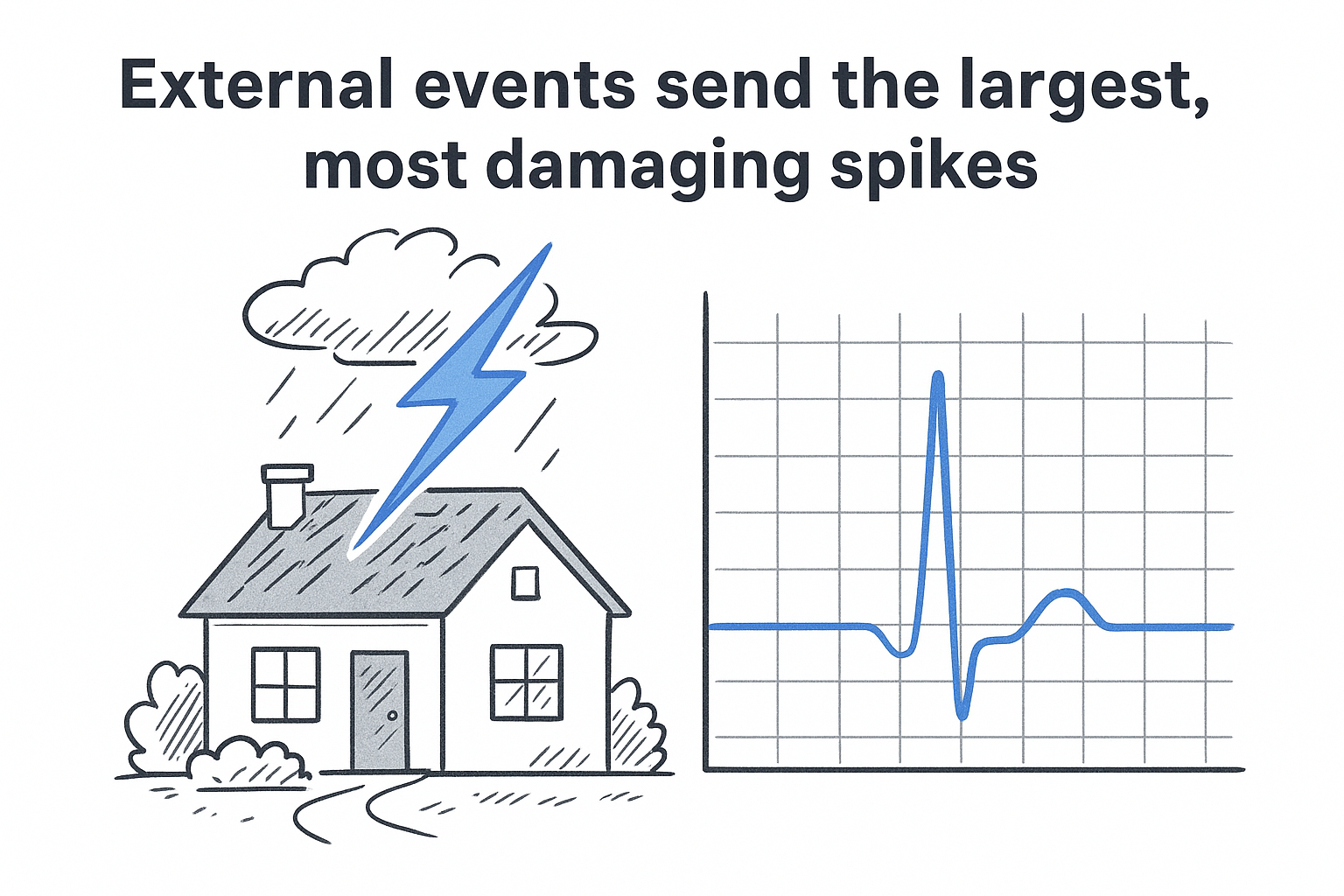
External events send the largest, most damaging spikes
Lightning strikes get most of the attention, but a direct hit to your house is actually rare. Far more common are surges caused by utility grid switching, downed power lines, or nearby lightning that induces a spike through the grid itself. Arizona’s summer monsoon season brings a sharp rise in these events every year, which is worth keeping in mind if your home doesn’t have surge protection installed at the panel. The table below breaks down how these sources typically compare in severity and frequency.
| Surge Source | Typical Cause | Frequency | Relative Severity |
|---|---|---|---|
| Internal wiring | Loose connections, aging panels | Frequent, low-level | Low to moderate |
| Appliance cycling | Motors and compressors switching on | Daily | Low |
| Utility grid switching | Load balancing, line repairs | Occasional | Moderate |
| Lightning (indirect) | Nearby strikes inducing voltage | Seasonal (monsoon) | High |
| Lightning (direct) | Strike to home or service line | Rare | Severe |
Understanding which category your home is dealing with matters because the fix looks different depending on the source. Wiring-related surges call for an electrician’s inspection of your panel and connections, while grid and weather-related surges call for a surge protection device installed where power enters your home. Guessing at the cause and hoping it resolves itself is how a minor flicker turns into a burned-out HVAC control board six months later.
How to prevent power surges in your home
You can’t stop every surge, but you can control how much damage one does when it happens. Most prevention strategies fall into two categories: fixing what’s already weak inside your walls, and blocking spikes before they reach your outlets. Skipping either half leaves a gap that a determined surge will eventually find.
Start with a whole-home surge protector
Plugging a surge strip into your TV outlet only protects that one device. A whole-home surge protector installs at your electrical panel and screens every circuit in the house at once, catching spikes before they ever reach your refrigerator, HVAC system, or home network equipment. This single upgrade handles the grid-switching and monsoon-related surges we covered in the table above, and it’s the fix most Scottsdale and Phoenix homeowners skip until after they’ve already replaced a fried appliance.
One whole-home surge protector at the panel does more work than a dozen plug-in strips scattered around the house.
Address the wiring issues causing internal surges
Surge protection at the panel won’t fix a loose neutral connection or a corroded breaker generating small surges from inside your walls. Aging panels need a professional inspection, especially in homes built before 1990 that have never had an upgrade. Have an electrician check for:
- Loose or corroded connections at the panel and outlets
- Breakers that feel warm to the touch or trip without an obvious cause
- Undersized wiring feeding high-draw appliances like AC units or pool equipment
- Signs of scorching or discoloration around outlets and switches
Rethink how appliances share your circuits
If your refrigerator, microwave, and window AC unit all run off the same circuit, every startup cycle sends a jolt through shared wiring. Dedicated circuits for major appliances reduce the frequency of these internal switching surges and lower the strain on your panel overall. This matters even more for pool pumps, spa equipment, and EV chargers, which draw heavy current and benefit from their own properly sized circuit rather than sharing space with everyday household loads.
Schedule regular electrical inspections
Many surge sources hide behind walls where you’d never spot them without testing equipment. A licensed electrician can measure voltage fluctuations, check for grounding problems, and catch a failing breaker before it damages anything. Annual inspections cost far less than replacing a smart refrigerator or an HVAC control board, and they catch the slow-building problems that plug-in surge protectors were never designed to handle in the first place.
Warning signs your home is dealing with power surges
Most homeowners don’t catch a surge in the act. Instead, they notice the aftermath: a device that stopped working, a light that dims for no reason, or a breaker that trips more often than it used to. Learning to spot these clues early helps you catch wiring problems before they turn into a bigger repair bill or a genuine fire hazard.
Flickering or dimming lights
Lights that flicker or dim when the AC kicks on, or when you run the microwave and dishwasher at the same time, point to a circuit that’s struggling under the load. Occasional flickering during a storm is normal, but if it happens on a clear day every time a major appliance starts up, you’re likely looking at undersized wiring or a loose connection somewhere in the circuit. This pattern often shows up years before a full appliance failure, which makes it one of the easiest early warnings to catch.
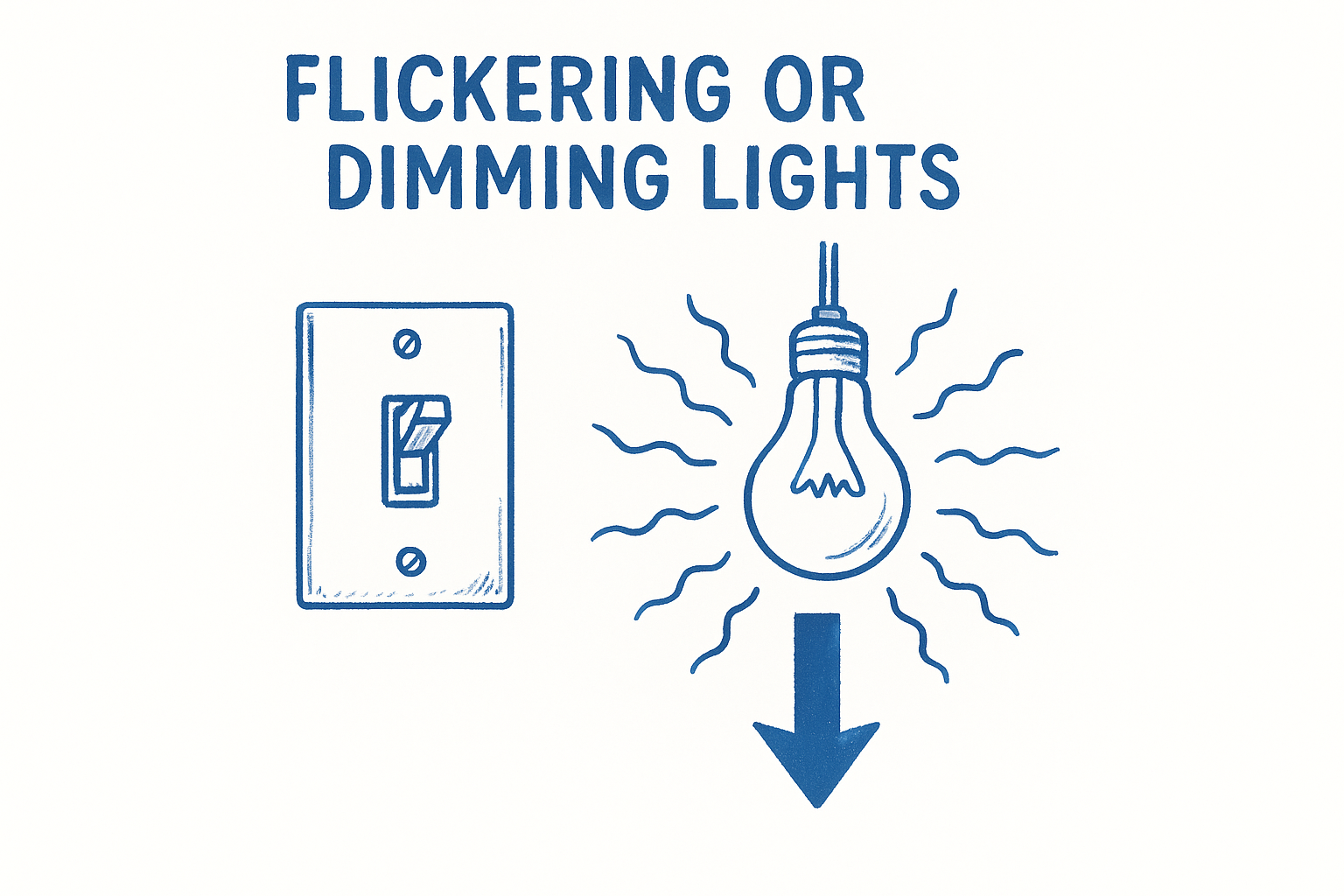
If your lights dim every time the AC kicks on, your wiring is already telling you something’s wrong.
Frequent breaker trips
A breaker trips to protect your home, so one trip now and then isn’t alarming. What matters is frequency. If the same breaker trips several times a week, or several breakers trip in the same week, your panel is absorbing more surges than it can handle cleanly. Repeated tripping without an obvious cause, like running a space heater or hair dryer, usually means the breaker itself is failing or the circuit behind it has a wiring fault.
Burning smells or discoloration
A faint burning smell near an outlet, a switch plate that feels warm, or scorch marks around a receptacle are not minor cosmetic issues. These signs mean heat has already built up from repeated small surges, and they warrant an immediate call to an electrician rather than a wait-and-see approach. Ignoring scorched outlets is one of the more common ways a slow electrical problem turns into an actual house fire.
Shortened appliance lifespans
If you’ve replaced a microwave, garage door opener, or smart thermostat more than once in a few years, surges may be the real culprit rather than bad luck with cheap electronics. Watch for:
- Electronics that reset or lose settings without a power outage
- Appliance control boards failing well before their expected lifespan
- Chargers or power adapters that get unusually hot or fail early
- Smart home devices that disconnect from the network repeatedly
These patterns rarely have a single obvious moment you can point to, which is exactly why they get overlooked until the damage adds up.
What to do right after a power surge hits
A surge doesn’t announce itself with a countdown, but the minutes right after one hit still matter. What you do in that window can mean the difference between a scare and a repeat of the same damage next month. Immediate action after a surge protects both your electronics and the wiring behind your walls, so don’t shrug it off just because the lights came back on.
Check your breaker panel first
Go straight to your electrical panel and look for any tripped breakers. A tripped breaker after a surge is actually a good sign, since it means the panel did its job and cut power before the spike reached your circuits. Reset it once, but if it trips again immediately, leave it off and call an electrician rather than resetting it repeatedly. Repeated resets on a breaker that keeps tripping can mask a wiring fault that needs a professional look, not a quick fix.
A breaker that trips once did its job. A breaker that trips twice is trying to tell you something.
Unplug sensitive electronics before power stabilizes
If the surge was strong enough to trip a breaker or dim your lights hard, unplug computers, TVs, and any smart home hubs before you flip anything back on. Power sometimes fluctuates for a few minutes after a surge event, especially during monsoon season when utility crews are actively switching loads to reroute power. Waiting ten minutes before reconnecting sensitive electronics costs you nothing and avoids exposing them to a second spike while the grid settles.
Inspect appliances for damage or unusual behavior
Walk through your home and check on major appliances, especially anything with a digital control board like your refrigerator, washer, or HVAC thermostat. Look for:
- Blank or frozen displays that won’t reset
- Unusual noises when the appliance powers back on
- A burning smell coming from any outlet or device
- Circuit breakers that feel warm even after resetting
Any of these warrant unplugging the device and calling a professional before you use it again.
Document the surge if it’s part of a pattern
If this isn’t your first surge in recent months, write down the date, what appliances were running, and what happened. This pattern becomes useful information for an electrician diagnosing recurring wiring issues, since it points them toward which circuits to inspect first. A single surge might be bad luck, but three in a season is a sign your home needs a proper electrical inspection rather than another wait-and-see approach.
Keeping your home’s power steady
Most power surges trace back to something you can actually fix: a loose connection, an overloaded circuit, or a panel that’s overdue for an inspection. Lightning and grid switching grab the headlines, but the slow, repeated surges happening inside your walls do the real long-term damage to your appliances and wiring. Catching the warning signs early, flickering lights, frequent breaker trips, warm outlets, saves you from a bigger repair bill down the road.
Guessing at the cause rarely works out. A licensed electrician can pinpoint whether you’re dealing with aging wiring, an undersized circuit, or a genuine need for whole-home surge protection at your panel. If your home in the Phoenix Metro Area has shown any of the signs covered above, don’t wait for the next surge to confirm your suspicion. Schedule an electrical inspection with AZ DC Electric and get a straight answer, backed by upfront pricing and a 5-year workmanship guarantee.