A single lightning strike or utility grid fluctuation can push thousands of volts through your home’s wiring in a fraction of a second. If you’re researching type 1 vs type 2 surge protector options, you’re already thinking about the right layer of defense, but picking the wrong one (or installing it in the wrong spot) can leave expensive equipment and appliances exposed.
The core difference comes down to where each device sits in your electrical system and what kind of surge it’s built to stop. Type 1 units mount upstream of the main breaker and absorb direct external hits, while Type 2 units install at the main panel or subpanel to catch internal surges and residual energy that gets past the first line. Both serve distinct roles, and many homes benefit from having both.
At AZ DC Electric, we install and upgrade surge protection across the Greater Phoenix Metro Area as part of our residential electrical services. This guide breaks down the technical differences between Type 1 and Type 2 surge protective devices, where each one belongs in your system, and how to figure out which setup your home actually needs.
Why type 1 and type 2 SPDs matter
Surge protection isn’t a single device you plug in and forget. Modern homes carry thousands of dollars worth of electronics, smart appliances, and HVAC equipment, all of which are vulnerable to voltage spikes. Understanding the type 1 vs type 2 surge protector distinction matters because the wrong device in the wrong location leaves real gaps in your protection, even if you’ve already spent money on surge suppression products.
The real cost of an unprotected system
A voltage spike doesn’t have to come from a dramatic lightning strike to cause damage. Utility switching events, transformer faults, and large appliances cycling on and off inside your home generate surges that degrade sensitive components over time. That slow, cumulative damage is often invisible until something stops working entirely, and by then the repair bill is already waiting.
Most appliance and electronics warranties do not cover surge-related damage, which means you absorb the full replacement cost out of pocket.
The financial exposure adds up fast. A single unprotected surge event can destroy a refrigerator compressor, an HVAC control board, or a home theater system in milliseconds. Replacing that equipment costs far more than a correctly specified surge protection setup at both the service entrance and the panel level. Getting the device type right from the start is the most cost-effective move you can make.
What makes surge protection a layered problem
Your electrical system has two distinct exposure points, and each one requires a specific type of device. External surges travel through the utility line and arrive at the service entrance before they reach your main breaker. Type 1 devices are engineered to absorb and divert that high-energy threat right at that entry point, stopping the bulk of the surge before it reaches your home’s internal wiring.
Internal surges originate inside the home from motors, compressors, and switching loads like air conditioners and dishwashers. These surges travel backward through your wiring and can reach every outlet and hardwired appliance on the same circuit. Type 2 devices, installed at the main panel or a subpanel, catch and redirect that energy safely to ground. Relying on only one layer means you’re covered against half the problem at best.
Type 1 vs type 2 at a glance
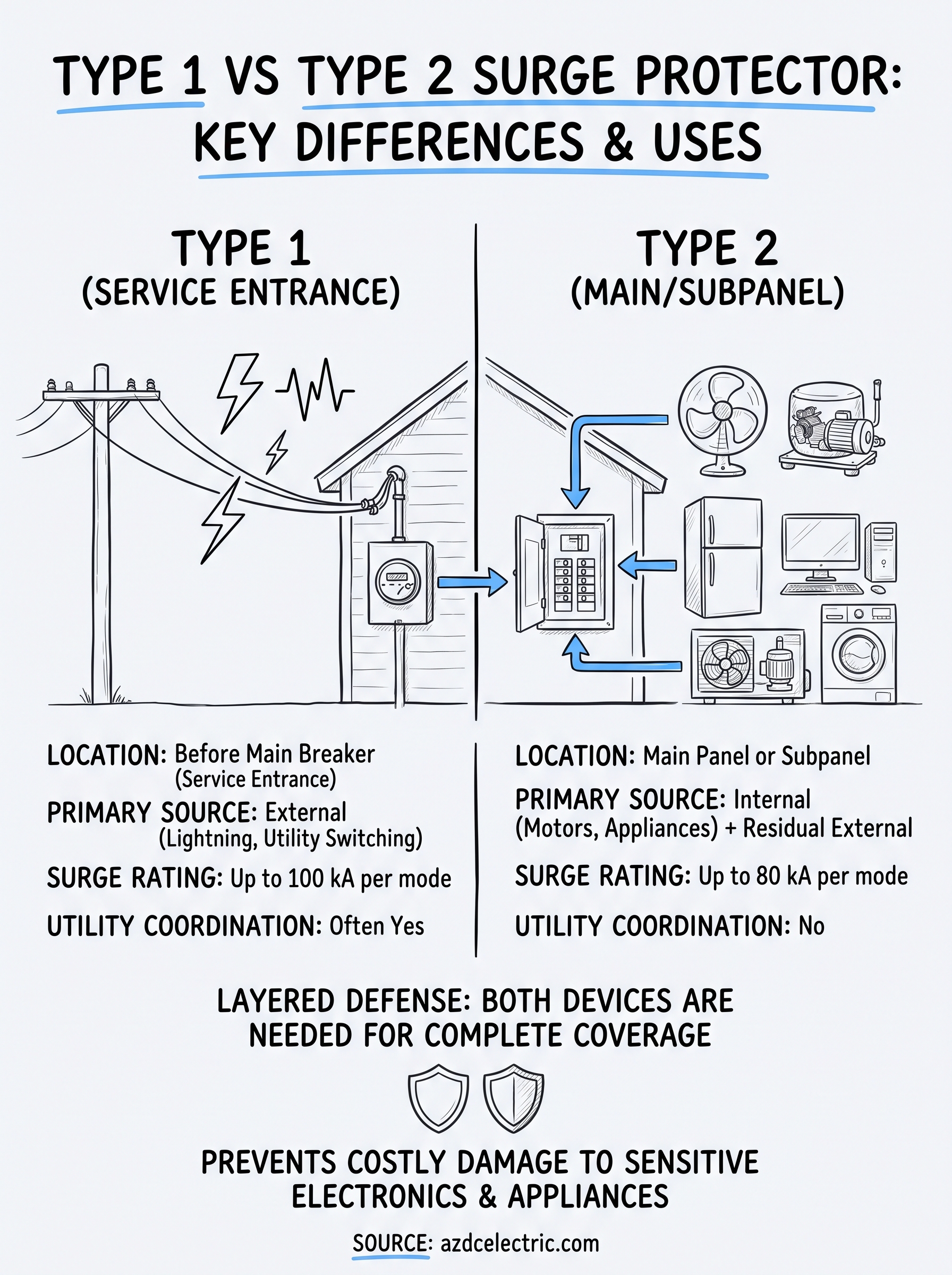
The fastest way to understand the type 1 vs type 2 surge protector comparison is to look at where each device installs and what it’s rated to handle. Type 1 SPDs mount before your main breaker, at the utility service entrance, and are built for high-energy surges that travel in from outside through the power line. Type 2 devices mount at the main distribution panel or subpanel and handle lower-energy surges, including those that originate inside the home or pass through after a Type 1 unit has already absorbed the peak of an external hit.
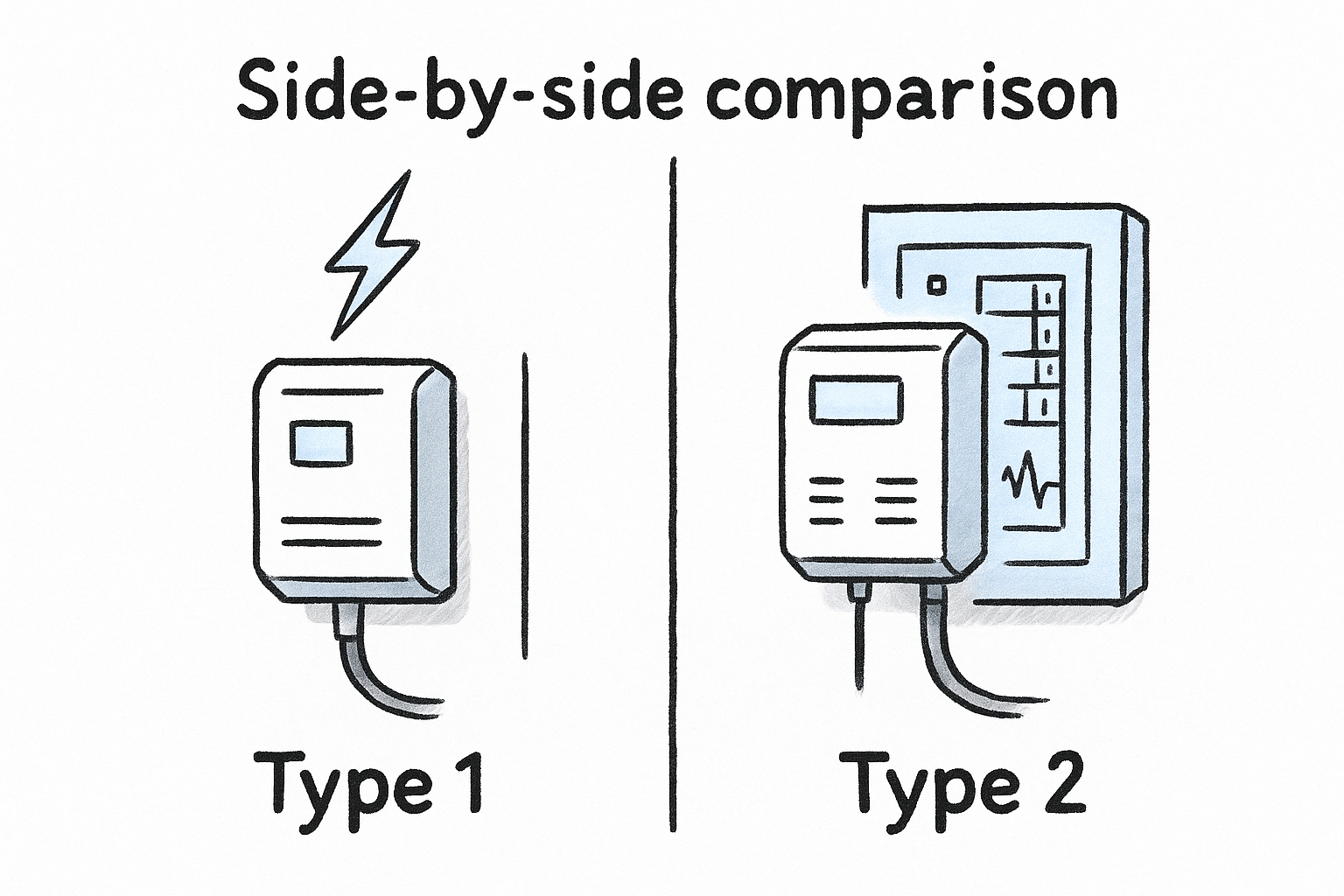
Side-by-side comparison
Before you choose between these two options, knowing the core specs helps you match the right device to the right location in your electrical system and avoid protection gaps. Each row in the table below reflects a real installation or performance difference that affects what the device can and cannot stop.
| Feature | Type 1 | Type 2 |
|---|---|---|
| Installation location | Before the main breaker (service entrance) | Main panel or subpanel |
| Primary surge source | External (lightning, utility switching) | Internal (motors, appliances) + residual external |
| Surge current rating | Up to 100 kA per mode | Up to 80 kA per mode |
| Requires utility or contractor coordination | Often yes | No |
| Can operate without the other type | Yes, but with coverage gaps | Yes, but with coverage gaps |
Running only a Type 2 device without a Type 1 at the service entrance leaves your home exposed to the full force of external surges.
Neither device replaces the other. Both types working together give your electrical system the layered coverage that no single device can deliver on its own.
How to choose the right type for your home
Choosing between Type 1 and Type 2 comes down to your home’s service entrance setup and your local surge risk profile. Homes with overhead utility lines face real external surge threats from lightning and utility switching events, which demand a device at the service entrance. Homes with underground feeds still need protection from internal surges, making a Type 2 at the main panel the standard starting point.
When you need both types
Most single-family homes benefit from layering both device types, and this is where the type 1 vs type 2 surge protector comparison becomes most practical. The Type 1 at the service entrance absorbs the peak energy from external hits, while the Type 2 at the panel handles residual energy and any surges your appliances generate internally. Consider both if your home matches these situations:
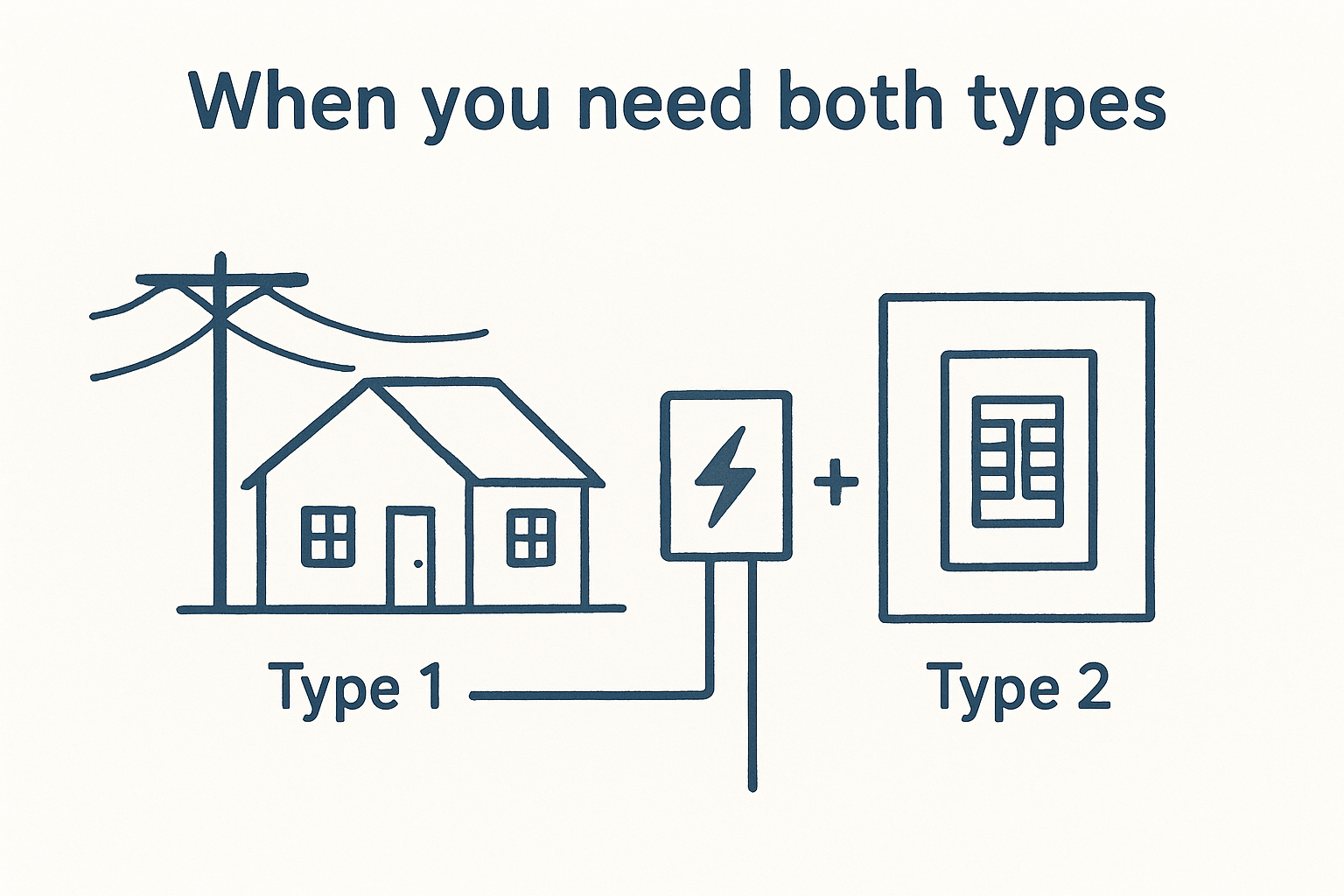
- You have overhead utility service running to your meter
- You live in an area with frequent thunderstorms or grid fluctuations
- You run large motor loads like HVAC systems, pool pumps, or well pumps
If you’re unsure whether your service entrance already includes a Type 1 device, have a licensed electrician inspect the meter socket before purchasing additional equipment.
When a Type 2 alone may be sufficient
If your utility feed runs underground and your area sees minimal lightning activity, a properly rated Type 2 at the main panel covers your most common surge risks. You still get solid protection against internal switching surges, and the installation stays straightforward since it mounts directly inside your existing panel.
Your electrician can also confirm whether your panel has available breaker space for a Type 2 module or whether a dedicated mounting bracket is needed, which shapes the total cost before any work begins.
Key ratings and code terms to understand
When you shop for surge protection, you’ll encounter technical labels that directly affect whether a device matches your installation needs. Knowing these terms helps you read product specs accurately and confirm that the device you choose covers your home’s actual voltage and current exposure levels.
kA ratings and what they measure
The surge current rating, expressed in kiloamperes (kA), tells you how much electrical energy a device can absorb in a single surge event. A higher kA rating means the device handles larger spikes before it reaches its limits. In the type 1 vs type 2 surge protector comparison, Type 1 devices typically carry ratings up to 100 kA per mode, while Type 2 devices run up to 80 kA per mode. Choosing a device rated below your actual exposure level shortens its lifespan and reduces protection after the first major surge.
When reviewing specs, focus on these three kA-related numbers:
- Per-mode rating: the surge current each conductor pair handles
- Per-phase rating: total capacity across each line
- Clamping voltage (VPR): the voltage level at which the device begins redirecting energy to ground
NEC and UL standards to know
The National Electrical Code (NEC) Section 230.67 requires surge protection at the service entrance of new residential construction, which directly references Type 1 placement requirements. Beyond the NEC, look for UL 1449 listing on any device you purchase, since that certification confirms the product passed standardized surge testing protocols.
A UL 1449 listing is the minimum verification you should require before any SPD goes into your panel or service entrance.
Devices without that listing have not passed independent safety testing, which creates real liability and protection gaps in your system regardless of what the packaging claims.
Installation and safety considerations
Both Type 1 and Type 2 devices require a licensed electrician for installation, and this is not a safe DIY project for most homeowners. Working at the service entrance or inside the main panel puts you in direct contact with conductors that remain live even when your main breaker is off, and a mistake at either point creates serious shock and fire hazard.
Type 1 installation requirements
Installing a Type 1 unit at the service entrance typically requires coordination with your utility company, because the meter socket needs to be pulled before the electrician can access the mounting point. Your electrician then positions the device between the utility feed and the main breaker, so it intercepts surges before they reach any of your home’s internal wiring.
Many jurisdictions also require a permit for service entrance modifications, so confirm with your local authority before scheduling the work.
Skipping the permit on a service entrance installation can void your homeowner’s insurance coverage if surge damage occurs later.
Type 2 installation requirements
In the type 1 vs type 2 surge protector comparison, Type 2 units involve a much simpler installation process. Your electrician connects the device directly inside the main panel or subpanel without needing to contact the utility. Before purchasing a unit, confirm your panel can support it by checking these points:
- Available breaker slots (most Type 2 modules need two)
- Panel amperage rating matches the SPD specification
- External bracket options if your panel has no open slots
Quick recap and what to do next
The type 1 vs type 2 surge protector distinction comes down to location and surge source. Type 1 devices belong at the service entrance to intercept external hits from lightning and utility switching events before they reach your wiring, while Type 2 units mount inside your main panel to handle internal surges and any residual energy that gets through. Running both layers gives your home complete, redundant coverage that neither device can deliver on its own.
Your next step is simple: have a licensed electrician inspect your current setup and confirm what protection you already have in place. If your service entrance lacks a Type 1 device or your main panel has no surge module installed, those are gaps worth closing before the next monsoon season hits the Phoenix valley. AZ DC Electric handles both installation types across the Greater Phoenix Metro Area with upfront pricing and no call-out fees. Request a surge protection consultation and get a clear answer on what your home needs.