When the power goes out in Phoenix, you don’t just lose lights, you lose air conditioning in 110-degree heat, and that’s when most homeowners start typing transfer switch installation near me into Google. A transfer switch is what lets your generator power your house safely, without backfeeding electricity into the grid and putting utility crews at risk. If you’re planning to buy a generator or already have one sitting in the garage, you need this piece before it does you any good.
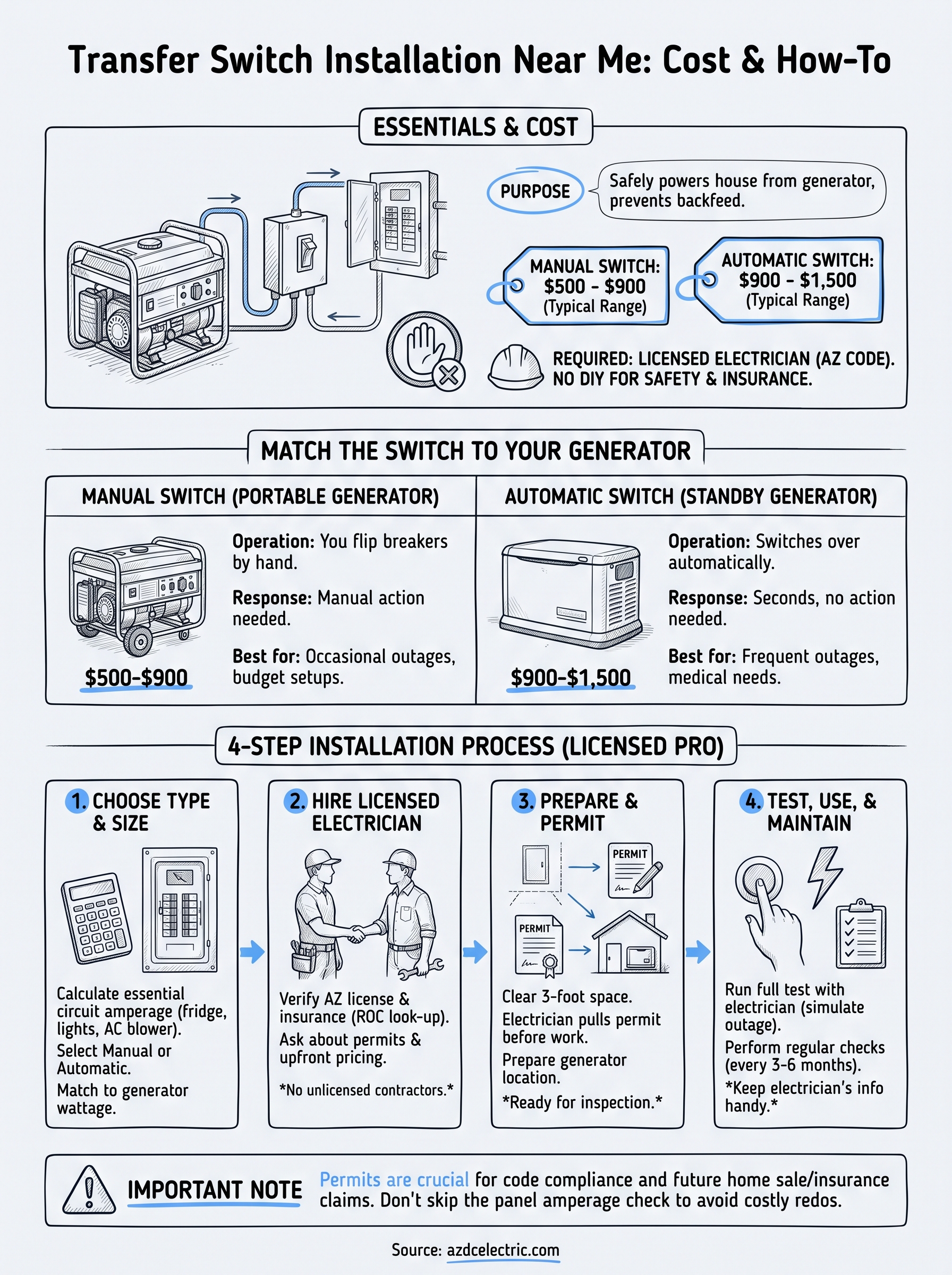
This guide answers the two questions everyone asks first: how much does it cost, and can you install it yourself. Costs typically run from $500 to $1,500 depending on switch type and panel size, and yes, Arizona code requires a licensed electrician for the job, both for safety and to keep your homeowner’s insurance valid.
Below, we walk through manual and automatic transfer switches, what drives the price up or down, and the installation steps a licensed pro follows. AZ DC Electric handles this work across the Phoenix Metro area with upfront pricing and no dispatch fees, so you’ll know exactly what you’re paying before anyone touches your panel.
What to know before your transfer switch installation
Before you call anyone, figure out what you’re actually trying to power. A portable generator running a few circuits (fridge, some lights, the AC blower) needs a different setup than a whole-house standby generator that powers everything automatically. Knowing this upfront saves you a wasted consultation and helps the electrician quote you accurately on the first visit.
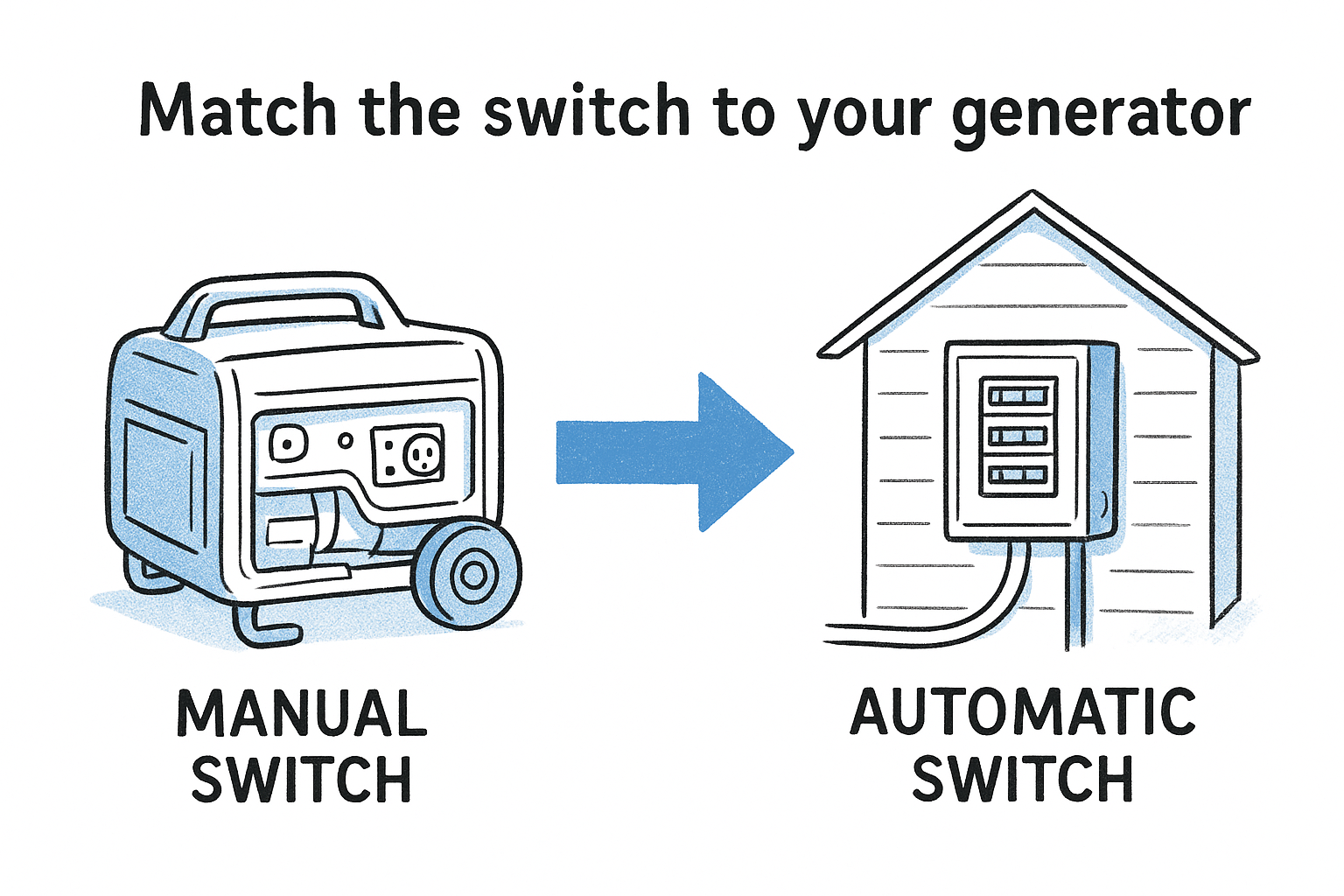
Match the switch to your generator
Manual transfer switches work with portable generators and require you to flip breakers by hand when the power drops. Automatic transfer switches pair with standby generators and switch over in seconds, no matter where you are in the house. Here’s how they stack up:
| Factor | Manual switch | Automatic switch |
|---|---|---|
| Generator type | Portable | Standby (permanent) |
| Response time | You flip it | Seconds, no action needed |
| Typical cost range | $500-$900 installed | $900-$1,500 installed |
| Best for | Occasional outages, budget setups | Frequent outages, medical needs, remote work |
Confirm your panel can handle it
Your electrical panel’s age and amperage matter more than most homeowners realize. Older 100-amp panels in Scottsdale and Mesa homes built before the 1990s sometimes need a panel upgrade before a transfer switch will even fit safely. A qualified electrician checks this during the initial inspection, not after the equipment shows up.
Skipping the panel check is the single most common reason transfer switch installs get delayed or cost more than quoted.
Generally, Arizona municipalities require an electrical permit for transfer switch work, and your electrician should pull it, not you. Permits protect you if something goes wrong later and matter when you sell the house. The National Electrical Code, adopted across Arizona jurisdictions, sets the backfeed prevention standards that make transfer switches mandatory in the first place, and building departments inspect against it before signing off. You can review the code basics through the National Fire Protection Association at nfpa.org if you want the technical details, but honestly, that’s your electrician’s job to know cold.
Finally, decide your budget range now. Knowing whether you’re aiming for a $600 manual setup or a $1,400 automatic system before the electrician arrives keeps the conversation focused and honest.
Step 1. Choose the right transfer switch type and size
Start by counting the circuits you actually need during an outage, not everything in your house. Most Phoenix homeowners size a manual transfer switch for six to ten essential circuits: refrigerator, a few lights, the garage door, and the AC blower motor if the compressor can’t run on generator power alone. Sizing too small means your generator trips constantly; sizing too large wastes money on capacity you’ll never use.
Calculate the amperage you need
Your electrician measures this against your generator’s rated wattage and your panel’s amp rating, but you can rough it out yourself first:
- List every circuit you want powered during an outage.
- Add up the wattage (check appliance labels or the generator’s spec sheet).
- Match that total against a standard switch size: 30-amp for light portable setups, 50-amp for larger portables, 100 to 200-amp for whole-house standby systems.
- Leave a 20 percent buffer for startup surges, especially with AC compressors.
Undersizing a transfer switch is the fastest way to turn a $600 install into a $1,200 redo.
Decide between manual and automatic now, not later
Going back and forth on switch type after the electrician quotes the job adds delays and change orders. If you already own a portable generator, a manual switch is the obvious call. If you’re installing a standby unit or someone in the house depends on medical equipment, pay the extra few hundred dollars for automatic switching and don’t second-guess it.
Step 2. Hire a licensed local electrician
Once you know what type of switch you need, the next move is finding someone qualified to install it. Searching transfer switch installation near me pulls up dozens of results, but not every electrician who shows up in that search actually holds an active Arizona license for this specific work. Verify before you book, not after the truck is in your driveway.
Check the license and insurance first
Arizona requires electrical contractors to carry a license through the Registrar of Contractors, and you can look up any contractor’s license number and standing directly on the Arizona ROC website before you sign anything. A licensed, insured electrician protects you twice: once from faulty work, and once from liability if something goes wrong during the install. Skip anyone who can’t produce a license number on request.
An unlicensed install can void your homeowner’s insurance the same day it saves you money.
Ask the right questions during the quote
A good electrician answers these without hesitation:
- Do you pull the permit, or do I need to?
- What’s included in the upfront price, and what could add cost later?
- Do you offer a workmanship guarantee, and for how long?
- Will you check my panel’s amperage before quoting a final number?
- Are there dispatch or call-out fees for the estimate visit?
Companies that answer clearly, in writing, with no dispatch fees and a firm price before work starts, are the ones worth hiring. AZ DC Electric backs its transfer switch installs with a five-year workmanship guarantee, which tells you the company expects the work to hold up long after the crew leaves.
Step 3. Prepare for installation day and permits
Once you’ve hired your electrician, installation day itself moves fast if you’ve prepped the space. Most transfer switch installation near me searches end with a same-week or next-week appointment, so use the days before to clear access to your panel and outline where the generator will sit outside.
Clear the path for the crew
A little prep on your end keeps the job on schedule and avoids extra hours on the invoice:
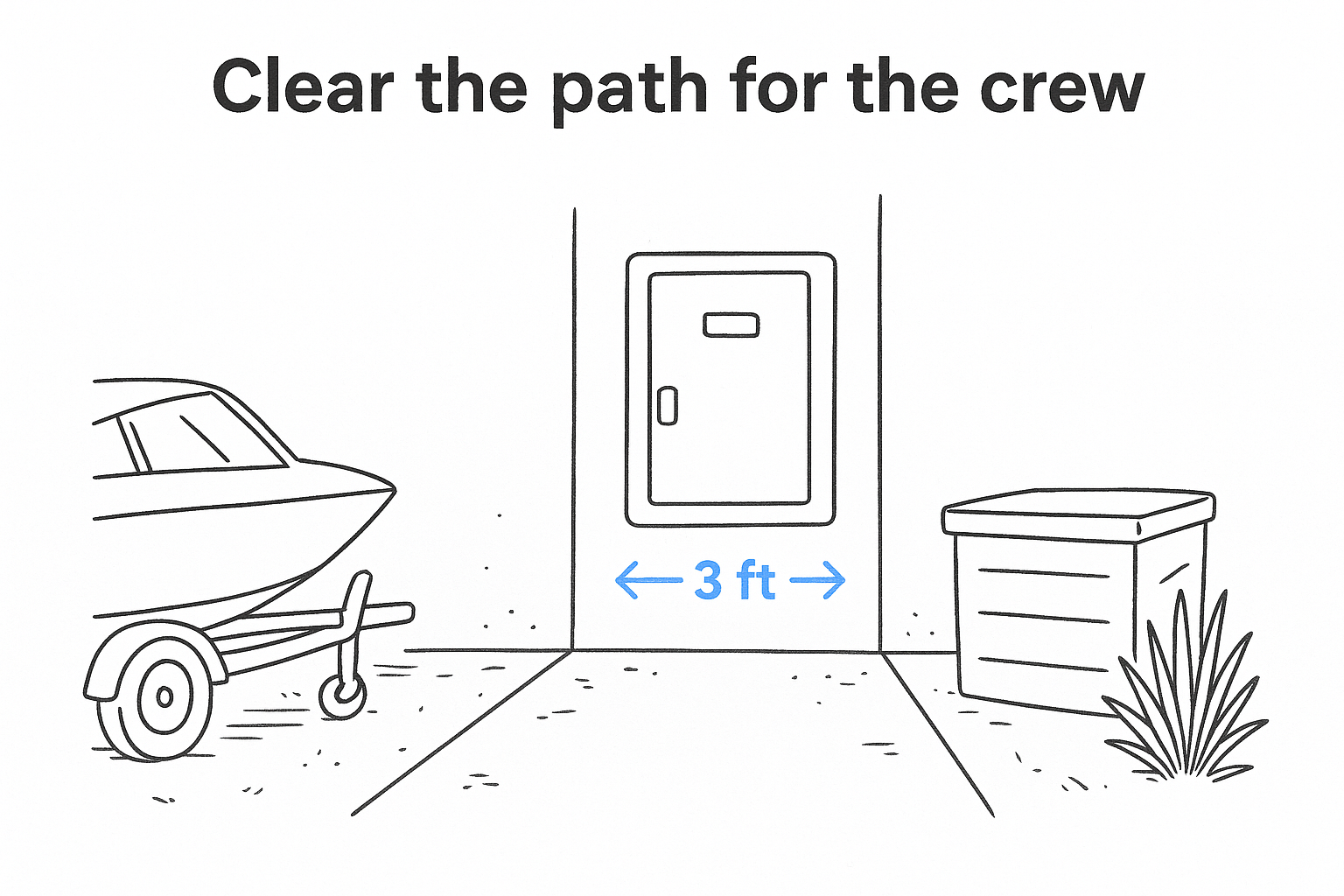
- Clear a 3-foot working space around your electrical panel.
- Move vehicles, gates, or storage bins away from the planned generator location.
- Confirm someone 18 or older is home to sign off on the completed work.
- Note any circuits you specifically want (or don’t want) included.
Permit timeline and inspection
Your electrician should pull the electrical permit before work starts, not after. Turnaround varies by city, but most Phoenix Metro jurisdictions issue transfer switch permits within a few business days. Scottsdale, Mesa, and Tempe each run their own inspection schedules, so ask your electrician which city department handles yours.
A permit isn’t paperwork for its own sake, it’s proof the install meets code when you sell the house or file an insurance claim.
Expect a city inspector to review the completed work before final sign-off, usually within a week or two of installation. Reputable electricians build this inspection into the project timeline upfront, so it shouldn’t surprise you or delay when you can actually use the switch.
Step 4. Test, use, and maintain your new switch
Once the inspector signs off, your electrician walks you through a live test before packing up. Watch this test closely. It’s your one chance to see exactly how the transfer switch operation works while someone qualified is standing next to you to answer questions.
Run a full test with your electrician present
Don’t let the crew leave until you’ve confirmed the switch actually does what it’s supposed to:
- Simulate an outage by shutting off the main breaker.
- Confirm the transfer switch (manual or automatic) engages correctly.
- Verify each circuit you selected actually receives power.
- Switch back to utility power and confirm the transfer switch resets.
- Ask for a copy of the wiring diagram and permit paperwork for your records.
A transfer switch you’ve never tested is a transfer switch you can’t trust when the power actually goes out.
Build a simple maintenance routine
After installation, treat the switch like any other piece of home safety equipment, not something you forget about until August. Run a test cycle every three to six months, especially before monsoon season, when outages spike across Scottsdale, Mesa, and Chandler. Check that the enclosure stays dry and free of dust, and listen for any unusual buzzing or clicking during operation, since that’s often the first sign of a loose connection.
Keep your electrician’s contact info handy for anything beyond a basic visual check. A five-year workmanship guarantee only helps if you actually call when something seems off instead of waiting for a full failure during the next outage.
Staying ready for the next Arizona outage
A transfer switch only earns its cost when the monsoon knocks out power at 2 a.m. and your fridge, AC blower, and a few lights keep running without you touching a breaker. You now know the two answers everyone searches for: installation costs land between $500 and $1,500, and Arizona code requires a licensed electrician for the job, no exceptions. Skip the DIY route and skip contractors who won’t produce a license number on request.
Getting this right means sizing the switch correctly, hiring someone who pulls the permit, and testing the setup before you actually need it. That’s the whole job, done once, done properly, and backed by a guarantee that means something. If you’re ready to stop searching and start scheduling, request a quote from AZ DC Electric and get upfront pricing before the next outage hits.