When the power goes out during an Arizona monsoon or a summer grid overload, you don’t want to be scrambling for flashlights and hoping your food doesn’t spoil. A whole-home standby generator kicks in automatically within seconds of a power failure, but only if it’s been installed correctly by someone who knows what they’re doing. That’s exactly why searching for a standby generator installer near me matters more than most people realize. The wrong contractor can leave you with permit issues, code violations, or a unit that fails the one time you actually need it.
At AZ DC Electric, we’ve handled generator installations across the Greater Phoenix Metro Area for years, so we know firsthand what separates a solid installer from one that cuts corners. We’re a licensed and insured electrical contractor based in Scottsdale, and we back every job with a 5-year workmanship guarantee, because generator installation isn’t something you should have to worry about twice.
This article breaks down six practical tips to help you find a qualified standby generator installer quickly and confidently. Whether you’re comparing local contractors or ready to book a consultation, these steps will save you time, money, and a lot of unnecessary stress. Let’s get into it.
1. Start with a licensed local electrician
When you search for a standby generator installer near me, the first filter to apply is licensing. In Arizona, electrical work requires a licensed contractor, and generator installation is no exception. A licensed electrician understands both the electrical requirements and the local code standards that apply to standby systems, which means fewer surprises once the job is complete. Starting here eliminates a large portion of unqualified candidates immediately.
Hiring an unlicensed installer might save a few hundred dollars upfront, but a failed inspection or improper wiring can cost significantly more to fix after the fact.
What to verify
Before you schedule anyone, pull their license number and verify it through your state’s contractor licensing board. In Arizona, you can check electrical contractors through the Arizona Registrar of Contractors. Also confirm they carry general liability insurance and workers’ compensation coverage, so you’re not financially responsible if something goes wrong on your property during installation.
- Active license in good standing with no disciplinary history
- General liability insurance (minimum $1 million is standard)
- Workers’ compensation coverage for all crew members
- Verifiable reviews that specifically mention generator installation work
Questions to ask
A short phone call reveals a lot about a contractor’s actual experience. Ask directly how many standby generator installations they’ve completed in the last year, and whether they handle both the electrical connection and the transfer switch installation themselves or subcontract any part of it. You want one accountable contractor, not a handoff chain where no single person owns the full scope of work.
- "How many standby generator installs have you completed recently?"
- "Do you pull permits and attend inspections directly?"
- "Who installs the transfer switch?"
- "Are you familiar with my local utility’s interconnection requirements?"
Typical timeline and cost drivers
Most residential standby generator installations in the Phoenix area take one to two days once permits are approved. Permit approval typically adds three to seven business days before any work can begin, so factor that into your planning. Your total installed cost will depend on generator size in kilowatts, transfer switch type, any gas line work required, and whether your existing panel needs an upgrade. Most whole-home installations run between $5,000 and $15,000 fully installed.
2. Use standby generator dealer locators
Major generator manufacturers like Generac, Kohler, and Briggs & Stratton all maintain dealer locator tools on their websites. These tools return a list of factory-trained installers in your area, which gives you a shorter path to qualified contractors without sorting through random search results.
What to verify
Dealer listings don’t automatically mean the contractor is the best fit for your project. Confirm that the installer holds an active electrical license in your state in addition to any brand certification, since brand training covers the equipment but not always the local code work surrounding it. Also check that their reviews mention completed installations, not just sales or maintenance visits.
- Active state electrical license, separate from dealer certification
- Positive reviews that specifically reference installation work
- A physical location within a reasonable distance of your property
Questions to ask
A dealer-certified installer knows the specific equipment inside and out, which reduces troubleshooting time if anything needs adjustment after startup.
Ask whether the dealer certification is current and which model lines they’re trained on. Also confirm they handle the full installation scope, including the transfer switch and utility coordination, rather than just supplying and dropping off the unit.
- "What brand certifications do you hold, and are they up to date?"
- "Do you install the transfer switch, or does a subcontractor handle that?"
Typical timeline and cost drivers
When you search for a standby generator installer near me through a dealer locator, lead times shift with the season. Peak demand periods following major storms can push scheduling out by several weeks, so contact multiple dealers at the same time rather than waiting on one response before moving forward.
3. Confirm permits and code experience upfront
Permits aren’t optional for standby generator installations, and any contractor who suggests skipping them is a red flag. When you search for a standby generator installer near me, confirming that your installer handles permits and inspections directly is one of the fastest ways to separate professionals from shortcuts.
What to verify
Check that the contractor has pulled permits in your specific city or municipality before, since code requirements vary across the Phoenix Metro Area. Ask to see examples of closed permits on past generator jobs, or at minimum, confirm they know your jurisdiction’s requirements for gas line proximity, transfer switch type, and setback distances.
- Permit history in your specific city
- Familiarity with local utility coordination requirements
- Knowledge of setback and clearance codes for your area
Questions to ask
Ask directly whether they pull the permit or expect you to handle it, and confirm who attends the final inspection. You want the installer present at inspection, not a third party unfamiliar with the work.
A contractor who understands local code requirements will keep you from failing an inspection that delays your project by weeks.
- "Have you pulled permits in my city before?"
- "Who attends the final inspection?"
- "What happens if the inspection fails?"
Typical timeline and cost drivers
Most Phoenix-area municipalities process residential electrical permits within three to seven business days. Expedited processing is sometimes available, but it typically adds cost to your project budget, so ask about that option upfront if your timeline is tight.
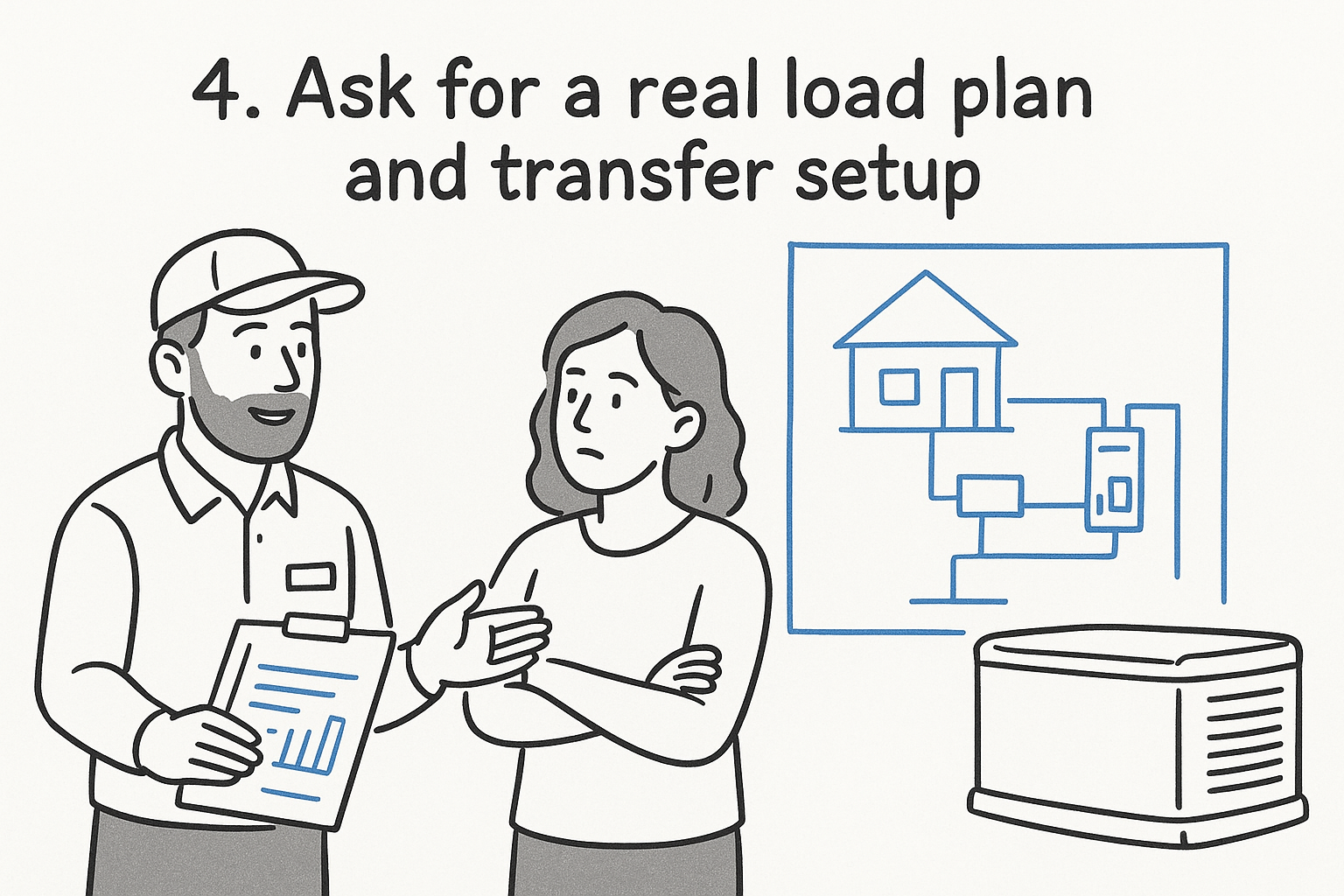
4. Ask for a real load plan and transfer setup
Any qualified standby generator installer near me search should return contractors who start with a load calculation, not a quick equipment guess. A load plan documents which circuits you’re powering, the total wattage draw, and what size generator your home actually requires. Without this, you risk buying an undersized unit that overloads on day one or an oversized one that burns through fuel unnecessarily.
What to verify
Confirm that your installer provides a written load plan before recommending a generator size. Also verify they understand the difference between a manual transfer switch and an automatic transfer switch (ATS), since a standby generator only functions automatically with a properly sized ATS installed.
- Written load calculation covering essential and whole-home circuits
- Automatic transfer switch sizing matched to your specific panel
- Confirmation that the ATS installation meets local code requirements
Questions to ask
Ask your installer to walk you through the load plan results and explain why they selected a particular generator size. This conversation reveals whether they actually calculated your needs or just guessed based on square footage.
A contractor who skips the load calculation is often also skipping the transfer switch sizing, which creates real failure points in your system.
- "Can you show me the load calculation results?"
- "What type of transfer switch do you recommend, and why?"
Typical timeline and cost drivers
A proper load assessment typically takes one to two hours during a site visit. The transfer switch cost itself ranges from $500 to $2,500 depending on whether you need a manual or automatic unit and your existing panel configuration.
5. Compare quotes using the same scope of work
When you receive quotes from multiple contractors after searching for a standby generator installer near me, the numbers will vary more than you expect. The only way to make a fair comparison is to ensure every quote covers the exact same scope, including the generator size, transfer switch type, permit fees, gas line work, and site cleanup. Without a shared scope, you’re comparing apples to hammers.
What to verify
Review each quote line by line and confirm that all labor, materials, and permit costs are itemized separately. A single "total installation price" without a breakdown tells you nothing about where the money goes or what gets cut if a contractor needs to reduce their price.
A detailed, itemized quote signals that a contractor understands the full project and isn’t hiding cost surprises for later.
- Permit fees listed explicitly
- Transfer switch type and brand specified
- Generator model and kilowatt size confirmed
Questions to ask
Ask each contractor whether their quote is fixed-price or subject to change after the site inspection. Also confirm whether gas line modifications are included or billed separately, since that single line item can add $500 to $1,500 to your final cost.
- "Is this a fixed quote or an estimate?"
- "What triggers a change order on your jobs?"
Typical timeline and cost drivers
Collecting three comparable quotes typically takes three to five business days. The biggest cost variable across quotes is usually transfer switch selection, so make sure every contractor specifies the same type before you draw any conclusions.
6. Book fast by aligning on site readiness
One of the fastest ways to lose two weeks on your installation timeline is showing up to the job with an unready site. Before your standby generator installer near me search turns into a scheduled booking, confirm that your gas line access, electrical panel location, and generator placement area are all documented and ready to share with your contractor.
What to verify
Your installer needs clear answers on three site conditions before they can lock in a date: where the generator will sit, how the gas line routes to that location, and whether your existing panel has space for a transfer switch connection. Confirm each item before your first contractor call.
- Generator pad or gravel bed location finalized
- Gas line access point identified
- Panel clearance confirmed for transfer switch installation
Questions to ask
Ask your contractor exactly what site prep they expect you to complete before their crew arrives, and whether they handle any prep work themselves or price it separately.
Confirming site readiness before booking eliminates the most common cause of same-day delays and rescheduling fees.
- "What do I need to have ready before your crew arrives?"
- "Do you handle generator pad prep, or is that on me?"
Typical timeline and cost drivers
A site that is fully prepped before the install date typically cuts one to three hours off your labor bill. Generator pad installation, if needed, adds $200 to $600 depending on size and material.
Next steps
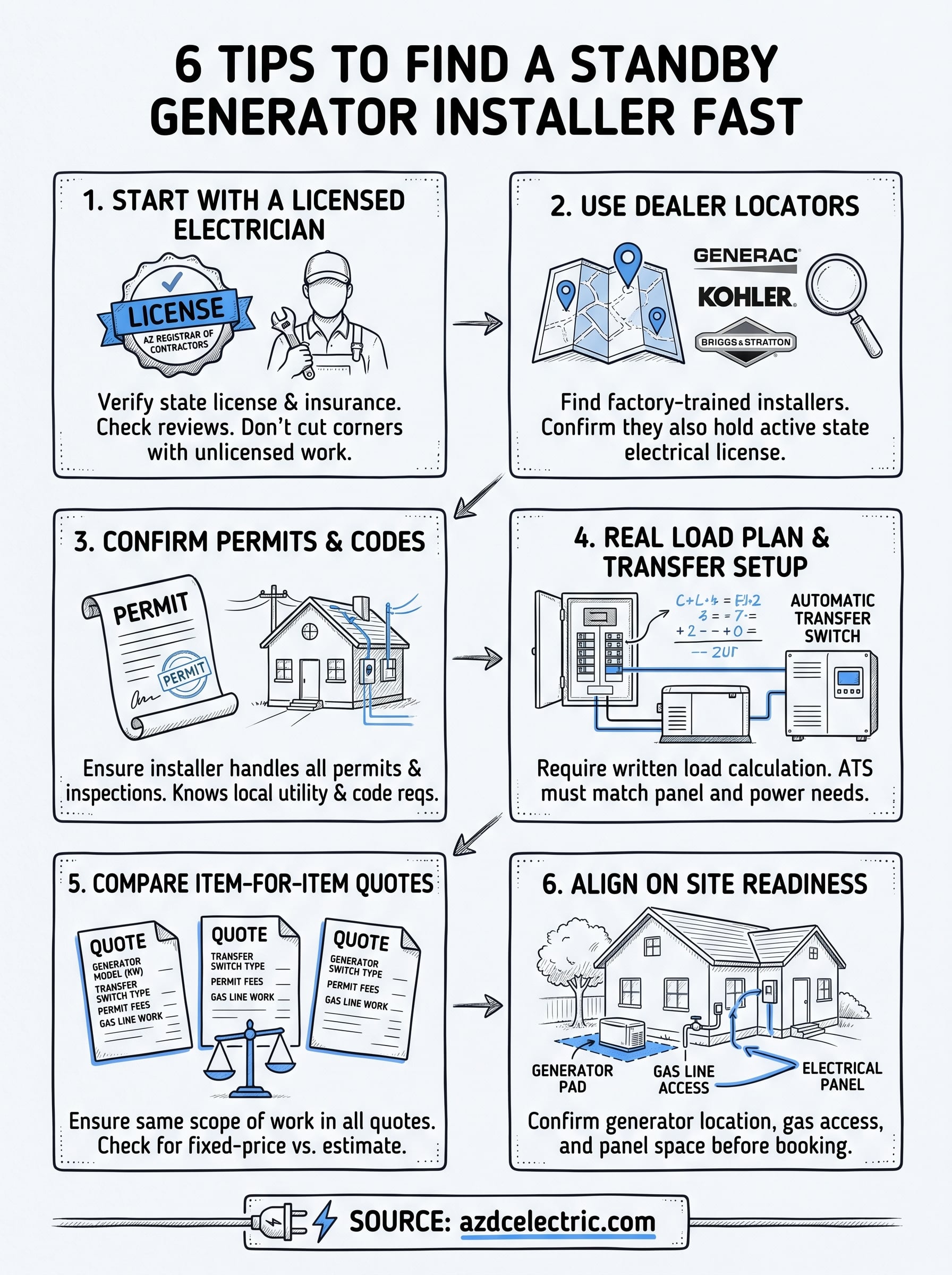
You now have six concrete steps to move from searching for a standby generator installer near me to having a qualified contractor scheduled and a plan in place. The core takeaway is simple: verify licensing first, confirm permits are included, and never skip the load calculation. Each of these steps removes a real risk from your project before money changes hands.
Your next move is to build a shortlist of licensed local electricians, collect at least three itemized quotes, and confirm site readiness before you commit to anyone. Doing that work upfront saves you from delays, surprise costs, and installers who disappear after the deposit clears.
If you’re in the Greater Phoenix Metro Area and want to skip the guesswork, book a generator installation consultation with AZ DC Electric. We offer upfront pricing, no call-out fees, and a 5-year workmanship guarantee on every job we complete.