Whether you’re installing smoke alarms in a new build or replacing outdated units in an older Phoenix-area home, the first question is usually the same: what’s this going to cost me? The answer to smoke alarm installation cost depends on several moving parts, the type of alarm, how many you need, the complexity of the wiring, and whether you hire a professional or go the DIY route. Most homeowners spend somewhere between $50 and $200 per alarm when factoring in both the device and labor, but that range shifts quickly based on your specific situation.
At AZ DC Electric, we install and wire smoke alarms across the Greater Phoenix Metro Area as part of our residential electrical services. We see the full spectrum, from quick battery-operated swaps to hardwired systems with interconnected units throughout a home. Because we use upfront pricing with no call-out fees, our customers know exactly what they’re paying before any work starts, which takes the guesswork out of budgeting for this kind of project.
This article breaks down average prices for different smoke alarm types, explains what drives the cost up or down, and helps you figure out when it makes sense to call a licensed electrician versus handling the job yourself. By the end, you’ll have a clear picture of what to expect financially and how to make a smart decision for your home’s safety and your budget.
Why smoke alarm installation cost matters
Understanding what you’ll spend on smoke alarm installation isn’t just about managing your budget. Smoke alarms are one of the few home safety investments where cutting corners or delaying the project carries real consequences for your family’s safety. When you know the real smoke alarm installation cost upfront, you make better decisions about the type of alarm, the number of units, and whether to hire a licensed electrician, all before any work begins. Budgeting accurately also helps you avoid cheap solutions that fail to meet local code requirements or perform reliably in an emergency.
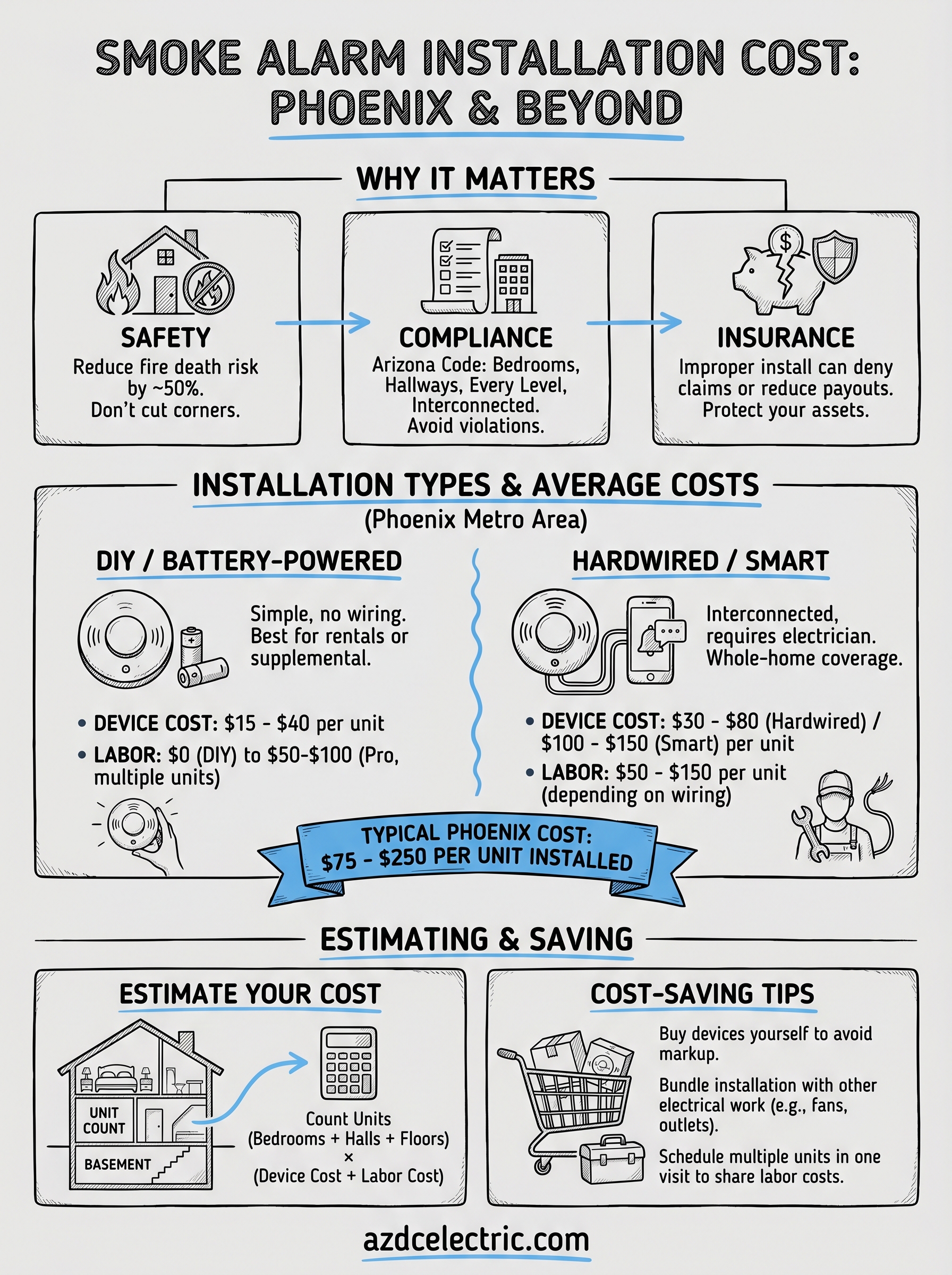
Smoke alarms reduce the risk of dying in a home fire by roughly 50 percent, according to the National Fire Protection Association.
Safety compliance and legal requirements
Arizona, like every other state, has building codes that govern smoke alarm placement, wiring type, and interconnection. For new construction and major renovations, hardwired interconnected alarms are typically required. That means if one alarm triggers, every unit in the house sounds simultaneously. Installing the wrong type or placing alarms in the wrong locations can create code violations that complicate home sales or invalidate insurance claims down the road.
Here’s what most Phoenix-area homeowners need to know about basic compliance:
- Bedroom placement: Alarms must be installed inside each sleeping room and in the hallway directly outside it.
- Every level: At least one alarm is required on every floor of the home, including the basement.
- Interconnection: Newer construction typically requires alarms to be hardwired and interconnected throughout the home.
- Carbon monoxide: Many Arizona homes also require combination smoke and CO detectors, particularly with gas appliances or attached garages.
The real cost of skipping professional installation
When you hire a licensed electrician for hardwired smoke alarms, you’re paying for more than the labor time on the job. Proper wiring, correct circuit connections, and verified placement all require expertise that protects your home in ways a DIY install often can’t match. Electricians also catch existing wiring issues during the installation process, which can prevent far more expensive repairs later.
Your homeowner’s insurance factors into this as well. Insurance companies may deny claims or reduce payouts if a fire investigation reveals that your smoke alarms were installed improperly or weren’t up to code at the time of the fire. The few hundred dollars you save by skipping professional installation could cost significantly more if a claim gets disputed. Viewing the total smoke alarm installation cost through that lens makes hiring a licensed electrician the more practical financial decision.
Average smoke alarm installation cost in Phoenix
Phoenix-area homeowners face a slightly different pricing landscape than national averages, mainly due to local labor rates and the specific needs of older Valley homes. Smoke alarm installation cost in the Greater Phoenix Metro Area typically runs $75 to $250 per unit installed. The exact number depends on which type of alarm you choose and how involved the wiring process is.
Battery-powered alarm costs
Battery-operated alarms are the most affordable entry point. The devices cost $15 to $40 for standard units, and installation is straightforward since no electrical wiring is required. A licensed electrician can handle several units in a couple of hours, keeping your total labor to around $50 to $100 for a standard home.
These work well in rental properties or rooms where hardwiring isn’t required by code. They also serve as cost-effective supplements to an existing hardwired system in areas that aren’t covered by primary wiring.
Hardwired and smart alarm costs
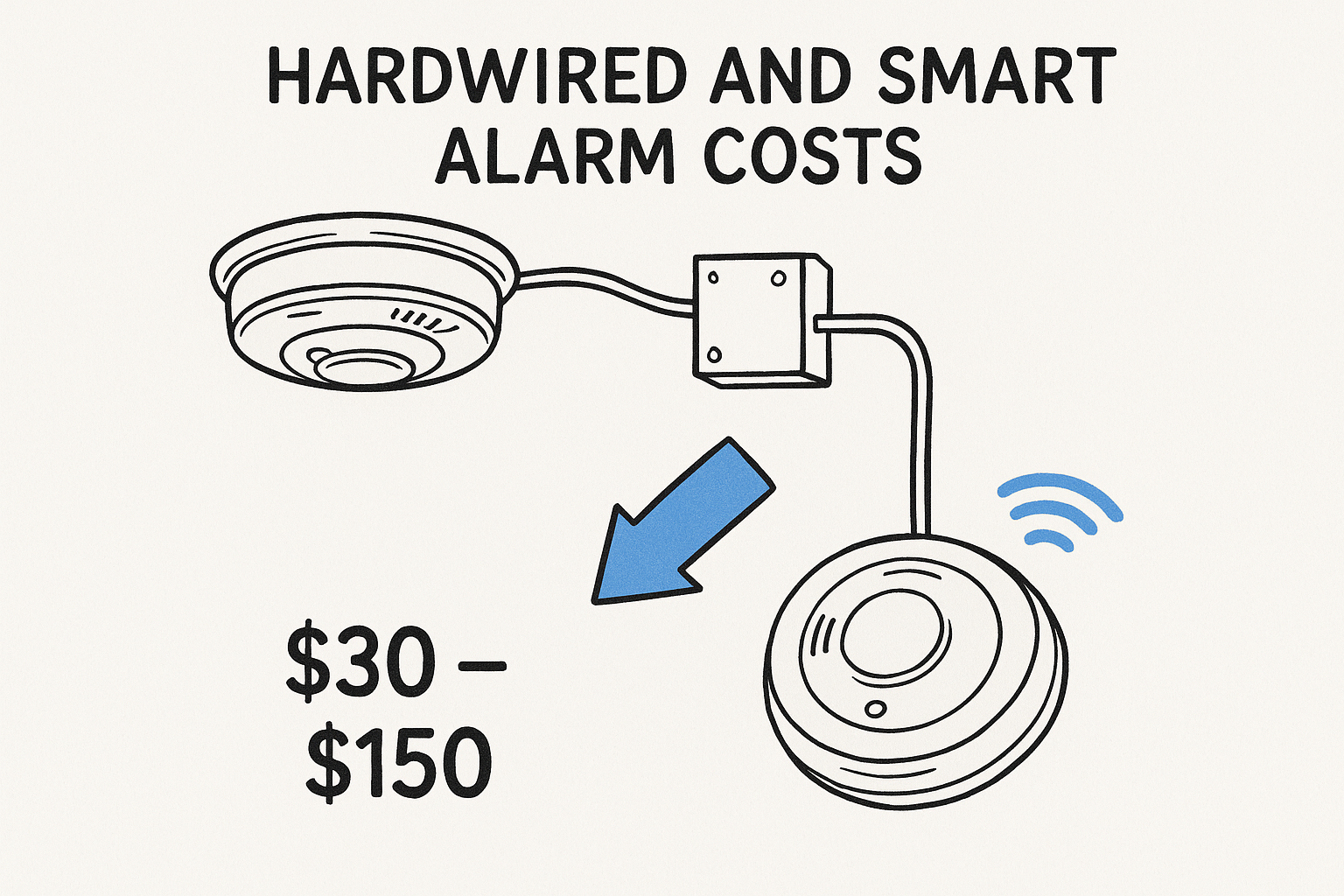
Hardwired alarms cost more because installation requires connecting each unit to your home’s electrical system. Device prices range from $30 to $80 for standard hardwired models, while smart alarms with Wi-Fi connectivity and app notifications run $100 to $150 per device. Labor adds $50 to $150 per unit depending on whether existing wiring is already in place or new circuits need to be run.
For most Phoenix homes, a complete hardwired system covering all bedrooms, hallways, and floors lands between $400 and $900 installed.
Combination smoke and carbon monoxide detectors sit at the higher end of the device price range, but they cover two safety requirements in a single unit. For homes with gas appliances or an attached garage, choosing a combo unit typically reduces your overall installation cost compared to purchasing and installing separate devices for each function.
How to estimate your smoke alarm installation cost
Getting a realistic number before you call an electrician saves you from budget surprises. Start by counting the total number of alarms your home needs, then factor in device type and labor. A quick walkthrough of your home gives you the raw inputs, and from there, the math is straightforward.
Count your rooms and floors
Walk through your home and list every bedroom, hallway outside a sleeping area, and each floor level. That list becomes your minimum unit count. Arizona code requires alarms in each of those locations, so every room you skip is a potential code violation. For a typical three-bedroom Phoenix home on one level, you’re usually looking at five to seven units minimum.
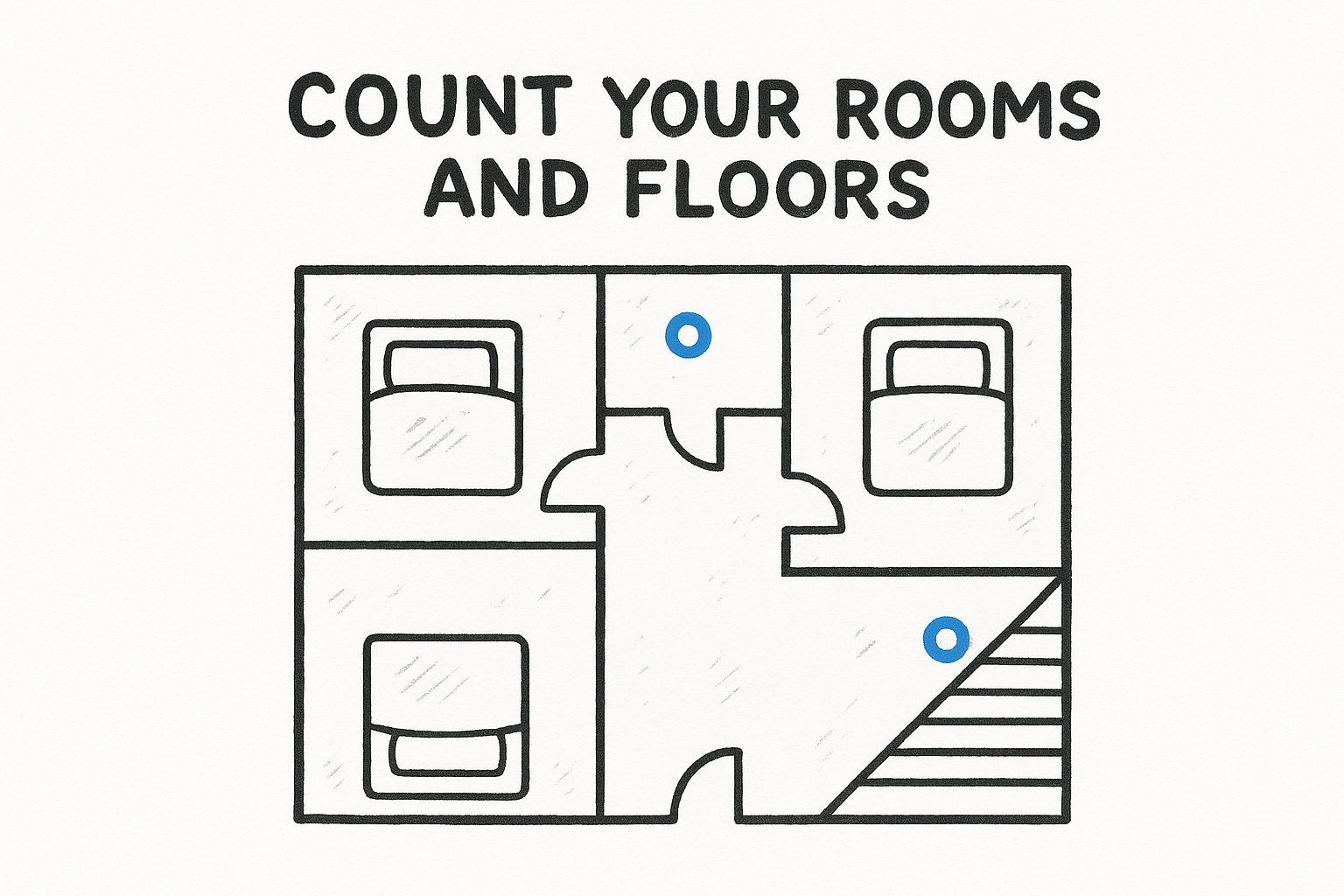
A larger home with multiple floors or additional bedrooms can push your unit count to ten or more, which significantly changes the total smoke alarm installation cost.
Use this simple breakdown to build your estimate:
| Location | Units Needed |
|---|---|
| Each bedroom | 1 per room |
| Each hallway outside bedrooms | 1 per hallway |
| Each additional floor | 1 minimum |
| Basement (if applicable) | 1 minimum |
Factor in wiring and labor
Once you have your unit count, multiply it by your per-unit device and labor cost to get a baseline number. Battery-powered alarms run lower, while hardwired or smart units add $50 to $150 in labor per unit on top of device costs. If your home has no existing wiring for hardwired alarms, a licensed electrician may need to run new circuits, which adds time and cost to the project.
Ask your electrician whether existing wiring is already in place before you finalize your budget. That single question can shift your estimate by several hundred dollars in either direction.
Choosing the right smoke alarm and setup
The alarm type you select directly shapes your smoke alarm installation cost and your home’s actual level of protection. Not all smoke alarms detect fire the same way, and the wiring configuration you choose affects both upfront price and long-term reliability. Matching the right device to each location in your home is the decision that matters most before you schedule an installation.
Ionization vs. photoelectric detectors
These two technologies detect smoke differently, and both have a place in a well-protected home. Ionization alarms respond faster to fast-flaming fires, the kind that spread quickly with little visible smoke. Photoelectric alarms detect slow, smoldering fires more reliably, which are common in bedroom fires caused by faulty wiring or upholstered furniture. Many licensed electricians recommend dual-sensor alarms that cover both detection types, particularly in sleeping areas where response time is most critical.
Installing dual-sensor alarms in bedrooms gives you the broadest protection without needing two separate units per room.
Hardwired vs. battery-powered setup
Your home’s existing wiring largely determines which setup makes the most practical sense. Battery-powered alarms require no electrical work, making them a straightforward option for rooms where hardwiring isn’t code-required. Hardwired interconnected systems are the better choice for whole-home coverage because when one alarm triggers, every unit in the house sounds at the same time. For Phoenix homes built before 1993, upgrading to a hardwired system may require running new wiring, which adds to your labor cost but delivers significantly stronger protection across the entire structure.
- Ionization: Best for kitchens and living areas with fast fire risk
- Photoelectric: Best for bedrooms and hallways
- Dual-sensor: Best all-around choice for maximum coverage
- Hardwired interconnected: Required for new construction; recommended for all homes
DIY vs pro installation and cost-saving tips
Deciding between a self-install and hiring a licensed electrician comes down to the type of alarm and your home’s wiring. Battery-powered alarms are genuinely DIY-friendly since they require no electrical work beyond mounting the unit and inserting batteries. Hardwired alarms are a different situation entirely, as connecting them to your home’s electrical system means working with live circuits, which carries serious safety risk without proper training.
When DIY makes sense
Battery-only replacements in existing mounts are the clearest case for a self-install. If you’re swapping out an old battery-powered unit for a new one of the same type, the job takes under ten minutes and costs nothing in labor. Smart battery alarms from brands like Nest or Ring install the same way and deliver app notifications without any electrical work involved.
Hardwired replacements are a different matter. An improper connection can create a code violation, void your warranty, or introduce a wiring fault that causes other problems in your home. For anything involving your home’s electrical system, a licensed electrician is the right call.
How to cut your smoke alarm installation cost
You have several practical options for reducing your total smoke alarm installation cost without cutting corners on safety or compliance. Buying your own devices before the electrician arrives avoids any parts markup. Combining your smoke alarm installation with another electrical service call, such as a panel inspection or ceiling fan installation, lowers your overall bill because you share the trip cost across multiple jobs.
Bundling smoke alarm installation with another electrical project is one of the most effective ways to reduce per-unit labor costs.
- Buy devices in advance to avoid markup
- Schedule multiple units in one visit to share labor costs
- Combine with other electrical work to reduce per-visit fees
A simple next step
You now have the core information you need to plan your smoke alarm installation cost accurately, from device prices and labor rates to code requirements and cost-saving strategies. The right next step depends on your home’s current setup and how many units you actually need. If you’re unsure about your existing wiring or whether your current alarms meet Arizona code, a professional inspection gives you a clear picture before you commit to any purchases.
AZ DC Electric installs and wires smoke alarms throughout the Greater Phoenix Metro Area with upfront pricing, no call-out fees, and a 5-year workmanship guarantee. You know the cost before any work starts, which makes budgeting straightforward. Whether you need a single hardwired replacement or a full interconnected system across multiple floors, the process starts with a simple consultation. Schedule your smoke alarm installation with AZ DC Electric and get your home protected the right way.