Your circuit breaker is the first line of defense between your home’s electrical system and a potential fire. When it works correctly, you never think about it. But when it starts to fail, the signs of a bad circuit breaker can range from subtle annoyances to genuine safety hazards, and ignoring them puts your home and family at risk.
The tricky part is that some symptoms overlap with other electrical issues, which makes it hard to know whether you’re dealing with a faulty breaker or something else entirely. A burning smell near the panel, a breaker that won’t stay reset, or flickering lights can all point to different problems depending on the cause.
At AZ DC Electric, our licensed electricians diagnose and replace failing breakers across the Greater Phoenix Metro Area every week. Below, we’ll walk you through the five most common warning signs, explain what’s actually happening inside the panel, and help you decide when it’s time to call a professional for a replacement.
1. Burning smell, smoke, or melting plastic
A burning smell near your electrical panel is never normal. It’s one of the most serious signs of a bad circuit breaker, and you should treat it as an emergency until a licensed electrician confirms otherwise. Active heat damage inside the panel can escalate to a house fire faster than most homeowners expect.
What you’ll notice in real life
The smell is typically sharp and acrid, similar to burning rubber or melting plastic. You might catch it near the panel itself, near a specific outlet, or even in a room where that circuit runs. Some homeowners also spot visible smoke or brown discoloration around the breaker slot before they ever smell anything.
Watch for these specific details when you check:
- Melted or warped plastic on the breaker face
- Black or brown staining around a single breaker
- A persistent chemical smell that returns after ventilating the room
Why it happens
Most burning smells from a breaker trace back to a loose wire connection or a breaker that can no longer trip at the correct amperage. When that happens, too much current flows through the circuit, which melts wire insulation and softens the plastic housing around the breaker.
If you smell burning plastic anywhere near your electrical panel, stop using the affected circuit immediately and keep people away from the area.
What to do right now for safety
Turn off the suspected circuit breaker, or shut off the main breaker if the smell is strong or you see smoke. Open windows to ventilate, and call a licensed electrician before restoring power to that circuit. Do not open the panel cover yourself under any circumstances.
When replacement becomes non-negotiable
Any breaker that has produced a burning smell, smoke, or melted plastic must be replaced before the circuit runs again. Heat damage rarely stays contained to a single breaker. Your electrician will inspect the surrounding wiring, bus bar, and panel enclosure for secondary damage before installing a replacement.
2. Breaker or panel feels hot to the touch
A warm panel after heavy use is not unusual, but heat you can feel through the cover is one of the clearer signs of a bad circuit breaker. Excess heat signals that current is meeting resistance it shouldn’t.
What "normal warm" vs "too hot" looks like
Slightly warm is acceptable if a breaker carries a steady load like a running HVAC unit. "Too hot" means you pull your hand back immediately, or the warmth spreads across the panel cover rather than staying isolated to one breaker slot.
Common causes in Phoenix-area homes
Phoenix summers push air conditioning systems harder than almost anywhere else in the country. That sustained load, combined with aging wiring or undersized breakers, creates conditions for chronic overheating inside the panel.
Quick checks that do not involve opening the panel
Touch the panel cover lightly with the back of your hand. Also check whether outlets or switches on that circuit feel warm at the wall plate, which can help you narrow down the heat source before calling for service.
When to stop using the circuit and get help
Stop using the circuit immediately if the panel feels uncomfortably hot, and call a licensed electrician. Heat that builds without tripping the breaker suggests the thermal protection has already failed, which removes your primary safety backup.
A panel that runs hot is not a "wait and see" situation. Cut power to that circuit and get an electrician on-site.
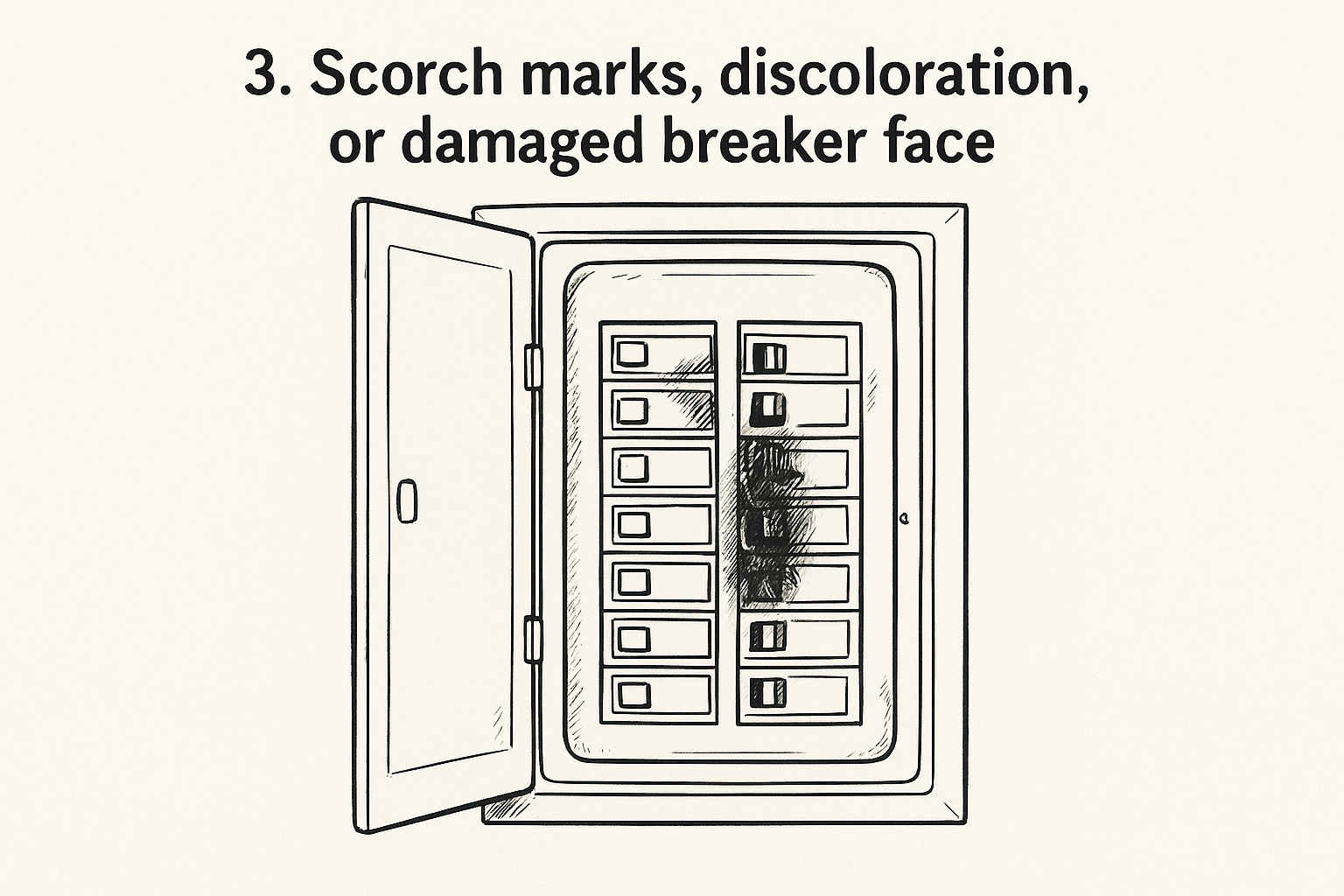
3. Scorch marks, discoloration, or damaged breaker face
Visible marks on your breaker are among the clearest signs of a bad circuit breaker. Unlike heat or odor, scorch marks and discoloration stay visible, so you can catch them during a simple visual check of your panel.
Where to look and what counts as "damage"
Open the panel cover and scan each breaker face carefully. Look specifically for:
- Brown or black staining around a breaker slot
- Warped or melted plastic on the breaker body
- A breaker that looks noticeably different from neighboring ones
What this usually indicates inside the panel
Discoloration almost always means heat or arcing occurred at some point on that circuit. Even if the breaker currently resets, internal components may already be degraded and unable to trip at the correct amperage.
Your electrician can use a thermal imaging scan to confirm whether heat damage extended beyond the visible surface.
Fire risk and why this sign escalates fast
Arcing inside a panel can ignite surrounding insulation within seconds. What you see on the breaker face is often just the visible edge of a deeper heat event that spread to wiring behind the panel.
A scorch mark is not cosmetic damage. It means something already went wrong inside that panel.
Why a breaker swap alone may not solve it
Replacing only the breaker leaves damaged wiring connections or bus bar components still in place. Your electrician needs to inspect the full circuit before confirming the repair is complete.
4. The breaker trips often or trips under light use
A breaker that trips repeatedly is one of the more recognizable signs of a bad circuit breaker, but it can also point to a wiring fault or an overloaded circuit. Figuring out which one saves you from replacing a breaker that was actually doing its job correctly.
How often is "too often"
If your breaker trips more than once or twice in a month without an obvious cause like plugging in a large appliance, that pattern is worth investigating. A healthy breaker trips occasionally; a failing one trips randomly or under minimal load.
Overload vs short vs ground fault, in plain terms
An overload means too many devices share one circuit. A short circuit means a hot wire has contacted a neutral wire. A ground fault means current is taking an unintended path to ground. Each has a different fix, and your electrician determines which one is present before touching the breaker.
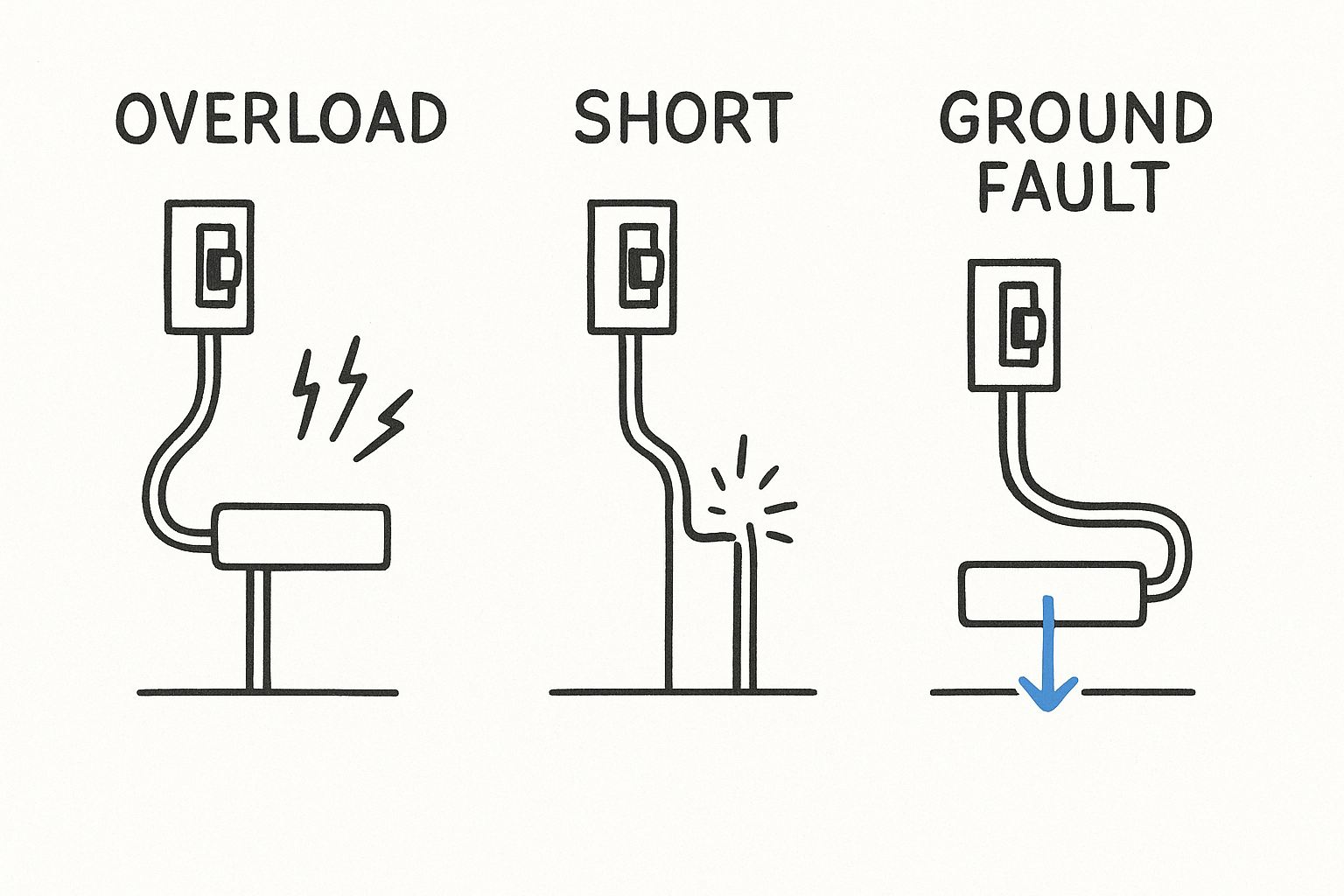
Repeated trips under light loads usually signal a failing breaker, not just a crowded circuit.
The overload check and the 80 percent rule
Keep your total circuit load to 80 percent or less of the breaker’s rated amperage. A 15-amp breaker should carry no more than 12 amps continuously. Add up the wattage on each device plugged into that circuit to check.
When a panel upgrade makes more sense than a breaker
Replacing one breaker only helps if your panel has enough capacity for your current demands. If every circuit runs near its limit, a full panel upgrade solves the real problem rather than masking it.
5. The breaker will not reset or will not stay on
A breaker that refuses to reset or trips the instant you flip it back is one of the most direct signs of a bad circuit breaker. It means the circuit has a live problem that won’t allow the breaker to hold.
What a correct reset feels like
A healthy reset clicks firmly into the "on" position and stays there. If your breaker feels loose, spongy, or snaps back to the tripped position immediately, the mechanism or the circuit itself has failed.
What repeated instant trips typically mean
Repeated instant trips usually point to a short circuit or ground fault still present on the line. Your breaker is doing its job, but the underlying fault hasn’t been cleared yet.
If the breaker trips immediately every time you reset it, stop resetting it and call a licensed electrician.
Why "forcing it" can damage equipment or wiring
Forcing a breaker back on against resistance pushes excess current through damaged wiring. That repeated stress burns insulation and can damage appliances connected to that circuit before you realize what’s happening.
What an electrician tests before replacing the breaker
Your electrician will measure insulation resistance and check for active faults along the full circuit run before swapping the breaker. Replacing it without that diagnostic step risks immediate failure of the new breaker.
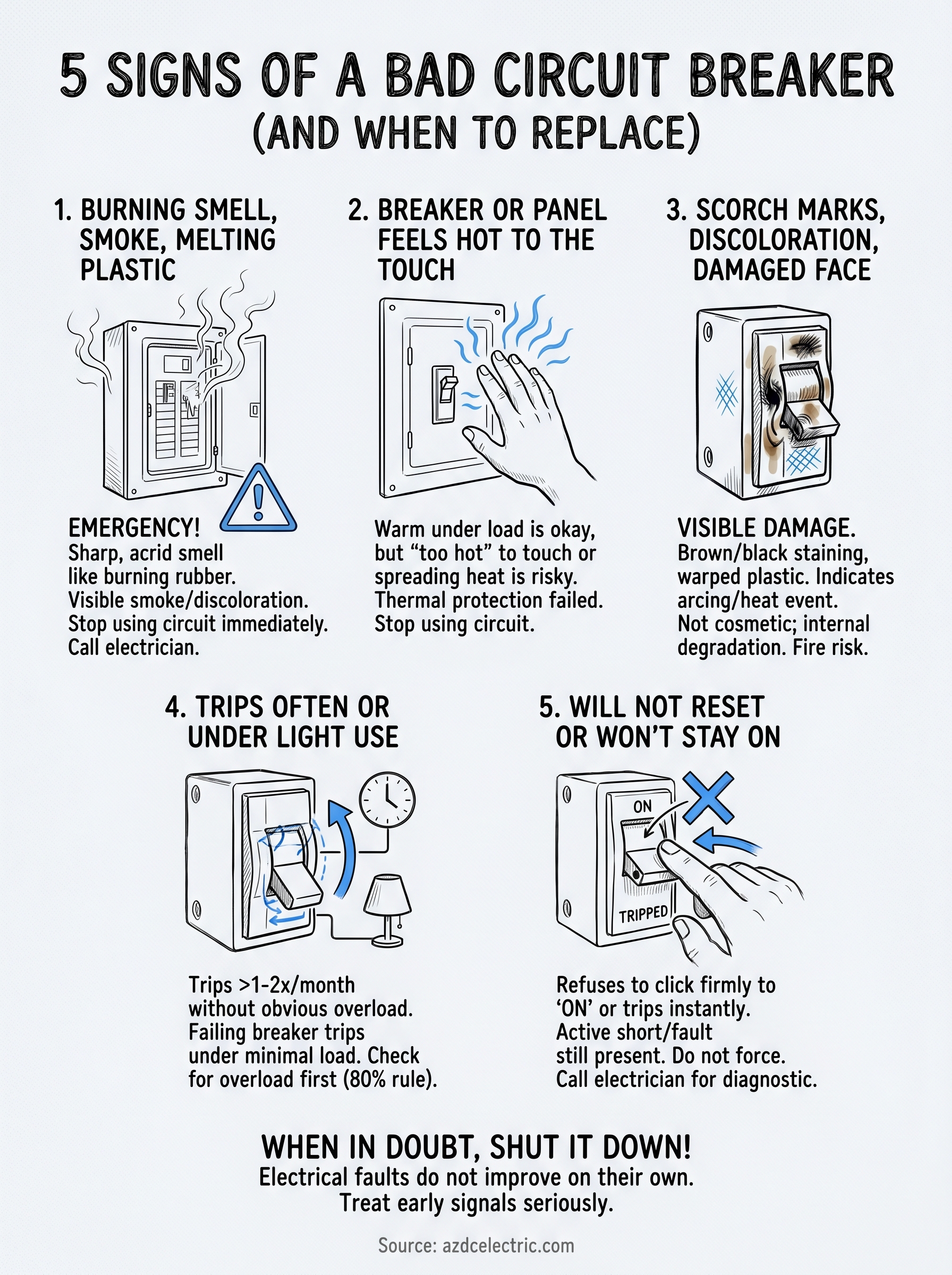
When in doubt, shut it down
Any one of these signs of a bad circuit breaker gives you a good reason to stop using that circuit until a licensed electrician can inspect it. Electrical faults do not improve on their own, and the longer you run a failing breaker, the more damage can spread to the surrounding wiring, the bus bar, and the panel enclosure.
Your panel does not need to be sparking or smoking for the risk to be real. A breaker that runs hot, smells faintly of burning, or trips without an obvious cause is already telling you something is wrong. Treating those early signals seriously costs far less than repairing fire damage or replacing a full panel after a fault compounds into something worse.
If anything in this article matches what you’re seeing at home, contact the licensed electricians at AZ DC Electric to schedule a panel inspection before the problem gets worse.