Installing the wrong breaker in a Siemens panel can damage your equipment, void your warranty, or create a genuine fire hazard. That’s why having a reliable Siemens circuit breaker compatibility chart matters, it tells you exactly which breakers fit your panel safely and which ones don’t belong there, no matter how similar they look on the shelf.
At AZ DC Electric, we handle panel upgrades and breaker replacements across the Phoenix Metro Area every week. We’ve seen firsthand what happens when a homeowner or handyman installs a breaker that physically snaps in but isn’t actually listed as compatible by Siemens. The connection may seem fine at first, but poor contact points lead to arcing, overheating, and eventual failure. It’s one of the most common, and most preventable, electrical mistakes we encounter.
This guide breaks down which breaker brands and series are compatible with Siemens panels, which cross-compatible options are UL-classified, and which ones you should avoid entirely. We’ll cover the QP, QT, and other Siemens breaker lines, plus address common questions about Eaton, GE, and Square D breakers fitting Siemens enclosures. By the end, you’ll know exactly what fits and, just as important, why compatibility matters beyond the physical click.
What "compatible" means for Siemens breakers
When you search for a Siemens circuit breaker compatibility chart, you’ll quickly find that "compatible" can mean two very different things. The first meaning is physical fit: the breaker snaps into the panel’s bus bar without forcing. The second, and far more important, meaning is listed compatibility: the breaker manufacturer has tested and certified that specific breaker for use in a specific Siemens enclosure. Confusing the two is where most dangerous wiring decisions start.
Physical Fit vs. Listed Compatibility
A breaker from a competing brand might slide into your Siemens panel and clip onto the bus bar without any visible gap. That does not make it safe or code-compliant. Listed compatibility requires that the breaker has been tested to UL Standard 489 and that either Siemens or a third-party certification body has approved it as an original or classified replacement for that panel. If that documentation does not exist, the breaker does not belong in your panel, full stop.
A breaker that physically fits but lacks UL classification for your specific panel can void your homeowner’s insurance and cause a failed code inspection.
What Siemens Actually Approves
Siemens recognizes three categories of acceptable breakers for their panels. Understanding each one helps you make the right purchase decision before you pull anything off the shelf.
| Category | Description | Example |
|---|---|---|
| OEM Siemens breakers | Manufactured by Siemens for that specific panel line | QP, QT, QPF series |
| Classified replacements | Third-party breakers UL-classified for Siemens panels | Eaton CL series |
| Panel directory listings | Breakers named as acceptable on the panel’s inside label | Listed on your enclosure door |
Each category carries distinct approval documentation, and only breakers that fall into one of these three groups belong inside your Siemens enclosure.
Step 1. Identify your Siemens panel and breaker type
Before you reference any Siemens circuit breaker compatibility chart, you need two pieces of information: your panel model number and the breaker series it was designed for. Both are printed directly on your electrical panel, so start there before purchasing anything.
Where to Find Your Panel Information
Open your panel door and look at the inside label. Most Siemens panels display the model number in the upper corner of that label, and the approved breaker series are listed directly below it. Write down the full model number, including any letter suffixes, because "P1" and "P1B" can have different approved breaker lists.

The panel’s inside label is the single most reliable source for compatibility, treat it as your primary reference before consulting any online chart.
Common Siemens Panel Series and Their Breakers
Knowing which panel series you own points you directly to the correct breaker family. The table below covers the most common configurations found in Phoenix-area homes.
| Panel Series | Compatible Breaker Types |
|---|---|
| PL series | QP, QPF, QT |
| ES series | QP, QAF |
| P1 series | QP, QT, QAF |
Each series accepts specific amperage ratings and frame sizes, so confirm your panel series before selecting any replacement breaker.
Step 2. Match electrical ratings and trip features
Physical fit and panel listing are only part of the equation. After confirming your panel series, you need to match the amperage rating and trip type of your replacement breaker to the circuit it protects. Using a breaker with the wrong rating puts your wiring and appliances at risk, even if the breaker is listed for your panel.
Amperage and Voltage Ratings
Every circuit in your panel has a wire gauge that determines the maximum ampere rating the breaker should carry. A 15-amp breaker protects 14-gauge wire, and a 20-amp breaker protects 12-gauge wire. Installing a higher-rated breaker than the wire gauge allows is a serious code violation because the wire can overheat before the breaker ever trips.
Always match the breaker amperage to the wire gauge in the circuit, not to the load the device draws.
Trip Feature Requirements
Certain circuits require GFCI or AFCI protection depending on their location in your home. Bedrooms and living areas require AFCI breakers per NEC 2020 requirements, while bathrooms, kitchens, garages, and outdoor circuits need GFCI breakers. The table below shows common circuit types and their required trip features.
| Circuit Location | Required Trip Feature |
|---|---|
| Bathroom / Kitchen | GFCI |
| Bedroom / Living Room | AFCI |
| Outdoor / Garage | GFCI |
| Laundry Room | GFCI or AFCI/GFCI combo |
Step 3. Verify approved replacements and UL listings
Once you’ve matched your amperage and trip requirements, confirm that the replacement breaker carries the right UL listing for your specific Siemens panel. A Siemens circuit breaker compatibility chart can point you in the right direction, but the UL listing printed on the breaker itself is your final authority. Look for the UL mark on the breaker label and cross-reference it with the panel’s inside door label before purchasing.
How to Read a UL Classification Label
The UL mark on a breaker falls into two categories: UL Listed and UL Classified. A listed breaker is an OEM Siemens product approved for their own panels. A classified breaker is a third-party product that has been independently tested and approved for use in specific Siemens enclosures.
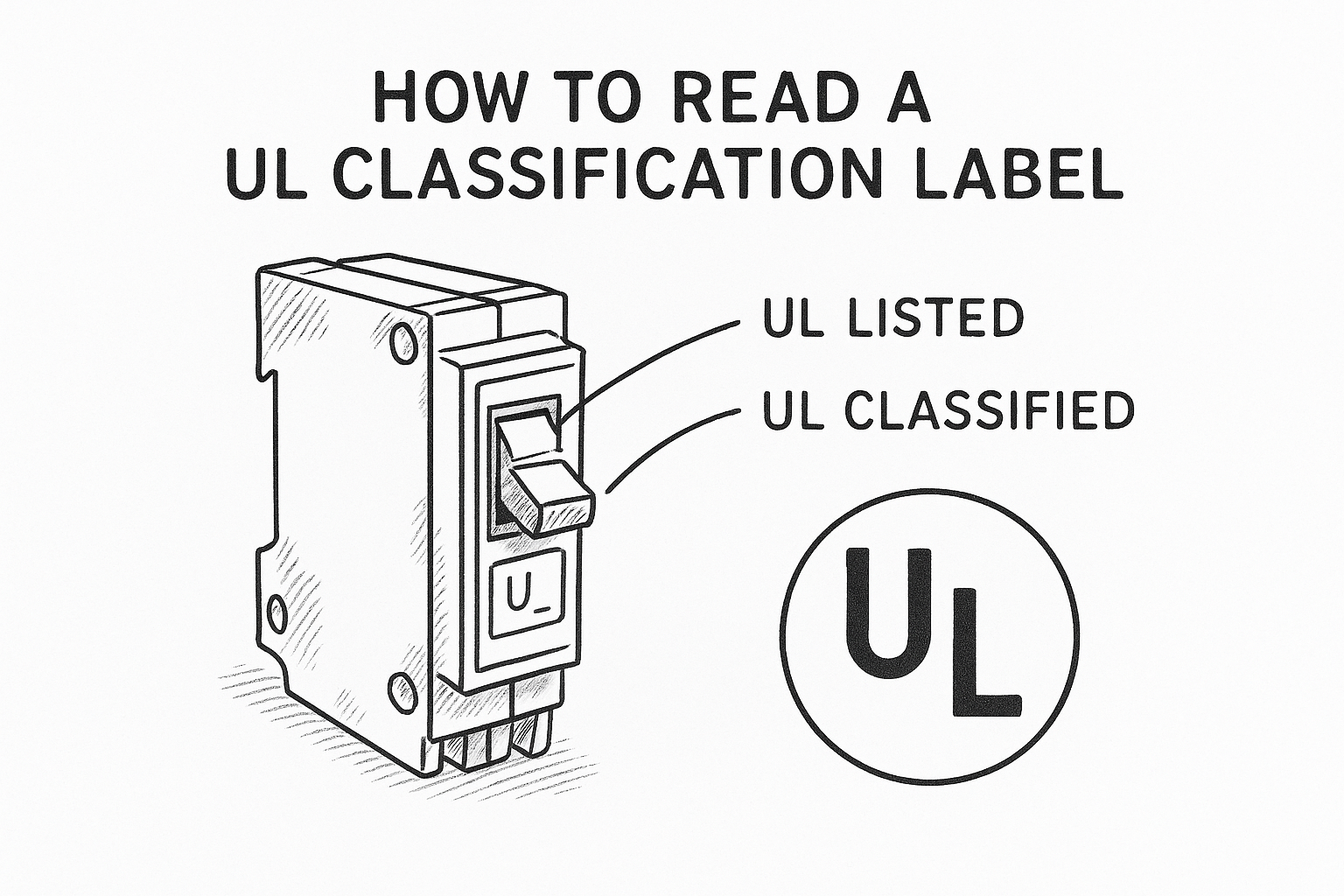
Never install a breaker that only carries a generic UL listing without a specific panel classification noted on its packaging.
Confirmed Compatible Replacements for Siemens Panels
The table below shows verified replacement options and their classification status for common Siemens panel lines.
| Breaker Brand / Series | UL Status | Compatible With |
|---|---|---|
| Siemens QP | UL Listed (OEM) | PL, P1, ES series |
| Siemens QPF (GFCI) | UL Listed (OEM) | PL, P1 series |
| Eaton CL (Classified) | UL Classified | Siemens PL series |
| Murray MP (legacy) | UL Listed (OEM) | Older Murray/Siemens panels |
Step 4. Handle brand swaps and know when to call a pro
Swapping a Siemens breaker for a different brand is sometimes necessary when an OEM part is unavailable or discontinued. However, not every brand swap is acceptable, and using this Siemens circuit breaker compatibility chart as your guide helps you avoid installing an unapproved breaker that looks right but performs dangerously.
When a Brand Swap Is Acceptable
A brand swap is only acceptable when the replacement carries a UL Classified listing specifically for your Siemens panel model. The Eaton CL series is the most widely recognized UL-classified option for Siemens PL-series panels. Brands like GE or Square D do not carry a classified listing for Siemens enclosures and should not be used as replacements under any circumstances.
If the replacement breaker packaging does not explicitly name Siemens panels in its classified listing, do not install it.
Verified classified replacements for common Siemens panels include:
- Eaton CL series: UL Classified for Siemens PL-series panels
- Murray MP series: UL Listed for legacy Murray/Siemens panels
When to Call a Licensed Electrician
Some situations go beyond a straightforward breaker swap and require professional assessment. Call a licensed electrician if your panel label is missing, if you see burn marks or melted plastic near any breaker slot, or if your panel is more than 25 years old. These are signs that the panel itself needs evaluation, not just a replacement breaker.

Final safety check
Before you close your panel door, run through one last check. Confirm your replacement breaker matches the amperage and wire gauge of the circuit, carries the correct trip feature for that location, and appears on either your panel’s inside label or a verified Siemens circuit breaker compatibility chart. If all three boxes are checked, you’re in good shape.
Your panel label is your final authority. If the breaker you’ve chosen does not appear there or on a verified classification document, pull it out and order the correct part. Installing a physically compatible but unlisted breaker is never worth the risk of arcing, overheating, or a failed inspection.
When anything looks off or unclear, skip the guesswork. The licensed electricians at AZ DC Electric handle panel evaluations and breaker replacements across the Phoenix Metro Area, and we provide upfront pricing before any work begins.