Recessed lighting is one of those upgrades that makes a noticeable difference the moment you flip the switch, cleaner sightlines, better light distribution, and a modern look that works in almost any room. But before you commit, you need a clear picture of what recessed lighting installation cost actually looks like in 2026, because the range can vary more than most homeowners expect.
The total price depends on several moving parts: the number of fixtures, your ceiling type, whether new wiring needs to be run, and the electrician you hire. A straightforward install in a finished ceiling with existing wiring is a completely different job, and price tag, than cutting into a second-story ceiling with no attic access. Knowing these variables upfront keeps you from getting blindsided by a quote.
At AZ DC Electric, we handle recessed lighting installations across the Greater Phoenix Metro Area every week, from single-room additions to whole-home layouts in new construction. This guide breaks down current pricing per fixture, labor rates, and the specific factors that push costs up or down, so you can plan your project with real numbers, not guesswork.
Why recessed lighting costs vary so much
When two homeowners in the same neighborhood get quotes for recessed lighting, they often end up with very different numbers, and that difference is not random. Recessed lighting installation cost swings based on a combination of the fixtures themselves, how much wiring work is involved, and how accessible your ceiling actually is. Understanding where those variables come from helps you read a quote accurately instead of just reacting to the total.
The fixture type shapes the starting price
Not all recessed lights are the same product, and that gap shows up immediately in material costs. A basic trim-and-can setup using older incandescent technology runs cheaper upfront, but most electricians today default to integrated LED fixtures or LED retrofit kits because they last longer and use less power. Beyond the light source, you also choose between new construction housings (installed before drywall goes up) and remodel housings (installed through an existing finished ceiling), and each requires different hardware. Larger fixtures, specialty trims, and smart-home-compatible dimmers all push the material cost higher before labor is even factored in.
Ceiling access determines how long the job takes
This is where labor hours can multiply quickly. If your electrician can walk through an unfinished attic above the installation area, running wire between fixtures is straightforward. A finished ceiling with no attic access is a different job entirely. The crew has to work through small cutouts, fish wire through insulation, and sometimes open sections of drywall to get everything connected cleanly. Second-floor ceilings, vaulted ceilings, and concrete slab construction each add layers of difficulty that translate directly into more hours billed.
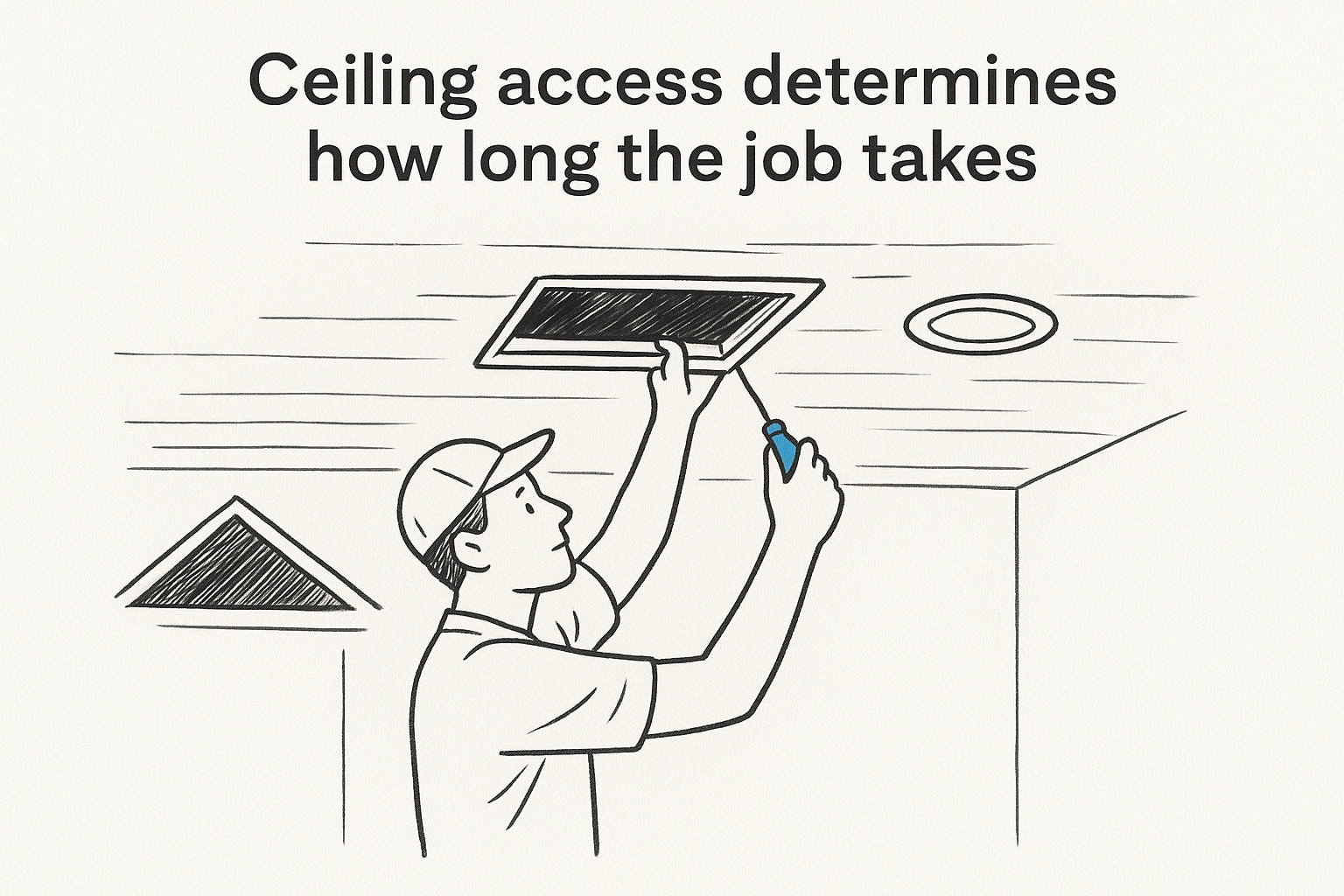
Ceiling access is often the single factor that most separates a routine installation from a complex one, so always describe your ceiling type when requesting a quote.
Wiring requirements can double the scope
If your existing electrical system can support additional fixtures on a nearby circuit, the wiring portion of the job stays manageable. Many older Phoenix-area homes were not wired with extra capacity in mind, though. If your electrician needs to run new circuits back to the panel, add a dedicated breaker, or relocate a switch, those hours add up fast. Dimmer compatibility is another common cost driver: older standard switches often need to be replaced with LED-compatible dimmers, and if you want multiple lighting zones, that requires additional switch legs and sometimes low-voltage control wiring.
The number of fixtures shifts your per-unit cost
Installing six recessed lights in a single room costs meaningfully less per fixture than installing one or two. When an electrician is already set up in a space, cutting additional holes, pulling wire between nearby fixtures, and connecting them to a single switch circuit takes far less incremental time than the first fixture did. Larger installations spread the setup cost across more units, which is why most contractors price by the job rather than a strict per-fixture rate. If you are planning multiple rooms, grouping the work into one project almost always produces better overall value per light installed.
2026 recessed lighting cost ranges to expect
Knowing the typical numbers for recessed lighting installation cost in 2026 gives you a reliable starting point before you call a single contractor. Prices have shifted modestly in recent years due to material costs and ongoing labor market changes in the Phoenix metro area, but the ranges below reflect what most homeowners are actually paying this year.
Per-fixture cost ranges
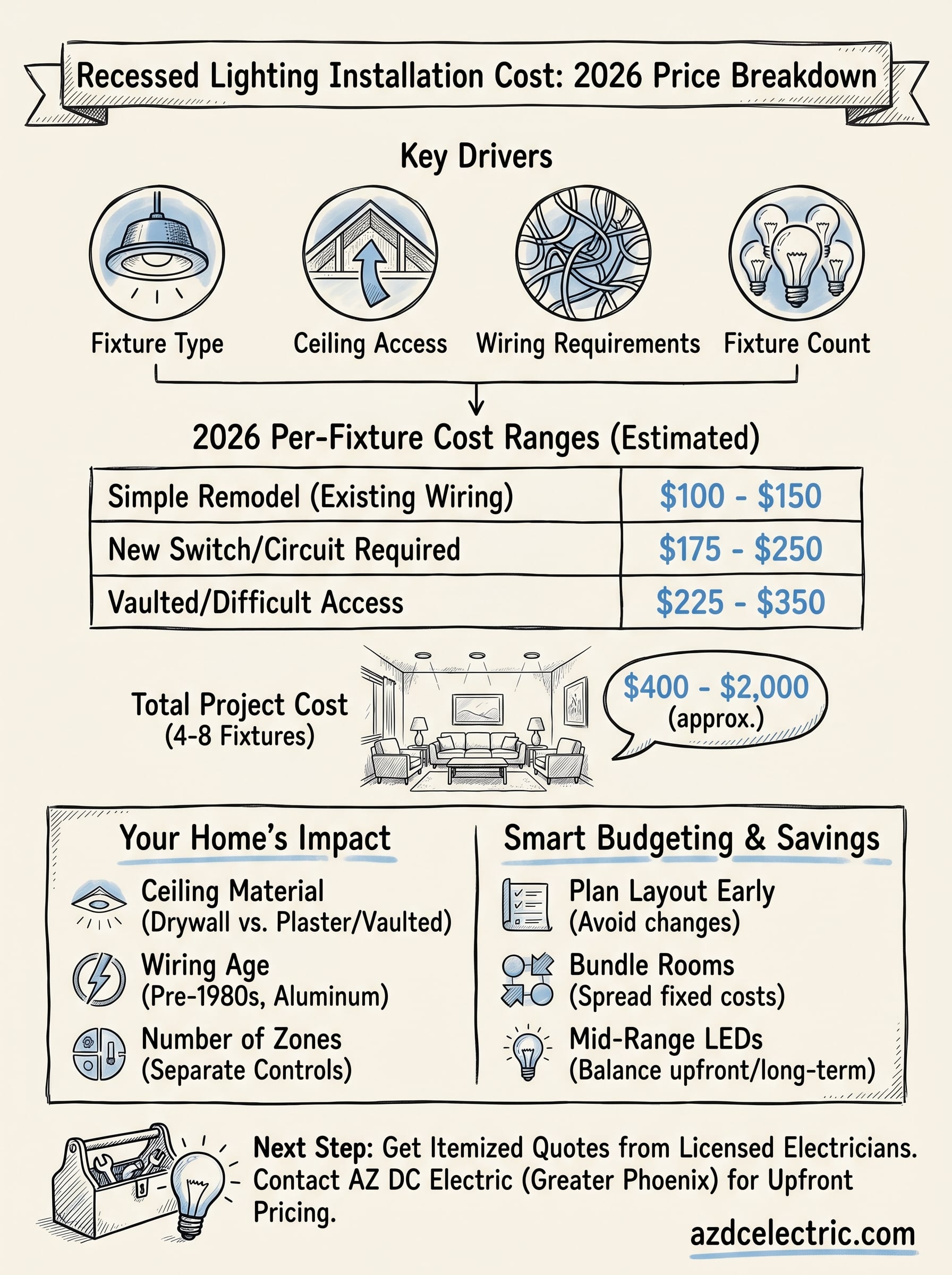
The most common way electricians quote recessed lighting is per fixture installed, which bundles the hardware and labor for each light into a single number. That per-fixture price typically falls between $100 and $350, depending on ceiling conditions and fixture type.
| Scenario | Estimated Cost Per Fixture |
|---|---|
| Simple remodel install, existing wiring nearby | $100 – $150 |
| New switch or circuit required | $175 – $250 |
| Vaulted ceiling or difficult access | $225 – $350 |
The per-fixture range is wide for a reason: ceiling access and wiring complexity carry more weight than the fixture price itself in most projects.
Total project cost by room size
For a standard living room or kitchen, most homeowners install between four and eight fixtures, which puts the total project cost somewhere between $400 and $2,000 depending on which scenario applies to your home. That range assumes a single room with one switch location and reasonably accessible ceiling conditions.
Larger projects shift the math considerably. A whole-home installation across multiple rooms, including new construction wiring, can run from $3,000 to $8,000 or more. If your project involves panel upgrades or additional dedicated circuits, factor those in separately, since electricians bill them as distinct line items rather than folding them into the per-fixture rate. Getting a written, itemized quote before any work starts is the clearest way to understand exactly where your money is going.
What drives the price in your home
General price ranges give you a ballpark, but your specific home conditions are what the electrician actually quotes. Two houses on the same street can produce very different numbers for the same recessed lighting installation cost because the physical realities inside the walls and ceilings are rarely identical. Knowing the factors that apply to your situation lets you anticipate where your quote lands before anyone shows up.
Your ceiling material and construction type
Drywall ceilings with attic access above them are the easiest and fastest to work with. Plaster ceilings, common in older Phoenix homes, require more careful cutting to avoid cracking and can add time to every single fixture. Coffered ceilings, tray ceilings, and vaulted ceilings all introduce angles and structural elements that slow the rough-in process considerably, which translates directly into higher labor charges.
If your ceiling is insulated and air-sealed, you also need IC-rated and airtight fixtures, which cost more than standard housings but are required by code in those situations.
The age of your home’s wiring
Homes built before the 1980s sometimes still have aluminum wiring or older knob-and-tube systems that are not compatible with modern lighting circuits without remediation. Even if your home has standard copper wiring, older panels with limited breaker slots may require a panel upgrade or subpanel addition before new circuits can be added. Your electrician will identify these issues during the estimate, but they add real cost to the project if they apply to your home.
How many fixtures you want on separate controls
Running all your recessed lights to a single switch location is the most straightforward wiring scenario. The moment you want separate zones, such as kitchen perimeter lights independent from island lights, the electrician needs to pull additional switch legs and may need to install multiple LED-compatible dimmers. Each zone adds wiring time and switch hardware. Grouping fixtures thoughtfully during the planning phase, rather than adding zones later, keeps that part of the job as efficient as possible.
How to estimate your recessed lighting budget
Building a realistic budget for recessed lighting installation cost does not require a contractor visit before you do any thinking. You can work through a simple process on your own that gets you close enough to evaluate quotes accurately when they come in. The key is to break the project into its major components rather than treating it as one unpredictable total.
Start with a fixture count and room list
Your first step is deciding how many fixtures you want and in which rooms. A general rule for residential spaces is one fixture for every four to six square feet of ceiling area, though room shape and ceiling height adjust that number. Measure each room you plan to upgrade and use that formula to get a working count.
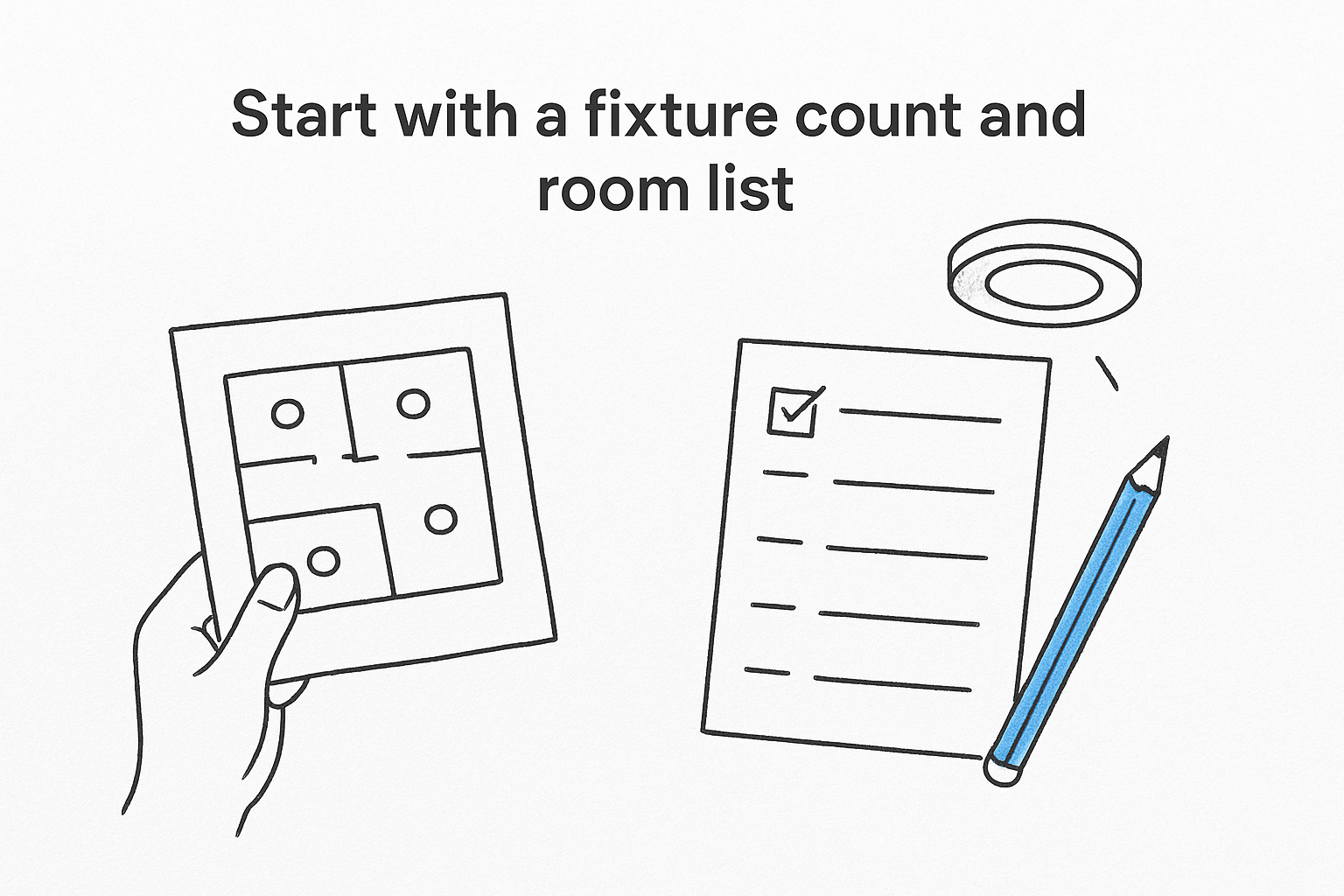
Once you have your list, use the per-fixture ranges from earlier in this guide to build a rough estimate:
- Simple remodel install with existing wiring nearby: $100 to $150 per fixture
- New switch or circuit required: $175 to $250 per fixture
- Vaulted ceiling or difficult access: $225 to $350 per fixture
Add up your fixture count multiplied by the range that best matches your ceiling conditions, and you have a working baseline.
Add a buffer for wiring unknowns
No estimate survives first contact with a wall without some adjustment. Older homes in particular often reveal wiring conditions that only become visible once an electrician opens the ceiling. A standard recommendation is to add 10 to 15 percent on top of your baseline estimate as a contingency for unexpected circuit work, switch replacements, or compatibility issues.
Building that buffer in from the start prevents a minor wiring surprise from blowing your entire project budget.
Get itemized quotes from licensed electricians
Once you have your working estimate, use it as a benchmark when you collect professional quotes. Ask each electrician for a written, line-item breakdown that separates fixture costs, labor, circuit work, and any panel-related charges. That structure makes it easy to compare quotes directly and spot where any outlier numbers are coming from.
Cost-saving moves that do not cut corners
Reducing your recessed lighting installation cost does not mean hiring the cheapest bidder or skipping steps that protect your home. There are several legitimate ways to bring the total down without sacrificing quality, safety, or the longevity of the work. The moves that actually save money address planning, timing, and product selection, not workmanship.
Plan your layout before the electrician arrives
Walking through your room plan ahead of the estimate saves real money because design changes during installation cost far more than changes made on paper. Decide how many fixtures you want, where the switch location will be, and whether you want dimmer control before anyone opens a wall. Every time a circuit route changes mid-job, the electrician bills for the extra time to adjust. Showing up with a clear, finalized layout shortens the estimate conversation and reduces the chance of scope creep once work begins.
A 30-minute planning session at home can prevent hours of rework charges on installation day.
Bundle rooms into one project
Scheduling multiple rooms in a single project is one of the most effective ways to lower your per-fixture cost. Setup time, tool transport, and trip charges are fixed costs that your electrician absorbs once per visit. When you spread those fixed costs across ten fixtures instead of four, each fixture carries a smaller share. If you have been thinking about adding recessed lighting to both the kitchen and the hallway, doing both at once almost always produces a lower total rate than two separate jobs.
Select mid-range integrated LED fixtures
Your fixture choice affects both the upfront material cost and your long-term energy bill. Basic budget fixtures often require replacement sooner, while premium smart-home options add cost that many homeowners do not fully use. A quality integrated LED fixture in the mid-price range, roughly $20 to $50 per unit, delivers reliable performance and solid lifespan without overbuilding the budget. Confirm with your electrician that any fixture you select is IC-rated if your ceiling is insulated, since using the wrong housing creates a code issue that costs more to fix later.
A simple plan for your next step
You now have a clear picture of what recessed lighting installation cost looks like in 2026, from per-fixture ranges to the specific home conditions that shift your total. The practical next step is to take your fixture count, room list, and ceiling notes and turn them into a written project scope before you contact anyone. That document becomes your reference point for every quote you collect.
Once your scope is ready, talk to a licensed electrician who knows your local code requirements and can give you a written, line-item estimate rather than a rough verbal number. That conversation will confirm whether your ceiling conditions and panel capacity match your budget expectations.
If you are in the Greater Phoenix Metro Area and want a straightforward, no-surprise quote, contact AZ DC Electric to schedule a consultation. Upfront pricing and a 5-year workmanship guarantee back every project we complete.