Your main breaker is the single switch that controls power to your entire home. When it starts tripping repeatedly, feels hot to the touch, or won’t reset at all, replacing it isn’t optional, it’s urgent. But before you call an electrician, you probably want to know what the main breaker replacement cost looks like so you’re not walking into the job blind. That’s a smart move, and this guide gives you real numbers based on panel size, amperage, and labor so you can evaluate any quote you receive.
Costs vary more than most homeowners expect. A straightforward breaker swap in a modern 100-amp panel is a different job, and a different price, than upgrading a 200-amp panel with outdated wiring. Parts alone can range from under $100 to well over $1,000, and labor depends heavily on the complexity of your specific setup. We break all of that down here, with 2026 pricing that reflects current material and labor rates in the residential electrical market.
At AZ DC Electric, we handle main breaker replacements across the Greater Phoenix Metro Area every week, from older Scottsdale homes with original panels to newer builds in Chandler and Mesa. Our upfront pricing model means you’ll know the cost before we start, and our 5-year workmanship guarantee backs every job we complete. This article draws directly from that hands-on experience to help you understand what you should actually pay and why.
Why main breaker replacement cost varies
The main breaker replacement cost is not a single fixed number you can look up and plug into a budget. Several overlapping factors push the price up or down, and understanding each one helps you read a contractor’s quote accurately. Some of these factors are within your control, others depend on the age and condition of your home’s electrical system.
The breaker itself: type and amperage rating
The breaker unit is the starting point for any cost estimate. Standard single-pole breakers used for individual circuits are inexpensive, but the main breaker is a different animal. It controls the full incoming load to your home, which means it must match your service amperage exactly. A 100-amp main breaker costs far less than a 200-amp or 400-amp unit, and specialty breakers from brands like Square D, Siemens, or Eaton carry a higher price tag than generic equivalents.
Some older panels use breakers that manufacturers no longer produce. When that happens, you’re looking at either a compatible aftermarket replacement or a full panel swap, which changes the cost picture significantly. Breaker type also matters: standard thermal-magnetic breakers cost less than AFCI (arc-fault circuit interrupter) or GFCI variants, which some local codes now require when work touches certain circuits.
Panel age and existing wiring condition
The condition of your existing panel and wiring directly affects how much labor the job requires. An electrician working inside a clean, well-organized panel in a newer home can complete a main breaker swap in a few hours. An older panel packed with aluminum wiring, deteriorating insulation, or corroded bus bars takes longer and may reveal additional problems once the work begins.
If your panel is more than 25 to 30 years old, budget for the possibility that the inspection uncovers secondary repairs beyond the breaker itself.
Panels from certain eras, particularly those using Federal Pacific or Zinsco equipment, often cannot be safely repaired with a new breaker alone. The cost of a repair can escalate quickly when the panel itself is the underlying hazard, not just the breaker that failed.
Permit requirements and local inspection fees
Most jurisdictions require a permit for main breaker replacement, and the City of Phoenix and surrounding municipalities in Maricopa County are no exception. Permit fees vary by city but typically run between $75 and $250 for this type of work. Your licensed electrician should pull the permit on your behalf, and a city inspector will verify the work before the utility restores power.
Skipping the permit is not a shortcut worth taking. It creates liability when you sell the home, voids your homeowner’s insurance coverage for that circuit, and leaves you unprotected if the work develops a problem later. Always confirm that your contractor includes permit costs in their quote.
Labor complexity and access
Labor makes up a significant portion of the total bill, and complexity drives that number up or down. A breaker replacement in an accessible indoor panel takes less time than one mounted in a tight exterior enclosure, a garage with limited clearance, or a subpanel setup where the main disconnect is located separately from the branch circuits.
Some jobs require the utility company to pull the meter before the electrician can safely work on the main breaker. In the Phoenix area, APS and SRP both require coordination for meter pulls, which can add scheduling time and, in some cases, a small utility fee. Your electrician should account for that coordination in their timeline, not treat it as a surprise on job day.
Combining all these factors is why two homeowners with similar homes can receive quotes that differ by several hundred dollars. The variables stack on top of each other, and the only way to get an accurate number is a proper on-site assessment from a licensed contractor.
Main breaker vs panel replacement costs
Before you can accurately compare quotes, you need to know whether you’re replacing a single component or the entire system. The main breaker is one device inside a larger enclosure, and the condition of that enclosure determines whether a targeted swap makes sense or whether the panel itself needs to go. Mixing up these two jobs leads to budget surprises that a little upfront clarity prevents.
When a breaker swap is enough
If your panel is relatively modern, properly sized for your home’s electrical load, and in good physical condition, replacing only the main breaker is a reasonable and lower-cost path. A licensed electrician removes the failed unit, installs a compatible replacement, verifies the connections, and closes the panel back up. Labor for a straightforward swap typically runs two to four hours, and the total bill reflects that limited scope.
Expect this type of job when the panel brand is still widely supported, the bus bars show no corrosion, and the internal wiring is copper and intact. Breaker-only replacements generally land in the $200 to $600 range all-in, depending on the amperage rating of the breaker and any permit fees your city requires.
When the full panel needs to go
Sometimes the main breaker fails because the panel itself is the problem. Outdated equipment from brands with documented safety records, corroded internal components, or panels that have simply exceeded their service life cannot be fixed with a breaker swap alone. Installing a new breaker in a compromised panel leaves the underlying hazard in place and may not satisfy a city inspection.
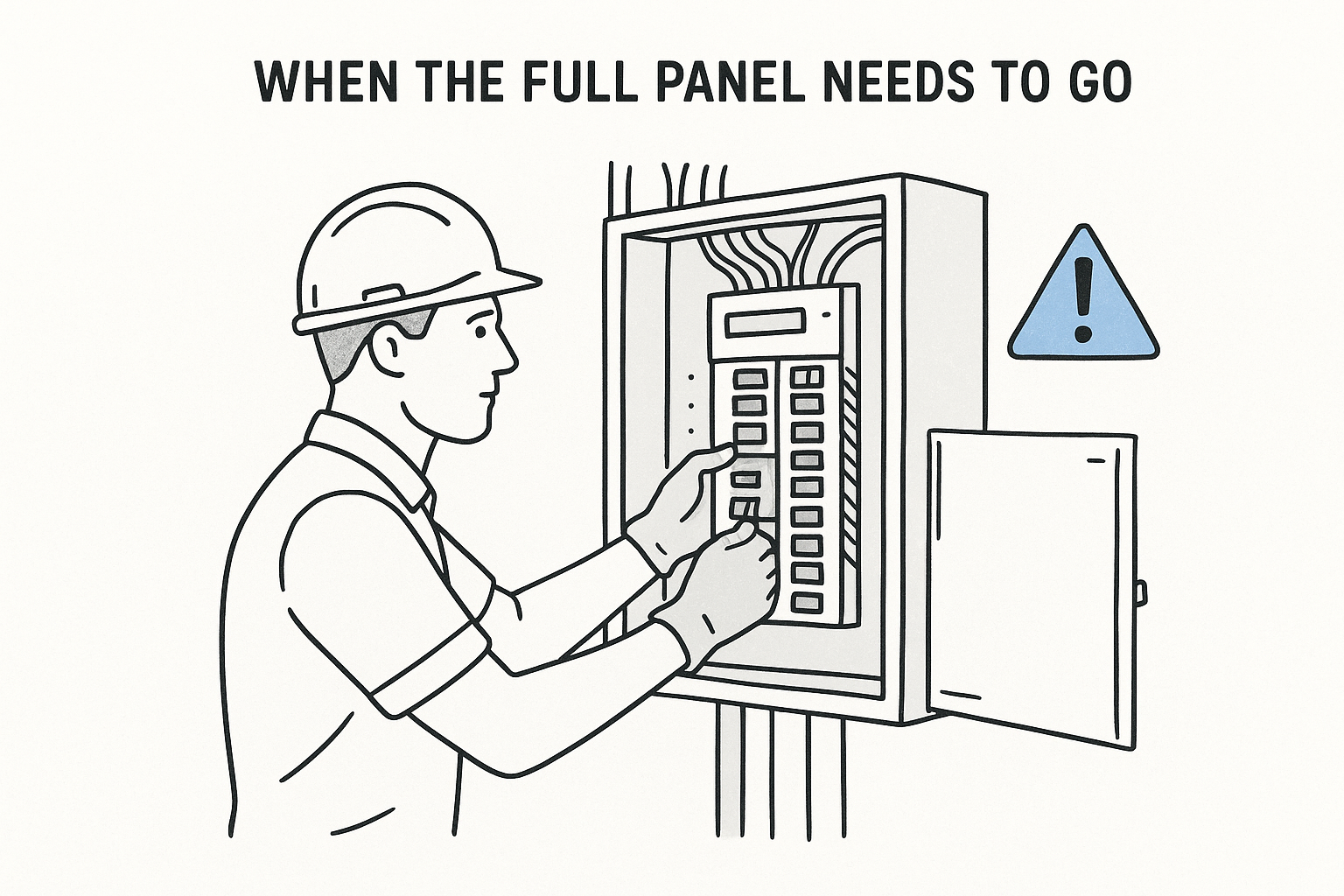
Replacing only the breaker in a failing panel can create a false sense of safety while the real risk remains inside the enclosure.
A full panel replacement carries substantially higher costs because it involves removing the existing enclosure, installing a new panel, reconnecting every circuit breaker, and restoring the connections to the main service entrance. This is a multi-hour job that often requires a utility meter pull and a city inspection before power is restored. In the Phoenix area, full panel replacements typically range from $1,500 to $4,000 or more, depending on panel size and existing wiring complexity.
Knowing which job your home actually needs is central to evaluating any main breaker replacement cost estimate accurately. A trustworthy contractor will explain the distinction upfront and show you the physical evidence behind their recommendation before any work begins.
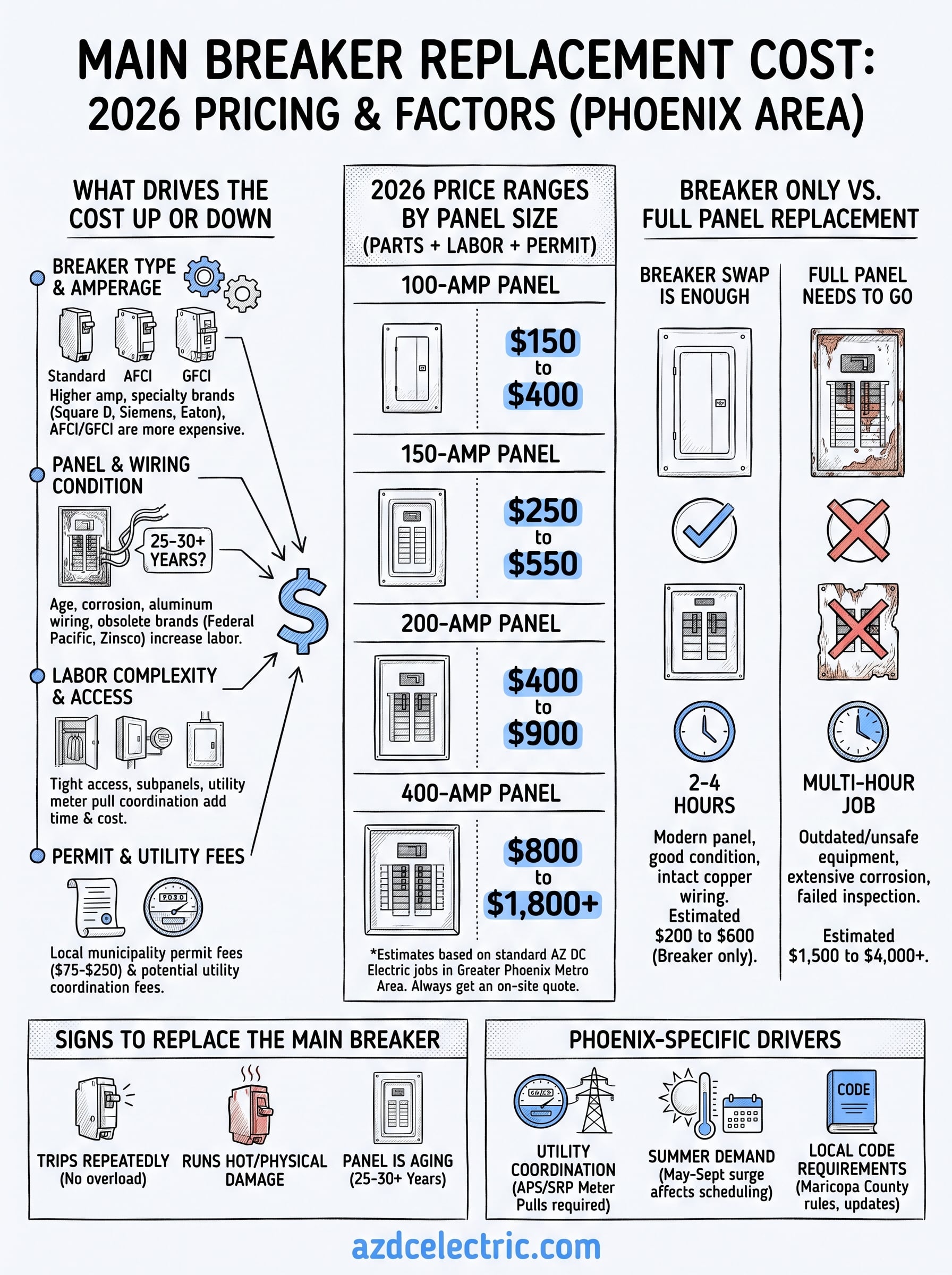
2026 price ranges by panel size and amperage
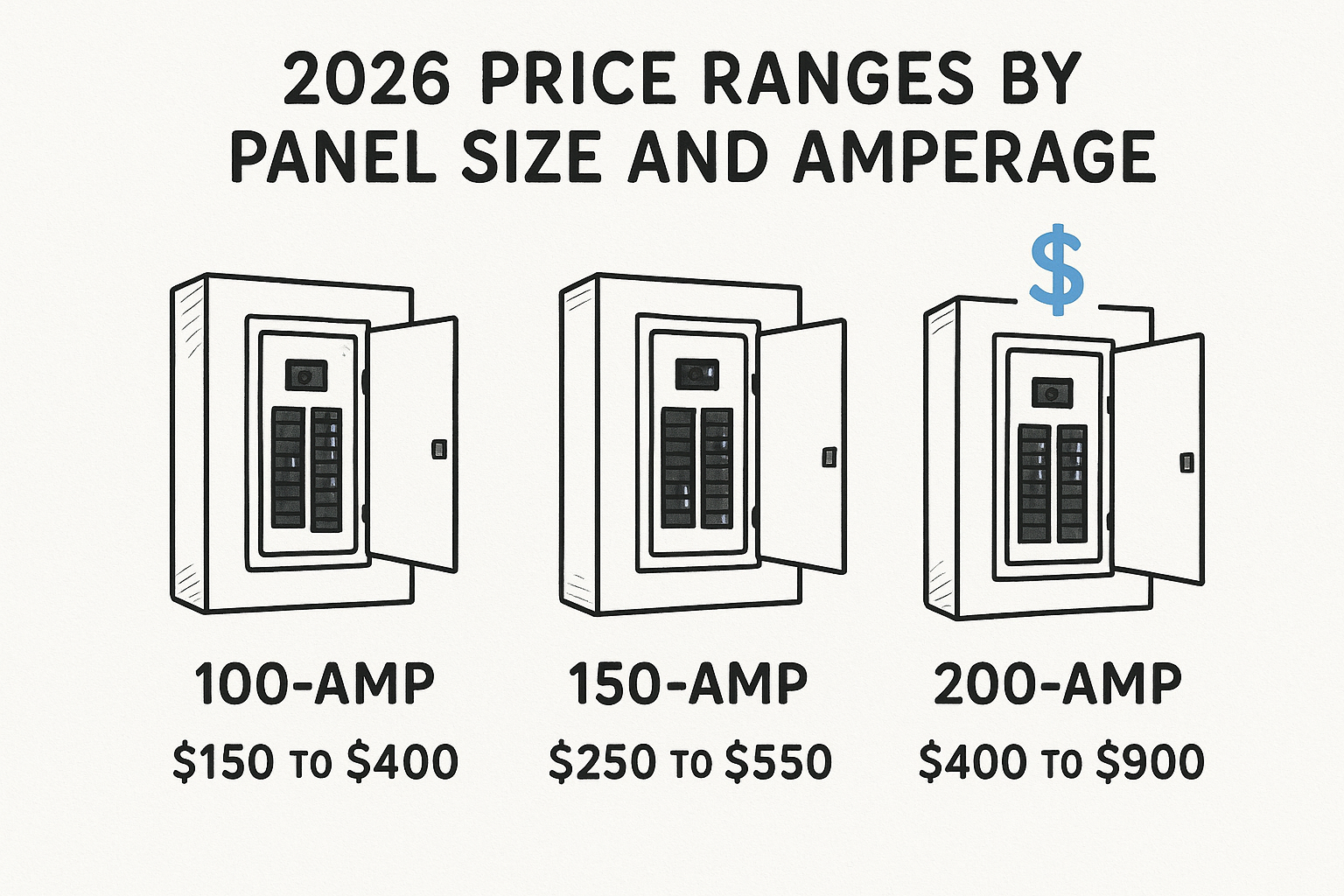
The amperage rating of your panel is the single biggest factor in determining where your job falls on the pricing spectrum. A higher-amperage panel draws more power, requires a heavier-duty breaker, and generally takes more labor to service safely. The numbers below reflect 2026 pricing for residential main breaker replacements and cover parts, labor, and standard permit fees in most Arizona municipalities.
100-amp panels
A 100-amp service was common in homes built before the 1980s, and many older properties in the Phoenix area still run on it. The main breaker for this panel size is widely available and relatively affordable. Breaker-only replacement for a 100-amp panel typically runs between $150 and $400 total, with most jobs landing in the lower half of that range when the panel is in decent condition and the work is straightforward.
If your 100-amp service is showing its age, an electrician may recommend upgrading the entire panel to 200-amp at the same time, which changes the main breaker replacement cost picture entirely but gives you a modern, code-compliant system.
150-amp panels
150-amp service sits between the two more common ratings and appears in homes from the 1980s and 1990s. Parts availability is slightly more limited, which can push material costs up modestly. Expect a total bill between $250 and $550 for a main breaker replacement at this amperage, depending on brand compatibility and local labor rates. The job scope is similar to a 100-amp swap, but sourcing an exact-match breaker sometimes adds lead time to the project.
200-amp panels and above
200-amp service is the current residential standard, and most modern homes in the Greater Phoenix Metro Area run on it. The main breaker itself costs more at this amperage, and the connections carry significantly more load, which demands careful handling. For 400-amp service, found in larger homes or properties with high electrical demand, breaker costs rise further and the job typically requires a utility coordination step before work can begin.
A 200-amp or 400-amp main breaker replacement should always be handled by a licensed electrician. The incoming conductors at this service level carry enough current to cause severe injury or death if mishandled.
Here is a quick reference for 2026 estimated totals by amperage:
| Panel Amperage | Estimated Total (Parts + Labor + Permit) |
|---|---|
| 100-amp | $150 to $400 |
| 150-amp | $250 to $550 |
| 200-amp | $400 to $900 |
| 400-amp | $800 to $1,800+ |
What drives the final price in Phoenix
Phoenix-specific factors push the main breaker replacement cost beyond the national averages you might find in generic pricing guides. The Valley operates under its own utility rules, building codes, and seasonal realities that all affect what you actually pay when the job is done.
Utility coordination with APS and SRP
Both Arizona Public Service (APS) and Salt River Project (SRP) require the meter to be pulled before an electrician can legally work on the main breaker. This step is not optional, and it is not instant. Scheduling a meter pull adds coordination time to the job, and in some cases a small utility fee applies depending on your service provider and account status.
If you book your job without confirming meter pull availability, you risk a same-day delay that pushes the work back by hours or even a full day.
Your electrician should contact the utility directly and handle this step as part of the job scope. If a contractor quotes you without mentioning utility coordination, ask about it before signing anything.
Summer scheduling and demand pricing
Phoenix summers create a demand surge for electrical work that directly affects labor availability and scheduling timelines. From May through September, cooling systems run at full load and electrical failures spike across the Valley. Electricians book up faster during this window, and emergency or same-day appointments cost more than standard scheduled work because demand is simply higher.
Planning your replacement during fall or spring gives you more scheduling flexibility and more room to compare quotes without pressure. If you do need work done in peak summer heat, expect to pay a modest premium for quick availability compared to what you would pay in cooler months.
Local code requirements in Maricopa County
Maricopa County municipalities, including Phoenix, Scottsdale, Mesa, and Chandler, each apply the National Electrical Code with local amendments. When a main breaker is replaced, the inspector will check that the work meets current code, which sometimes requires bringing adjacent components up to standard even if they were not part of the original repair scope.
This is not a contractor upsell tactic, it is a code compliance reality. The cost impact is usually modest, but knowing it might happen lets you budget appropriately rather than treating it as a surprise when the inspector flags something on the day of the final walkthrough.
What to expect during replacement day
Knowing what happens on the day of your main breaker replacement removes a lot of the uncertainty that makes electrical work stressful. The job follows a predictable sequence, and understanding each step helps you confirm that your contractor is doing the work correctly and not cutting corners that could affect your safety or your city inspection.
Before the electrician arrives
Your electrician should contact the utility to schedule the meter pull before arriving at your property. That coordination step is non-negotiable in the Phoenix area, and it determines the start time of your job. You should receive a confirmed time window, not a vague estimate. Clear the area around your panel before the crew shows up, specifically removing anything stored in front of or directly below the enclosure. Good access reduces labor time, which directly affects what you pay and keeps your main breaker replacement cost from creeping up due to avoidable delays.
Confirm with your electrician that the utility meter pull is already scheduled before they show up, not something they plan to arrange on arrival.
During the work
Once the meter is pulled and the incoming power is confirmed off, your electrician will open the panel and assess the condition of the internal components before touching the breaker. This assessment matters because it can reveal corrosion, damaged bus bars, or wiring issues that affect the repair scope. A thorough contractor will walk you through anything unusual they find before proceeding, giving you a chance to make an informed decision rather than discovering surprises on your bill.
The actual breaker removal and installation typically takes one to three hours for a standard residential job. The electrician will torque connections to manufacturer specifications, verify the neutral and ground bonds are correct, and confirm that the breaker seats properly in the panel before closing it up.
After the job is done
Once the work is complete, the electrician coordinates with the utility to restore meter service and then tests the panel under load to confirm everything operates correctly. Your circuit breakers should all function normally, and the main breaker should hold without tripping or running hot. Before the crew leaves, request a copy of the permit and inspection paperwork if the city inspection has already cleared the job. If the inspection is scheduled for a later date, your contractor should give you a confirmed appointment window so you know the job will receive its final sign-off without you needing to chase it down yourself.
Signs you should replace the main breaker
Knowing when to replace your main breaker saves you from two expensive mistakes: waiting too long and dealing with a complete power failure or fire risk, or replacing it prematurely when a simpler fix would have worked. The symptoms below are concrete, observable warning signs that tell you the breaker itself is the problem, not a downstream circuit or an appliance drawing too much load.
It trips repeatedly without a clear cause
Your main breaker should only trip when the total electrical load on your panel genuinely exceeds its rated amperage. If it trips regularly with normal household usage, or if it trips and then refuses to reset fully, the breaker mechanism itself is failing. A healthy breaker holds steady under normal load and resets cleanly after a trip. One that behaves erratically is no longer doing its primary job, which is protecting your home from overload and fault conditions.
A breaker that won’t reset or keeps tripping within minutes of being reset is a safety emergency, not a minor inconvenience.
Check that large appliances like your HVAC system or electric dryer are not running simultaneously before concluding the breaker is at fault. If the tripping continues even with reduced load, the breaker is the issue and replacement is the right call.
It runs hot or shows physical damage
Open your panel cover carefully and look at the main breaker. A properly functioning breaker should be cool or only slightly warm to the touch during normal operation. If you feel significant heat, notice a burning smell near the panel, or spot any discoloration, melting, or visible charring on the breaker housing, those are signs of internal arcing or a deteriorating connection that will only get worse.
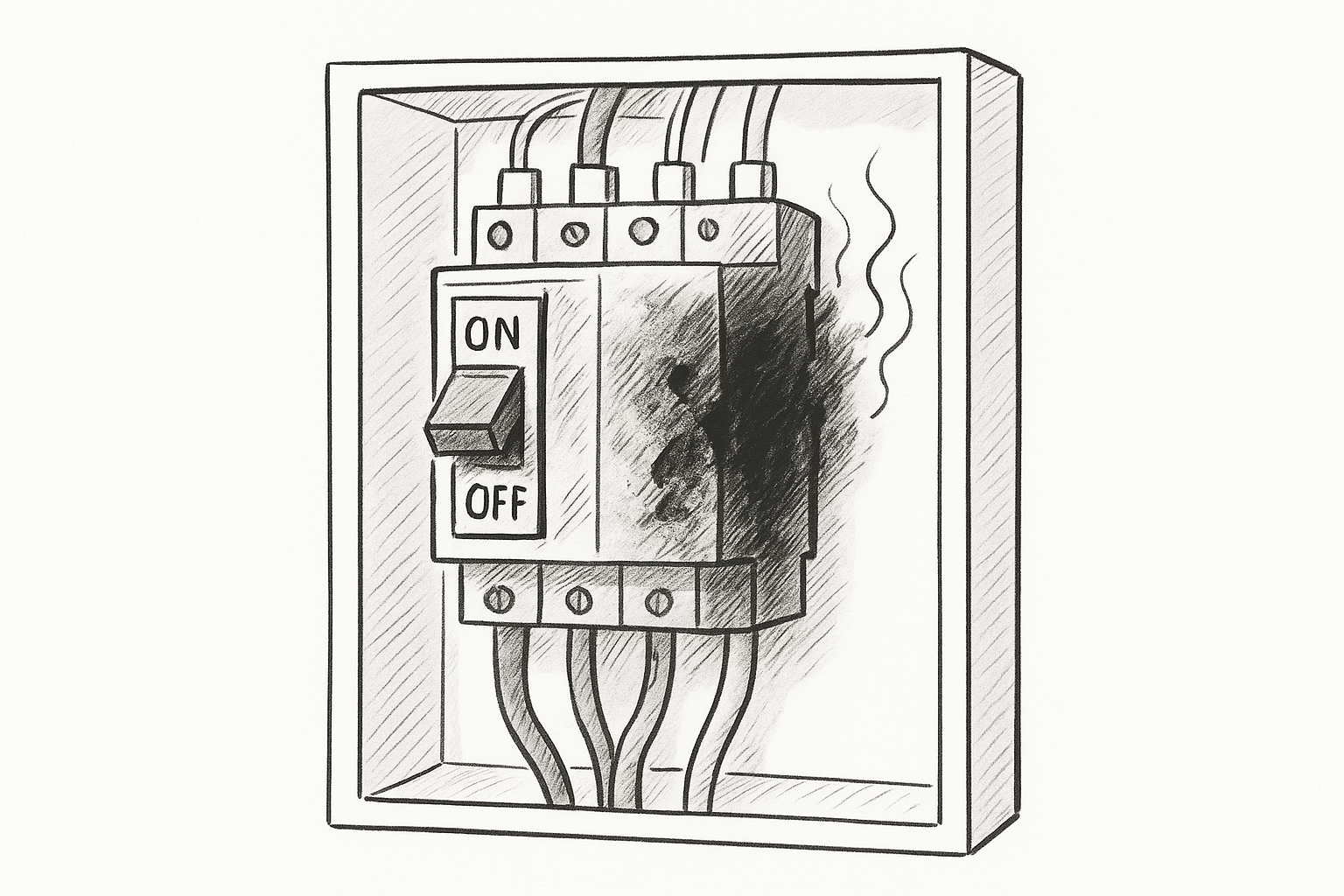
Physical damage is non-negotiable grounds for replacement, regardless of how recently the breaker was installed. Damaged breakers can fail to trip during a fault, which removes the one protection standing between your wiring and a fire.
Your panel is aging and showing wear
Panels older than 25 to 30 years often have main breakers that have simply worn out through normal cycling over decades of use. If your home still runs on original equipment from the 1980s or earlier, the mechanical components inside the breaker lose their reliability even if nothing dramatic has happened. Factoring in the main breaker replacement cost at this stage, before a failure occurs, is far less disruptive than dealing with an emergency outage in the middle of a Phoenix summer.
How to get an accurate quote and avoid overpaying
Getting an accurate quote starts with understanding that no legitimate electrician can give you a firm main breaker replacement cost over the phone without seeing your panel. The amperage rating, brand, condition, and access to your electrical enclosure all affect the final number. Any quote delivered without an in-person assessment is a rough ballpark at best and a low-ball hook at worst.
Insist on an on-site assessment before committing
When you contact an electrician, tell them upfront that you want a full in-person assessment before any pricing is confirmed. A licensed contractor who won’t come out to look before quoting is not a contractor you want doing the work. The visit should include opening the panel, inspecting the main breaker and internal components, and checking whether a breaker swap alone is sufficient or whether the panel condition changes the scope.
If a contractor quotes you a firm price over the phone without asking detailed questions about your panel brand, age, and amperage, treat that number with serious skepticism.
Know what a complete quote should include
A trustworthy quote lists every cost component separately: the breaker itself, labor, permit fees, and any utility coordination steps required for the meter pull. If a quote shows only a single lump sum with no itemization, ask the contractor to break it down. That breakdown tells you whether you’re being charged fairly for parts and whether the labor rate is reasonable for the scope of work your job requires. A quote that omits permit fees is not a complete quote, it is a number that will grow once the job starts.
Get at least two quotes and compare them correctly
Two quotes give you enough data to spot outliers. When you compare them, look beyond the total price and examine what each quote actually covers. A lower number that excludes permits or underestimates labor is not the better deal. A higher quote that itemizes utility coordination, includes the permit, and reflects the actual condition of your panel may represent better overall value and fewer surprises on the day the work is done.
Pay attention to warranty terms as well. A contractor offering a 5-year workmanship guarantee on the completed job is standing behind their work in a way that a one-year warranty does not match. The guarantee length is a meaningful signal about how much confidence the electrician has in the quality of what they install.
Your next step
You now have a clear picture of what the main breaker replacement cost looks like in 2026, what drives the price up or down, and how to evaluate the quotes you receive. The numbers in this guide reflect real residential jobs in the Phoenix area, not theoretical estimates pulled from national averages that don’t account for Arizona utility rules, local permit requirements, or summer scheduling pressure.
AZ DC Electric serves the Greater Phoenix Metro Area with upfront pricing, no call-out fees, and a 5-year workmanship guarantee on every job we complete. If your main breaker is tripping, running hot, or simply aging out, you don’t need to guess at what the repair should cost. Book an on-site assessment with our licensed team and get a full itemized quote before any work begins. Schedule your electrical service with AZ DC Electric and know exactly what you’re paying before we touch a single wire.