Picking up a Home Depot GFCI outlet seems straightforward enough, until you’re standing in the electrical aisle staring at a wall of options. 15 Amp or 20 Amp? Weather-resistant or tamper-resistant? Self-testing or standard? The wrong choice can mean a failed inspection or, worse, a real safety hazard in your kitchen, bathroom, or outdoor space.
GFCI (Ground Fault Circuit Interrupter) outlets are required by electrical code in any area exposed to moisture, and they exist for one reason: to prevent electrical shock. Whether you’re replacing a worn-out receptacle or adding protection where it’s missing, understanding what you’re buying matters. At AZ DC Electric, we install and troubleshoot GFCI outlets across the Greater Phoenix Metro Area every day, so we know exactly where homeowners get tripped up.
This guide walks you through how to choose the right GFCI outlet at Home Depot, how to install it safely, and what to do when that little reset button stops cooperating. We’ll also cover when it makes sense to call a licensed electrician instead of handling it yourself.
What a GFCI outlet does and where you need one
A GFCI outlet monitors the flow of electrical current between the hot and neutral wires in real time. When it detects even a tiny imbalance, as small as 4 to 6 milliamps, it cuts power in about one-tenth of a second. That’s fast enough to stop a life-threatening shock before your body registers what happened.
How GFCI protection works
The outlet compares the current leaving through the hot wire to the current returning through the neutral wire. If those two numbers don’t match, it means current is taking an unintended path, possibly through a person, water, or a fault in a connected appliance. The outlet trips instantly, shutting off power to both the outlet itself and any standard outlets wired downstream from it on the same circuit.
A single GFCI outlet can protect multiple standard outlets further down the same circuit, which is why electricians often install just one GFCI at the first outlet position rather than replacing every receptacle in the room.
Where electrical code requires GFCI outlets
The National Electrical Code (NEC) has expanded GFCI requirements significantly over the years, and most local jurisdictions follow these rules closely. Any Home Depot GFCI outlet you install must meet current code for the location you’re working in.
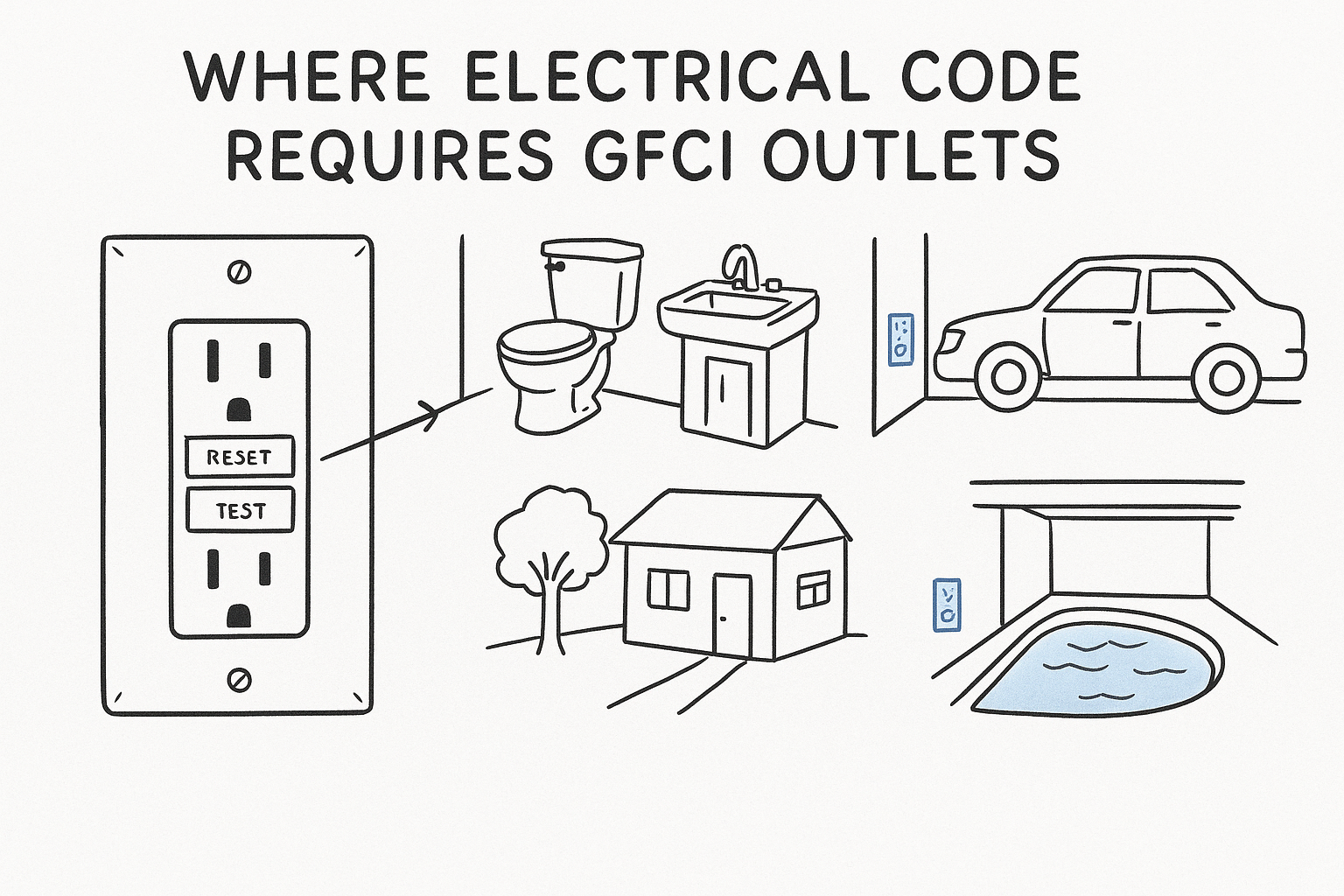
Here are the areas where GFCI protection is required:
- Bathrooms: All receptacles within bathroom spaces
- Kitchens: Countertop outlets within 6 feet of a sink
- Garages: All outlets, including those for freezers or refrigerators
- Outdoors: Every exterior outlet, regardless of height or cover type
- Crawl spaces and unfinished basements: Any receptacle in these areas
- Pools and spas: All outlets within 20 feet of the water’s edge
- Laundry and utility sinks: Outlets near any sink or wet area
If your home was built before these rules took effect, you may have unprotected receptacles in several of these locations.
How to pick the right Home Depot GFCI outlet
When you walk into Home Depot’s electrical section, the GFCI outlet selection breaks down into a few key decisions. Getting these right means your outlet will pass inspection and actually protect the people using it.
Choose the right amperage
15 Amp outlets work for most household circuits, especially in bathrooms and kitchens wired with 14-gauge wire. If your circuit uses 20 Amp breakers and 12-gauge wire, you need a 20 Amp GFCI outlet, which has a distinctive T-shaped neutral slot. Matching amperage to your circuit is not optional.
Installing a 15 Amp outlet on a 20 Amp circuit is an NEC violation and creates a potential fire hazard.
Match the rating to the location
A home depot gfci outlet labeled "weather-resistant" (WR) is required for any outdoor installation, and that rating must appear on the outlet’s packaging, not just the cover plate. Tamper-resistant (TR) models block foreign objects from entering the slots and are now required in new construction across all locations. Self-testing outlets run automatic checks and use indicator lights to confirm that protection is active. For most interior locations, a standard tamper-resistant GFCI at the correct amperage covers everything the code requires.
Step 1. Turn off power and confirm the wiring
Before you touch any wiring, go to your electrical panel and flip the breaker that controls the outlet’s circuit. Don’t guess which one it is. Use a non-contact voltage tester, available at Home Depot for under $20, to confirm the outlet is completely dead before you unscrew the cover plate or pull anything out of the box.
Read the existing wires before you disconnect anything
Pull the old outlet carefully out from the box and look at what you’re working with. Most residential wiring gives you three wires: a black (hot), white (neutral), and bare copper or green (ground). Some older homes in the Phoenix area have two-wire systems without a ground, which still accept a GFCI outlet but require you to add a label that reads "No Equipment Ground" on the face of the outlet. Home Depot sells these labels, and most GFCI outlet packages include them.
If you see silver-colored conductors instead of copper, that’s aluminum wiring. Stop immediately and call a licensed electrician, because aluminum requires special connectors and handling that goes beyond a standard GFCI swap.
Your wire gauge also determines which Home Depot GFCI outlet you bring home. Twelve-gauge wire means you need a 20 Amp outlet. Fourteen-gauge wire means a 15 Amp outlet is the correct fit.
Step 2. Install or replace a GFCI outlet
With the power confirmed off, you’re ready to connect your Home Depot GFCI outlet. GFCI outlets have two sets of terminals on the back: one labeled "LINE" and one labeled "LOAD." The LINE terminals connect to the wires coming from the breaker panel. The LOAD terminals connect to any downstream outlets you want to protect on the same circuit.
Connect the wires to the correct terminals
Most GFCI outlet failures trace back to reversed LINE and LOAD connections. The LINE side receives the incoming power, so it gets the black wire on the brass-colored terminal and the white wire on the silver terminal. The bare copper ground attaches to the green screw.
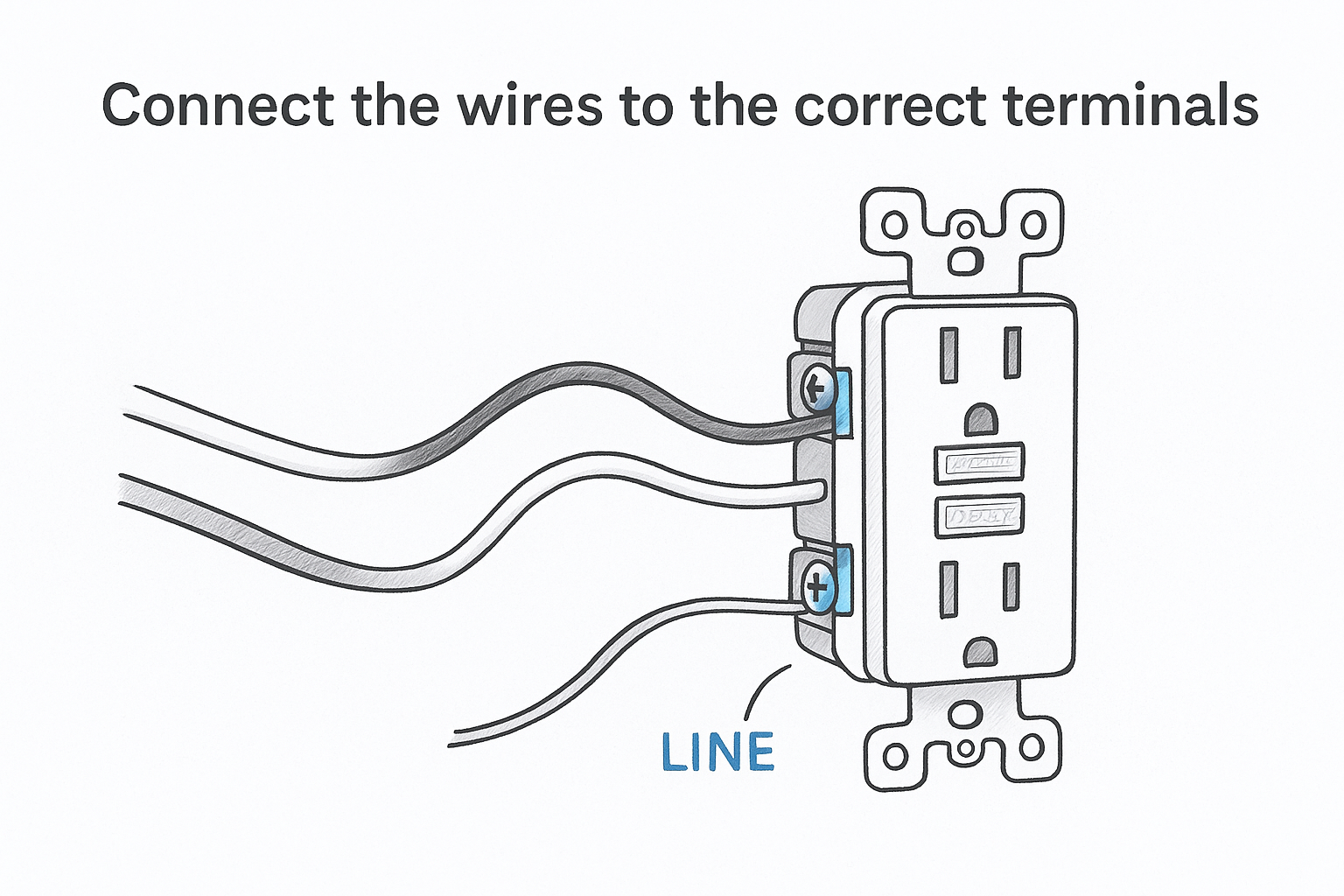
If you’re only protecting the single outlet and not any downstream receptacles, cap the LOAD terminals with the included tape and leave them unused.
- Black wire (hot): LINE brass terminal
- White wire (neutral): LINE silver terminal
- Bare copper or green wire: Ground screw
Fasten the outlet and restore power
Push the outlet carefully into the box, fold the wires behind it without forcing them, and secure it with the mounting screws. Attach the cover plate, then go back to your panel and restore the breaker. The outlet should power up immediately, and the indicator light on self-testing models will confirm the circuit is active.
Step 3. Reset, test, and fix common trips
Once power is restored, press the TEST button on your outlet. This cuts power to the outlet and any downstream receptacles it protects. Then press the RESET button to restore power. If the outlet doesn’t trip when you press TEST, you likely have the LINE and LOAD wires swapped. Turn the breaker off and redo the connections before moving forward.
Test the outlet before using it
Plug a lamp or phone charger into the outlet before calling the job done. Press TEST to confirm it loses power, then press RESET to confirm it comes back. Your home depot gfci outlet should respond correctly every time you run this sequence.
- Press TEST: outlet loses power
- Press RESET: outlet restores power
- Plug in a device to confirm the circuit is live
Why the GFCI keeps tripping
A GFCI that trips repeatedly usually points to a ground fault in a connected appliance, not a bad outlet. Unplug everything from the circuit and reset. If it holds, plug each device back in one at a time to find the problem appliance. If the outlet trips with nothing connected, call a licensed electrician to inspect the circuit wiring.
A GFCI that won’t reset at all, even with no load attached, means the outlet itself has failed and needs full replacement.
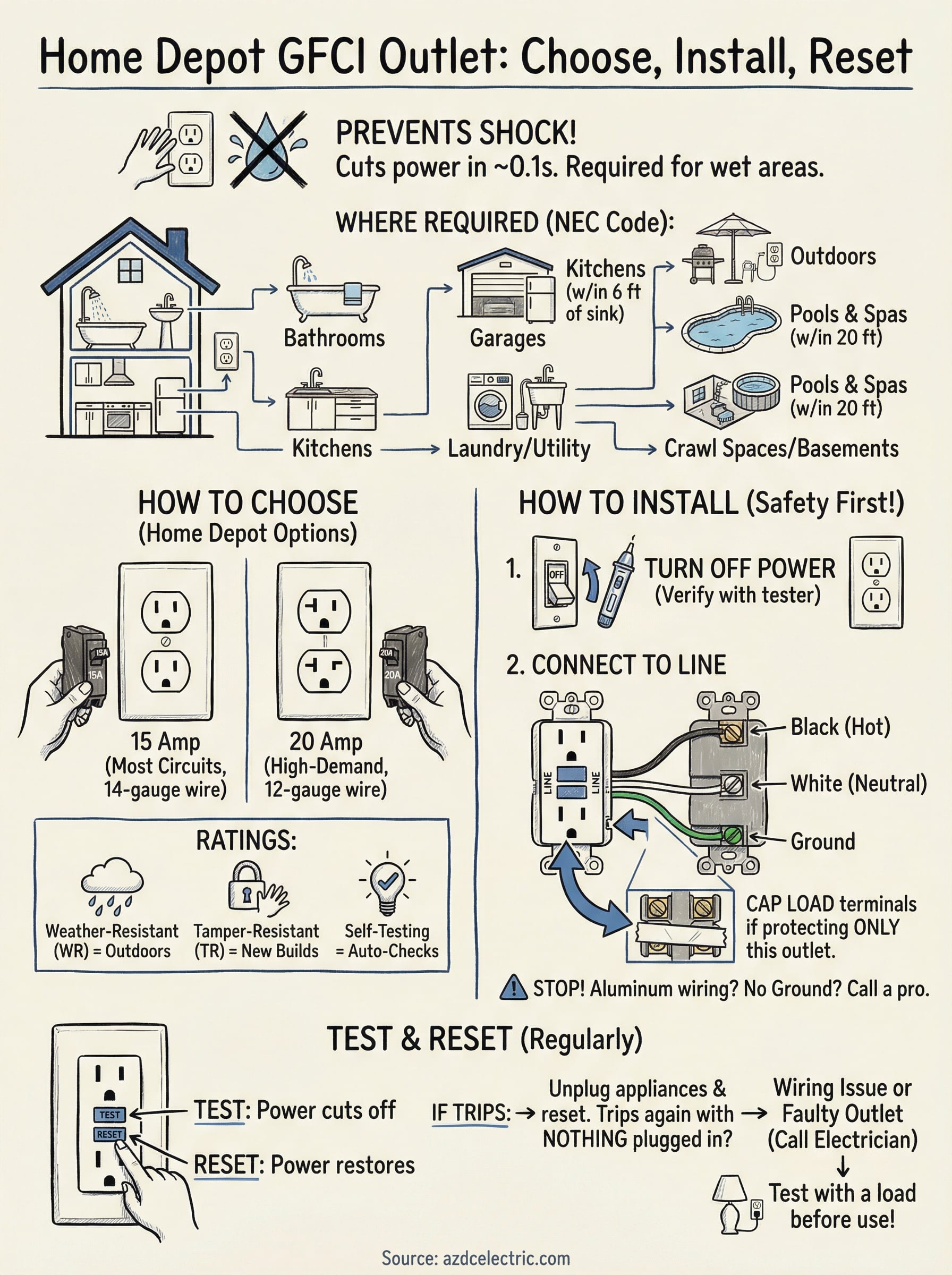
Final safety checks before you walk away
Before you pack up your tools, run through a few quick checks that confirm your Home Depot GFCI outlet is correctly installed and ready to use. Press TEST and RESET one final time with a device plugged in to verify the outlet trips and restores power as expected. Check that the cover plate sits flush, the mounting screws are snug, and no wires are pinched behind the outlet. If you installed a weather-resistant model outdoors, confirm the in-use cover closes fully over the outlet face.
When something doesn’t pass these checks, do not leave the outlet energized. A loose connection or a persistent trip that you cannot diagnose signals a deeper wiring problem that needs a professional inspection. If your circuit involves aluminum wiring, no ground conductor, or repeated unexplained faults, the safest move is to stop and bring in a licensed electrician. The team at AZ DC Electric handles GFCI installations and full electrical inspections across the Greater Phoenix Metro Area.