Most homes in the Phoenix Metro Area have a mix of outlet types, and many homeowners don’t think twice about the difference until something goes wrong. But when you compare a GFCI outlet vs regular outlet, the distinction isn’t just technical. It’s a safety issue that can prevent electrocution, especially in kitchens, bathrooms, garages, and outdoor spaces where water is present.
A GFCI (Ground Fault Circuit Interrupter) outlet monitors the flow of electricity and shuts off power in milliseconds if it detects a ground fault. A standard outlet does not. That single difference has major implications for your home’s safety, your compliance with NEC electrical code, and where each outlet type is required by law.
At AZ DC Electric, we install and upgrade outlets across Scottsdale and the Greater Phoenix area every day, from older homes with outdated wiring to new builds that need to meet current code. In this article, we’ll break down exactly how GFCI and regular outlets differ, where each one belongs in your home, and when it’s time to swap a standard outlet for GFCI protection.
Why GFCI protection matters for shock safety
A standard outlet delivers power continuously with no built-in mechanism to detect danger. When electricity takes an unintended path through your body instead of returning through the neutral wire, that is called a ground fault. Without GFCI protection, the circuit keeps delivering current until the breaker trips or you let go, and standard breakers are not designed to react fast enough to protect you from electrocution.
How ground faults happen in your home
Ground faults are more common than most homeowners realize, and they almost always involve water or moisture near an energized outlet. A hair dryer dropped into a sink, a power tool used on wet concrete, a bathroom outlet positioned too close to the tub, or a garden hose near an outdoor receptacle are all real scenarios that create ground fault conditions. In each case, moisture creates a low-resistance path that electricity follows directly through whoever is in contact with it.
These situations are not freak accidents. The U.S. Consumer Product Safety Commission has documented that hundreds of electrocution deaths occur in and around American homes every year, and a significant portion involve outlets in wet or damp locations where GFCI protection was absent or bypassed.
What happens to your body during a shock
Your body conducts electricity efficiently, and even a low-level current can cause serious injury. At around 10 milliamps, your muscles can lock up and prevent you from releasing the source. At 100 milliamps, ventricular fibrillation becomes a real risk. A GFCI outlet detects an imbalance of as little as 4 to 6 milliamps and cuts power in roughly 1/40th of a second, which is fast enough to prevent most life-threatening outcomes.
A standard breaker protects the wiring, not you. GFCI protection is the only device in a typical outlet circuit designed specifically to protect the person touching it.
When you compare a gfci outlet vs regular outlet in a wet-area setting, the regular outlet offers zero automatic response to a ground fault. The GFCI version responds before your nervous system can register what happened. That speed is the core reason electrical code now mandates GFCI protection in the locations where ground faults are most likely to occur.
GFCI vs regular outlets: what actually changes
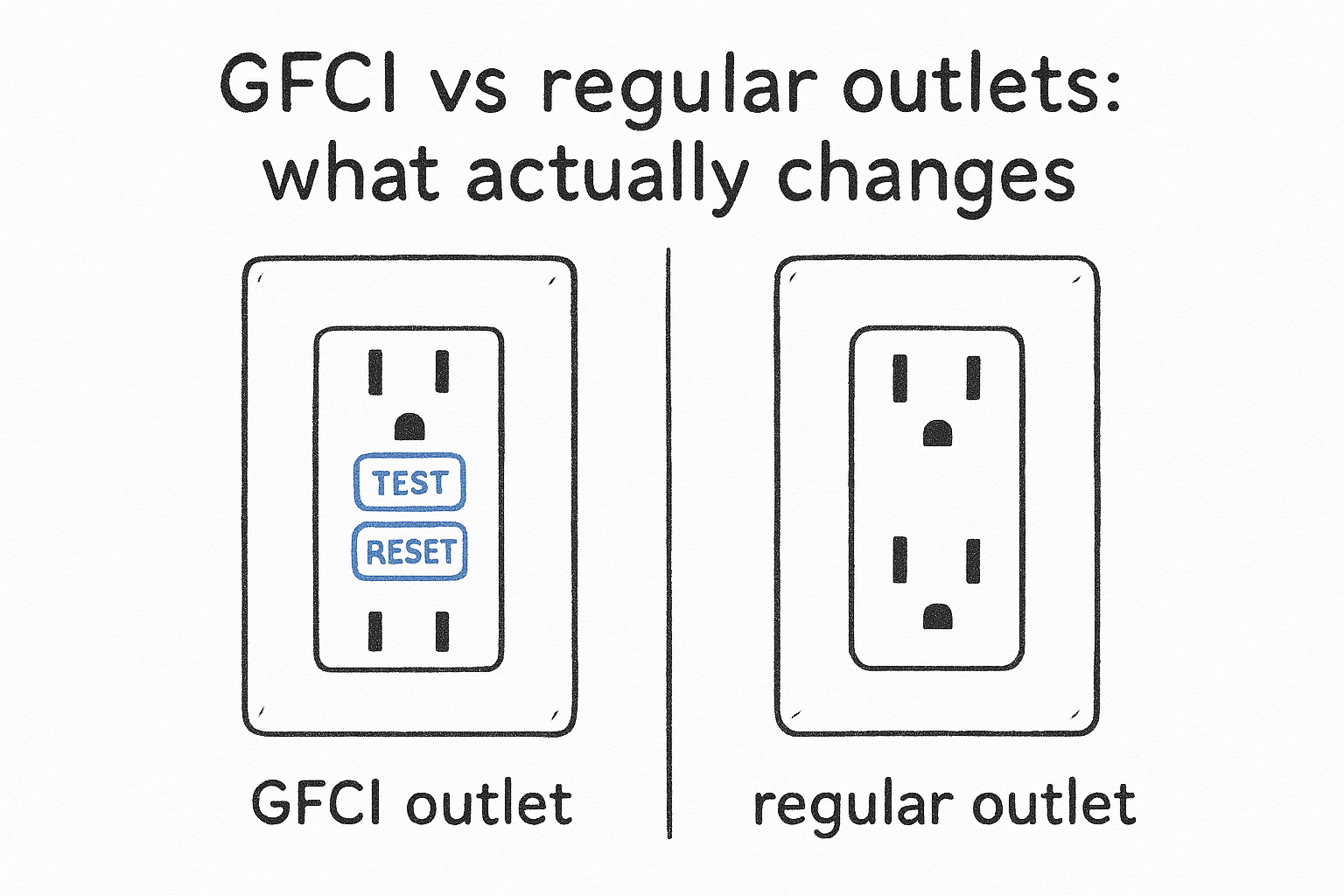
When you look at a GFCI outlet vs regular outlet side by side, the physical difference is obvious. A GFCI outlet has two small buttons on its face, labeled "Test" and "Reset," while a standard outlet has nothing but the slots for your plug. But the real differences run deeper than appearance and come down to how each device handles electricity internally.
The internal sensor that changes everything
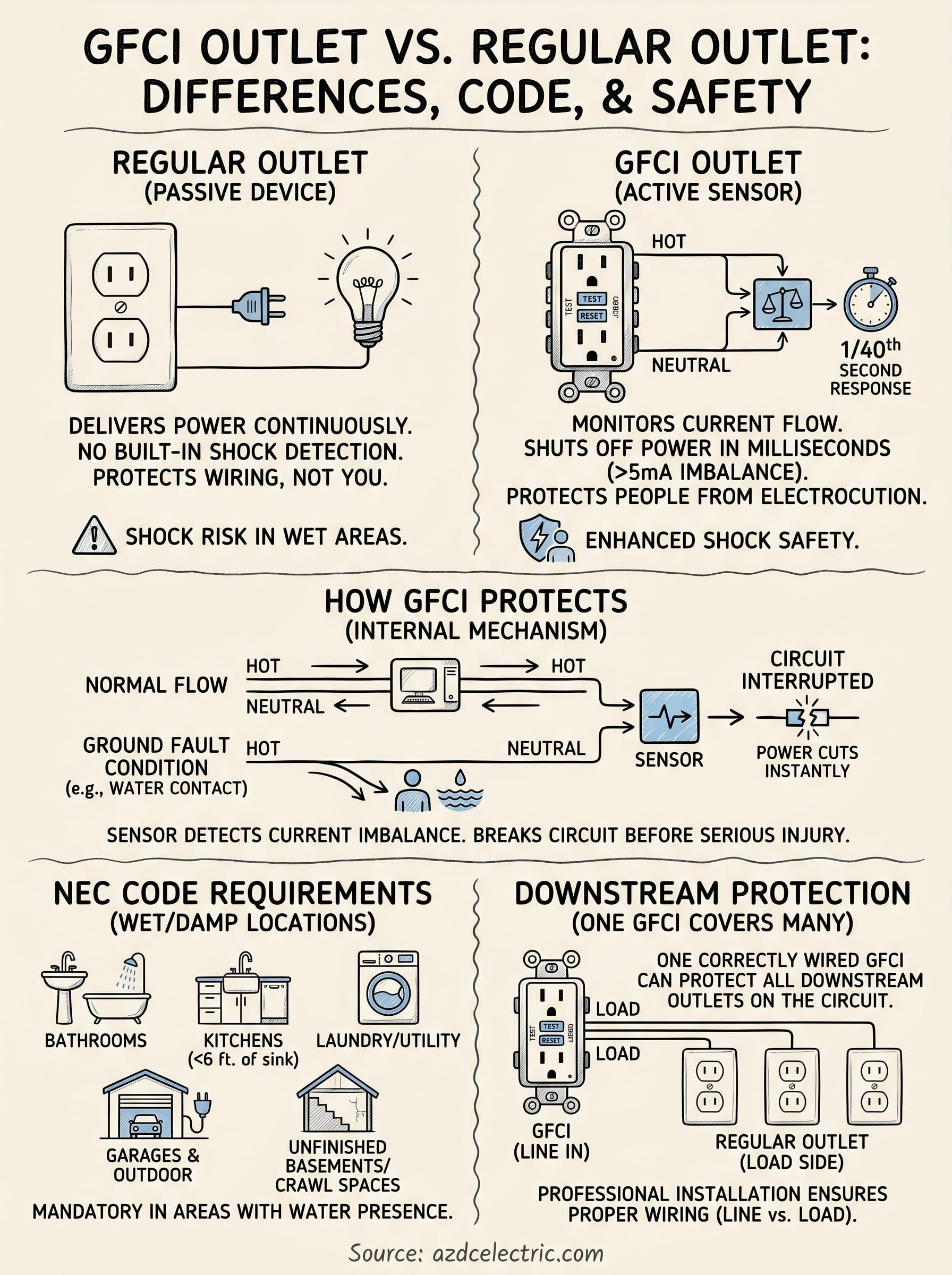
A standard outlet is a passive device. It connects your appliance to the circuit and does nothing else. A GFCI outlet contains a built-in current sensor that continuously compares the amount of electricity flowing out through the hot wire against what returns through the neutral wire. Under normal conditions, those two values match. The moment they differ by more than about 5 milliamps, the outlet’s internal relay breaks the circuit instantly.
That sensor is the only difference between an outlet that protects you and one that simply delivers power.
What this means for how you use them
For everyday appliances like lamps or phone chargers, you will notice no practical difference in how either outlet performs. Power delivery feels identical. The GFCI version only behaves differently when a fault condition occurs, which is exactly when you need it to act. Standard outlets stay live regardless of what is happening, while a tripped GFCI outlet requires you to press the Reset button before power restores, which also serves as a built-in indicator that something went wrong.
Where GFCI outlets are required by electrical code
The National Electrical Code (NEC) sets the baseline for where GFCI protection is legally required in residential construction and renovation. If your home was built or remodeled after these requirements took effect, your electrician was required to follow them. Older homes often predate these rules entirely, which means regular outlets may still exist in locations where code now demands GFCI protection.
Wet and damp locations inside your home
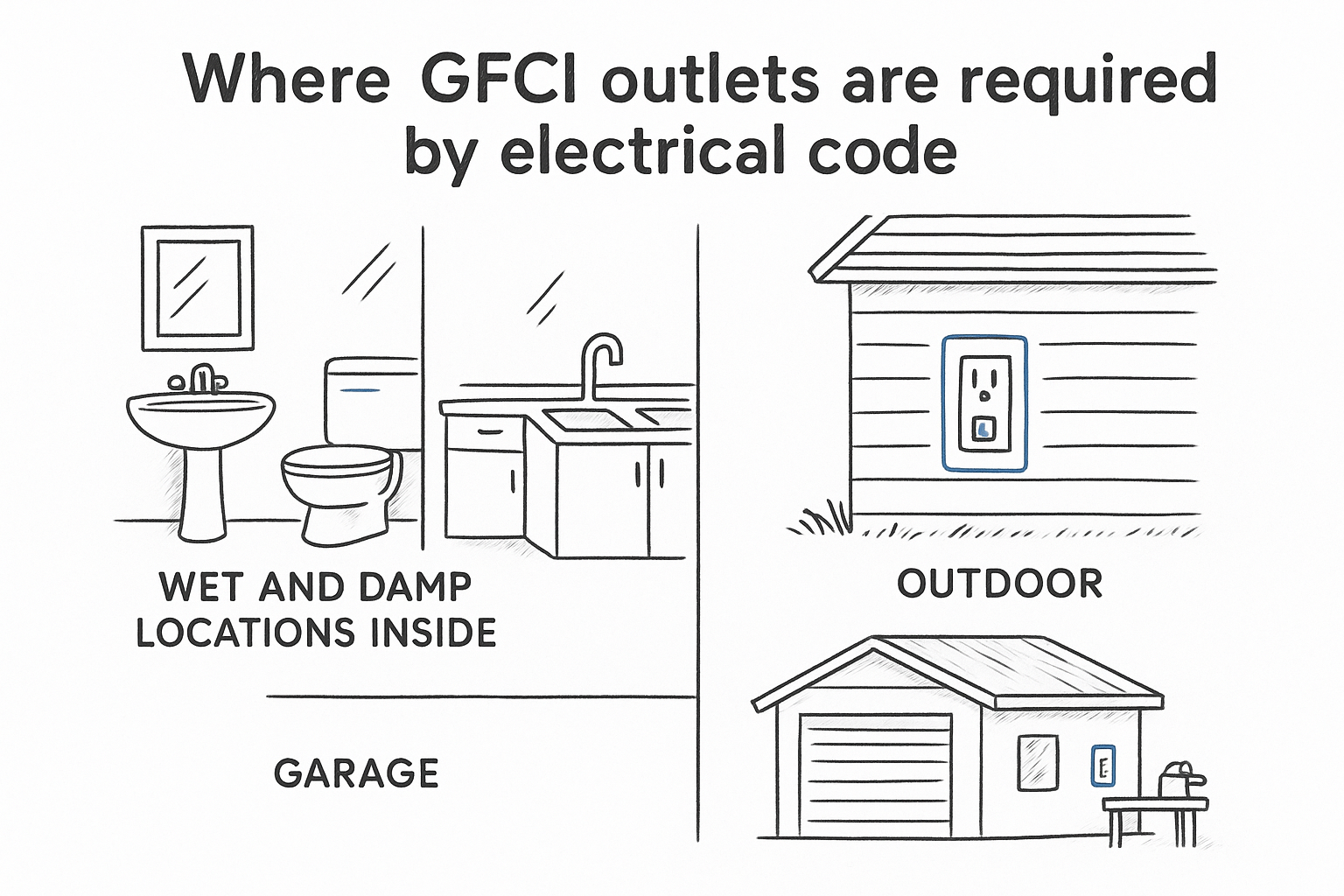
Bathrooms have required GFCI protection since the 1975 NEC update, making them one of the earliest mandated locations. All outlets within six feet of a sink in a kitchen must be GFCI-protected under current code, and this includes both sides of a double sink. Laundry rooms, utility sinks, and unfinished basements all fall under NEC requirements as well, since moisture presence in these areas creates the exact conditions where a gfci outlet vs regular outlet comparison becomes a life-safety decision, not a preference.
Outdoor and garage locations
Any outlet installed outside your home, whether on a porch, patio, or mounted to an exterior wall, requires GFCI protection under current NEC standards. Garages follow the same rule, including detached garages and workshops. Crawl spaces and boathouses are also covered.
If your garage or outdoor outlets do not have Test and Reset buttons on their face, they are either connected downstream to a GFCI outlet elsewhere on the circuit or they lack the protection entirely.
Your local jurisdiction in the Phoenix Metro Area may adopt the NEC with amendments, so always confirm current requirements with a licensed electrician before assuming your installation meets code.
How GFCI outlets protect other outlets downstream
One GFCI outlet can protect multiple standard outlets on the same circuit without requiring a GFCI device at every single location. This is called downstream protection, and it works through the wiring method your electrician uses when connecting the outlets. When the GFCI outlet is wired correctly using its "Load" terminal, any outlet installed after it on the same circuit receives the same ground fault protection as the GFCI outlet itself.
How the Load terminal makes this possible
The back of a GFCI outlet has two sets of terminals: "Line" and "Load." The Line terminals connect to the incoming power from your panel. The Load terminals connect to any outlets that follow in the circuit. When a ground fault occurs anywhere downstream, the GFCI sensor detects the imbalance and shuts off power to both the GFCI outlet and every outlet wired through the Load side.
Outlets protected this way behave identically to a dedicated GFCI device for safety purposes. They will lose power when the GFCI trips, and power will not restore to any of them until you press Reset on the GFCI outlet at the head of the circuit.
This means a single GFCI outlet at the first position in a bathroom or kitchen circuit can legally protect all standard outlets that follow on that same run.
Why placement determines whether protection actually works
When your electrician maps out a circuit during a gfci outlet vs regular outlet upgrade, the position of the GFCI outlet matters significantly. A standard outlet wired ahead of the GFCI on the Line side receives no protection at all. Only outlets wired after the GFCI on the Load side benefit from downstream coverage, which is why professional installation is the only reliable way to confirm your protection is set up correctly.
How to upgrade to GFCI protection the right way
Upgrading from a standard outlet to GFCI protection is a straightforward job for a licensed electrician, but the details of how it’s done determine whether your protection actually works. Before any work starts, your electrician needs to identify which outlets are on which circuits and map out where GFCI devices should go to provide the most efficient coverage across your home.
Skipping a professional assessment often results in GFCI outlets wired through the Line terminals only, which means the downstream outlets on that circuit receive no protection at all.
What to expect during the installation
When your electrician replaces a regular outlet with a GFCI device, they will turn off power at the breaker, remove the existing outlet, and check the wiring configuration before connecting the new device. If the goal is to protect multiple outlets downstream, they will connect the incoming power to the Line terminals and run the outgoing wires through the Load terminals. After installation, they will test each protected outlet using the Test button to confirm the protection works as intended.
When a GFCI breaker makes more sense
For some circuits, a GFCI circuit breaker installed at the panel is a better option than swapping individual outlets. This is common in garages, outdoor circuits, and older homes where outlet boxes are too shallow to fit a GFCI device comfortably. A GFCI breaker protects every outlet on that circuit automatically, and your electrician can determine which approach fits your specific wiring layout when evaluating a gfci outlet vs regular outlet upgrade on a case-by-case basis.
Next steps for a safer home
Now that you understand the gfci outlet vs regular outlet distinction, the practical question is what your home actually has right now. Walk through your bathrooms, kitchen, garage, and outdoor outlets and look for the Test and Reset buttons. If those buttons are not present on the face of the outlet or on a GFCI breaker protecting that circuit, your home may not meet current NEC requirements.
Older homes in the Phoenix Metro Area commonly have standard outlets in locations that code now requires GFCI protection. Identifying and replacing them is not a weekend project you want to guess your way through, since an outlet wired incorrectly gives you no protection at all even if it looks right. A licensed electrician can map your circuits, confirm which locations lack coverage, and install devices correctly the first time. If you are ready to get started, schedule an outlet inspection or GFCI upgrade with AZ DC Electric today.