A dead GFCI outlet in your kitchen or bathroom isn’t just an inconvenience, it’s a safety gap. These outlets exist to cut power the instant they detect a ground fault, and when they fail, the protection disappears. Knowing the GFCI outlet replacement cost before you call an electrician (or grab a screwdriver yourself) puts you in control of the decision. Prices vary depending on whether you’re swapping a standard outlet, upgrading to GFCI protection for the first time, or dealing with older wiring that complicates the job.
Most homeowners across the Phoenix Metro Area will spend somewhere between $100 and $300 per outlet for a professional replacement, but that range shifts based on labor rates, outlet location, and the condition of your existing wiring. If you’ve received a quote and aren’t sure whether it’s fair, this breakdown will give you real numbers to compare against, not vague estimates.
At AZ DC Electric, we handle GFCI replacements and installations across Scottsdale, Mesa, Chandler, and the surrounding valley every week. We put together this guide based on what we actually see in the field: current material costs, typical labor times, and the factors that push a straightforward swap into a more involved repair. Below, you’ll find everything you need to evaluate your options and your budget.
Why GFCI replacement matters in Arizona homes
Arizona’s heat and humidity cycles create conditions that wear out electrical components faster than in many other states. GFCI outlets in kitchens, bathrooms, garages, and outdoor areas take on more stress here because of the temperature swings between scorching summers and mild winters. A unit that passes a basic trip test today can still fail to respond correctly six months from now, and that gap in protection is exactly where electrical hazards develop.
Heat accelerates component degradation
The internal components of a GFCI outlet include a small circuit board, a test button mechanism, and a solenoid that trips the circuit when it detects an imbalance as small as 4 to 6 milliamps. Sustained heat above 100°F pushes these components toward early failure. Phoenix Metro summers regularly hit 115°F outdoors, and garage outlets, patio receptacles, and south-facing wall boxes can reach internal temperatures that manufacturers never intend for standard use.
Most GFCI outlets carry a rated lifespan of 10 to 15 years, but Arizona’s climate can cut that window considerably. If your outlets are more than a decade old and haven’t been tested recently, replacement is worth scheduling before a failure happens at the wrong moment.
A GFCI outlet that trips but won’t reset is not broken; it has detected a fault and is doing exactly what it was designed to do. The underlying cause still needs professional investigation.
Pools, spas, and outdoor circuits
The Phoenix area has one of the highest concentrations of residential pools in the country. Outdoor and pool-adjacent outlets are required by the National Electrical Code to have GFCI protection, and the combination of standing water, intense heat, and UV exposure makes these locations the fastest to develop faults. A corroded or failed GFCI near a pool is a serious safety issue, not a minor repair to push off until next season.
When you’re budgeting the GFCI outlet replacement cost for an outdoor or pool circuit, plan for a more involved job than a standard indoor swap. Weatherproof covers, conduit runs, and aging pool wiring all add time and materials to the project.
Older homes without full coverage
Many homes built before the mid-1980s in the Scottsdale and East Valley area were not required to have GFCI protection in kitchens and bathrooms at the time of construction. Current code requires GFCI protection within six feet of any water source, which means older homes frequently need multiple outlets added or upgraded during a remodel or safety inspection. Replacing a standard outlet with a GFCI unit in these situations involves more than a direct one-for-one swap, and the age of your existing wiring plays a significant role in both the complexity and the total price.
2026 GFCI outlet replacement cost ranges
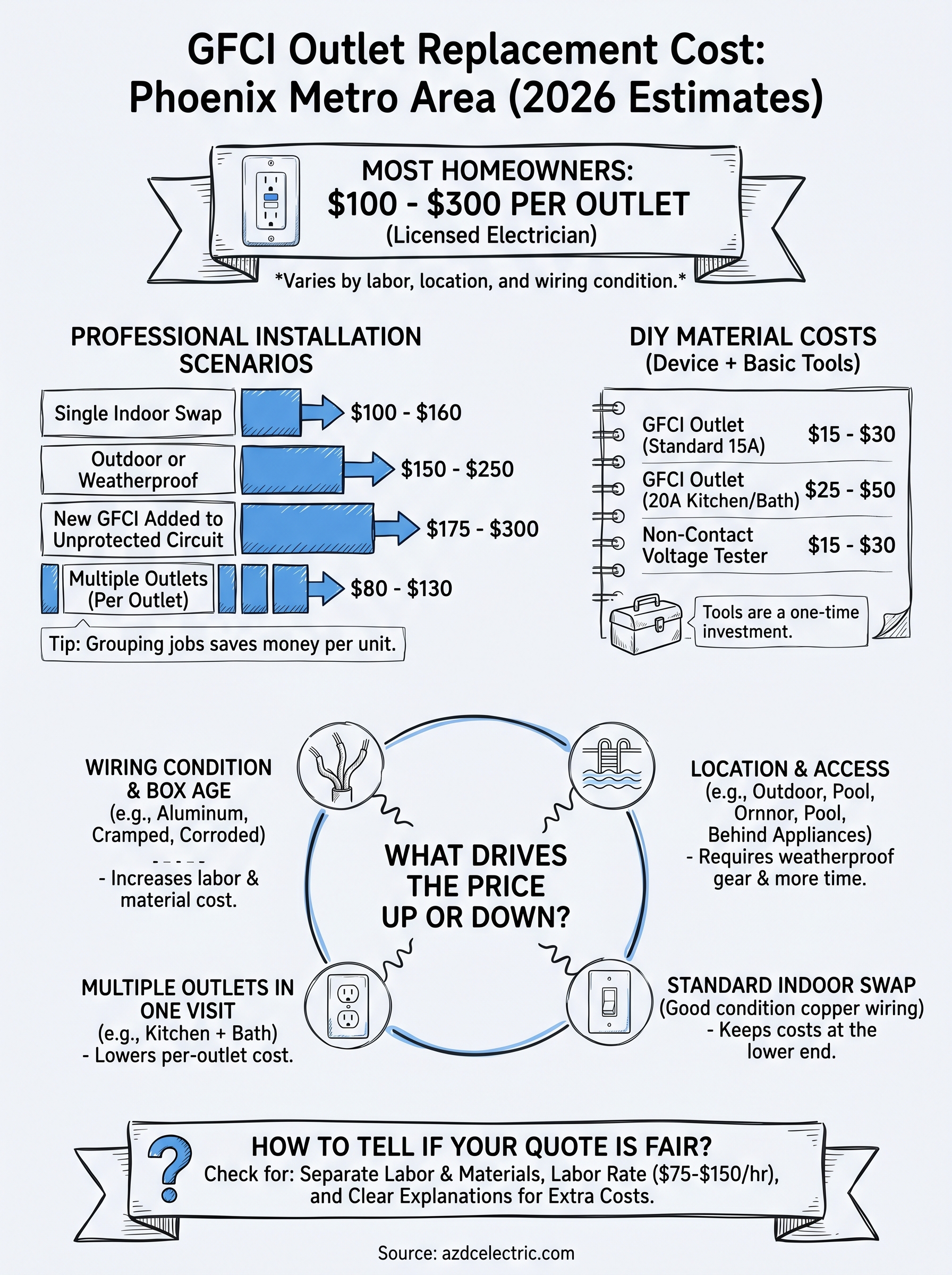
For most Phoenix Metro homeowners, the total GFCI outlet replacement cost in 2026 falls between $100 and $300 per outlet when you hire a licensed electrician. That range covers the outlet itself, labor, and any minor adjustments to the existing box or wiring. Jobs that involve older wiring, aluminum conductors, or locations without any existing GFCI protection can push that number higher, as you’ll see in the breakdown below.
Professional installation costs
When you hire a licensed electrician, labor typically runs between $75 and $150 per hour, and a straightforward GFCI swap takes 30 to 60 minutes. Add the cost of the outlet itself and you’re looking at the following typical ranges by scenario:

| Scenario | Estimated Cost |
|---|---|
| Single outlet, direct swap | $100 – $160 |
| Outdoor or weatherproof location | $150 – $250 |
| New GFCI added to unprotected circuit | $175 – $300 |
| Multiple outlets replaced in one visit | $80 – $130 per outlet |
Scheduling multiple replacements during a single visit is the most cost-effective approach, since the trip charge and setup time get spread across each unit rather than billed separately.
Material costs for DIY
If you replace the outlet yourself, the device is your main expense. Standard 15-amp GFCI outlets retail between $15 and $30 at most hardware stores, while 20-amp versions used in kitchen and bathroom circuits run $25 to $50. Tamper-resistant models, required in new construction under current electrical code, sit at the higher end of those ranges.
Beyond the outlet, budget for a non-contact voltage tester ($15 to $30) if you don’t already own one. You’ll also need a flathead screwdriver, wire stripper, and needle-nose pliers. Most of those tools have uses well beyond a single job, so consider them a one-time investment rather than a recurring cost.
What changes the price of a GFCI replacement
The $100 to $300 range covers most standard jobs, but several specific factors can push your total above that ceiling or pull it below. Understanding what drives the GFCI outlet replacement cost helps you read a quote accurately and ask the right questions before work begins.
Wiring condition and box age
Your electrician’s first step is inspecting the existing wiring inside the box. Aluminum wiring, common in homes built between 1965 and 1973, requires special anti-oxidant compound and connectors to connect safely to a GFCI device. This adds both material cost and labor time. Older two-wire systems without a ground conductor also complicate the swap, since current code requires specific labeling or a separate grounding path when GFCI protection replaces a standard outlet.

If your home has aluminum wiring, always disclose this to your electrician before scheduling, since it affects both the approach and the price.
Cramped or corroded boxes slow down the job considerably. A shallow box packed with multiple conductors, damaged insulation, or deteriorating wire nuts can turn a 30-minute swap into a 90-minute repair.
Location and access difficulty
Outdoor outlets, garage circuits, and pool-adjacent receptacles require weatherproof covers and often involve conduit work that indoor jobs don’t. Reaching an outlet behind a large appliance, inside a finished wall, or at the top of a vaulted ceiling adds labor time that your electrician will factor into the final price.
Scheduling multiple outlets in a single visit also affects the per-unit cost. Grouping three or four replacements into one appointment lowers what you pay per outlet compared to booking separate visits for each one, since the trip fee gets spread across the whole job rather than applied to each outlet individually.
DIY cost vs hiring a licensed electrician
Replacing a GFCI outlet yourself can bring the total material cost down to $20 to $50, which is appealing when a professional quote runs $100 to $160 for the same job. Whether that savings is worth it depends on your comfort level with basic electrical work, the condition of your existing wiring, and the specific location of the outlet. Understanding where the GFCI outlet replacement cost breaks in your favor helps you make the right call before you pick up a screwdriver or dial a phone.
When DIY makes sense
A direct GFCI swap is one of the more approachable electrical tasks for a confident homeowner. If the existing outlet is in good condition, the wiring inside the box is standard 14 or 12-gauge copper, and the location is indoors and easily accessible, handling the swap yourself is reasonable. You will need a non-contact voltage tester to confirm the circuit is fully de-energized before you touch anything, and you should follow the labeled LINE and LOAD terminals on the new device exactly as printed.
Never assume a circuit is off because you flipped a breaker. Always verify with a tester before reaching inside any outlet box.
When to call a licensed electrician
Several situations make professional installation the safer and smarter choice. If you open the box and find aluminum wiring, two-wire circuits without a ground conductor, corroded connections, or damaged insulation, stop and contact a licensed electrician. These conditions require specific materials and hands-on experience to address correctly, and an incorrect fix creates a fire or shock hazard that no amount of saved labor cost justifies.
Outdoor outlets, pool-adjacent receptacles, and garage circuits also belong in this category. Weatherproof covers, conduit work, and the proximity to water raise the risk level of any mistake considerably. For those locations, paying a licensed electrician is straightforward protection against a much larger liability.
How to tell if your quote is fair
When you receive a quote, comparing it against real market data gives you the leverage to accept it confidently or ask better questions. The GFCI outlet replacement cost for a standard indoor swap by a licensed electrician in the Phoenix Metro Area should land between $100 and $160 per outlet. If your quote sits significantly above that range without explanation, you need to understand exactly what’s driving the difference before you sign anything.
Signs the price is reasonable
A fair quote will itemize labor and materials separately rather than presenting a single opaque total. Expect to see a labor rate between $75 and $150 per hour and a separate line item for the outlet itself, which runs $15 to $50 depending on amperage and features. If the electrician notes specific conditions, such as aluminum wiring or a weatherproof cover requirement, those additions should appear as distinct line items with a brief explanation.
A licensed electrician who answers your questions about the quote directly and without pressure is a strong sign that the pricing is legitimate.
Multi-outlet quotes should also reflect a lower per-unit cost compared to a single-outlet job. Grouping several replacements into one visit spreads the trip cost across each unit, and a reputable contractor will reflect that savings in the total rather than billing the full single-outlet rate for every outlet.
Red flags to watch for
Avoid any quote that refuses to separate labor from materials or that escalates sharply after the electrician sees the work. A price running more than 50 percent above the typical range without a documented reason, such as extensive wiring repairs or a panel-level issue, warrants a second opinion before you commit.
Getting two or three quotes for the same scope is standard practice, and any licensed electrician will expect it. If a contractor pressures you to decide on the spot without written documentation of both the scope and the price, that alone is reason to look elsewhere.
Next steps for a safer circuit
You now have the numbers and context to evaluate any quote you receive and decide whether a DIY swap or a professional installation fits your situation. Most standard GFCI outlet replacement costs in the Phoenix Metro Area land between $100 and $160 per outlet, and anything significantly above that range deserves a clear explanation before you agree to the work. If your home has outlets older than a decade, aluminum wiring, or unprotected circuits near water sources, scheduling a replacement sooner rather than later closes a real safety gap.
Grouping multiple replacements into one appointment keeps your per-outlet cost lower and your home protected faster. If you’re ready to book a GFCI replacement or want a straightforward quote for your specific situation, contact the licensed electricians at AZ DC Electric to schedule service across Scottsdale, Mesa, Chandler, and the surrounding Phoenix valley.