You press the reset button on your GFCI outlet, hear a click, and nothing happens. Maybe it pops right back out, or maybe the button won’t budge at all. Either way, you’re stuck with a GFCI outlet not resetting, and whatever was plugged into it is dead. It’s one of the most common electrical issues homeowners in the Phoenix area run into, especially in kitchens, bathrooms, and outdoor spaces where these outlets take a beating.
Before you assume the outlet is toast, there are several things worth checking first. A tripped breaker, a wiring issue upstream, moisture in the box, or even a connected device pulling the outlet into a fault state, any of these can prevent a reset without meaning the GFCI itself has failed.
This guide walks you through the most likely causes and practical fixes you can try yourself before scheduling a replacement. And if you do reach the point where the outlet needs professional attention, our licensed electricians at AZ DC Electric handle GFCI diagnostics and replacements across the entire Greater Phoenix Metro Area, no call-out fees, upfront pricing, and a 5-year workmanship guarantee on every job.
What a GFCI does and why it won’t reset
A GFCI, which stands for Ground Fault Circuit Interrupter, is a safety device built directly into the outlet body. It constantly monitors the current flowing between the hot and neutral wires. Under normal conditions, the current leaving the hot wire and returning through the neutral wire should be equal. When the GFCI detects even a small imbalance, as little as 4 to 6 milliamps, it cuts power in under 30 milliseconds. That response is fast enough to prevent a lethal shock, which is why the National Electrical Code requires GFCI protection in bathrooms, kitchens, garages, crawl spaces, outdoor areas, and anywhere near a water source.
How the reset button works
The two buttons on the face of a GFCI outlet, TEST and RESET, are how the device reports its status. Pressing TEST simulates a ground fault and trips the outlet intentionally. Pressing RESET restores power once the fault clears. When the outlet is functioning correctly, pressing RESET causes the button to click and hold in place, and power returns immediately. If the button pops back out the moment you press it, or if nothing happens when you push it at all, the outlet is signaling that it still detects a problem.
The mechanism inside a GFCI outlet is electromechanical. A small solenoid holds the contacts closed when power is stable. When the device trips, that solenoid releases the contacts and cuts the circuit open. Pressing RESET re-engages the solenoid, but only if the electronics inside confirm that the fault condition is gone. If anything keeps that signal active, the solenoid cannot hold, and the button will not stay in no matter how many times you try.
A GFCI outlet physically cannot hold a reset while it still detects an unsafe current condition. Pressing harder or repeatedly makes no difference.
Why your GFCI outlet won’t reset
A GFCI outlet not resetting almost always comes down to one of five root causes. Identifying the right one determines what fix actually solves the problem, rather than sending you down the wrong path.
Here are the most common reasons a GFCI refuses to reset:
| Cause | What it means |
|---|---|
| No power reaching the outlet | The circuit breaker is tripped or the panel has an issue |
| Upstream GFCI tripped | A separate GFCI controls power to this outlet and it needs resetting first |
| Connected device causing a fault | A plugged-in appliance is pulling the outlet into a tripped state |
| Moisture or heat damage | Water intrusion or heat exposure is holding the fault signal active |
| Outlet has failed internally | Years of use have degraded the internal components beyond recovery |
Each of these problems requires a different approach. Working through them in a specific order keeps you from replacing a functional outlet when the real issue is a tripped breaker, or from chasing a panel problem when the outlet itself has simply worn out. The steps in this guide follow that logical sequence so you can identify the actual cause without guessing or repeating work.
Safety checks before you touch anything
Working on a GFCI outlet not resetting is generally low-risk compared to other electrical work, but you still need to rule out a few hazards before you start pressing buttons or pulling the outlet from the wall. Moisture, physical damage, and burn signs can all turn a simple troubleshooting job into a dangerous situation if you ignore them. Take two minutes to go through these checks before touching anything.
Look for visible signs of damage
Your first task is a simple visual inspection. Stand in front of the outlet and look closely at the face, the cover plate, and the surrounding wall. If you see scorch marks, black discoloration, or the plastic looks melted or cracked, stop there. Those signs point to a fault that burned hot enough to damage the outlet body, and the internal components are likely compromised. Handling a visibly burned outlet without turning off the breaker first puts you at real risk.
If you smell burning plastic or see any discoloration around the outlet, shut off the breaker controlling that circuit before getting any closer.
Check also for standing water or wet surfaces near the outlet. Outdoor outlets, garage outlets, and those near sinks are the most likely locations. If the area is wet, dry it completely before attempting any reset or inspection. Water and live electrical contacts are a serious combination, not a minor inconvenience.
Unplug everything connected to the outlet
Before you press the reset button or inspect the wiring, remove every device plugged into the GFCI outlet and any standard outlets it controls downstream. A faulty appliance, a damaged power strip, or even a worn extension cord can continuously signal a fault to the GFCI, making it impossible to hold a reset until that load is disconnected.
This step costs you nothing and takes about thirty seconds. If the outlet resets cleanly once you unplug everything, you have already identified the source of the problem without opening a single junction box. Plug items back in one at a time and watch whether the outlet trips again. Testing each load individually is the fastest way to isolate the faulty device and confirm the outlet itself is still working correctly.
Step 1. Confirm the circuit has power
A GFCI outlet not resetting often has nothing to do with the outlet itself. The most overlooked cause is simply no power reaching the outlet in the first place. If the circuit breaker has tripped, the GFCI has no power to work with, and pressing the reset button will accomplish nothing because there is nothing to restore. Always check the panel before you touch the outlet.
Check the breaker panel
Your electrical panel is the first place to look. Open the panel door and scan each breaker for one that sits in a middle position between ON and OFF, or one that is visibly flipped to the OFF side. A tripped breaker does not always fall completely to OFF, so look carefully for any breaker that appears slightly out of alignment with the others.
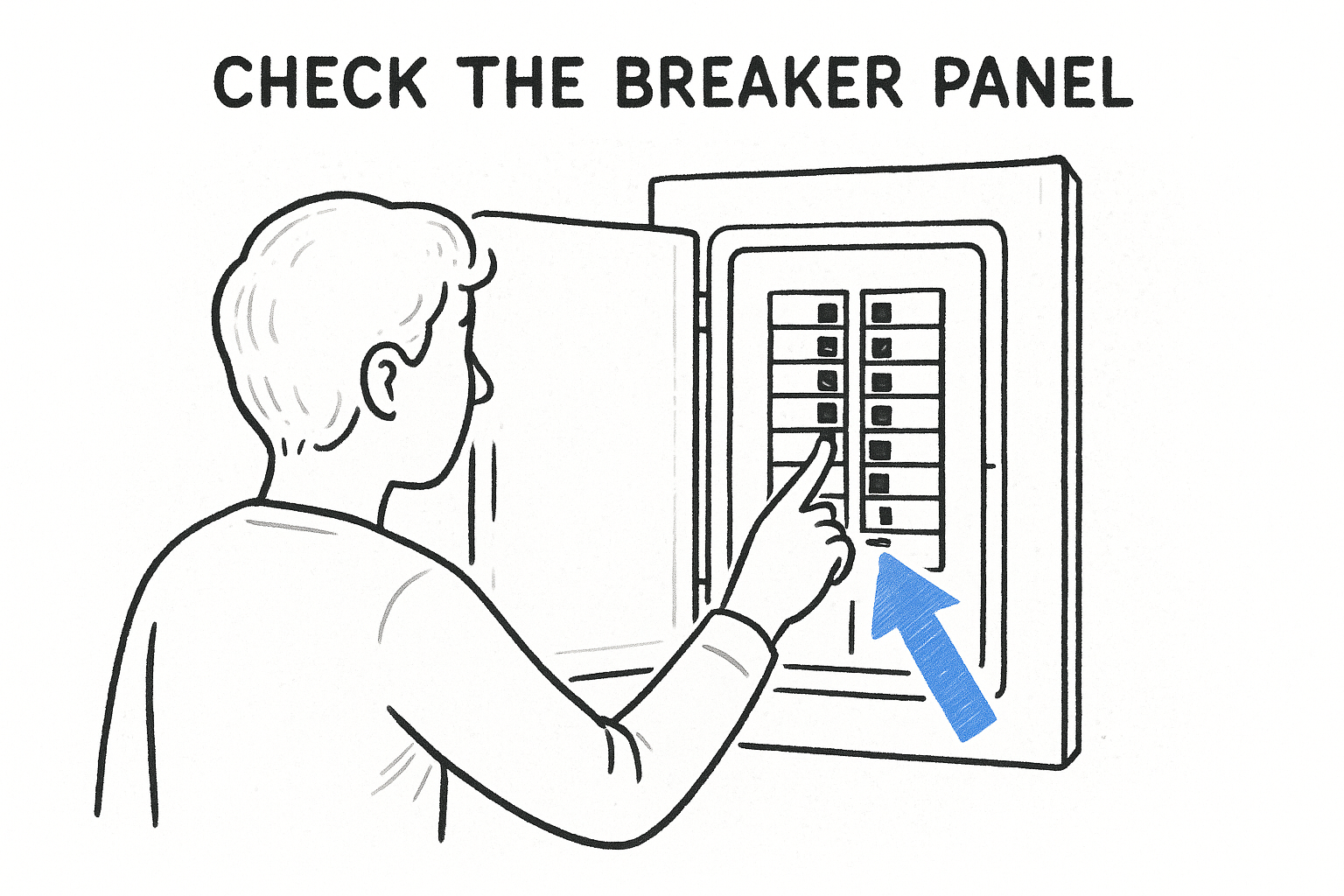
A breaker that trips repeatedly after you reset it is telling you there is an ongoing fault on that circuit, not a fluke. Call a licensed electrician before using that circuit again.
To reset a tripped breaker, follow these steps in order:
- Push the breaker firmly to the full OFF position before resetting it. Skipping this step means the reset will not take hold.
- Wait five seconds.
- Flip the breaker to the full ON position with a single firm motion.
- Return to the GFCI outlet and check whether it now responds when you press RESET.
Test other outlets on the same circuit
If the breaker looks fine, test the other standard outlets in the same room or area using a lamp or phone charger. A dead breaker does not always show visible signs of tripping, and testing nearby outlets tells you quickly whether the problem is isolated to the GFCI or affecting the whole circuit.
If multiple outlets in the same area have no power, the breaker is the likely culprit even if it looks normal. In that case, reset it using the steps above and retest. If all nearby outlets are working but the GFCI still has no power, the issue is either inside the outlet itself or in the wiring feeding that specific outlet box. Move on to the next steps to narrow it down further.
Step 2. Reset the outlet the right way
Many people press the reset button and assume the outlet has failed when it actually has not. GFCI outlets require a specific sequence to reset correctly, and skipping a step means the button will not hold even on a fully functional outlet. Before concluding your GFCI outlet not resetting is a sign of a deeper problem, confirm that you are following the correct procedure.
Press the button in the correct sequence
The reset process is straightforward, but the order matters. Pressing RESET while a faulty load is still connected will not work regardless of how many times you try. Make sure you have already unplugged everything from the outlet before working through these steps.
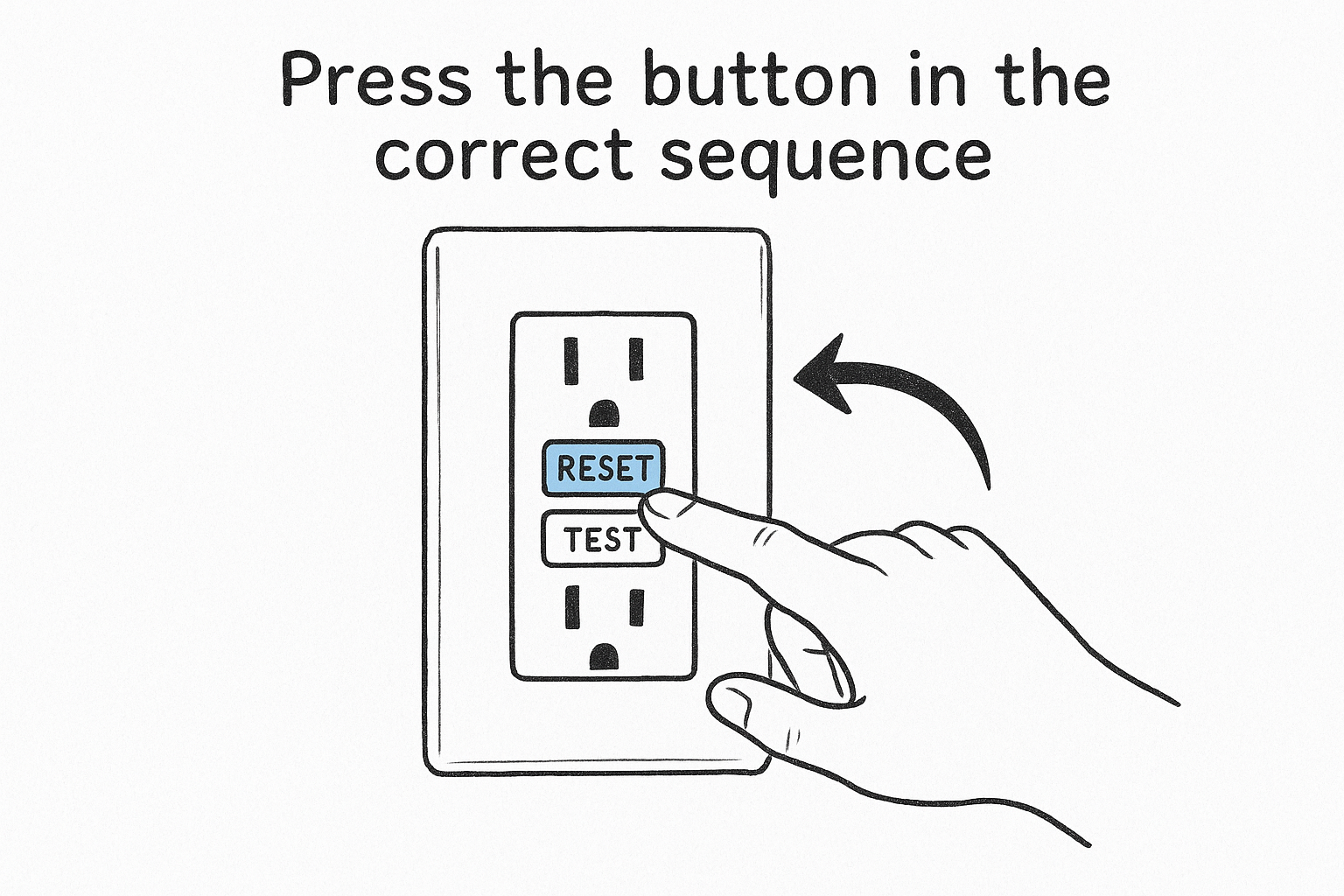
Follow this sequence exactly:
- Unplug all devices from the GFCI outlet and any standard outlets it controls downstream.
- Locate the RESET button on your outlet, which is typically the larger of the two buttons and often labeled or colored differently from TEST.
- Press RESET firmly and steadily using one finger. Do not jab it quickly. Apply steady pressure until you feel or hear a distinct click.
- Release the button and check whether it stays in the depressed position.
- Plug a lamp or phone charger into the outlet to confirm power has returned.
If the RESET button clicks but immediately pops back out, the outlet is still detecting a fault condition. Move on to the next troubleshooting steps rather than pressing it repeatedly.
What a successful reset looks and feels like
A properly reset GFCI outlet gives you clear physical and functional feedback so you know immediately whether it worked. The RESET button will click audibly when you press it, then stay slightly recessed compared to its tripped position. Once you plug in a device, power should return instantly without any delay or flickering.
When a reset fails, the button either refuses to move inward at all, or it clicks and springs back out within a second. Both responses mean the outlet’s internal fault sensor is still active and holding the circuit open. Running through the reset sequence a second or third time will not change the result. Repeated failed resets are a signal to move forward in your troubleshooting process, not a reason to keep pressing the button and hoping for a different outcome.
Step 3. Find upstream GFCIs and dead outlets
One of the most overlooked reasons for a GFCI outlet not resetting is that a completely separate GFCI outlet controls the power feeding it. Electricians often wire multiple outlets in a chain, where a single GFCI at the start of the run protects every outlet downstream from it. If that upstream GFCI trips, every outlet it feeds goes dead regardless of whether those outlets have their own GFCI buttons or not.
Why one GFCI controls others
Wiring a single GFCI outlet to protect a group of standard outlets is common practice and saves both material and labor during installation. The upstream GFCI connects through its LOAD terminals, which send protected power to every outlet further down the circuit. This setup appears frequently in bathrooms, kitchens, and garages where code requires GFCI protection across a broad area. The individual outlets at the end of that chain look and function like ordinary outlets with no visible reset button, so it is easy to miss that they depend on a GFCI located in a different part of the room or even a different room entirely.
In older homes, an upstream GFCI controlling your dead outlet may be located in a garage, bathroom, or utility room with no obvious connection to where you are working.
How to locate and reset an upstream GFCI
Finding an upstream GFCI requires a methodical room-by-room search rather than guessing. Start in the most likely locations first and work outward until you find an outlet with both TEST and RESET buttons in a tripped state.
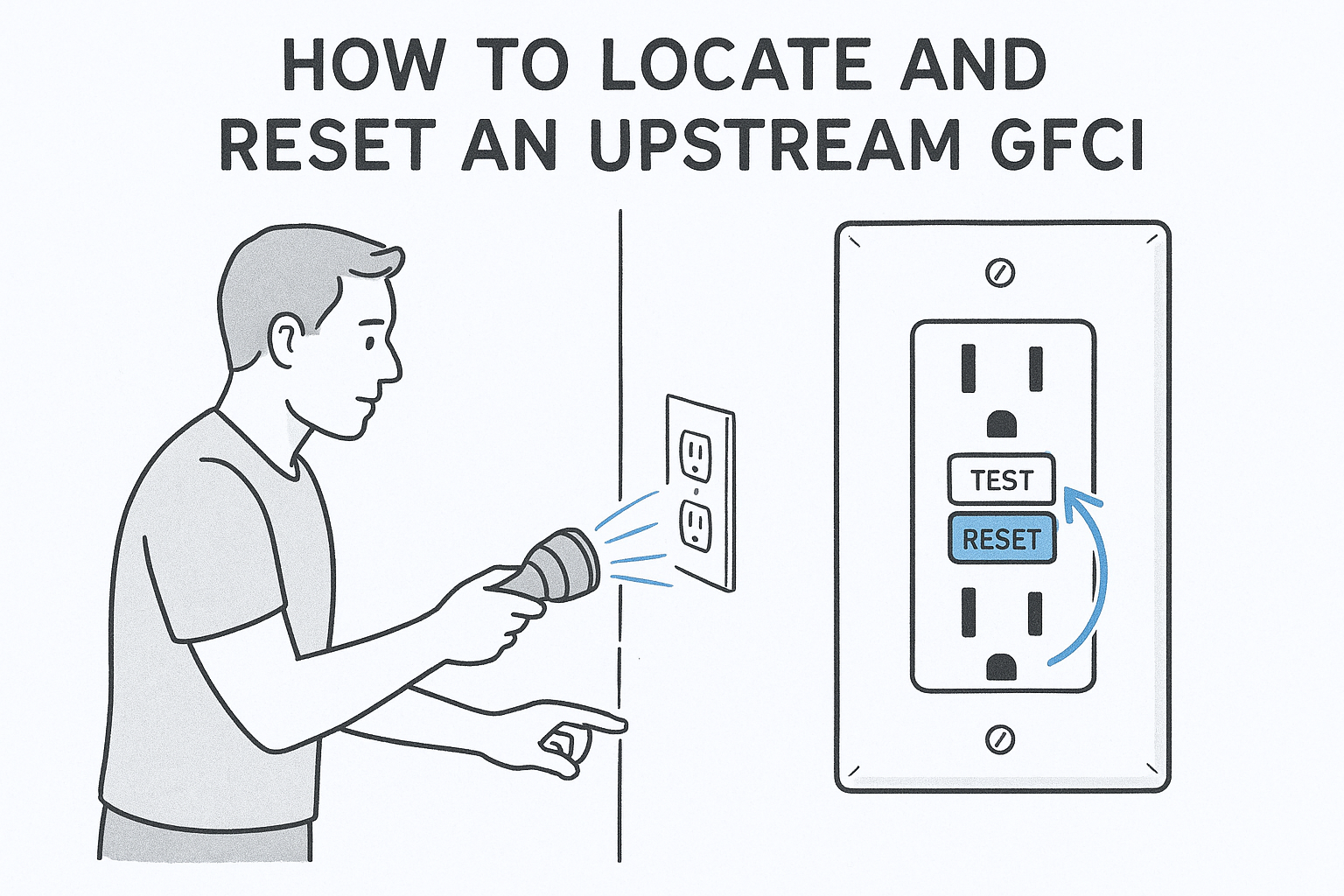
Check these locations in order:
- Bathrooms on the same floor, especially the bathroom closest to the dead outlet
- Garage outlets, which frequently serve as upstream protection for exterior or utility room outlets
- Kitchen countertop outlets, which often protect outlets on adjacent walls
- Utility rooms or laundry areas, where a GFCI protecting the whole circuit may sit near the panel
- Outdoor outlet boxes, which sometimes feed interior outlets in older wiring configurations
Once you locate a GFCI outlet with a tripped or extended RESET button, press it firmly until it clicks and holds. Return to your original outlet and test it with a lamp or phone charger. If power returns, the upstream GFCI was the entire problem, and the outlet you started with is completely functional.
Step 4. Rule out moisture, heat, and outdoor damage
Moisture and heat are two of the most common environmental causes behind a GFCI outlet not resetting, especially in the Phoenix area where summer temperatures regularly push past 110 degrees Fahrenheit. If your outlet sits in a bathroom, kitchen, garage, or outdoor enclosure, environmental damage should be near the top of your suspect list before you conclude the device has failed internally.
Check for moisture inside the outlet box
Water intrusion is the most frequent reason an outdoor or bathroom GFCI refuses to hold a reset. Even small amounts of condensation or pooled water inside the outlet box can keep the fault sensor continuously active. If you recently ran sprinklers near an exterior outlet, had a bathroom leak, or the area experienced heavy rain, moisture is a likely culprit worth investigating before moving on.
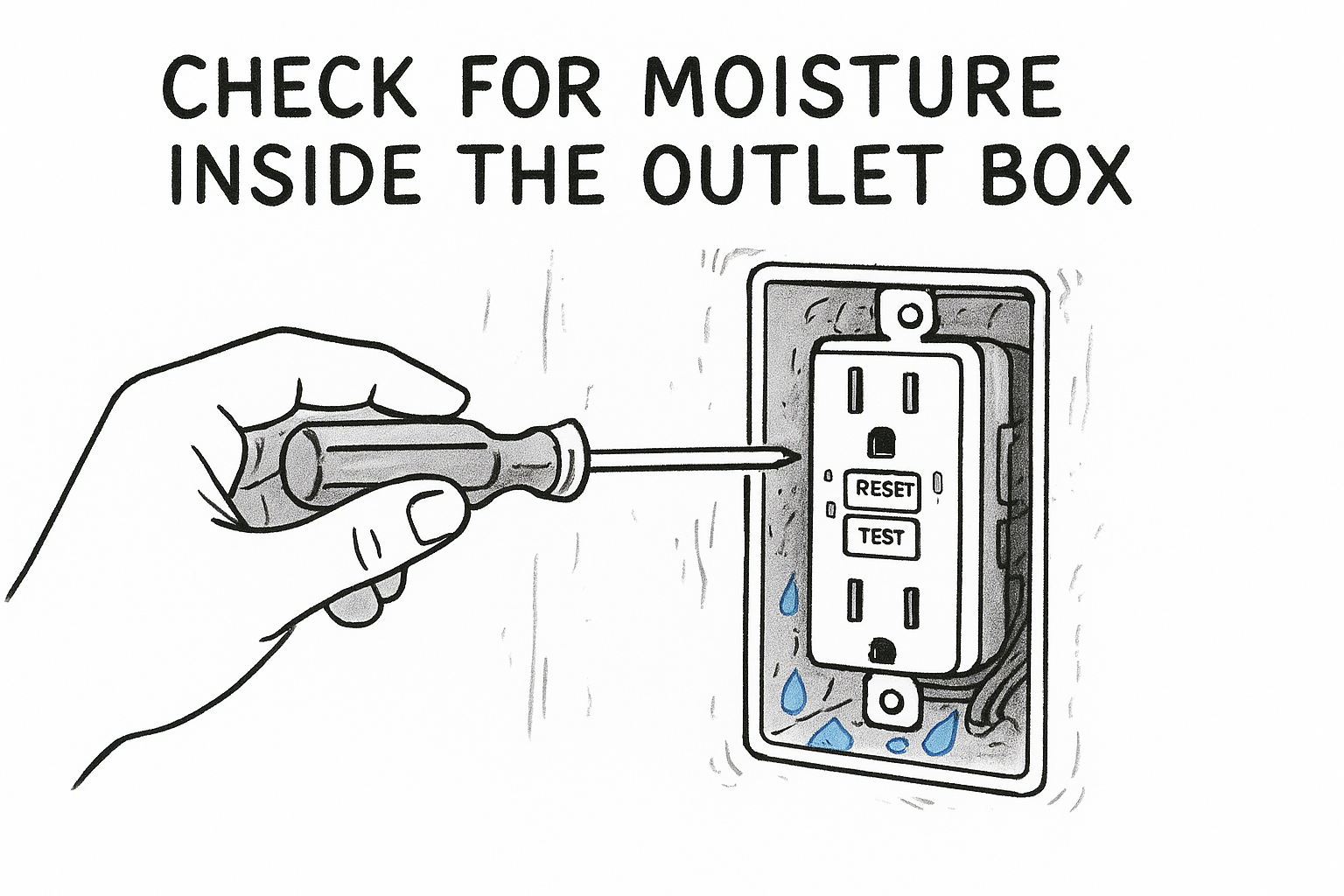
To check for and address moisture, follow these steps:
- Shut off the circuit breaker controlling the outlet before removing the cover plate.
- Remove the cover plate using a flathead screwdriver.
- Look inside the box for visible water droplets, discoloration, or surface rust on the metal components.
- If you find moisture, allow the box to dry fully before restoring power. A fan or a low-heat hair dryer held at a safe distance speeds up the process.
- Restore power and attempt a fresh reset once the box is completely dry.
Never press the reset button on an outlet that still has visible moisture inside the box or on its face.
Assess heat exposure and outdoor damage
Phoenix summers put outdoor outlets under extreme thermal stress that most other regions never experience. Repeated heating and cooling cycles crack the outlet’s plastic housing, degrade the internal components, and weaken the solenoid mechanism that holds a reset in place. If your outlet sits in direct sun or inside an unshaded enclosure, heat damage is a real possibility even on a relatively new device.
Inspect the outlet face and cover plate for cracked plastic, discoloration, or warped surfaces that point to sustained heat exposure. Check the gasket on any outdoor cover plate as well, since a failed gasket lets moisture and insects into the box. Mud dauber nests are a common problem inside outdoor outlet boxes in Arizona specifically, and they can physically obstruct the reset button or hold the fault sensor active. Clear any debris from the box and replace a damaged weatherproof cover before testing the outlet again.
Step 5. Decide if the outlet failed or wiring did
If you have confirmed power at the breaker, unplugged all devices, found no upstream GFCI issues, and ruled out moisture or heat, the remaining question is whether your GFCI outlet not resetting points to a dead outlet or a problem with the wiring behind it. These are two different fixes, and misidentifying the cause wastes time and money. This step helps you figure out which one you are dealing with before calling anyone or buying a replacement.
How to test the outlet itself
The fastest way to test the outlet is to swap it with a known-good GFCI outlet from another location in the house. First, shut off the breaker controlling the circuit. Remove the cover plate and carefully pull the outlet from the box without touching the wire connections. Disconnect the wires from the faulty outlet and connect them to your known-good unit in the exact same positions, matching line hot to line hot, line neutral to line neutral, and ground to ground. Restore power and press RESET on the replacement outlet.
If the replacement GFCI resets and holds without any issue, the original outlet has simply failed internally and needs permanent replacement.
If the replacement also refuses to reset, the outlet is not the problem. The wiring feeding the box is holding the fault condition active, and no outlet you install there will function correctly until the wiring issue is resolved.
Signs the wiring is the problem
When wiring is the culprit, you will often notice specific patterns that go beyond a single dead outlet. Multiple outlets on the same circuit may behave erratically, or the replacement GFCI trips immediately after you restore power, before you even connect a load. These patterns point clearly toward a wiring fault, a damaged insulation section, or a loose connection somewhere along the circuit run, not a failed device.
Check inside the outlet box for loose wire connections, scorch marks on the wire insulation, or wires that have pulled away from their terminals. A loose neutral wire is a particularly common cause because it creates an imbalance that the GFCI reads as a continuous fault. Tighten any loose connections using the appropriate screwdriver, then restore power and test again. If the outlet still does not reset after you secure the connections and replace the device, the fault exists deeper in the circuit and requires a licensed electrician with diagnostic equipment to locate and fix safely.
When to stop troubleshooting and call a pro
Most homeowners can work through the steps above without any special tools or electrical training. But a GFCI outlet not resetting can sometimes point to conditions that go beyond what you should handle yourself. Knowing where to draw that line protects you, your household, and your home’s electrical system from a mistake that costs far more to fix than a simple service call.
Warning signs that point beyond a DIY fix
Some situations make it clear that professional diagnosis is the right call rather than continued self-troubleshooting. If you notice any of the following, stop what you are doing and contact a licensed electrician.
Watch for these specific warning signs:
- The replacement GFCI outlet trips immediately after you restore power, even with no load connected
- You find scorch marks, melted insulation, or a burning smell inside the outlet box
- Multiple circuits in your home are behaving erratically at the same time
- The breaker controlling the circuit trips repeatedly within minutes of resetting it
- You discover aluminum wiring in the outlet box instead of copper
- The wires inside the box are brittle, cracked, or showing bare copper along their length
- You cannot identify which breaker controls the circuit and the panel labels are missing or wrong
Any one of these warning signs points to a fault condition that diagnostic equipment and hands-on experience are required to locate and resolve safely.
Work that requires a licensed electrician in Arizona
Beyond personal safety, some electrical work in Arizona legally requires a licensed contractor. Replacing a failed GFCI outlet in an existing box is generally a straightforward swap. However, if the investigation reveals that you need new wiring runs, panel work, or circuit additions, state law requires that work be performed by a licensed electrical contractor. Attempting those repairs yourself can void your homeowner’s insurance and create problems when you sell the property, since unpermitted work shows up during inspection.
AZ DC Electric handles GFCI diagnostics, outlet replacements, and circuit repairs across the Greater Phoenix Metro Area with no call-out fees and upfront pricing before any work begins. If your troubleshooting has pointed to a wiring fault or a deeper panel issue, scheduling a professional inspection is the fastest way to get your outlet back online without guessing.
Get power back safely
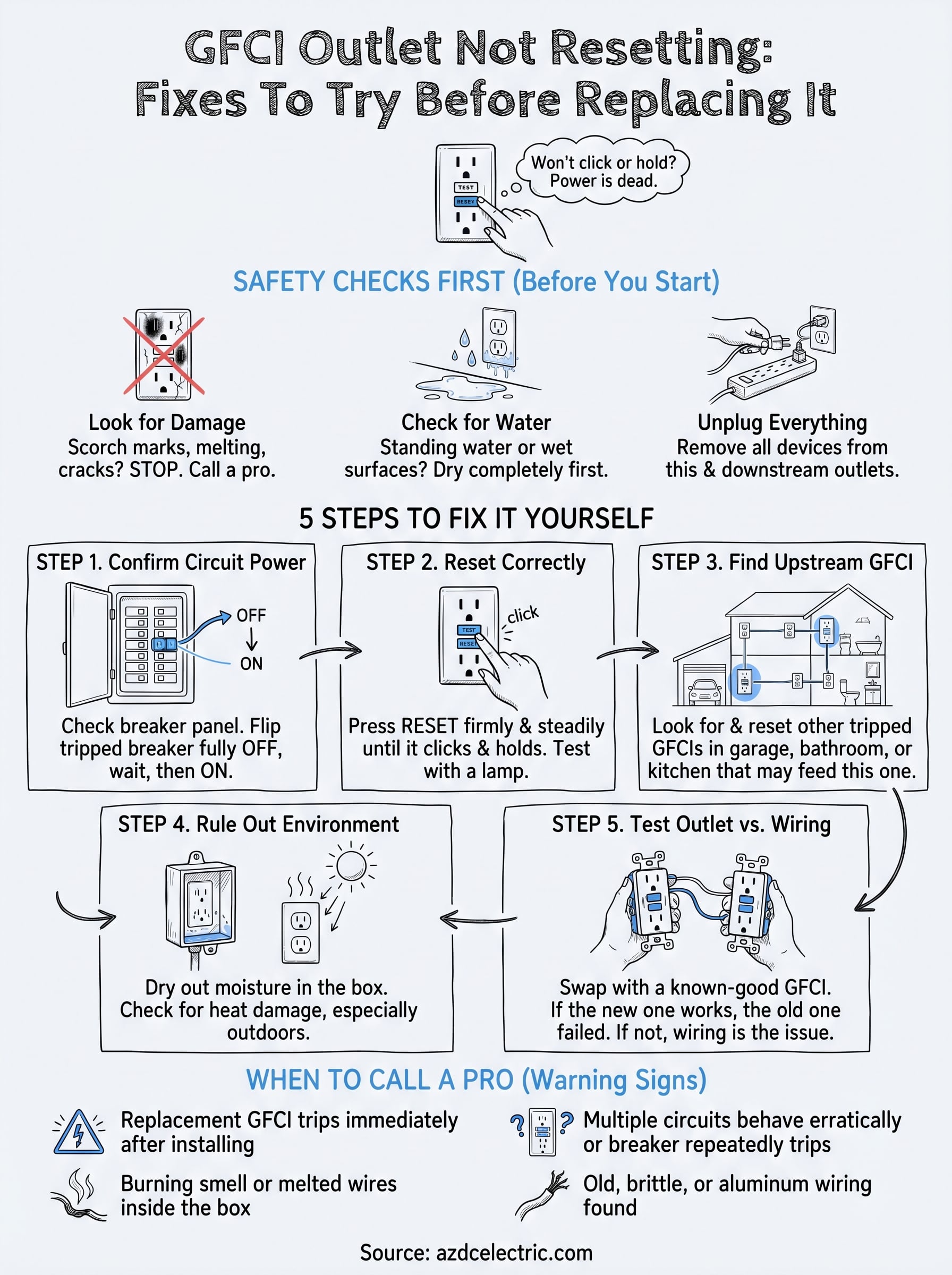
A GFCI outlet not resetting is almost always solvable once you work through the right sequence. Start with the breaker, unplug your devices, find any upstream GFCI outlets, check for moisture or heat damage, and then test whether the outlet itself or the wiring is causing the fault. Most homeowners resolve the issue before they ever need to buy a replacement outlet.
When the problem points to damaged wiring, a repeatedly tripping breaker, or scorch marks inside the box, those are situations where professional diagnosis saves you time and keeps your home safe. Guessing at wiring faults without the right tools can make the problem worse.
If your troubleshooting has hit a wall or turned up warning signs, the team at AZ DC Electric is available across the Greater Phoenix Metro Area with no call-out fees, upfront pricing, and a 5-year workmanship guarantee on every repair.