A GFCI (Ground Fault Circuit Interrupter) outlet is one of the most practical safety upgrades you can make to your home, and understanding the GFCI outlet installation cost before you call an electrician keeps you from overpaying. These outlets cut power in milliseconds when they detect a ground fault, which is why building codes require them in kitchens, bathrooms, garages, and anywhere near water.
But what should you actually expect to pay in 2026? The answer depends on a few things: labor rates in your area, the number of outlets you need, and whether your existing wiring supports GFCI protection or needs upgrades. Here in the Phoenix Metro Area, our team at AZ DC Electric handles these installations daily, so we know exactly where pricing stands and what drives the final number up or down.
This guide breaks down material costs, electrician labor rates, DIY vs. professional pricing, and the factors that affect your total bill. Whether you’re replacing a single outlet or upgrading an entire home, you’ll walk away knowing what a fair price looks like and how to make a smart decision for your budget and safety.
Why GFCI outlets matter for safety and code
A standard outlet keeps power running regardless of what happens on the circuit. A GFCI outlet, by contrast, monitors the current flowing in and out of the circuit continuously. When it detects even a tiny imbalance, typically as small as 4 to 6 milliamps, it trips within one-thirtieth of a second and cuts power. That speed is fast enough to prevent a fatal shock in most cases.
How GFCI outlets protect you from ground faults
Ground faults occur when electricity finds an unintended path to the ground, often through a person. Water is the most common culprit: a hair dryer dropped in a sink, a power tool used in the rain, or a faulty appliance near a wet surface. Without a GFCI outlet, a ground fault can deliver a lethal shock before a standard breaker even notices the problem. Standard breakers trip on overcurrent, not on the small leakage currents that cause electrocution. GFCI outlets fill that gap and protect you where standard circuit protection falls short.
The U.S. Consumer Product Safety Commission estimates that GFCI protection could prevent hundreds of electrocution deaths each year in the United States.
Where the National Electrical Code requires GFCI outlets
The National Electrical Code (NEC) sets the baseline for where GFCI protection is mandatory in new construction and remodels. Most jurisdictions in Arizona, including Scottsdale and the Greater Phoenix Metro Area, adopt the NEC and enforce it through local permitting. Knowing these locations matters when you plan your GFCI outlet installation cost, because you may need more outlets than you expect.
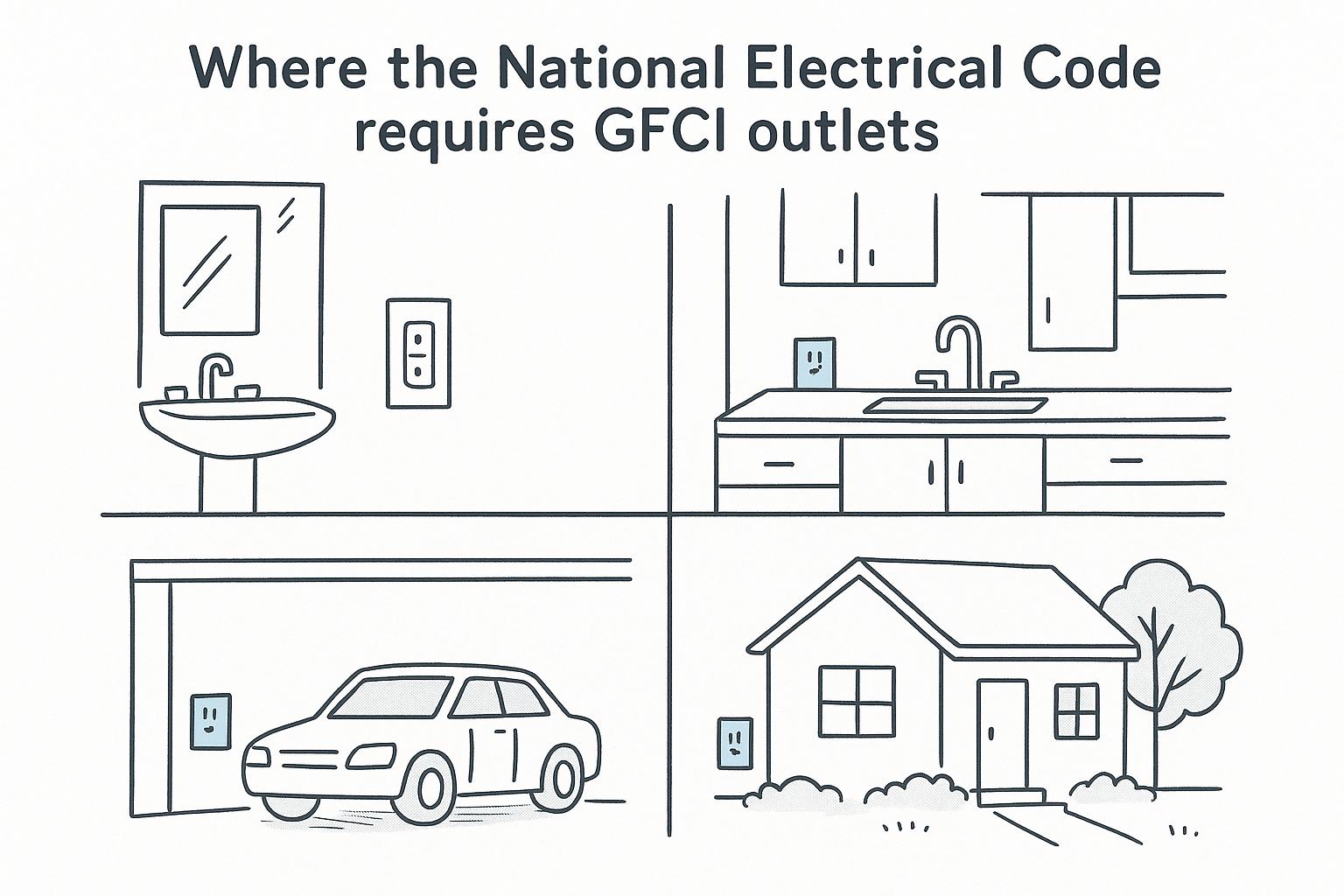
NEC-required GFCI locations include:
- Bathrooms: all outlets within the room
- Kitchens: countertop outlets within 6 feet of a sink
- Garages: all outlets not dedicated to a specific appliance
- Outdoor outlets: all exterior outlets exposed to weather
- Unfinished basements: outlets throughout the space
- Pool and spa areas: all outlets near water features
What happens if you skip GFCI protection
Skipping GFCI outlets in required locations is not just a safety risk, it is a code violation that can delay or kill a home sale. Home inspectors flag missing GFCI protection routinely, and buyers or lenders frequently require corrections before closing. Beyond real estate, an insurance claim related to electrical injury can be denied if your wiring did not meet code at the time of the incident.
Phoenix homeowners also face a practical hazard specific to this region. The combination of desert heat, dust, and seasonal monsoon moisture puts electrical systems under more stress than in many other climates. GFCI outlets that are current and properly installed give your home a meaningful layer of protection against conditions that show up here every single year.
Typical GFCI outlet installation cost in 2026
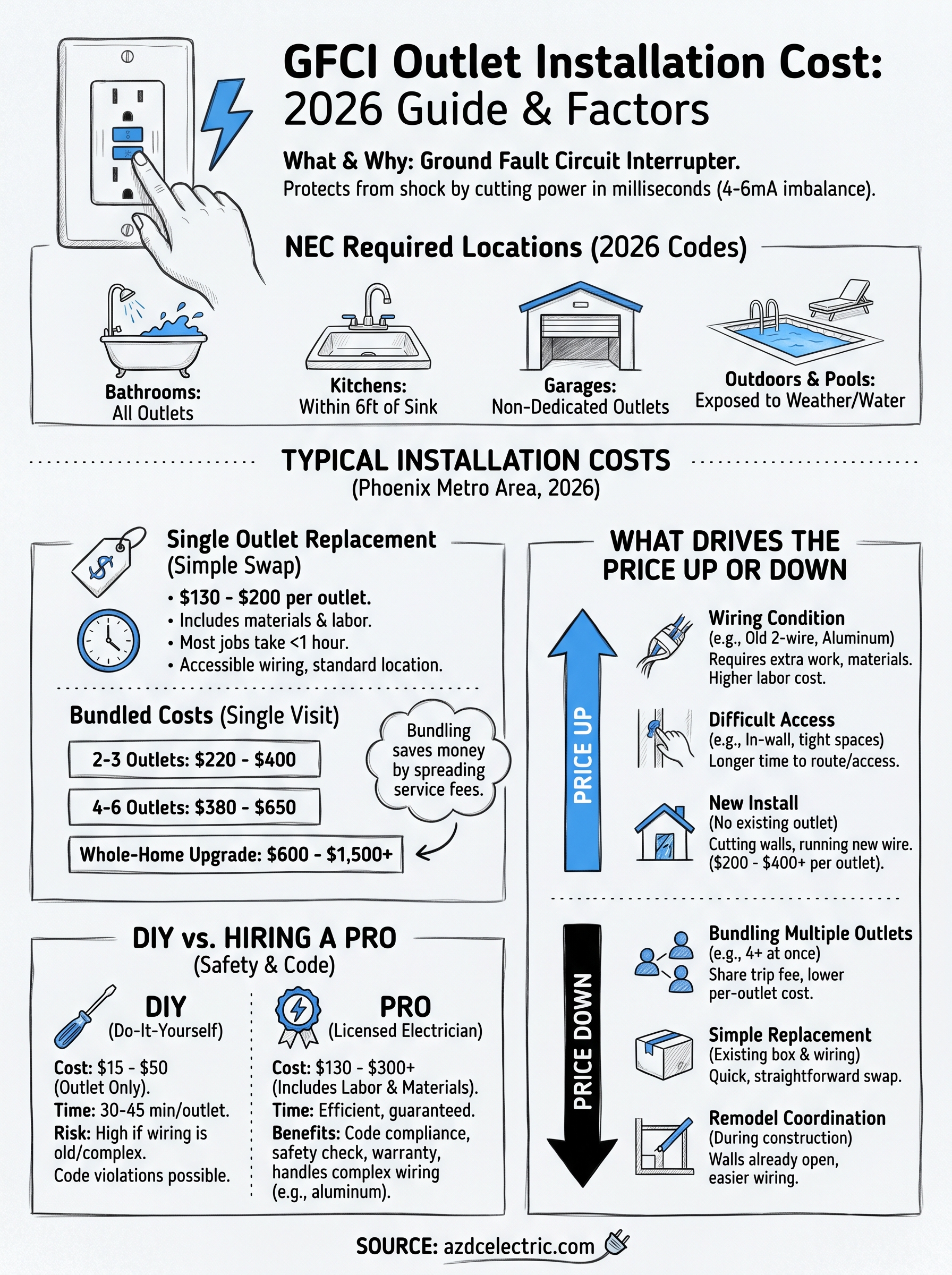
The total GFCI outlet installation cost in 2026 ranges from $130 to $300 per outlet when you hire a licensed electrician. That range covers both labor and materials. The outlet itself costs between $15 and $50 depending on the amperage and brand. Labor accounts for the bulk of the bill, typically $100 to $250 per outlet, since most jobs take one to two hours per location.
What you pay for a single outlet replacement
Replacing an existing outlet with a GFCI model is the most straightforward job and lands at the lower end of the price range. Electricians in the Phoenix Metro Area typically charge $130 to $200 for a single replacement, which includes the outlet, a quick wiring check, and testing. If your existing outlet is in a standard location with accessible wiring, there is little complexity involved.
If an electrician quotes you over $250 for a simple single-outlet swap in an accessible location, ask for a breakdown before agreeing.
Cost breakdown by number of outlets
Your per-outlet price drops when you install multiple GFCI outlets in the same visit, because the electrician’s travel time and minimum service fee get spread across the job. Here is a general pricing range for the Phoenix area in 2026:
| Number of Outlets | Estimated Total Cost |
|---|---|
| 1 outlet | $130 to $200 |
| 2 to 3 outlets | $220 to $400 |
| 4 to 6 outlets | $380 to $650 |
| Whole-home upgrade | $600 to $1,500+ |
Whole-home upgrades cost more because they involve inspecting every outlet location, running longer jobs, and sometimes addressing older wiring that does not meet current code. Bundling all your GFCI work into a single appointment is almost always the most cost-effective approach.
What drives the price up or down
Several factors push your GFCI outlet installation cost above or below the averages listed in the previous section. Understanding them helps you anticipate what an electrician will find before they start the job, and it puts you in a better position to ask the right questions when you review a quote.
Wiring condition and older electrical systems
The condition of your existing wiring is the single biggest variable in the final price. Homes built before 1970 often have aluminum or two-wire wiring that lacks a ground conductor, which complicates a GFCI installation. In those cases, an electrician may need to run new wiring, add a grounding conductor, or use specific wiring methods approved for ungrounded circuits. Each of those steps adds both time and materials to the job.
If your home still has two-prong outlets in bathrooms or the kitchen, budget for additional work beyond a standard GFCI swap.
Outlet location and physical access
Where the outlet sits in your home directly affects how long the job takes. Outlets inside finished walls, inside cabinetry, or in tight spaces like under a vanity take longer to access and wire than outlets in open garages or unfinished basements. Outdoor outlet installations also carry additional costs because they require weatherproof covers and boxes rated for exterior use.
How many outlets you install at once
Scheduling multiple outlets in a single appointment lowers your per-outlet cost because you pay one trip fee spread across the whole job. An electrician charging a flat $75 to $100 service call fee absorbs that cost more efficiently when the job covers four outlets instead of one. If you know you need GFCI protection in multiple rooms, bundling everything into one visit is the most straightforward way to control your total bill.
Replacement vs new install and other common scenarios
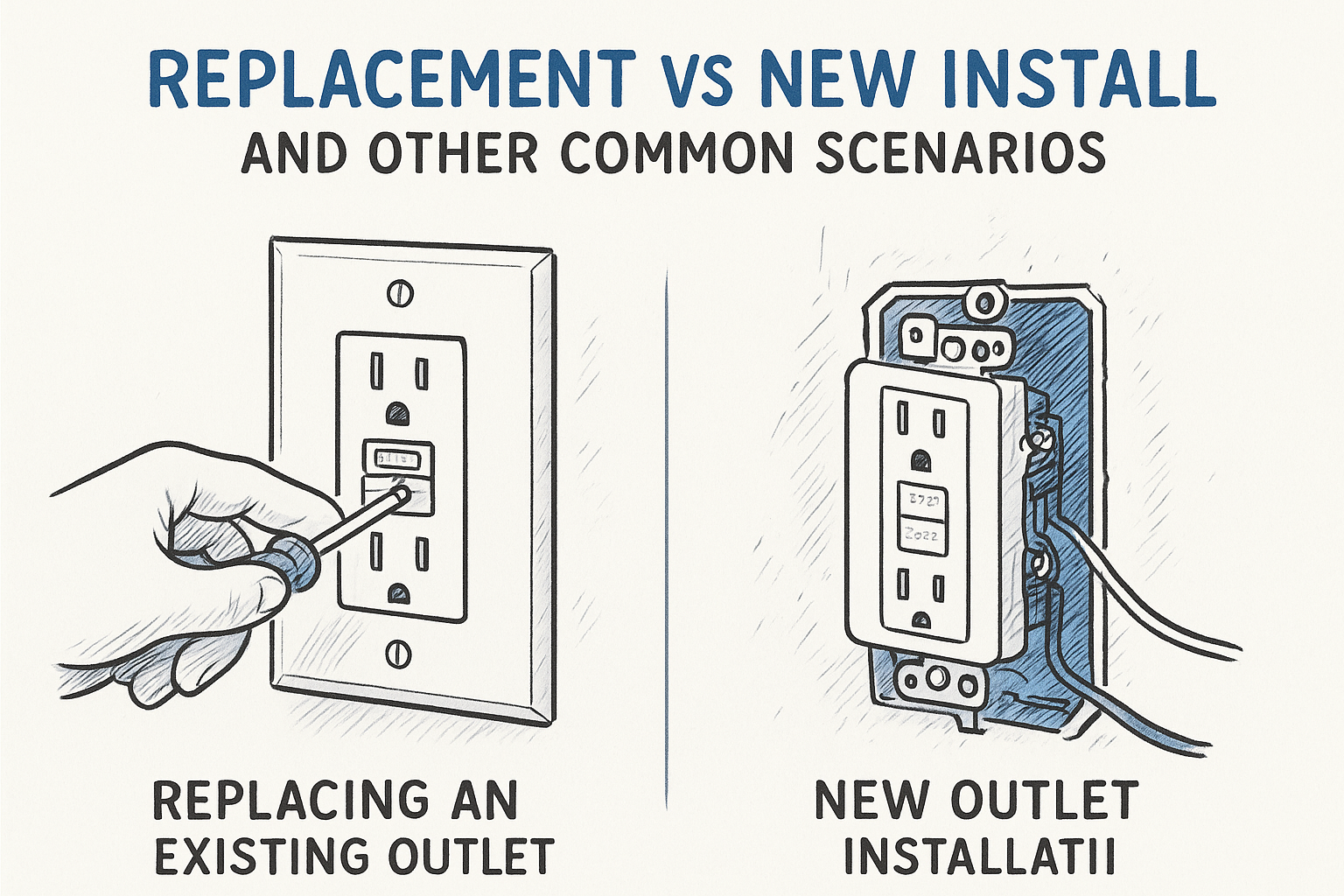
The type of job you need changes your GFCI outlet installation cost significantly. A straightforward swap of an old outlet for a new GFCI model is the least expensive scenario, while adding an outlet to a location that has never had one requires more work. Knowing which category your project falls into helps you evaluate any quote an electrician gives you.
Replacing an existing outlet
Swapping a standard outlet for a GFCI model is the most common and cost-effective job. The wiring and box are already in place, so the electrician removes the old outlet, connects the GFCI device, tests it, and moves on. Most single replacements take under an hour and cost between $130 and $200 in the Phoenix area. If you have several outlets to replace across a bathroom, kitchen, and garage, batching them into one visit keeps the total bill manageable.
Replacing all non-GFCI outlets in required locations at once is almost always cheaper than scheduling separate calls for each one.
Adding a new outlet where none exists
Installing a brand-new outlet in a location that has never had one is a different job entirely. The electrician needs to run wire from an existing circuit, cut a new box into the wall, and route the wiring through finished spaces. That added labor typically pushes the total cost to $200 to $400 per new outlet, depending on how far the circuit needs to extend and what walls are in the way.
Upgrading during a remodel
If you are already opening walls for a kitchen or bathroom remodel, that is the best time to add GFCI protection. Your electrician can run new wire and place outlets without the extra cost of cutting into finished walls, which brings the per-outlet price closer to a standard replacement. Coordinating electrical work during a remodel consistently produces the best value for this type of upgrade.
DIY vs hiring an electrician in Phoenix
The GFCI outlet installation cost drops significantly if you handle the swap yourself. A GFCI outlet costs $15 to $50 at a home improvement store, and the job on a standard replacement is straightforward for anyone comfortable working with basic wiring. That said, Phoenix has specific conditions and code requirements that make the DIY-versus-pro decision worth thinking through carefully before you pick up a screwdriver.
What you save going DIY
On a simple replacement in an accessible, already-grounded location, a DIY approach saves you the $100 to $200 in labor an electrician would charge. You shut off the breaker, swap the outlet, follow the LINE and LOAD terminal labels, and test. The U.S. Consumer Product Safety Commission provides guidance on safe electrical practices that any homeowner can reference before starting. For a single outlet in a bathroom or kitchen with intact modern wiring, many homeowners handle this without difficulty.
- Outlet cost: $15 to $50
- Tools needed: screwdriver, voltage tester, wire stripper
- Time: 30 to 45 minutes per outlet in ideal conditions
Why hiring a licensed electrician makes sense in Phoenix
Older Phoenix homes often have two-wire ungrounded circuits or aluminum wiring from the 1960s and 1970s, and those situations require more than a simple swap. An electrician identifies those conditions before problems develop, and a bad connection in desert heat degrades faster than in cooler climates. Monsoon season moisture also accelerates corrosion in outdoor and garage outlets, making proper installation critical.
If your home is pre-1980 or you find aluminum wiring behind the outlet, stop and call a licensed electrician rather than proceeding on your own.
For multiple outlets, permit-required work, or any location near a pool or exterior wall, the labor cost pays for itself in safety, code compliance, and the 5-year workmanship guarantee a professional brings to the job.
Next steps
You now have a complete picture of GFCI outlet installation cost in 2026, from a single replacement to a whole-home upgrade. The core takeaway is straightforward: labor, wiring condition, and the number of outlets you need are the three factors that determine your final bill. Simple swaps in accessible locations stay on the low end; older homes with two-wire circuits or new outlet runs push the price higher.
Your best move is to schedule everything in one visit. Combining your bathroom, kitchen, garage, and outdoor outlets into a single appointment saves you money and gets your home up to code at once. Phoenix’s heat and monsoon conditions make proper installation more important here than in most other markets, so hiring a licensed professional is worth the cost.
If you are ready to get started, contact the licensed electricians at AZ DC Electric for upfront pricing and no dispatch fees across the Greater Phoenix Metro Area.