A backup generator is only as useful as its connection to your home’s electrical system, and that connection depends on a properly installed transfer switch. If you’re researching generator transfer switch installation cost, you’re asking the right question before committing to a project that directly affects your home’s safety and electrical reliability. The short answer: most homeowners in the Phoenix Metro Area spend between $400 and $2,500+, depending on the switch type, labor complexity, and local permit requirements.
But that range is wide for a reason. A basic manual transfer switch for a portable generator sits at one end of the spectrum, while a whole-home automatic transfer switch paired with a standby generator sits at the other. Panel condition, circuit count, wire runs, and whether your existing setup meets current code all factor into the final number. Understanding these variables before you call an electrician saves you from sticker shock and helps you make a confident decision.
At AZ DC Electric, we handle transfer switch installations across the Greater Phoenix Metro Area, from Scottsdale to Mesa to Chandler and beyond. As a licensed and insured electrical contractor, we provide upfront pricing so you know exactly what you’re paying before any work starts. This guide breaks down every cost factor involved, compares manual vs. automatic switches, and walks you through what to expect from the process so you can budget accurately and choose the right setup for your home.
What a generator transfer switch does and why it matters
A transfer switch is an electrical device that connects your generator to your home’s wiring in a controlled, code-compliant way. Without one, your generator can only power whatever appliances you plug directly into it using extension cords. A transfer switch eliminates that workaround by allowing your generator to feed power into your electrical panel, so hardwired circuits like your HVAC system, refrigerator, or lighting actually work during an outage. Whether you’re researching generator transfer switch installation cost for a portable unit or a whole-home standby system, the switch is always the critical piece that makes everything function safely and legally.
How a transfer switch controls power flow
The switch sits between your utility connection and your electrical panel. When grid power is present, it keeps your home connected to the utility line. When an outage hits, you either flip the switch manually or it transfers automatically, depending on your setup, and your generator becomes the power source for your selected circuits.
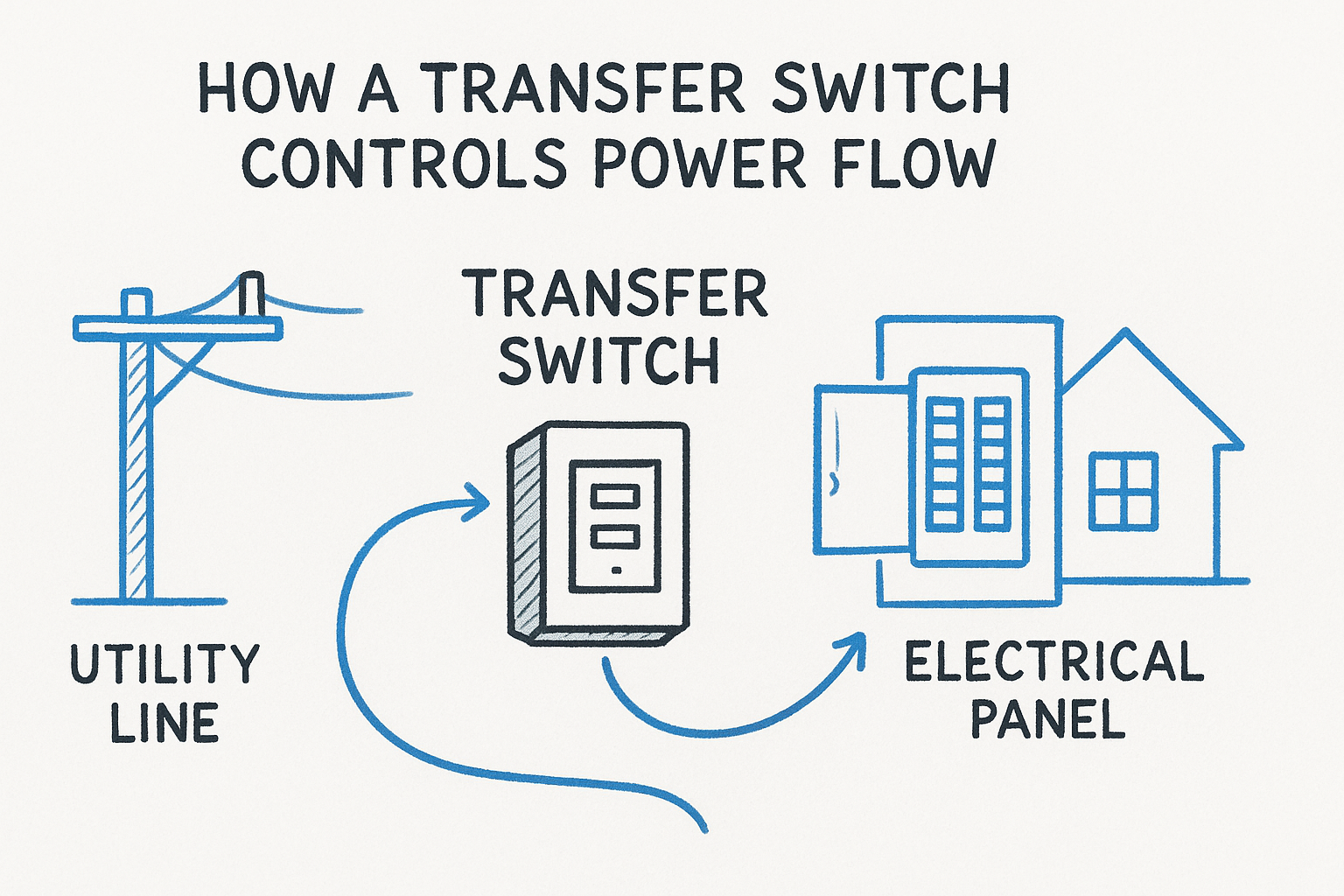
The physical isolation from the utility grid is the core function of any transfer switch, and it is not optional. It is required by the National Electrical Code (NEC) because it prevents generator power from traveling backward through the utility lines and into the broader grid. Lineworkers repairing downed lines during a storm have no way of knowing a home generator is energizing those lines unless a transfer switch breaks that connection.
Back-feeding utility lines without a transfer switch is illegal in most jurisdictions and puts utility workers at serious risk of electrocution.
Why skipping a transfer switch creates real risks
Running a generator without a transfer switch forces most homeowners to rely on extension cords routed through windows or doors, which creates fire hazards and limits total wattage to a fraction of what the generator can actually deliver. Those cords also introduce carbon monoxide risk when the generator sits too close to the home, and they create tripping hazards throughout your living space.
Beyond safety, there’s a practical problem that most homeowners don’t anticipate. Hardwired appliances like your furnace, built-in lighting, ceiling fans, and garage door simply cannot run from an extension cord. You either live without them during an outage or you install a proper transfer switch. For Phoenix-area homeowners, losing air conditioning during a summer grid failure is a genuine health concern, not a minor inconvenience.
What a transfer switch protects in your electrical system
A correctly installed transfer switch protects your generator’s engine from overload by letting you select only the circuits you need during an outage. Without that selection process, it’s easy to accidentally draw more load than your generator can handle, which causes voltage fluctuations that damage sensitive electronics like computers, smart TVs, and modern appliance control boards.
Your electrical panel and home wiring also benefit from the protection a transfer switch provides. When power transfers through a properly rated switch, amperage flows through components designed to handle it. Extension cord workarounds push current through wiring rated for lower loads, generating heat and raising the risk of a wire fire inside your walls. Installing a transfer switch is ultimately an investment in every appliance and system connected to your home, and it’s a prerequisite for any generator setup that a licensed electrician will sign off on.
Typical transfer switch installation cost ranges in 2026
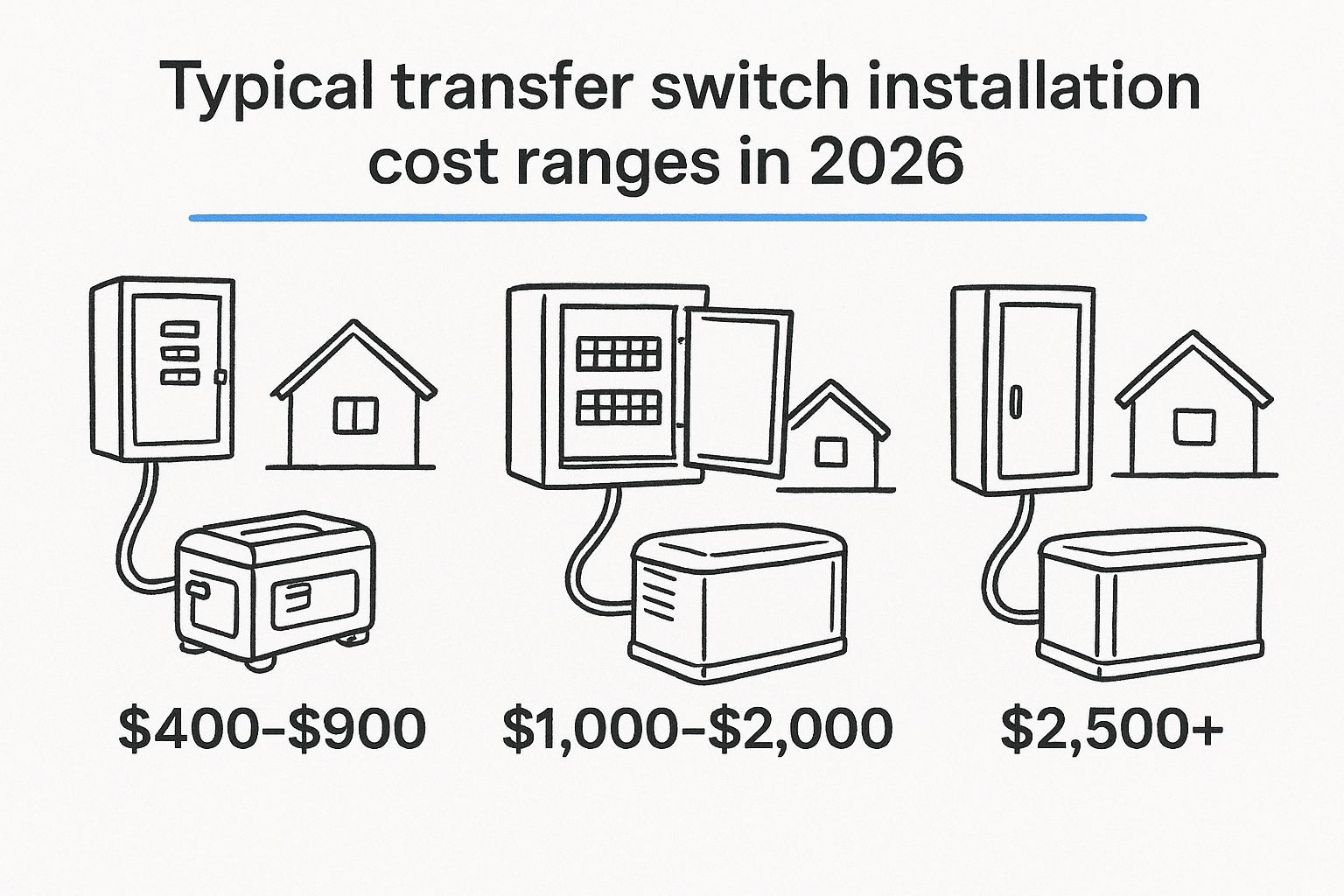
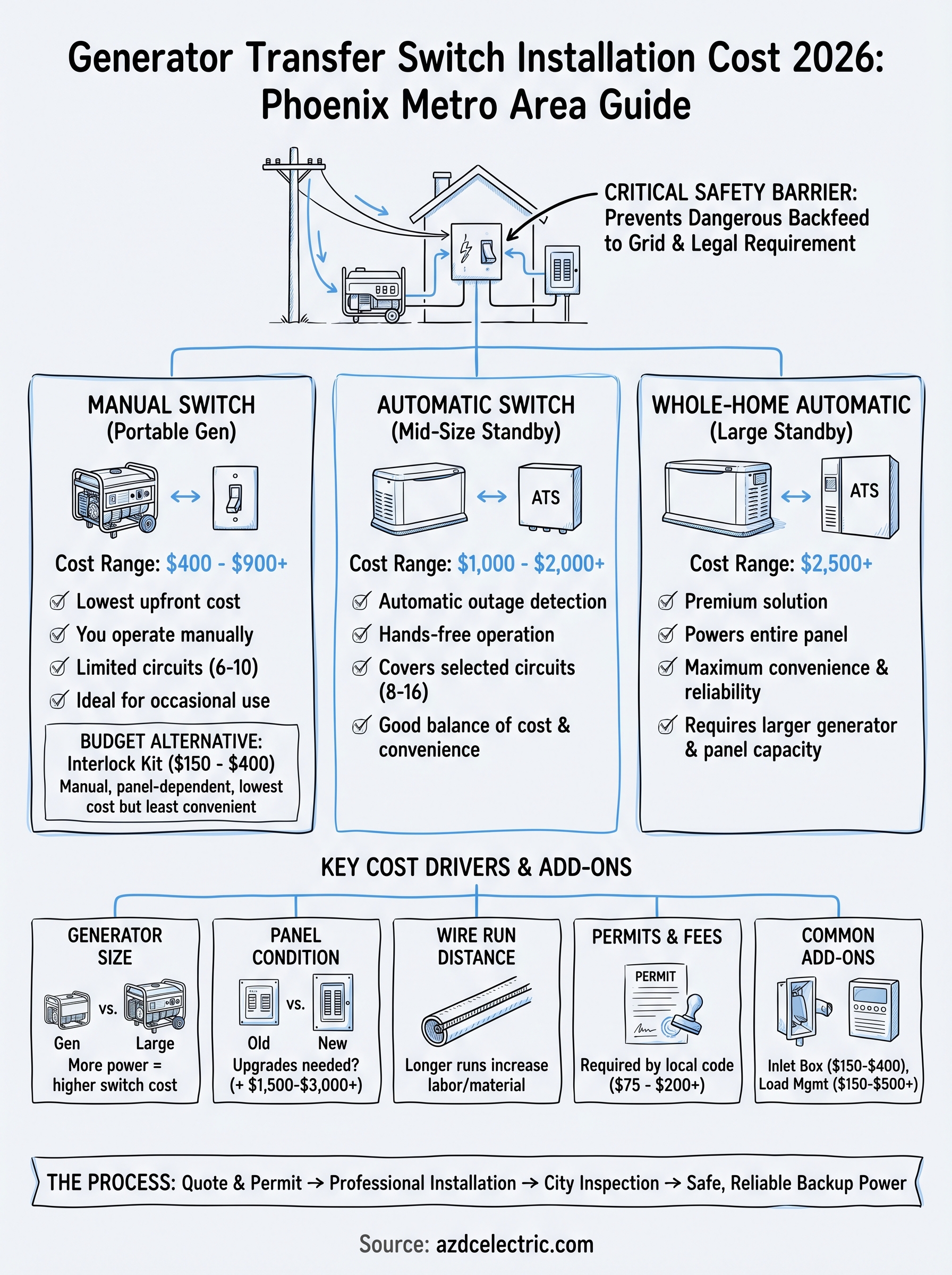
When you’re budgeting a generator transfer switch installation cost, having concrete numbers to work from makes a real difference. Most projects fall into three broad tiers based on switch type and system size. Smaller manual setups designed for portable generators land between $400 and $900 all-in, full automatic transfer switches for mid-size standby generators run $1,000 to $2,000, and whole-home automatic systems with high circuit counts push beyond $2,500 when labor, permits, and any required panel work are included.
Manual transfer switch cost ranges
Manual transfer switches are the most affordable way to connect a portable generator to your home’s wiring. The switch unit itself typically costs $150 to $400, depending on the number of circuits it controls, with 6-circuit and 10-circuit models being the most common for residential use. Labor for the installation usually adds $250 to $500, assuming your panel is in good condition and the generator inlet placement is straightforward, putting your realistic total somewhere between $400 and $900 for a basic, code-compliant setup.
If your electrical panel is older or already at capacity, even a manual switch installation can carry additional costs for breaker work or a small subpanel.
Permit fees are another line item to plan for. Most Phoenix-area jurisdictions require a permit for transfer switch work, and those fees typically run $75 to $150 depending on the city. A licensed contractor will usually include this in your upfront quote, but it’s worth confirming before you sign off on any estimate.
Automatic transfer switch cost ranges
Automatic transfer switches (ATS) cost significantly more because they include internal sensors, contactors, and control logic that manual switches don’t require. The unit alone runs $300 to $1,500 or more depending on amperage rating and brand, and installation labor is more involved, often adding $500 to $1,200 to the project total.
Whole-home ATS units rated at 200 amps, which cover your entire panel, sit at the higher end of that range. Partial-load automatic switches covering 8 to 16 selected circuits offer a middle-ground option for homeowners who want automatic transfer without paying for a full standby system. For these mid-tier setups, total costs typically land between $1,200 and $2,000, including all labor, hardware, and permits.
Manual vs automatic transfer switches and cost differences
Choosing between a manual and automatic transfer switch is one of the biggest decisions that shapes your total generator transfer switch installation cost. Both options meet code requirements and protect your home from backfeed hazards, but they differ significantly in how they work, how much they cost, and how much effort they require from you during an actual outage. Understanding the tradeoffs before you buy keeps you from overspending on features you don’t need or underspending on a setup that frustrates you every time the grid goes down.
Manual transfer switches: what you get and what you pay
A manual transfer switch requires you to physically flip a switch or rotate a selector to move power from the utility to your generator. You do this yourself, which means you need to be home, physically able, and willing to step outside to start your portable generator before transferring power. For many Phoenix-area homeowners, that process is straightforward and the lower cost makes it the right call.
Manual switches are a reliable, code-compliant solution for homeowners who use a portable generator occasionally and don’t mind a brief delay in getting circuits back online.
The hardware itself runs $150 to $400 for most residential models, and licensed labor to install it adds another $250 to $500. Your all-in cost for a manual setup generally lands between $400 and $900, making it the most accessible entry point for backup power.
Automatic transfer switches: the premium and what justifies it
An automatic transfer switch does exactly what the name says. It detects a utility outage on its own and switches your home over to generator power within seconds, without any action on your part. For homeowners with standby generators, elderly residents, or anyone who spends time traveling, that automatic response is worth the added cost.
ATS units carry more internal components, including voltage sensors, time-delay relays, and motorized contactors, which push equipment costs to $300 to $1,500 depending on amperage rating. Labor is also more involved, typically adding $500 to $1,200 to the project. Your realistic total for an automatic setup falls between $1,200 and $2,500 or more for a whole-home system. The convenience and reliability of not managing a transfer manually during a summer outage is the core reason most homeowners with standby generators choose this option.
Interlock kits vs transfer switches: price and use cases
When researching generator transfer switch installation cost, you’ll likely come across interlock kits as a cheaper alternative. Both options legally connect your portable generator to your home’s panel, but they work differently, carry different costs, and suit different situations. Knowing which one fits your setup can save you several hundred dollars or prevent a frustrating installation that doesn’t meet local code requirements.
What an interlock kit actually is
An interlock kit is a mechanical plate installed directly on your existing electrical panel that prevents the main utility breaker and your generator breaker from being on at the same time. You flip your main breaker off, flip the generator breaker on, and the plate physically stops you from accidentally having both energized simultaneously. It’s a simple, effective backfeed prevention method that uses your panel’s existing breakers rather than a separate switch unit.
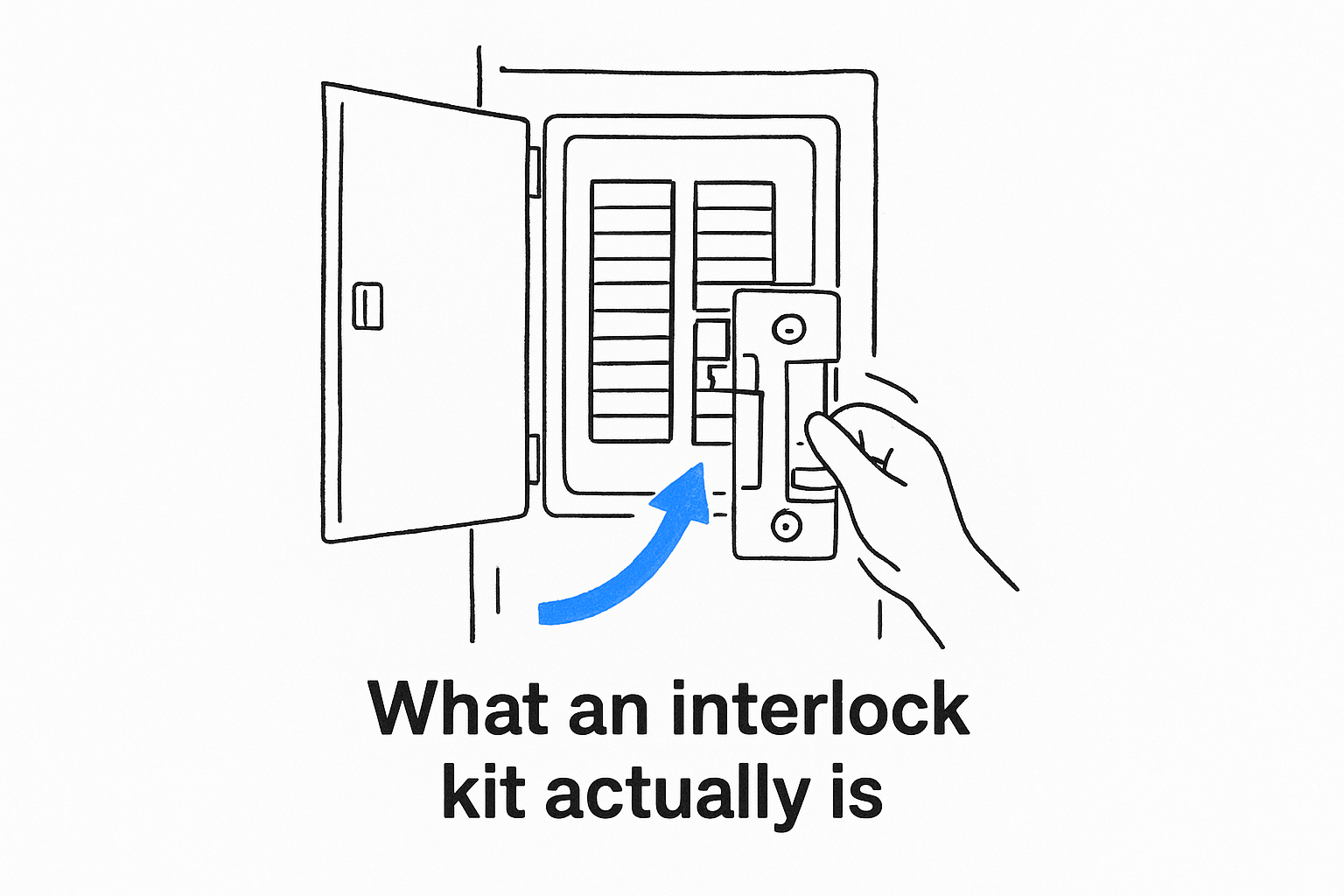
Interlock kits are only compatible with specific panel brands and models, so confirming compatibility before purchasing is a necessary first step.
Hardware costs for interlock kits typically run $30 to $100, which is dramatically lower than even a basic manual transfer switch. Licensed labor to install one adds $100 to $250 in most cases, putting your all-in total between $150 and $400. That makes interlock kits the most affordable code-compliant option available for homeowners with portable generators.
When an interlock kit makes sense and when it doesn’t
An interlock kit works well if you want the ability to run any circuit in your home during an outage by selectively switching off nonessential breakers to stay within your generator’s wattage capacity. This flexibility is the main advantage over a manual transfer switch, which locks you into whatever circuits were pre-wired into it during installation. For homeowners who are comfortable managing their panel manually and want the lowest possible upfront cost, an interlock kit is a practical solution.
The limitation is real, though. You must be present, physically capable, and comfortable working near your panel every time you need to transfer power. There is no automatic operation and no pre-selected circuit protection against overload. If your goal is a whole-home standby system with automatic transfer, an interlock kit won’t meet your needs at all. For those setups, a proper automatic transfer switch is the only viable path, and the higher cost reflects the additional protection and convenience that comes with it.
What drives your final price: a practical checklist
No two transfer switch installations land at exactly the same number, and that’s not a sales tactic from contractors. Your specific home, generator setup, and local requirements all create a unique combination of variables that moves the final generator transfer switch installation cost up or down. Running through the factors below before you request quotes puts you in a much stronger position to evaluate what electricians tell you.
Generator type and system size
The generator you already own or plan to buy shapes almost every other cost decision. A small portable generator rated at 5,000 to 7,500 watts pairs well with a 6-circuit or 8-circuit manual switch, which keeps hardware and labor costs relatively low. A whole-home standby generator rated at 20kW or more requires a 200-amp automatic transfer switch with full-panel coverage, and that moves the project into a different price bracket entirely.
Matching your transfer switch capacity to your generator’s actual output rating is a code requirement, not a preference, so confirm both numbers before purchasing any equipment.
Panel condition and available capacity
Your electrical panel’s age, condition, and remaining breaker capacity directly affect what the installation involves. A newer panel with open breaker slots gives an electrician a straightforward path to connect your transfer switch or interlock kit without additional work. An older panel that’s already at capacity, or one showing signs of corrosion, wear, or outdated wiring, may require a service upgrade, a subpanel, or breaker consolidation before any transfer switch work can begin. Those additions can push your project cost up by $500 to $2,000 or more depending on the scope.
- Panel age (pre-1990 panels often require inspection or upgrades)
- Available breaker slots or need for tandem breakers
- Existing grounding and bonding condition
- Presence of aluminum wiring, which requires special connectors
Wire run distance and installation complexity
Where your generator sits relative to your electrical panel matters more than most homeowners expect. A generator located close to the panel on an exterior wall keeps wire runs short, conduit costs low, and labor time manageable. Moving the connection point across a garage, through finished walls, or underground to reach an exterior pad-mounted standby unit adds material and labor to the project. Every additional foot of conduit and wire run contributes to your final bill, so generator placement during a new installation is a decision worth discussing with your electrician before any concrete work happens.
Labor, permits, and inspections in the Phoenix metro
Labor, permitting, and inspection fees are a real part of your generator transfer switch installation cost that some online estimates leave out entirely. In the Phoenix metro, these line items are predictable if you know what to expect, and they vary by city, project scope, and the complexity of the installation rather than by contractor preference alone.
What licensed electricians charge for labor in Phoenix
Licensed electricians in the Greater Phoenix Area typically charge between $85 and $150 per hour for residential electrical work, with most transfer switch installations taking two to five hours depending on system type and panel accessibility. A straightforward manual switch installation on a newer home with an accessible panel sits closer to the two-hour mark, while a full automatic transfer switch connecting to a standby generator on a pad outside the garage can run five or more hours once conduit runs and wiring are accounted for.
Most electrical contractors, including AZ DC Electric, quote transfer switch work as a flat-rate project price rather than an hourly billing structure. That approach protects you from cost overruns when the job takes longer than expected, and it gives you a clear number to compare across multiple quotes.
Always confirm that any quote you receive covers labor, hardware, and permit fees as a single itemized total rather than hardware alone.
Permit requirements across Phoenix-area cities
Every jurisdiction in the Phoenix metro requires a permit for transfer switch installations, and that includes Scottsdale, Mesa, Chandler, Gilbert, Tempe, and the City of Phoenix itself. Permit fees for this type of electrical work typically run $75 to $200 depending on the municipality, with some cities basing the fee on the total project valuation rather than a flat rate. Your licensed electrician pulls the permit on your behalf as part of the job, so you are not responsible for navigating the process yourself.
What the inspection covers and what happens after
After the installation is complete, a city inspector visits the property to verify that the transfer switch is properly connected, correctly rated for your generator’s output, and installed in compliance with the current version of the National Electrical Code as adopted locally. Inspections for residential transfer switch work are typically scheduled within a few business days of permit submission. If the inspector identifies a deficiency, your contractor corrects it at no additional charge when you work with a reputable company that backs its work with a written workmanship guarantee.
Electrical panel and wiring upgrades that change the budget
Your electrical panel’s condition is often the single biggest variable in your total generator transfer switch installation cost. A transfer switch installation on a modern, well-maintained panel is a contained project. But when the panel itself needs attention, that work gets added to the same job, and the combined scope can push your budget well past the initial estimates you find online. Knowing what to watch for before you schedule an electrician helps you set realistic expectations from the start.
When your panel needs an upgrade before switch installation
Many Phoenix-area homes were built with 100-amp panels that made sense at the time but don’t leave room for today’s electrical loads, especially once an EV charger, standby generator, and modern HVAC system all share the same service. If your panel is already at capacity, your electrician cannot simply add a transfer switch or interlock kit without first creating space for it. A panel upgrade from 100 to 200 amps typically costs $1,500 to $3,000 on its own, depending on the service entrance location, local permit fees, and whether the utility company needs to upgrade the meter base as well.
A panel upgrade scheduled at the same time as your transfer switch installation often costs less in total labor than treating them as two separate projects.
Older panels present a different set of concerns. Federal Pacific and Zinsco panels, which were installed widely in homes built between the 1950s and 1980s, carry documented reliability problems that most licensed electricians will flag before proceeding with any transfer switch work. Replacing one of these units adds $1,800 to $3,500 to your project budget, but it’s a necessary step that your electrician should clearly explain before work begins.
Wiring conditions that add to your project
The wire gauge and overall condition of your existing circuits matters just as much as the panel itself. Aluminum wiring, which was common in homes built during the 1960s and 1970s, requires special connectors and anti-oxidant compound at every junction to meet current code. If your home has aluminum branch circuit wiring, your electrician needs to address those terminations wherever the transfer switch connects, which adds labor time and material cost to the job.
Long conduit runs to an exterior generator pad also increase material and labor costs beyond what a basic installation requires. Each additional ten feet of conduit and wiring contributes to your final number, so your generator’s physical placement relative to the panel directly shapes the budget for your specific project.
Common add-ons: inlet box, outlets, and load management
Your generator transfer switch installation cost rarely covers just the switch itself. Most homeowners add at least one supporting component to make the overall system practical, and those additions are worth budgeting for upfront rather than discovering them mid-project. Understanding what each add-on does and what it costs helps you put together a complete, accurate estimate before you schedule any work.
Inlet box installation and what it costs
An inlet box is the exterior receptacle your portable generator’s power cord plugs into. Without an inlet box, your generator has no safe, weather-protected connection point to the home, which means you’re back to running extension cords through windows or doors. The inlet box mounts to an exterior wall close to your panel, and the cord runs from your generator directly into it during an outage.
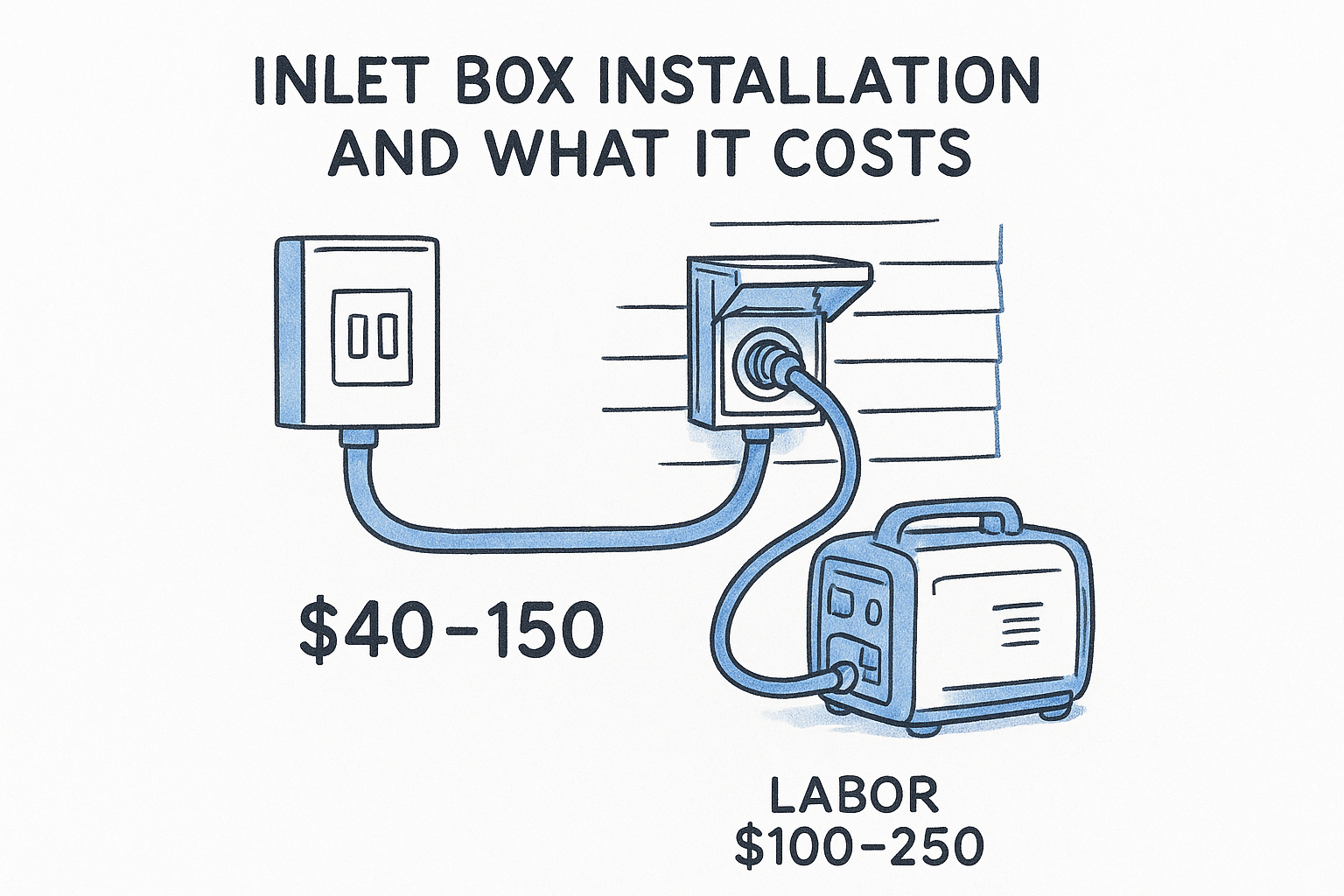
Hardware costs for a quality inlet box run $40 to $150 depending on the amperage rating, with 30-amp and 50-amp models being the most common for residential use. Labor to mount the box and run conduit to the panel adds $100 to $250, putting your total for this component at roughly $150 to $400. Most electricians install the inlet box at the same time as your manual transfer switch, which keeps combined labor costs lower than scheduling two separate visits.
Confirm that your inlet box amperage rating matches both your generator’s plug type and your transfer switch rating before purchasing any hardware.
Dedicated outlets and power distribution
Some homeowners add a separate 240-volt outlet on the exterior of the home to accommodate a larger portable generator with a twist-lock plug. This outlet serves the same function as an inlet box but connects to a specific circuit rather than feeding the full transfer switch. The cost for a dedicated exterior outlet typically runs $150 to $350 installed, and it’s a straightforward add-on when your generator uses a configuration that doesn’t match a standard inlet box.
Load management devices and why they matter
A load management device monitors your generator’s total output in real time and automatically sheds lower-priority circuits when demand approaches the generator’s capacity limit. Without one, drawing too much load at once causes your generator to bog down or shut off entirely. These devices cost $150 to $500 for the unit, plus installation labor, and they’re especially useful when your transfer switch covers multiple high-draw circuits like an HVAC system and a water heater simultaneously.
How to estimate your own project cost and get quotes
Building your own rough estimate before calling electricians gives you a meaningful baseline for evaluating the quotes you receive. Start by identifying your generator type, whether portable or standby, and the switch type that matches it. Then factor in your panel’s age, available breaker space, and the approximate distance between your panel and your planned generator location. Those four inputs alone let you place your project into a general cost tier before any professional ever sets foot in your home.
Build your own cost estimate before calling anyone
Use the ranges covered earlier in this guide as your starting framework for generator transfer switch installation cost. A manual switch with an inlet box for a portable generator typically runs $550 to $1,300 all-in when you include labor, the permit, and basic hardware. An automatic transfer switch for a standby generator adds more for equipment and labor, pushing your realistic total to $1,200 to $2,500 or higher once panel work is considered.
A simple checklist helps you build a more precise estimate:
- Generator output rating in watts or kilowatts
- Distance from panel to generator location in feet
- Panel age, brand, and available breaker slots
- Whether your municipality requires an inspection fee separate from the permit
- Any add-ons you want, such as an inlet box or load management device
Writing these details down before your first call gives every electrician the same information, which makes their quotes directly comparable rather than based on different assumptions.
What to ask when you request quotes
Request at least three quotes from licensed, insured electricians, and ask each one to provide a written, itemized breakdown that separates equipment cost, labor, permit fees, and any panel-related work. A quote that bundles everything into a single number without line items makes it harder to evaluate what you’re actually getting. Ask each contractor specifically whether the permit fee is included and what their policy is if the inspection reveals additional work.
Confirm that each contractor holds an active Arizona electrical license and carries liability insurance before accepting any quote. A written workmanship guarantee covering the completed installation is another standard item to request, since transfer switch work involves your panel and carries long-term safety implications. Comparing three fully itemized quotes from licensed professionals puts you in the best position to make a confident, well-informed decision.
Next steps to plan a safe installation
You now have everything you need to understand your generator transfer switch installation cost and build a realistic budget before calling a single electrician. Start by writing down your generator’s output rating, your panel’s age and available breaker capacity, and the distance from your panel to your planned generator location. Those four details shape your estimate more than any other factor, and having them ready makes every quote you receive faster and easier to compare.
Your next move is to contact a licensed, insured electrician who provides upfront pricing and a written workmanship guarantee. Skipping that step risks an installation that fails inspection or creates safety problems down the road. AZ DC Electric serves the entire Greater Phoenix Metro Area with transparent pricing, no call-out fees, and a 5-year workmanship guarantee on every job. Request your generator installation quote today and get a clear number before any work begins.