An electrical panel inspection cost typically falls between $100 and $400 for most homes, though several factors can push that number higher or lower. If you’ve been searching for a straight answer on what you’ll actually pay, you’re in the right place.
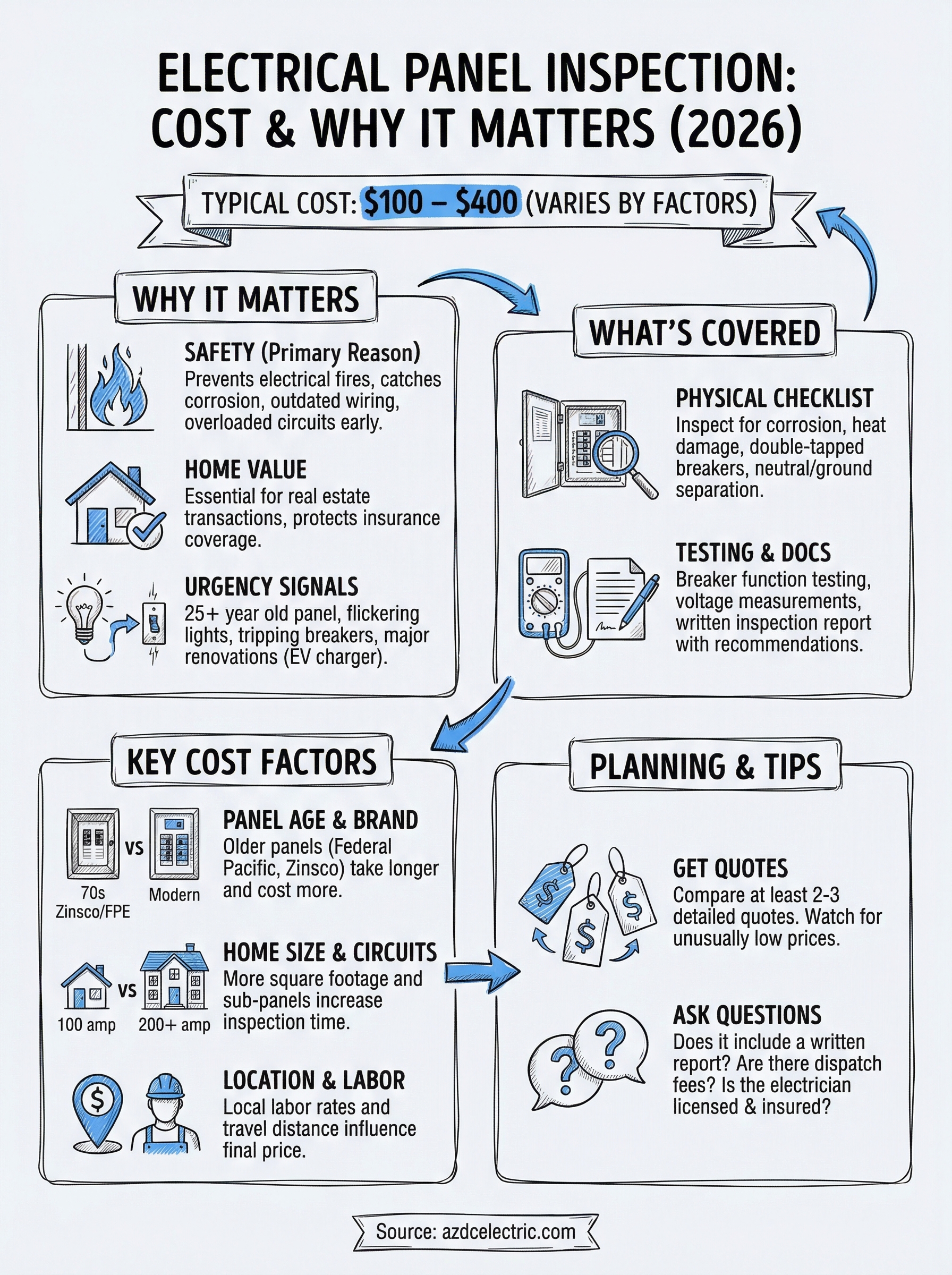
Your electrical panel is the hub that distributes power to every circuit in your home. When it’s not functioning correctly, or when it hasn’t been checked in years, you’re gambling with everything from nuisance tripping to genuine fire hazards. A professional inspection catches problems like corroded breakers, outdated wiring, and overloaded circuits before they become emergencies.
At AZ DC Electric, we perform electrical panel inspections across the Greater Phoenix Metro Area every week. We see firsthand how pricing varies based on panel age, home size, and the scope of work involved, and we know homeowners deserve clear numbers before committing. That’s why we put this guide together.
Below, we’ll break down current 2026 pricing, walk through the factors that influence your final bill, and explain what a thorough inspection actually includes. Whether you’re buying a home, upgrading your panel, or just overdue for a checkup, this article gives you the information you need to budget with confidence.
Why electrical panel inspections matter
Your electrical panel is more than a metal box on the wall. It controls every circuit in your home and acts as the first line of defense against overloads, short circuits, and faults that can damage your appliances or, far worse, start a fire. Most homeowners never think about their panel until something goes wrong, but by that point the damage is often already done. A proactive inspection lets a licensed electrician identify problems early, before a tripped breaker becomes a burned wire or a minor issue becomes a costly emergency repair.
Safety is the primary reason
Electrical fires are not rare events. According to the U.S. Fire Administration, electrical failures and malfunctions account for thousands of residential fires each year, and a significant share trace back to faulty wiring, overloaded circuits, and aging panels. Older panels from manufacturers like Federal Pacific and Zinsco have well-documented failure rates, where breakers fail to trip under overload conditions and allow dangerous heat to build inside your walls. You may never see or smell anything until the fire has already started.
Skipping a panel inspection is one of the most overlooked risks homeowners take, and it costs far less to catch a problem early than to deal with the aftermath.
A licensed inspector checks for signs that your panel is no longer operating safely, including loose connections, corrosion, and double-tapped breakers, plus any evidence of heat damage near the bus bar. These are problems you cannot reliably spot without training and the right tools. Catching even one of them can protect your family and your home from a dangerous and expensive outcome.
Inspections protect your home’s value
Real estate transactions in Arizona increasingly include electrical inspections as part of the due diligence process. If you’re selling your home and your panel has hidden problems, a buyer’s inspector will find them, and you’ll be negotiating repairs under pressure. Getting ahead of that process with your own inspection gives you time to address issues on your schedule, rather than scrambling during escrow.
Beyond resale, a well-maintained panel keeps your homeowner’s insurance in good standing. Some insurers in Arizona ask about panel age or condition during policy renewals, and an undocumented problem can complicate a claim. Keeping a record of your most recent panel inspection and any corrective work is a straightforward way to protect your coverage and document your home’s condition.
When an inspection becomes urgent
Certain situations make an inspection a necessity rather than a recommendation. If your home is more than 25 years old and has never had a panel inspection, that fact alone is reason enough to schedule one. The same applies if you notice flickering lights, frequently tripping breakers, a burning smell near any outlet or switch, or if you’re planning a major renovation or EV charger installation that will add significant load to your existing system.
Knowing the electrical panel inspection cost in advance helps you budget without hesitation, because the cost of an inspection is always lower than the cost of a problem that has gone undetected for years.
What an electrical panel inspection covers
Understanding what you’re paying for helps you evaluate whether the electrical panel inspection cost is justified. A licensed electrician doesn’t just glance at your breaker box and move on. They work through a systematic evaluation of your entire panel, checking both the physical components and the way your circuits are configured to handle your home’s current electrical load.
The physical inspection checklist
During the physical portion of the inspection, the electrician opens the panel cover and examines every component inside. They look for corrosion, burn marks, and signs of heat damage on the bus bar, breakers, and wiring connections. They also check for double-tapped breakers, which occurs when two wires are connected to a single breaker terminal designed for one. This is a common code violation that increases fire risk and frequently goes unnoticed by homeowners.
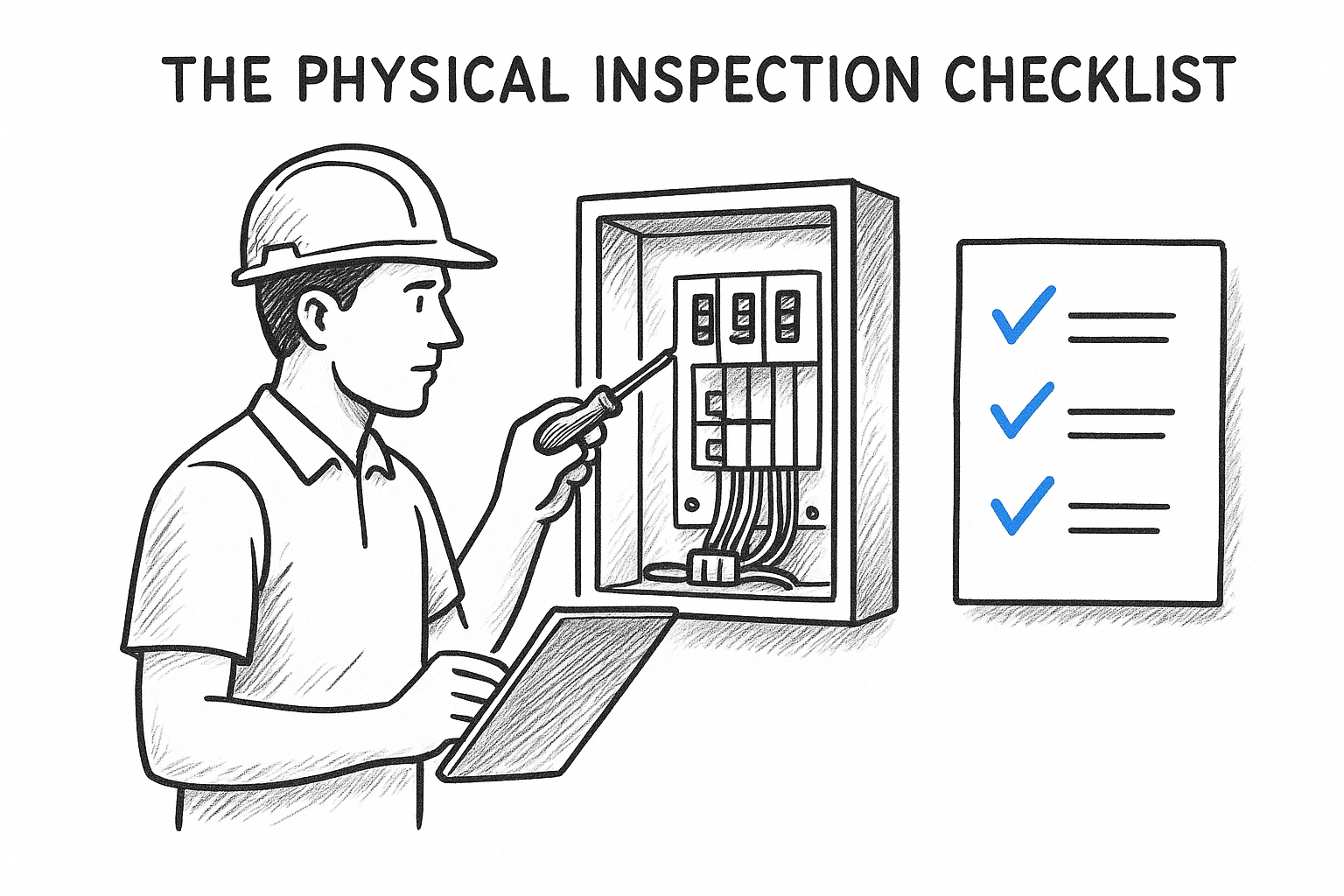
Beyond the breakers themselves, the electrician confirms that every breaker is correctly rated for the wire gauge it protects, that the panel enclosure is free from moisture intrusion, and that neutral and ground wires are properly separated. These details matter because small wiring errors can create hazards that only show up under load, not during a casual visual check.
A thorough physical inspection often surfaces issues that no amount of external observation would ever reveal.
Testing and documentation
After the physical review, the electrician tests breaker function and measures voltage levels across the panel to confirm your service is delivering consistent power. Significant voltage drops can point to a problem with your utility connection or internal panel components that need prompt attention.
You should also receive written documentation of the inspection findings. A reputable electrician provides a clear summary of everything that was checked, what was found, and any recommendations for follow-up work. That written record is valuable for insurance purposes, prospective buyers during a home sale, and your own reference if you schedule corrective repairs down the road.
Electrical panel inspection cost in 2026
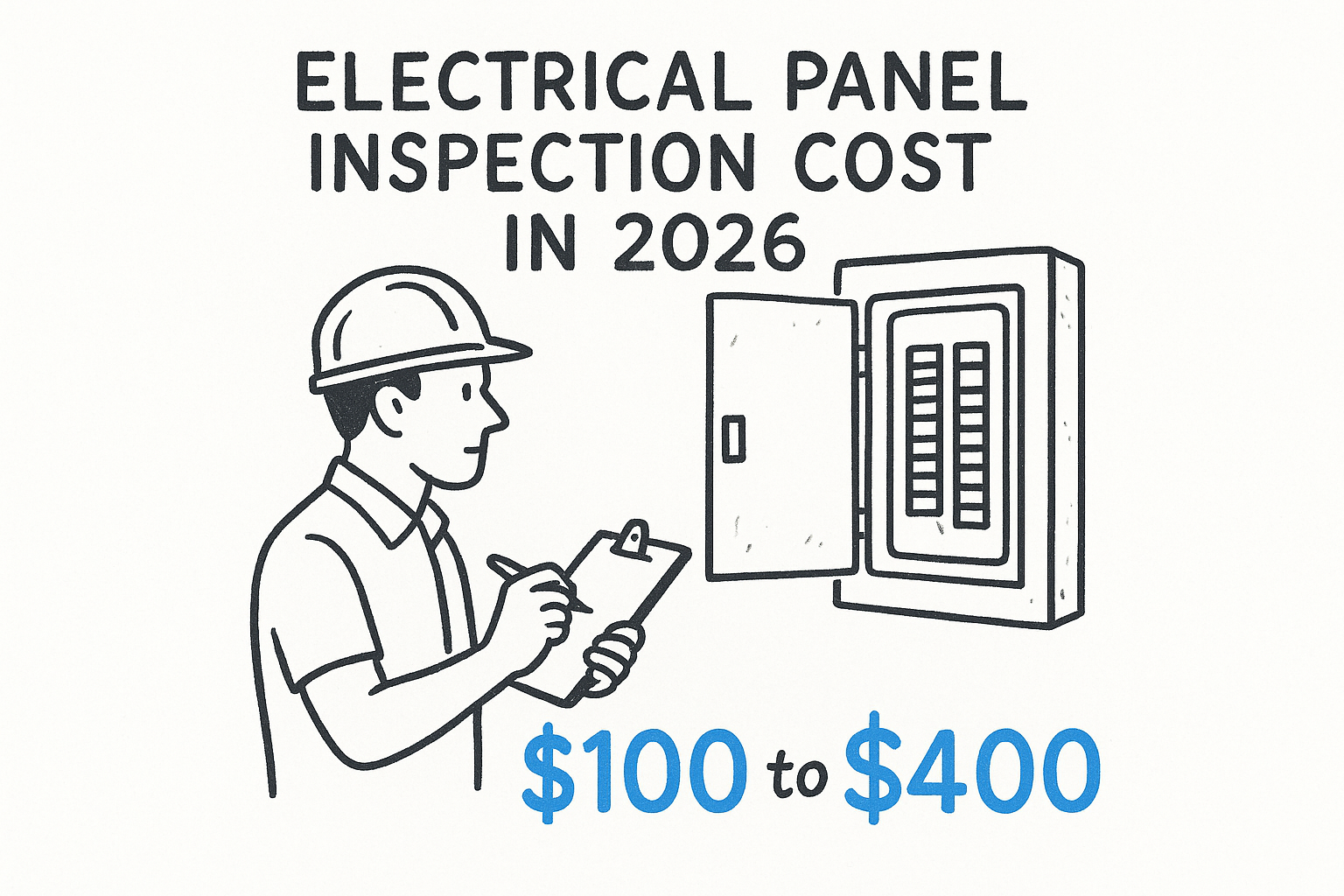
The electrical panel inspection cost in 2026 ranges from $100 to $400 for a standard residential inspection in most markets across the country. The lower end of that range typically applies to basic visual inspections on smaller homes with simple panel configurations, while the upper end reflects more thorough evaluations that include breaker testing, load analysis, and formal written documentation.
Standard inspection pricing
Most homeowners in the Phoenix Metro Area pay somewhere between $150 and $300 for a complete panel inspection. Here’s how pricing generally breaks down across common inspection types:
| Inspection Type | Typical Cost Range |
|---|---|
| Basic visual inspection | $100 – $150 |
| Standard full inspection | $150 – $300 |
| Inspection with written report | $200 – $350 |
| Inspection bundled with panel work | $250 – $400+ |
Bundling your inspection with a panel upgrade or repair often brings the per-service cost down, since the electrician is already on-site and working inside the panel. Ask about combined pricing when you first schedule your appointment.
Getting a written quote before the inspection starts is the simplest way to avoid billing surprises after the job is done.
What affects the base rate
Your location within the Phoenix Valley plays a role in the price you see. Labor rates in Arizona generally run between $75 and $150 per hour, and most standard inspections take one to two hours to complete. Electricians working in higher-cost suburbs may charge toward the top of that range, which pushes the total inspection fee higher.
Panel age also factors into the final number. Older panels with outdated configurations take more time to evaluate thoroughly, so a Federal Pacific or Zinsco panel from the 1960s or 70s will typically cost more to inspect than a modern 200-amp service installed in the last decade. When you call for pricing, mention your panel’s approximate age and brand so the electrician can give you a reliable estimate upfront rather than adjusting the bill after the work is done.
Cost factors that change the price
Several variables influence the electrical panel inspection cost beyond just the base labor rate. Understanding what drives the price up or down helps you anticipate what you’ll actually pay when you call for a quote, rather than being surprised by the final number.
Panel age and brand
Older panels require more time to inspect thoroughly, and more time means higher labor costs. Panels manufactured by Federal Pacific or Zinsco were common in homes built between the 1950s and 1980s, and both have well-documented safety concerns. Inspecting these units takes longer because an electrician needs to carefully evaluate breaker function, wiring integrity, and potential hazards specific to those designs. If your home falls into this category, budget toward the higher end of the standard price range.
Knowing your panel’s brand before you call an electrician saves time and helps you get a more accurate estimate upfront.
Home size and circuit count
Larger homes have more circuits, and more circuits mean more to inspect. A 1,200-square-foot home with a single 100-amp panel takes considerably less time to evaluate than a 3,500-square-foot home running a 200-amp service with multiple sub-panels. Each sub-panel adds to the total inspection time, which directly increases the cost. When you request a quote, give the electrician your home’s square footage and mention any sub-panels in a garage, workshop, or separate structure on the property.
Location and local labor rates
Labor rates across the Phoenix Metro Area vary depending on the city and the electrician’s overhead. Inspections in Scottsdale or Paradise Valley tend to run slightly higher than those in outlying areas because of local market differences. Your distance from the electrician’s base of operations also plays a role, since travel time factors into the overall cost on some service calls.
Some companies, including AZ DC Electric, waive dispatch fees for most cities in the Phoenix Valley, which removes a common line item that inflates quotes from other providers. That difference is worth asking about when you compare bids from multiple electricians.
How to plan, compare quotes, and avoid surprises
Planning ahead makes a significant difference when budgeting for an electrical panel inspection cost. Before you call anyone, gather basic information about your panel: the brand, approximate age, amperage rating, and whether you have any sub-panels. Providing this information upfront helps electricians give you a more accurate estimate over the phone, rather than adjusting the price once they arrive and see the scope of the job.
Getting multiple quotes
Collecting at least two or three quotes before committing is a straightforward way to understand what the market looks like in your area. Write down each quote in detail, including what the inspection covers, how long it takes, whether a written report is included, and whether the company charges a dispatch or travel fee. Comparing quotes on those specifics, not just the final dollar amount, gives you a clearer picture of what you’re actually getting.
A lower quote that excludes written documentation or breaker testing may cost you more in the long run if problems go undetected.
Watch for quotes that seem unusually low. An inspection priced well below the typical range often skips important steps like breaker function testing or load analysis, leaving you with an incomplete picture of your panel’s condition.
What to ask before scheduling
Asking the right questions before you book protects you from unexpected charges at the end of the job. Use the following list as a starting point when you contact electricians:
- Does the quoted price include a written inspection report?
- Are there any dispatch or travel fees on top of the base rate?
- How long does the inspection typically take for a home my size?
- Does the electrician carry a current Arizona electrical license and insurance?
- What happens if the inspection uncovers a problem that needs immediate repair?
Getting clear answers to these questions before the appointment starts eliminates the most common sources of billing confusion. Reputable electricians will answer all of them without hesitation, and any reluctance to commit to upfront pricing is a signal worth taking seriously.
A simple way to decide what to do next
The decision is straightforward: if your panel is more than 25 years old, you’ve noticed warning signs like flickering lights or tripping breakers, or you’re planning a significant upgrade like an EV charger installation, schedule an inspection. The electrical panel inspection cost is a small investment compared to the risk of leaving a potential hazard undetected inside your walls. Most homeowners in the Phoenix area pay between $150 and $300, and knowing your panel is in good shape is worth every dollar of that.
You don’t need to wait for something to go wrong before taking action. A licensed electrician can tell you exactly where your panel stands, what needs attention now, and what can wait. AZ DC Electric serves homeowners across the Greater Phoenix Metro Area with upfront pricing, no dispatch fees, and a 5-year workmanship guarantee on all work performed. Schedule your electrical panel inspection today and get the clear answers you need.