Whether you’re adding outlets in a home office, replacing outdated two-prong receptacles, or wiring a brand-new addition, understanding the electrical outlet installation cost ahead of time keeps your budget on track. The problem is that pricing varies, sometimes significantly, depending on the type of outlet, the complexity of the run, and where you live in the Phoenix metro area.
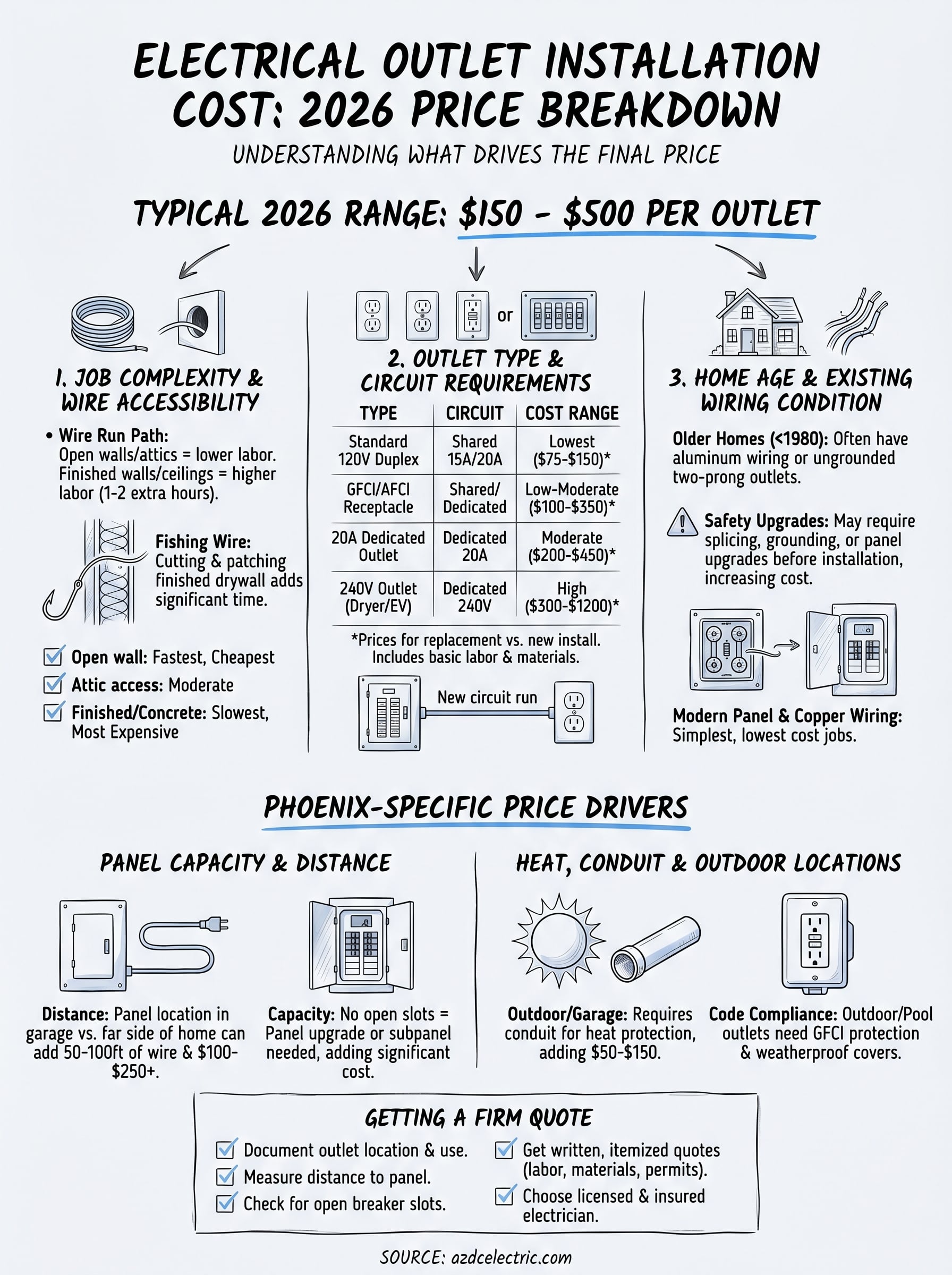
Most homeowners in 2026 can expect to pay somewhere between $150 and $500 per outlet, though that range shifts based on factors like wire accessibility, panel capacity, and whether you need a standard 120V receptacle or a dedicated 240V circuit. We’ll break all of that down in this guide so you know exactly what drives the final number on your invoice.
At AZ DC Electric, we handle outlet installations across Scottsdale, Mesa, Chandler, and the greater Phoenix valley every week, from single-outlet additions to full-home rewires. This guide draws from that hands-on experience to give you a realistic, transparent look at what you’ll pay, what affects the price, and where you can save money without cutting corners on safety.
Why electrical outlet installation cost varies so much
The electrical outlet installation cost you see quoted online is often a best-case scenario figure. In reality, no two outlet jobs are identical. A straightforward receptacle swap in a finished room costs far less than adding a new outlet in a kitchen with no nearby circuits and walls full of insulation. Three core factors drive most of the price variation: job complexity, outlet type, and the current condition of your home’s wiring.
Job complexity and wire accessibility
The single biggest cost variable is how easy it is to run wire from your electrical panel or an existing circuit to the new outlet location. If your attic or crawl space gives an electrician a clear, unobstructed path, the job stays quick and the labor cost stays low. Add drywall cuts, concrete walls, or a finished ceiling in the way, and the time required increases significantly.
Running wire through finished walls can add one to two hours of labor per outlet compared to a straightforward open-wall installation.
Fishing wire through existing walls requires cutting access holes, threading cable through insulation, and patching afterward. Some electricians include patching in their quote; others don’t. Always ask before you sign off on a price.
- Open wall or new construction: fastest, lowest labor cost
- Finished drywall with attic access: moderate labor
- Finished walls, concrete, or tile: highest labor cost
Outlet type and circuit requirements
Standard 15-amp outlets placed on an existing circuit are the least expensive option. The price climbs when you step up to a 20-amp dedicated circuit for a kitchen appliance, a 240V outlet for a dryer or EV charger, or a GFCI/AFCI receptacle required in bathrooms, kitchens, garages, and outdoor locations.
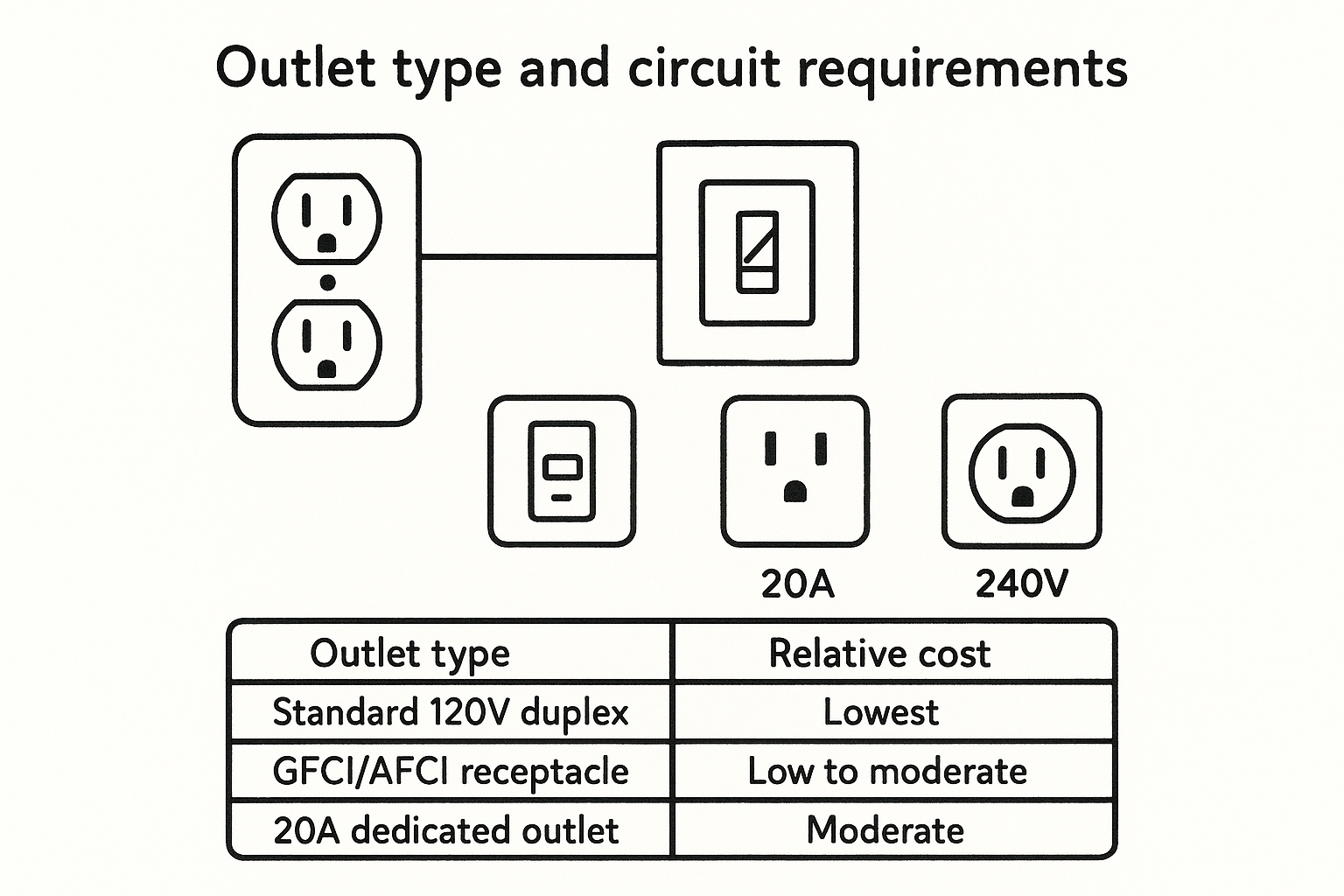
A dedicated circuit means running a brand-new wire all the way from your panel to the outlet location, which adds both materials and labor. If your panel is near capacity or needs an upgrade to accommodate the new circuit, that cost gets added to your project total as well.
| Outlet type | Circuit needed | Relative cost |
|---|---|---|
| Standard 120V duplex | Shared 15A or 20A | Lowest |
| GFCI/AFCI receptacle | Shared or dedicated | Low to moderate |
| 20A dedicated outlet | Dedicated 20A | Moderate |
| 240V outlet (dryer, range) | Dedicated 240V | High |
Home age and existing wiring condition
Older homes in the Phoenix area add another layer of cost. Properties built before 1980 often have aluminum wiring or ungrounded two-prong outlets, both of which require extra work before a new outlet can be safely installed. Your electrician needs to verify that existing wiring can support the new load and that all connections meet current NEC code.
Homes with full copper wiring, a modern panel, and open circuit capacity are the simplest jobs. Outdated systems may need panel work, grounding upgrades, or aluminum-to-copper splicing before a single outlet gets installed, and those extra steps add directly to your final bill.
What you pay for when you hire an electrician
When you get a quote for an outlet installation, the total electrical outlet installation cost breaks down into a few distinct line items. Understanding each one helps you evaluate whether a quote is fair and spot any surprises before work begins.
Labor charges
Labor typically makes up the largest portion of your total cost, often between 60 and 70 percent of the invoice. Most electricians in the Phoenix metro area charge by the hour or quote a flat rate per outlet, depending on the scope of the job. Hourly rates for licensed electricians in Arizona generally run between $85 and $150 per hour in 2026. A simple outlet replacement might take 30 to 45 minutes. A new outlet requiring a dedicated circuit run from the panel could take two to four hours.
The more access restrictions your home has, the more labor hours your electrician will need, which is why you should always describe your walls and attic situation when requesting a quote.
Materials and permits
Wire, boxes, receptacles, and connectors are billed separately from labor, though many electricians bundle material costs into a flat rate. For a standard outlet, materials typically add $15 to $50 to the project. A 240V outlet with 10-gauge wire and a new breaker can push material costs to $100 or more on its own.
Permit fees apply to most new circuit installations in Maricopa County and the surrounding cities. Depending on your city, permits cost between $50 and $150 for a single circuit. Your electrician should pull the permit on your behalf. If they suggest skipping it, that is a red flag worth taking seriously.
Overhead and warranty coverage
Reputable electrical contractors build in a margin that covers their licensing, insurance, vehicle costs, and any guarantees they offer on their work. At AZ DC Electric, that includes a 5-year workmanship guarantee, which means any labor issue gets corrected at no additional charge to you. That warranty coverage is part of what separates a licensed professional from an uninsured handyman.
2026 cost ranges by outlet type and job
Knowing the typical electrical outlet installation cost for your specific job type helps you recognize a fair quote and plan your budget before calling an electrician. The figures below reflect 2026 pricing for the Greater Phoenix metro area, including labor and basic materials for a standard installation. Actual costs shift based on wire run length, wall access, and permit requirements.
Standard and GFCI outlets
Replacing an existing outlet with a standard duplex receptacle is the most affordable job on this list. You pay primarily for labor since the circuit and wiring are already in place. Adding a new outlet to an existing circuit costs more because your electrician needs to extend the wiring, but it still falls well below the cost of a dedicated circuit run.
A GFCI receptacle costs a bit more for the device itself but typically takes the same amount of time to install as a standard outlet. Most bathrooms, kitchens, garages, and outdoor locations require GFCI protection by code, so factor this in if you’re planning outlets in any of those spaces.
| Job type | Typical cost range |
|---|---|
| Standard outlet replacement | $75 to $150 |
| GFCI outlet installation | $100 to $175 |
| Adding outlet to existing circuit | $150 to $300 |
| AFCI outlet or breaker install | $175 to $350 |
Dedicated circuits and 240V outlets
New dedicated circuit runs represent the higher end of outlet pricing because your electrician pulls fresh wire from the panel to a single location. A 240V outlet for a dryer, range, or EV charger adds the cost of heavier-gauge wire, a double-pole breaker, and more installation time overall.
For EV charger outlets specifically, costs can reach $500 to $1,200 depending on panel distance and whether your panel needs a breaker upgrade first.
- 20A dedicated circuit outlet: $200 to $450
- 240V outlet for dryer or range: $300 to $600
- 240V EV charging outlet (Level 2): $500 to $1,200
These ranges assume your panel has open slots and your walls provide reasonable wire access. Older homes or situations where the panel sits far from the outlet location will push costs toward the upper end of each range.
The biggest price drivers in Phoenix-area homes
Phoenix-area homes have specific characteristics that push the electrical outlet installation cost higher than national averages suggest. Understanding these local factors helps you budget accurately and avoid surprises when your electrician walks through the job.
Panel capacity and distance
Your electrical panel is the starting point for any new circuit, and its location relative to your outlet determines how much wire your electrician needs to pull. In many Arizona tract homes, the panel sits in the garage on the opposite end of the house from the kitchen or master bedroom, which adds 50 to 100 feet of wire to a dedicated circuit run. That extra material and labor time adds up quickly.
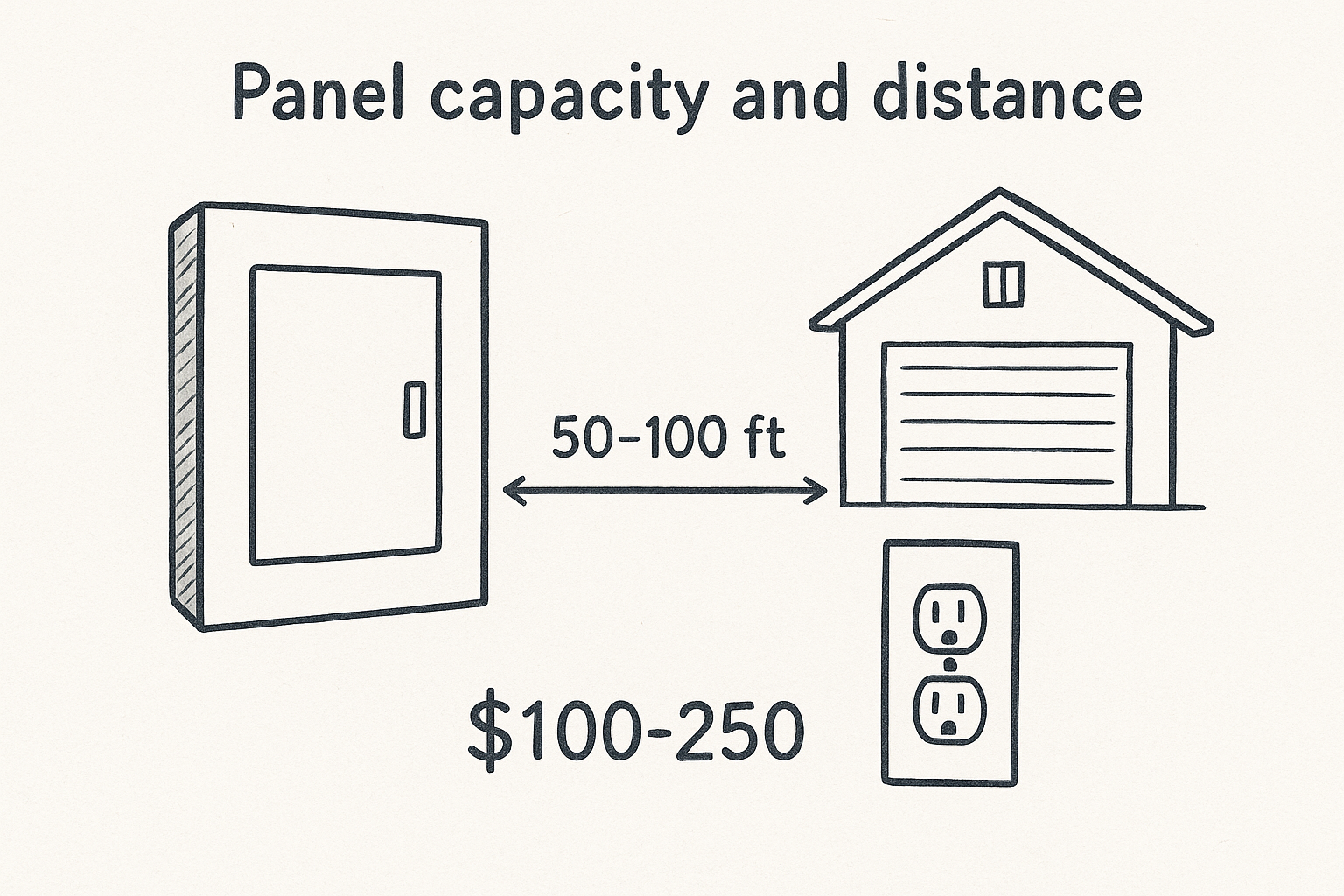
Panel distance alone can add $100 to $250 to a dedicated circuit job depending on how your home is laid out.
If your panel is near capacity with no open breaker slots, your electrician needs to add a tandem breaker or install a subpanel before connecting a new circuit. Either option adds cost before a single outlet gets installed, so always have your electrician check available capacity upfront.
Heat, conduit, and outdoor locations
Phoenix summers create conditions that affect outdoor electrical work more than most parts of the country. Any outlet installed outdoors or in an unconditioned space like an attached garage or covered patio often requires conduit rather than standard NM cable to protect the wire from heat degradation. Conduit materials and the time to run them add $50 to $150 to a typical outdoor outlet job.
Outdoor and pool-adjacent outlets also trigger GFCI requirements and weatherproof cover plate rules under the National Electrical Code, which your licensed electrician must follow regardless of city. These code-compliant components cost more than standard indoor hardware but protect you from both shock risk and permit issues down the line.
- Outdoor conduit run: adds $50 to $150
- Weatherproof cover plate: adds $15 to $40
- GFCI device requirement: adds $20 to $50 for the receptacle itself
How to estimate your project and get a firm quote
Getting an accurate electrical outlet installation cost estimate starts with gathering basic information about your project before you contact an electrician. The more detail you provide upfront, the more accurate your quote will be, and the less likely you are to see the price change once work begins. Preparation saves time on both sides of the conversation.
What to measure and document before you call
Before reaching out for quotes, walk through the job yourself and note a few key details. Identify where you want the outlet, how far that location sits from your electrical panel, and whether the wall space is open (such as in a garage) or finished drywall. Check your panel for open breaker slots and note whether your home has a standard 200-amp service or an older 100-amp setup.
Writing down these details before you call gives an electrician enough context to provide a ballpark figure over the phone, which helps you compare multiple quotes fairly.
A short checklist to have ready:
- Outlet location and intended use (standard, kitchen, EV charger, outdoor)
- Wall type and access (open framing, finished drywall, concrete)
- Panel location and approximate distance from the outlet
- Number of outlets needed
What a firm quote should include
A written quote from a licensed electrician should break out labor, materials, and permit fees as separate line items. Avoid accepting verbal estimates only, since those are easy to revise once the job is underway. Ask specifically whether the quote covers wall patching, permit pulling, and cleanup after the work is complete.
Request quotes from at least two electricians so you have a comparison point. If one quote comes in significantly lower, ask what it excludes rather than assuming it is the better deal. Licensed, insured contractors who pull proper permits and back their work with a warranty will typically quote higher than unlicensed alternatives, and that difference in price reflects real protection for your home.
Next steps for your outlet project
You now have a clear picture of what shapes the electrical outlet installation cost for any job, from a simple receptacle swap to a full dedicated circuit run. The next move is straightforward: gather your project details, check your panel for open slots, and reach out to a licensed electrician for a written, itemized quote.
Working with a licensed, insured professional protects your home and keeps your project code-compliant from start to finish. Skipping that step to save a small amount upfront often leads to failed inspections, voided homeowner’s insurance, or safety hazards that cost far more to fix later.
If your outlet project is in Scottsdale, Mesa, Chandler, or anywhere in the Greater Phoenix metro area, AZ DC Electric is ready to help. Contact us for upfront pricing, no call-out fees, and a 5-year workmanship guarantee. Request your outlet installation quote today.