A single power surge can destroy thousands of dollars in electronics, appliances, and HVAC equipment in less than a second. Monsoon season in Arizona makes this risk especially real, lightning strikes and grid fluctuations are part of life here in the Valley. That’s why an Eaton surge protective device is one of the most practical upgrades you can add to your electrical panel. Eaton manufactures some of the most widely installed surge protection hardware on the market, with options built for everything from single-family homes to large commercial facilities.
At AZ DC Electric, we install and service surge protective devices across the Greater Phoenix Metro Area as part of our panel upgrade and electrical safety work. We’ve seen firsthand what unprotected panels look like after a major surge event, and it’s never a small repair bill. That hands-on experience is exactly why we put this guide together, to give you a clear breakdown of Eaton’s SPD lineup before you buy or hire someone to install one.
This article covers the main types of Eaton surge protective devices, their technical specifications, how installation works, and what to consider when choosing between residential and commercial models. Whether you’re protecting a home theater setup or an entire building’s electrical system, you’ll walk away knowing which device fits your situation and what the installation process actually involves.
Why surge protection matters in Arizona homes and businesses
Arizona sits in one of the most electrically active regions in the country. Phoenix averages around 30 to 40 thunderstorm days per year, and during monsoon season from June through September, lightning strikes and sudden grid fluctuations happen regularly. Your home or business draws power from a grid that gets stressed by extreme heat, rapid load changes from air conditioning systems, and occasional utility switching events. All of that creates conditions where surge damage is not a rare event but a predictable risk.
Arizona’s monsoon season drives real electrical risk
The monsoon season brings more than just rain. Dust storms knock out power lines, lightning hits utility infrastructure, and the resulting surges travel through your service entrance directly into your panel. A direct or nearby lightning strike can send tens of thousands of volts through your wiring in microseconds, destroying anything connected to it. Even a modest grid fluctuation from an overloaded transformer can degrade sensitive electronics over time, shortening the lifespan of appliances, HVAC controllers, and smart home devices.
Installing surge protection at the panel level intercepts that voltage before it reaches your equipment, which is why it works where plug-in strips fall short.
What surges actually cost homeowners and businesses
Replacing surge-damaged equipment adds up fast. A single event can take out your refrigerator, water heater control board, TV, HVAC unit, and computer all at once. For a typical Arizona home, that repair or replacement bill easily runs into the thousands of dollars, and most homeowner insurance policies carry a deductible that offsets much of the coverage.
For commercial properties, the stakes climb even higher. Damaged point-of-sale systems, security cameras, or industrial machinery can mean hours of downtime on top of the replacement cost. An Eaton surge protective device costs a fraction of what one surge event could cost you, which is exactly why licensed electricians recommend installing one at the panel rather than depending solely on plug-in strip protectors.
Eaton SPD types and where each one installs
Eaton organizes its surge protective device lineup around installation point, which directly determines how much surge energy each device can handle. Choosing the right Eaton surge protective device for your property means understanding the two primary types and exactly where each one goes in your electrical system.
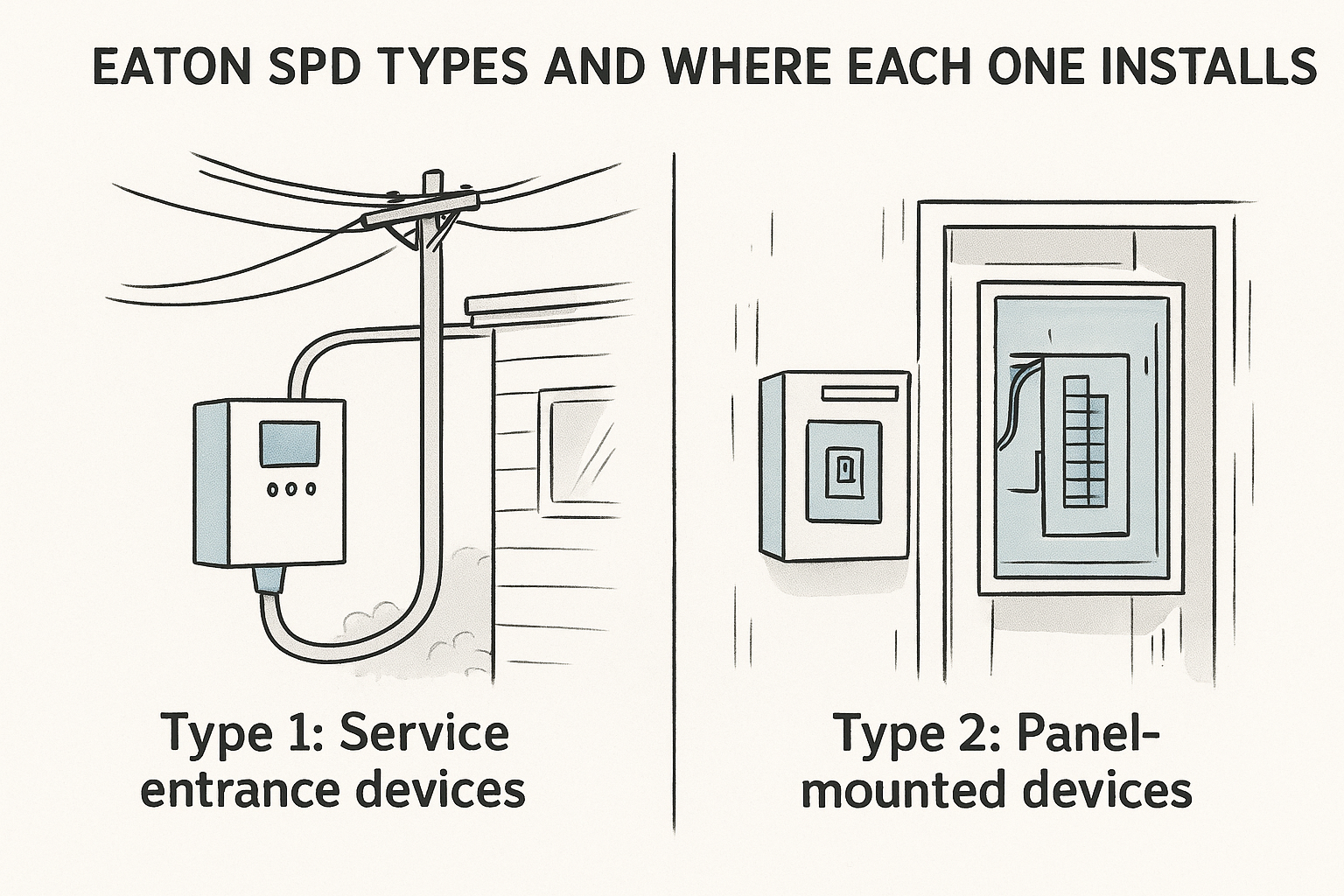
Type 1: Service entrance devices
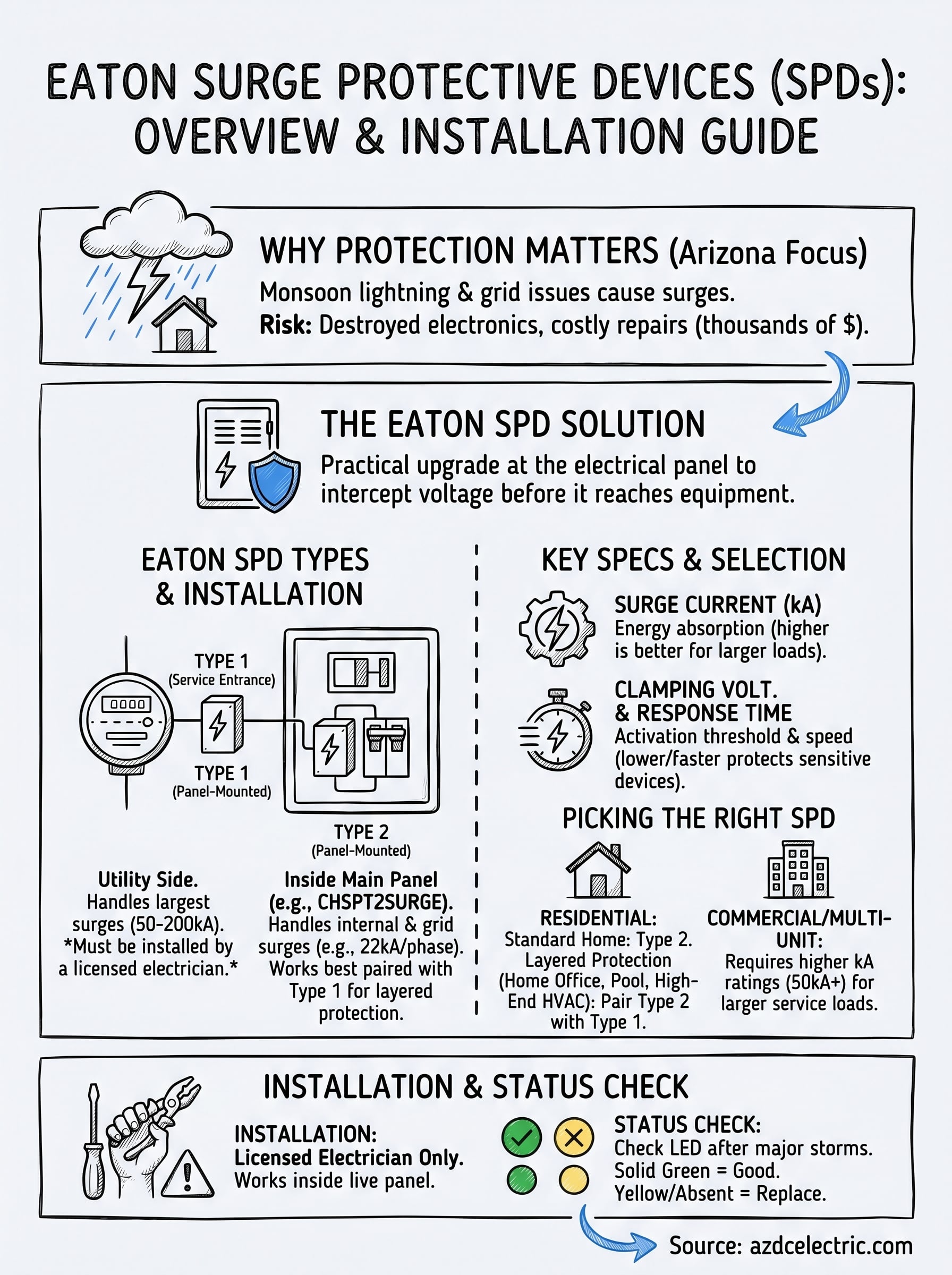
Type 1 SPDs install on the utility side of your main breaker, intercepting surges before they reach your panel. Eaton’s CHSPT2ULTRA and comparable Type 1 models handle the largest surge currents, typically rated between 50,000 and 200,000 amps, and mount at the meter base or service entrance.
A Type 1 device alone is not enough, because residual surge energy still travels downstream into your branch circuits after the initial clamp.
A licensed electrician must install Type 1 devices, since the work involves utility-side wiring that stays energized even when your main breaker is off. This is never a DIY job under any circumstances.
Type 2: Panel-mounted devices
Type 2 SPDs mount inside your main breaker panel and connect to a dedicated double-pole breaker slot. The Eaton CHSPT2SURGE is the most common residential model, providing whole-home protection for appliances, HVAC systems, and electronics from surges that originate within the grid or inside your building.
These devices work effectively on their own when your main surge risk is internal, but they perform best when paired with a Type 1 device at the service entrance for maximum coverage.
Specs that matter when you compare Eaton SPDs
Not every Eaton surge protective device carries the same performance numbers, and picking the wrong spec for your situation leaves equipment partially exposed. Three key figures appear on every Eaton spec sheet, and knowing what each one means helps you compare models without relying on marketing language.
Surge current rating
Surge current rating, measured in kiloamps (kA), tells you how much surge energy the device can absorb in a single event. Residential Eaton models like the CHSPT2SURGE carry a 22 kA per-phase rating, while commercial and industrial units step up to 50 kA or higher. The larger your building and the more equipment you’re protecting, the higher this number should be.
A higher kA rating doesn’t mean the device performs better on small surges; it means it survives more events before degrading and needing replacement.
Clamping voltage and response time
Clamping voltage is the threshold at which the device activates and diverts surge energy away from your circuits. Lower clamping voltage means the device reacts sooner, giving sensitive electronics like HVAC controllers and smart home devices better protection. Eaton’s residential SPDs typically clamp at around 700 to 800 volts, which meets the UL 1449 4th edition standard for tested surge protection equipment.
Response time works alongside clamping voltage. Eaton SPDs operate in the nanosecond range, meaning they activate before a surge front travels far enough down your wiring to cause measurable damage to connected appliances or circuit boards.
How to pick the right Eaton SPD for your needs
Picking the right Eaton surge protective device comes down to three factors: your building type, your surge exposure level, and how much equipment you’re protecting. Residential and commercial properties have different needs, and buying a device rated for one when you need the other leaves gaps in your protection.
Match the device to your building type
For a standard single-family home in the Phoenix metro, the Eaton CHSPT2SURGE covers most situations when installed at the main panel. If your home runs a dedicated home office, a pool pump, or high-end HVAC equipment, pair that Type 2 device with a Type 1 unit at the service entrance for layered protection. That combination handles both external surges from lightning and internal surges from large motor-driven appliances cycling on and off.
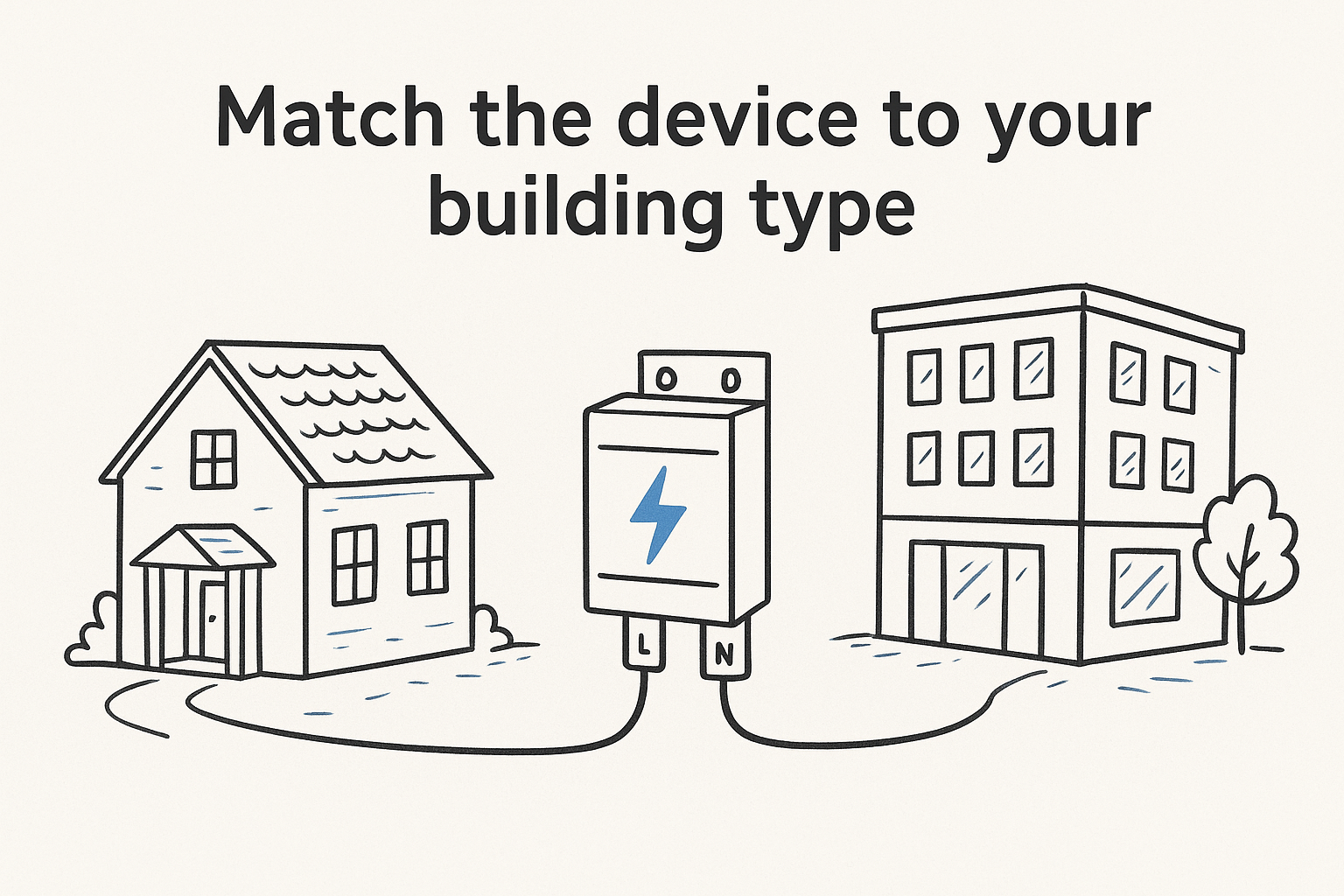
Commercial properties almost always need a higher kA-rated device, since their service entrance handles significantly more load and larger surge events.
Multi-unit buildings or businesses with sensitive equipment should look at Eaton’s commercial SPD line, where per-phase ratings of 50 kA or higher give you the headroom to handle industrial-scale surges without the device degrading ahead of schedule.
Check the warranty and status indicators
Most Eaton residential SPDs include a diagnostic LED that shows whether the device is still functioning. A failed or degraded unit won’t show normal operation, so checking that indicator after a major storm costs you nothing and confirms your equipment is still covered going into the next monsoon season.
How to install, test, and replace an Eaton SPD safely
Installing an Eaton surge protective device requires working inside a live electrical panel, which means this is a job for a licensed electrician, not a DIY project. Even with the main breaker off, your service entrance conductors remain energized. One wrong contact with those wires causes serious injury or death.
Installation steps
Your electrician will connect the SPD to a dedicated double-pole breaker slot inside your main panel, run the leads to the device’s terminals, and torque each connection to the manufacturer’s specified rating. Proper torque matters because a loose connection degrades the device’s ability to clamp surge current effectively.
Always verify that your panel has an open double-pole slot before purchasing an Eaton SPD, since a full panel requires either a tandem breaker solution or an upgrade before installation.
Here is a basic overview of what the installation process involves:
- Turn off the main breaker and confirm service entrance conductors are still live
- Mount the SPD unit inside the panel enclosure
- Connect the leads to the dedicated double-pole breaker
- Restore power and confirm the status LED is solid green
Testing and replacement
After installation, checking the LED indicator after every major storm takes less than a minute. A yellow or absent light means the device absorbed a large event and may need replacement. Most residential Eaton SPDs have a service life tied to cumulative surge exposure, not calendar time, so the indicator is your most reliable signal.
Replace the device immediately if the indicator shows a fault, because a degraded unit provides little to no protection during the next surge event.
Next steps
You now have a complete picture of how Eaton surge protective devices work, what specs to compare, and what a proper installation looks like. The short version: a Type 2 panel-mounted SPD handles most residential situations in the Phoenix metro, and pairing it with a Type 1 device at the service entrance gives you layered protection during monsoon season. Commercial properties need higher kA-rated units and a licensed electrician who understands how to size the device correctly for the building’s service load.
Surge protection is one of those upgrades that costs little upfront and prevents a repair bill that can easily run into thousands of dollars. If you want a licensed electrician to assess your panel, recommend the right device for your property, and install it correctly with a 5-year workmanship guarantee, contact AZ DC Electric for a surge protection consultation and get upfront pricing before any work begins.