Arizona’s monsoon season brings intense lightning storms to the Phoenix Metro Area, and one of the most common questions homeowners ask is: does a surge protector protect against lightning? The short answer, those power strips plugged in behind your TV or computer offer some defense against minor surges, but a direct lightning strike is a different animal entirely. We’re talking about up to 300 million volts hitting your electrical system in a fraction of a second.
At AZ DC Electric, we handle surge damage calls across Scottsdale, Mesa, Chandler, and the surrounding valley, especially after monsoon season rolls through. We’ve seen firsthand what lightning can do to panels, appliances, and home wiring, and we’ve helped hundreds of homeowners put proper protection in place before the next storm hits.
This article breaks down exactly what a standard surge protector can and can’t do against lightning, the critical differences between a power strip and whole-home surge protection, and what steps actually work to keep your electronics and electrical system safe when the sky lights up.
The short answer: it helps, but not for direct hits
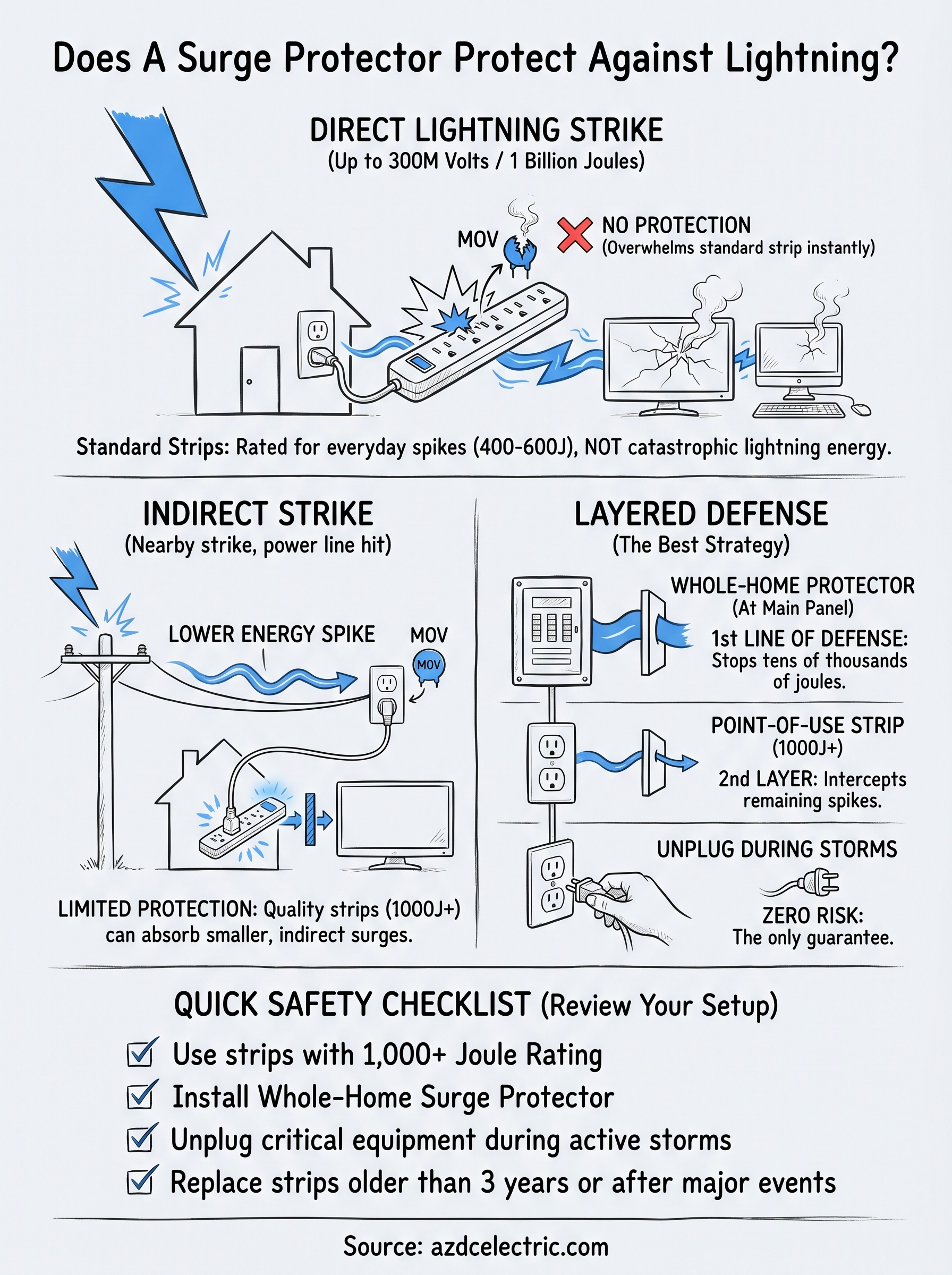
A standard surge protector works by detecting excess voltage and diverting it away from your devices through a component called a metal oxide varistor (MOV). Most residential surge strips are rated to handle surges between 400 and 600 joules, which is enough to stop small spikes caused by appliances cycling on and off or utility company fluctuations. When you ask does a surge protector protect against lightning, the honest answer is: yes, for indirect surges, and no, for a direct lightning strike.
What surge protectors are actually rated for
The joule rating on your surge strip tells you how much energy the device can absorb before it fails. A direct lightning strike can produce energy levels in the hundreds of thousands to millions of joules, a number that completely overwhelms any standard consumer surge strip. The device may sacrifice itself trying to block the surge, but it will not stop the full force of that energy from reaching your equipment.
A surge protector rated at 600 joules provides real protection against everyday voltage spikes, but it is not designed or tested to stop a direct lightning strike.
Indirect strikes are a different story
Your home does not need to take a direct hit for lightning to damage your electronics. A strike that hits a power line a block away, or even one that hits nearby ground, can send a damaging voltage spike through your entire electrical system. This is where a quality surge protector earns its keep. These indirect surges carry far less energy, and a good surge strip with a high joule rating and a low clamping voltage can intercept them before they reach your TV, computer, or appliances.
Why lightning surges overwhelm surge strips
When you ask does a surge protector protect against lightning, understanding the raw energy difference between a standard voltage spike and a lightning-induced surge changes everything. Most everyday power spikes, caused by your AC unit cycling on or a transformer fluctuation down the street, carry somewhere between 1 and 2 joules of energy. Your surge strip manages those with no problem.
The energy gap is not close
A single lightning bolt releases roughly one billion joules of total energy, and even a fraction of that traveling through your home’s wiring will destroy most consumer-grade surge protectors instantly. The metal oxide varistors inside your strip are simply not built to absorb that kind of load. They saturate and fail in microseconds, often before they can even redirect the surge away from your connected devices.
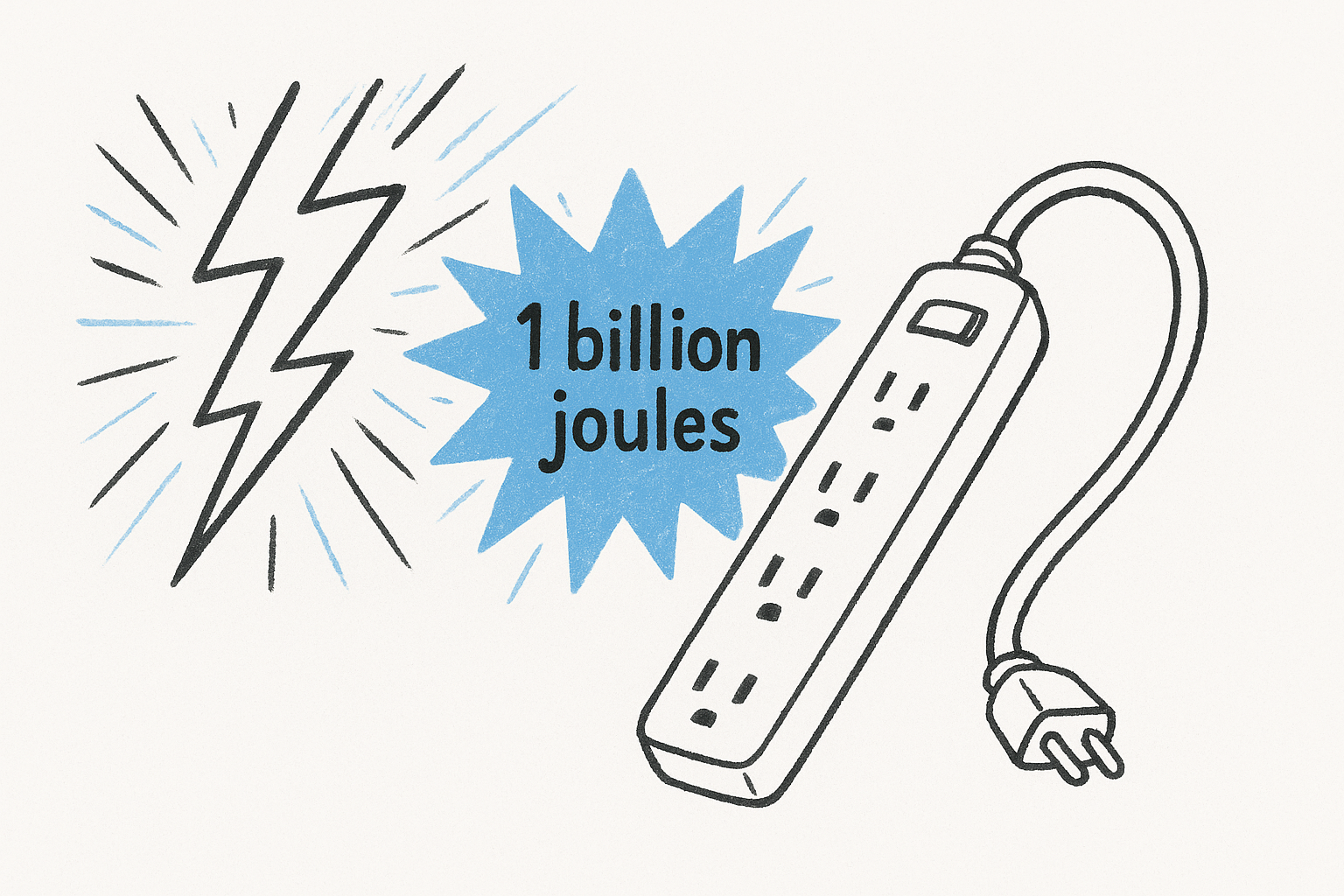
Standard surge strips are rated for everyday electrical noise, not the catastrophic energy levels that a nearby lightning strike sends through your wiring.
Speed is also a factor. Lightning surges travel at nearly the speed of light, giving the MOV inside your strip almost no reaction time. By the time the device tries to respond, the spike has already reached your equipment and done its damage.
What a surge protector actually protects against
A surge protector does its best work against the everyday electrical noise your home deals with constantly. Appliances cycling on and off, utility grid fluctuations, and nearby construction activity all send small voltage spikes through your wiring. These spikes rarely exceed 10 to 20 joules, which puts them well within the handling range of any quality surge strip.
The most common surge sources in your home
Your HVAC system is one of the biggest culprits. Every time the compressor kicks on, it draws a large amount of current and sends a brief spike back into your home’s electrical circuits. Refrigerators, washing machines, and power tools do the same thing on a smaller scale. A surge protector intercepts these spikes before they reach your sensitive electronics, extending the life of your devices over time.
A surge protector is genuinely effective against the low-level voltage spikes that happen dozens of times a day inside your home.
When you ask does a surge protector protect against lightning, the real takeaway is that routine surge protection is valuable even when storms are not in the forecast. Shielding your electronics from daily electrical stress keeps them running longer and reduces the risk of premature failure caused by cumulative damage.
How to protect electronics from lightning surges
When you want real protection, you need to layer your defenses. Unplugging your devices before a storm is the only method that guarantees zero surge damage, since no electricity can travel through a disconnected cord. However, that is not always practical, which is why combining multiple protection strategies gives you the best outcome.
Install a whole-home surge protector
A whole-home surge protector mounts directly at your main electrical panel and acts as the first line of defense for every circuit in your house. When asking does a surge protector protect against lightning, this is where the real answer lives. These devices are rated to handle much larger surges than any power strip, stopping tens of thousands of joules before the energy even reaches your outlets.
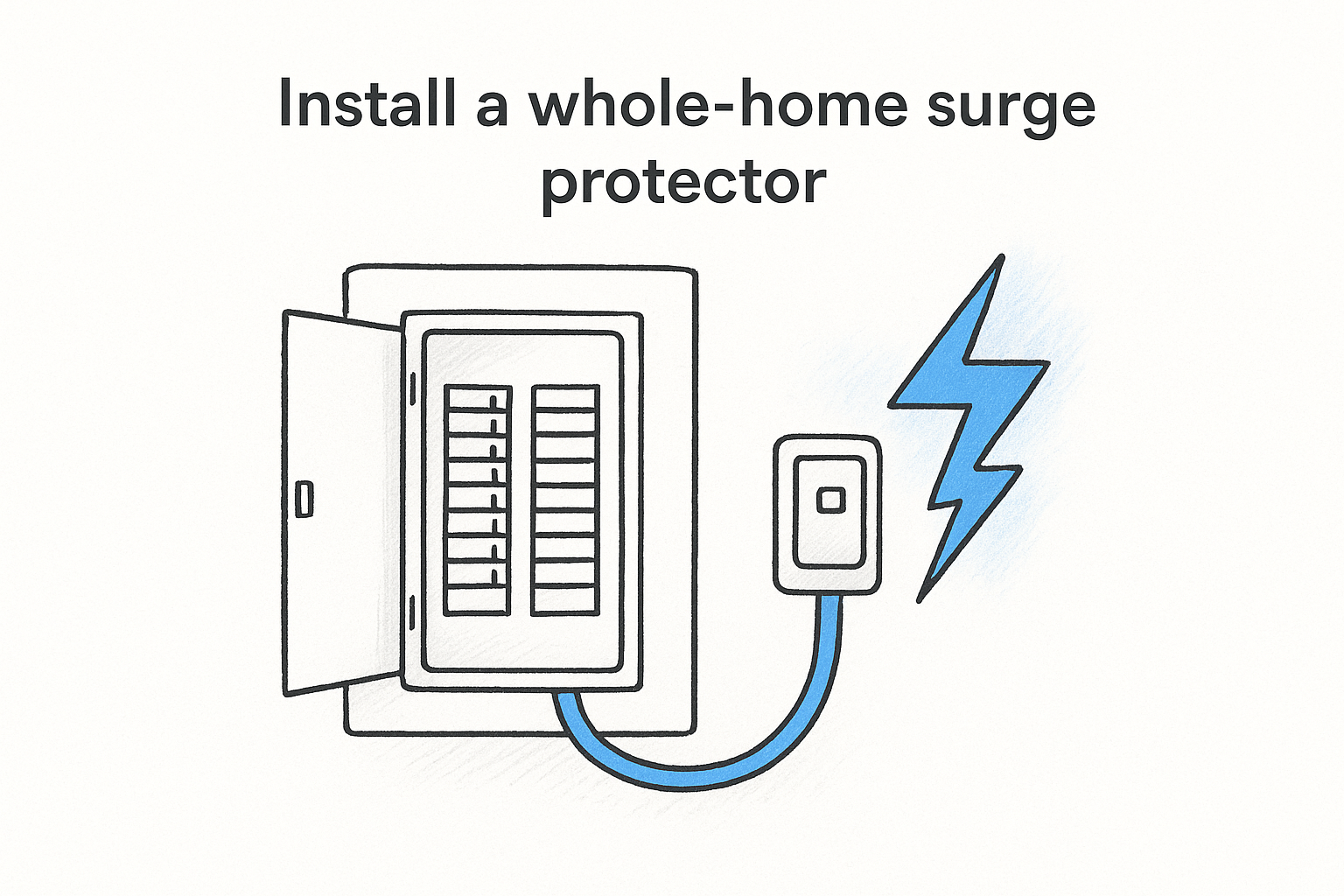
A whole-home surge protector paired with quality point-of-use strips at your devices gives you layered protection that handles both large and small surges.
Unplug critical equipment during storms
For your most valuable electronics, such as computers, TVs, and gaming systems, unplugging them during active lightning storms removes all risk. No device connected to your wiring can be damaged by a surge it cannot receive. This takes thirty seconds and costs nothing.
Common mistakes and quick safety checklist
Even homeowners who care about protecting their electronics make avoidable errors that leave their devices vulnerable. Knowing where people go wrong helps you close the gaps in your protection setup before a storm tests it.
Mistakes that leave you exposed
The most common mistake is treating a basic power strip as a surge protector. Most power strips simply add outlets and do nothing to block voltage spikes. Check the packaging for a joule rating. If you see none, it offers zero surge protection. Another frequent error is keeping surge strips plugged in after the MOV has failed. Once that component burns out from absorbing too many spikes, the strip stops protecting anything connected to it, even though power still flows through. When people ask does a surge protector protect against lightning, this burned-out scenario is often why they are asking after the fact.
Replace your surge strip every two to three years, or immediately after any major electrical event, to make sure the MOV is still functional.
Quick safety checklist
Use this list to review your current setup and spot any weak points:
- Confirm your power strips have a joule rating of 1,000 or higher
- Install a whole-home surge protector at your main panel
- Unplug computers, TVs, and gaming systems during active storms
- Replace surge strips older than three years
- Schedule a home electrical inspection to check panel health
A simple way to get peace of mind
The question of does a surge protector protect against lightning comes down to one core reality: standard strips handle everyday spikes, but real storm protection requires a whole-home device installed at your panel. Layering that with point-of-use strips and unplugging critical equipment during active storms covers you from every angle.
Getting the right protection in place does not have to be complicated. A licensed electrician can install a whole-home surge protector in a few hours, and that single upgrade guards every circuit and appliance in your home from the next monsoon season forward. You also eliminate the guesswork of wondering whether your current setup is actually working.
If you are ready to stop relying on a power strip to protect thousands of dollars in electronics, the team at AZ DC Electric serves the entire Greater Phoenix Metro Area and offers upfront pricing with no call-out fees.