A circuit breaker that won’t reset, trips repeatedly, or feels hot to the touch isn’t just annoying, it’s a potential fire hazard. If you’re dealing with any of these signs, you’re probably already searching for the circuit breaker replacement cost so you can figure out your next move. The short answer: most homeowners in the Phoenix Metro Area pay somewhere between $150 and $350 for a standard single-pole breaker replacement, though the final number depends on the breaker type, amperage, and panel condition.
At AZ DC Electric, we handle breaker replacements across Scottsdale, Mesa, Chandler, and the surrounding valley, and one of the most common questions our electricians hear is whether a quoted price is fair. That’s a reasonable thing to wonder. Breaker prices vary widely depending on whether you need a basic 15-amp single-pole or a 50-amp double-pole unit, and labor rates differ from one contractor to the next. We believe you should know exactly what you’re paying for before any work starts.
This guide breaks down what each part of the job actually costs in 2026, parts, labor, and the factors that push the price up or keep it low. We’ll also cover when DIY makes sense versus when you should call a licensed electrician, so you can make the right call for your home and your budget. Let’s get into the real numbers.
Why circuit breaker replacement cost matters
When a breaker fails, the financial impact is only part of the picture. A faulty breaker puts your home at risk of electrical fires, appliance damage, and complete loss of power to an entire circuit. Understanding the circuit breaker replacement cost upfront means you can act quickly, compare quotes with confidence, and avoid getting stuck with an inflated bill from a contractor who assumes you haven’t done your homework.
A failed breaker is a safety issue, not just an inconvenience
Most homeowners wait too long to replace a failing breaker because they assume it’s a minor fix. In reality, a breaker that trips under normal load, won’t reset, or runs warm inside the panel is no longer doing its primary job: protecting your wiring from dangerous overloads. If the breaker fails to trip when it should, too much current flows through your wiring, which generates heat and can ignite the surrounding materials inside your walls.
A breaker that feels hot to the touch or shows any scorch marks around the terminals should be treated as an urgent repair, not something to monitor over time.
The National Fire Protection Association reports that electrical failures and malfunctions are among the leading causes of home structure fires in the United States. Replacing a faulty breaker promptly is one of the most direct ways to reduce that risk in your home.
Knowing the price range keeps you in control
Understanding what parts and labor actually cost puts you in a much stronger position when reviewing any contractor’s quote. Some homeowners receive estimates that are double what the job reasonably warrants, simply because they had no reference point going in. Others skip the service call entirely and attempt a DIY fix without realizing their specific panel requires a proprietary breaker type that isn’t available at a standard hardware store.
Your goal in researching this cost is to walk into any conversation with a contractor already knowing the realistic range for your breaker type and amperage. That knowledge lets you evaluate the quote in front of you clearly, whether you’re comparing two contractors side by side or deciding whether a same-day call is worth the added urgency fee.
Circuit breaker replacement cost in 2026 price ranges
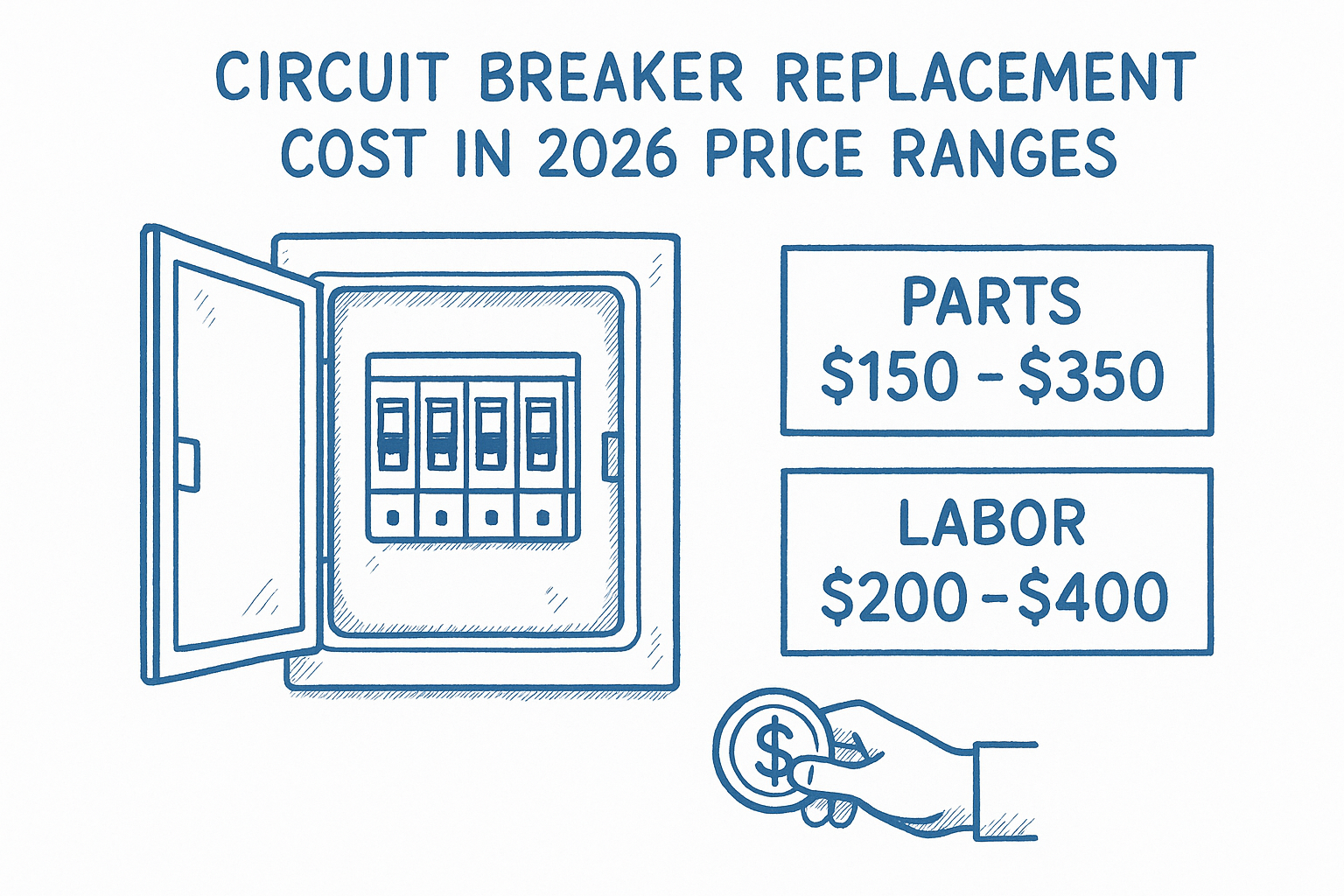
The circuit breaker replacement cost breaks down into two components: parts and labor. Most Phoenix area homeowners pay between $150 and $350 for a standard replacement, but that range shifts significantly depending on the breaker type and amperage your panel requires.
Standard single-pole breakers
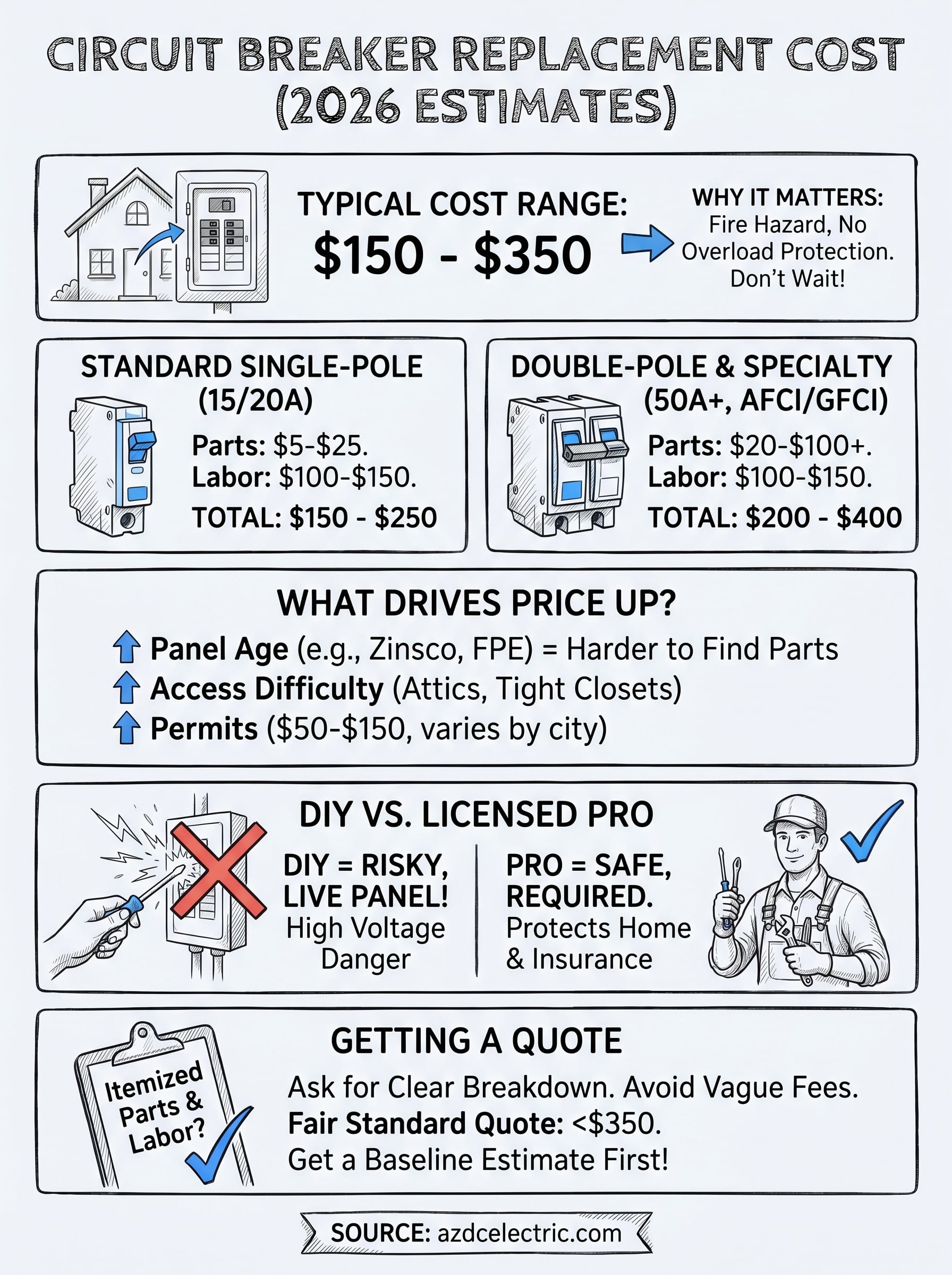
Single-pole breakers handle 15-amp and 20-amp circuits and are the most common type in residential panels. The breaker itself runs $5 to $25 at a hardware store, but with a licensed electrician’s labor factored in, the total job typically lands between $150 and $250. If your panel is older or harder to access, expect the number to sit closer to the top of that range.
Getting the exact breaker brand that matches your panel matters, because using a mismatched breaker can create a loose fit that becomes a hazard over time.
Double-pole and specialty breakers
Double-pole breakers serve 240-volt circuits like dryers, water heaters, and HVAC systems. Parts alone run $20 to $100 or more, and total replacement costs with labor fall between $200 and $350.
AFCI and GFCI breakers, which provide added protection in kitchens, bathrooms, and bedrooms, cost more at the parts level, typically $30 to $80 each. That pushes your total project into the $200 to $400 range depending on your panel location and the complexity of the installation your home requires.
What drives the price up or down
Several factors push your circuit breaker replacement cost above or below the standard range. Knowing which ones apply to your situation helps you budget accurately and understand why two contractors might quote different prices for what looks like the same job.
Panel age and breaker availability
Older electrical panels, particularly those made by manufacturers like Federal Pacific or Zinsco, require proprietary breakers that can be difficult to source. When your electrician has to order a specific breaker or substitute an approved compatible part, both the parts cost and the time required to complete the job increase. Panels in good shape with widely available breakers keep costs at the lower end of the range.
If your panel is 30 or more years old, your electrician may recommend a full panel evaluation before replacing individual breakers, since the underlying equipment may also need attention.
Labor conditions and permit requirements
Your panel’s location plays a direct role in labor time. A breaker box tucked into a tight utility closet, an attic, or an outdoor enclosure takes longer to work in safely, which adds to the labor charge. Some Arizona municipalities also require a permit for breaker replacements, especially in older homes undergoing renovation, and permit fees typically add $50 to $150 to your total. Asking your electrician upfront about permit requirements in your city avoids surprise charges at the end of the job.
DIY vs hiring an electrician in Arizona
The circuit breaker replacement cost is low enough that some homeowners consider handling the swap themselves. Before you grab a screwdriver, though, it’s worth understanding exactly what the task involves and what Arizona law actually requires from you.
When DIY is tempting but risky
Replacing a breaker looks straightforward on the surface: remove the old one, insert the new one, tighten the wires. The problem is that your main panel remains live during this process, even after you switch off the main breaker. The service entrance wires at the top of the panel carry constant voltage that only your utility company can cut. One wrong move near those terminals puts you at serious risk of electrocution.
Working inside a live panel without proper training and equipment is one of the most dangerous DIY electrical tasks a homeowner can attempt.
Your odds of doing the job safely without professional experience are low, and the financial cost of a mistake, whether a fire, a damaged panel, or an injury, far exceeds what you’d save on labor.
Why Arizona requires a licensed electrician
Arizona state law classifies most electrical work, including breaker replacement, as work that requires a licensed contractor when performed for compensation. Beyond the legal angle, homeowner’s insurance policies in Arizona frequently deny claims tied to electrical fires if unpermitted or unlicensed work contributed to the damage. Hiring a licensed electrician protects your home, your coverage, and your family.
How to estimate your cost and judge a quote
Before you call anyone, gather basic information about your panel to build a rough estimate. Note your panel brand, the amperage of the failing breaker printed directly on the breaker’s switch, and whether it’s a single-pole or double-pole unit. That information alone tells you the realistic parts cost and helps you frame the labor charge you should expect from any contractor you contact.
Build your own estimate before calling
Start with the parts price by searching for your specific breaker model at a hardware store like Home Depot or Lowe’s. Add $100 to $150 for a standard labor rate in the Phoenix Metro Area, and you have a solid baseline number to work from. If your breaker requires an AFCI or GFCI type, add $30 to $60 on top of that parts figure before comparing quotes.
If an estimate comes in significantly higher than your baseline without a clear explanation, ask the contractor to break down parts and labor separately before you agree to anything.
Red flags in a contractor’s quote
A fair quote itemizes parts and labor clearly. Watch for contractors who give you a flat number without explaining what’s included, or who add vague fees for things like "assessment" or "materials handling" without specifying what those cover.
The total circuit breaker replacement cost for a standard single breaker should rarely exceed $350 unless your panel has complicating factors the contractor explains directly to you. If someone quotes $500 or more for a standard 15-amp or 20-amp replacement, ask for a detailed written breakdown before you sign anything.
Next steps
You now have a clear picture of what a circuit breaker replacement cost looks like in 2026, from parts to labor to the factors that shift the final number. Use that information to build your own baseline estimate before contacting any electrician, and compare quotes by asking for a clear breakdown of parts and labor listed separately.
If your breaker is tripping, running warm, or refusing to reset, don’t wait. Electrical hazards don’t improve on their own, and the longer a faulty breaker stays in service, the greater the risk to your home and family. A licensed electrician can replace most standard breakers in under an hour.
AZ DC Electric serves Scottsdale, Mesa, Chandler, and the Greater Phoenix Metro Area with upfront pricing and a 5-year workmanship guarantee. Request a breaker replacement quote today and get a clear, itemized number before any work begins.