The average ceiling fan installation cost runs between $150 and $400 when you hire a licensed electrician, but that number can shift fast depending on your wiring situation, ceiling height, and whether you need a new switch or junction box. If you’re budgeting for a fan install in the Phoenix area, you need real numbers, not vague estimates.
This guide breaks down what electricians, handymen, and big-box store services actually charge in 2026, along with the specific variables that push your final bill up or down. We cover labor rates, material costs, and the scenarios that turn a straightforward swap into a bigger project. At AZ DC Electric, we handle ceiling fan installations across the Greater Phoenix Metro Area with upfront pricing, so we know exactly where these costs come from. Whether you’re replacing an old fan or adding one where only a light fixture exists, this pricing breakdown will help you plan with confidence before you book a single appointment.
Average ceiling fan installation costs in 2026
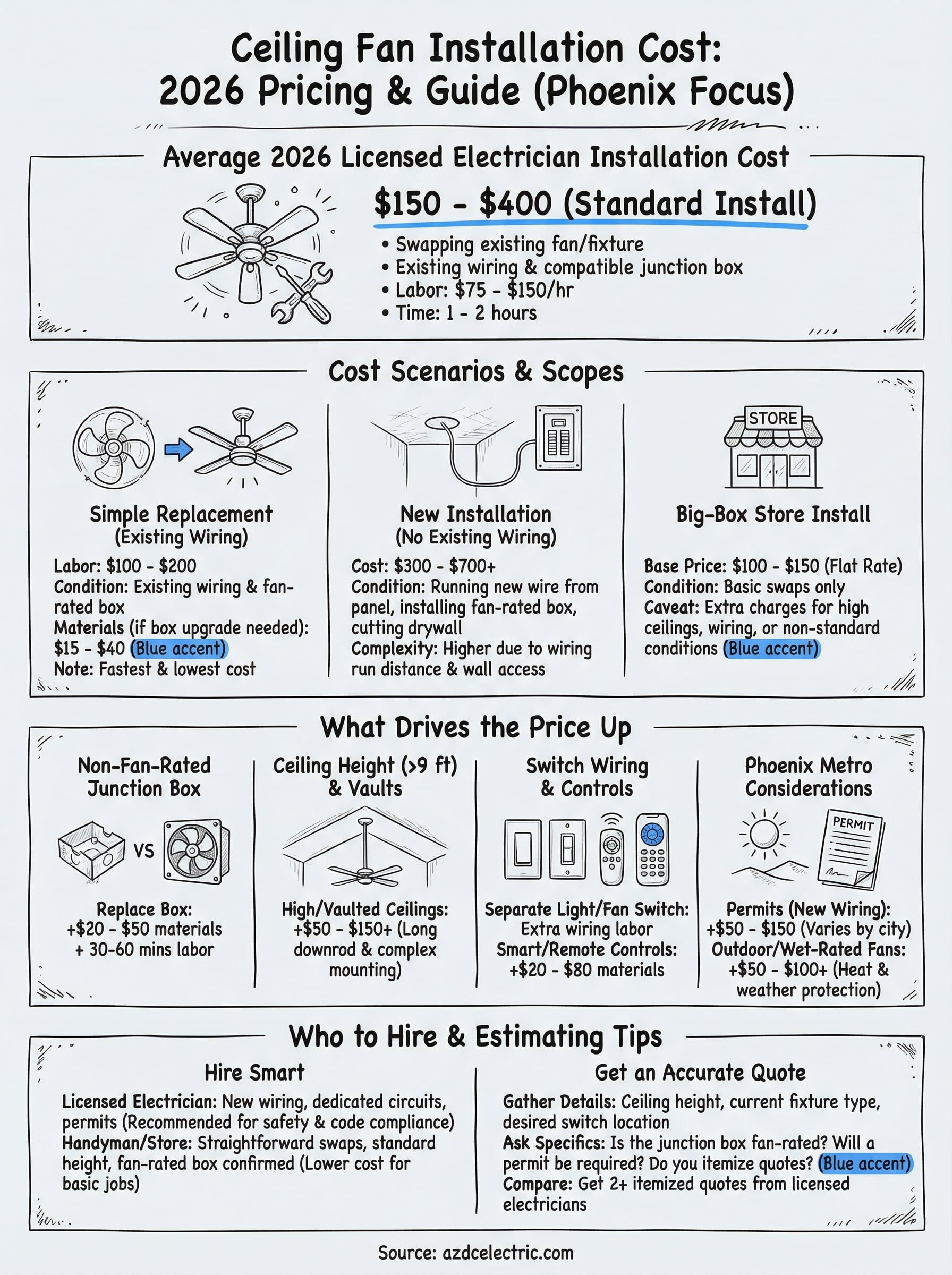
Most homeowners pay between $150 and $400 for a standard ceiling fan installation when hiring a licensed electrician. That range covers the most common scenario: swapping an existing ceiling fan or light fixture for a new fan in a room with existing wiring and a compatible junction box. Labor alone typically runs $75 to $150 per hour, and a straightforward swap takes one to two hours in most homes.
Simple fan replacement on existing wiring
When you already have a ceiling fan in place, a replacement is the least expensive path. A licensed electrician will disconnect the old unit, verify the existing wiring and box, mount the new fan, and test it for proper operation. Total labor for this job typically falls between $100 and $200, assuming no wiring complications come up. If you also want a separate wall switch for the fan and light kit, add $50 to $100 for that wiring work.
Replacing an existing fan with a similar model using the same mounting style is the fastest way to keep your ceiling fan installation cost at the lower end of the range.
Materials like a ceiling fan brace or an upgraded fan-rated junction box run $15 to $40 if the existing box is not fan-rated. Most electricians will flag this during the job and get your approval before adding the part.
New fan installation where no existing wiring exists
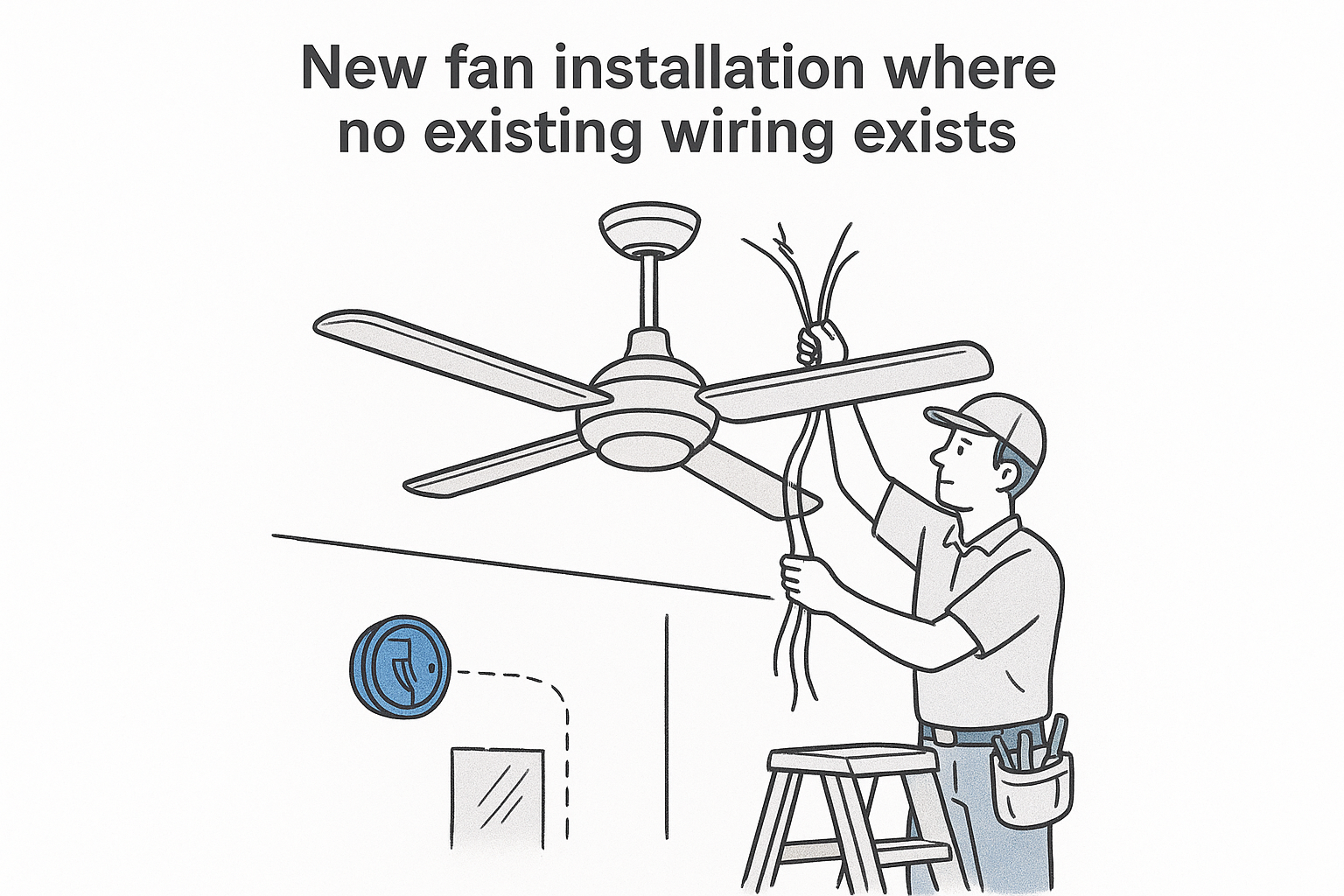
Adding a ceiling fan to a room that currently has no overhead wiring is a different job entirely. An electrician needs to run new wire from your electrical panel or an existing circuit, install a fan-rated box, and often cut into drywall to route the cable. This type of installation typically costs $300 to $700 or more, depending on how far the wire needs to travel and whether you want a wall switch or a remote control.
Vaulted or high ceilings push this cost higher because the electrician needs additional time and sometimes specialized equipment to work safely. Expect to add $50 to $150 to your total for ceiling heights above nine feet, particularly if a downrod extension is needed to position the fan at the correct height for air circulation.
Big-box store installation pricing
Home Depot and Lowe’s both offer ceiling fan installation services through third-party contractors. Pricing through these programs generally starts around $100 to $150 for a basic fan swap, but the final cost depends on your location and the specific provider assigned to your job. These services work well for straightforward replacements, but complex installs involving new wiring or high ceilings often fall outside what the flat-rate programs cover.
Independent electricians give you more flexibility on scope and typically provide clearer upfront pricing for jobs that involve new circuits, permit work, or specialty installations like outdoor-rated fans or remote-controlled systems.
What drives your total installation price
Several factors shape your final ceiling fan installation cost beyond the basic labor rate, and knowing them in advance saves you from sticker shock when the electrician finishes the walk-through. Understanding where the variables come from lets you compare quotes accurately and decide which upgrades are worth adding now versus later.
Existing wiring and junction box condition
Your existing wiring condition is the single biggest cost driver. Fan-rated junction boxes are required by code to support the weight and movement of a ceiling fan, and standard light fixture boxes often fail this requirement. If your electrician finds a non-rated box, replacing it adds $20 to $50 in materials and 30 to 60 minutes of additional labor. Older homes may also have aluminum wiring or undersized circuits that require upgrading before a new fan can be safely connected, which can push your total well above the average range.
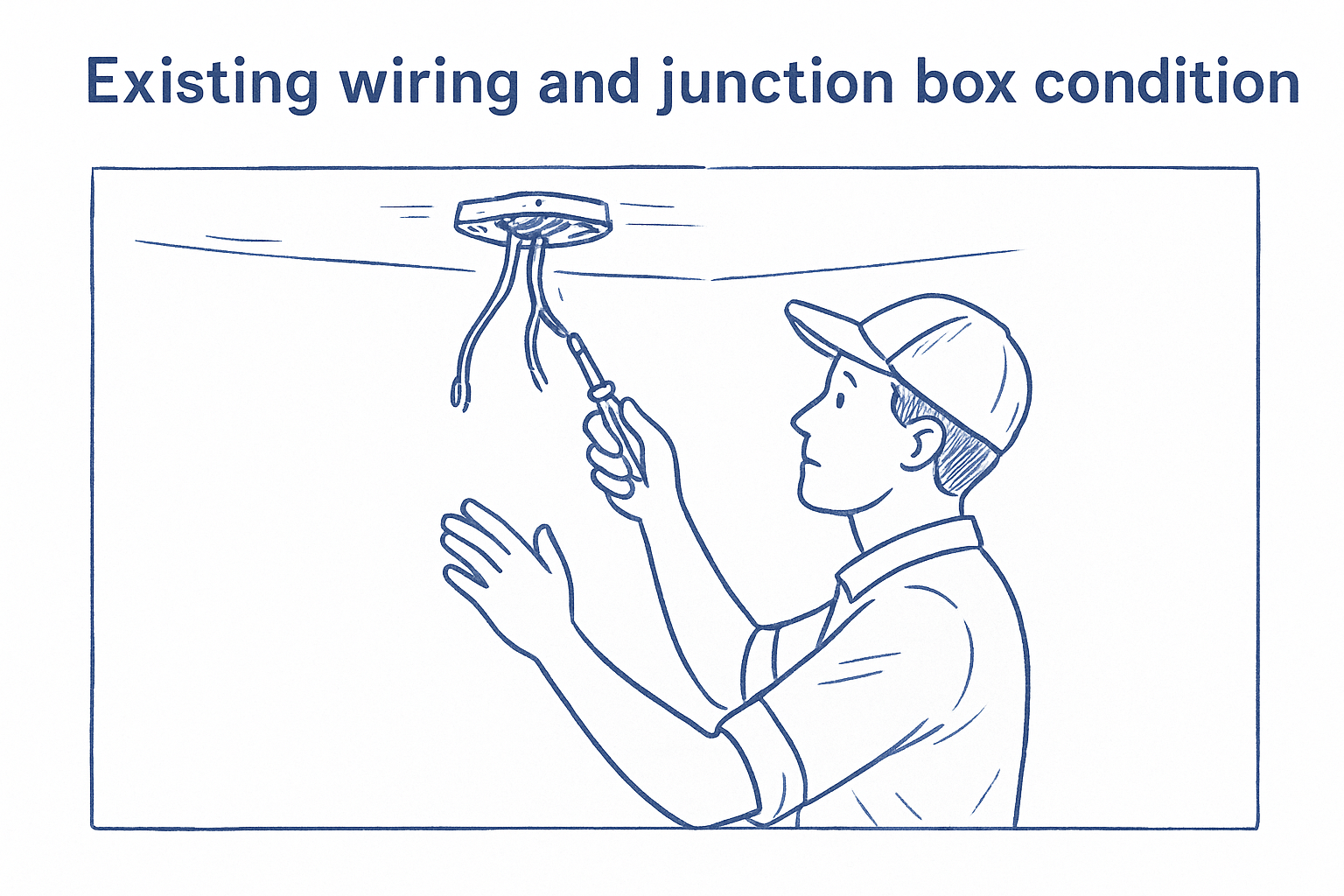
If you’re unsure whether your existing box is fan-rated, ask the electrician to check it during the estimate, not after they’ve already started the job.
Ceiling height and mounting complexity
Standard eight-foot ceilings keep installation straightforward. Ceilings above nine feet require a longer downrod to position the fan at the recommended height of seven to eight feet above the floor, which adds material cost and increases the time the electrician spends working at height. Vaulted or sloped ceilings add another layer of complexity because they require a specialized angled mounting kit, which most fans do not include in the box. Budget an additional $50 to $150 for any ceiling above nine feet.
Switch wiring and control options
Your switch configuration affects both labor time and material cost. Adding a separate wall switch for the light kit and fan motor requires running additional wire, which takes extra time. Smart fan controls or remote receiver kits add $20 to $80 in materials depending on the brand. If your existing switch location needs to move, or if you want a dedicated double-gang switch, the electrician may need to cut into drywall and patch it afterward.
Phoenix Metro considerations for permits and pricing
Living in the Greater Phoenix Metro Area adds some location-specific factors to your ceiling fan installation cost that you won’t find in national pricing guides. The desert climate, combined with city-by-city permit requirements across Scottsdale, Mesa, Chandler, and surrounding suburbs, means your final bill can vary based on where your property sits, not just what’s happening inside your ceiling.
When permits are required in Arizona
Most straightforward ceiling fan replacements do not require a permit in the Phoenix Metro Area, as long as you’re swapping an existing fixture on an existing circuit without altering the wiring. However, if your installation involves running new wire, adding a dedicated circuit, or modifying your electrical panel, a residential electrical permit is typically required under Arizona state code and local municipal rules. Skipping a permit when one is required can create problems when you sell your home or file an insurance claim.
Always ask your electrician upfront whether your specific installation requires a permit, so that cost gets factored into the quote before work begins.
Permit fees in the Phoenix Metro Area generally range from $50 to $150 for minor electrical work, depending on the city. Scottsdale and Chandler have slightly different fee schedules than unincorporated Maricopa County areas, so confirm the requirement with your contractor before signing off on any scope of work.
How Phoenix heat affects your installation scope
Arizona’s extreme summer temperatures make ceiling fan performance a year-round priority, and many homeowners in the Valley upgrade to higher-CFM fans or install outdoor-rated fans on covered patios and ramadas. Outdoor fan installations near pools or uncovered areas require wet-rated or damp-rated fixtures and often involve additional weatherproofing steps for the wiring and box. These jobs typically cost $50 to $100 more than a standard indoor installation due to the materials and extra care required to protect the connections from heat and humidity cycling.
Who to hire: electrician, handyman, or store install
Choosing the right person for your job starts with understanding what each option actually covers. Not every installation is the same, and the wrong hire can lead to code violations, voided warranties, or rework costs that exceed what you would have paid for a licensed professional from the start. Your specific wiring situation and ceiling setup should drive this decision, not just the upfront price.
When to hire a licensed electrician
A licensed electrician is the right choice whenever your installation involves new wiring, a dedicated circuit, or any work that requires a permit. Electricians carry liability insurance and a state license, which protects you if something goes wrong after the job is done. At AZ DC Electric, every technician provides upfront pricing before touching a single wire, so you know your total ceiling fan installation cost before work begins.
If your installation requires a new circuit or a junction box upgrade, only a licensed electrician can legally perform that work in Arizona.
Your existing wiring condition, ceiling height, and switch configuration all fall within what a licensed electrician handles routinely. For jobs that go beyond a simple swap, the added cost over a handyman is offset by the assurance that the work meets local code requirements.
When a handyman or store install works
A handyman can handle a straightforward fan-for-fan swap in a standard eight-foot ceiling room, provided the existing wiring and junction box are already confirmed as fan-rated. This option works best when no new wiring is involved and the job does not require a permit. Confirm those details before booking, because discovering a problem mid-job often means calling in a licensed electrician anyway.
Big-box store installation services follow a similar scope and work well for basic replacements. Their flat-rate pricing looks competitive upfront, but add-on charges for anything outside standard conditions, such as high ceilings or non-rated boxes, can close the gap with an independent electrician faster than most homeowners expect.
How to estimate your cost and avoid surprises
Getting an accurate ceiling fan installation cost before booking comes down to preparation on your end. Before you call any contractor, gather the basic details about your room: ceiling height, current fixture type, whether you have an existing fan or just a light fixture, and where you want the switch located. These four details allow any licensed electrician to give you a firm quote rather than a rough ballpark.
Get itemized quotes before committing
When you request a quote, ask for line-item pricing that separates labor from materials. A single lump-sum number makes it hard to compare contractors or spot where costs can shift unexpectedly. A solid quote should list the labor hours, any junction box or mounting hardware, switch wiring if applicable, and any permit fees your city requires.
Ask for a written quote that breaks down labor and materials separately so you have a clear baseline before approving any additional work.
Getting at least two quotes from licensed electricians gives you a realistic sense of local rates. It also helps you identify any contractor quoting significantly below market, which often signals cut corners or hidden charges that show up once the job is already underway.
Questions to ask before the job starts
A few direct questions protect you from unexpected charges once work begins. Ask whether the existing junction box is fan-rated, since replacing it adds both time and materials to the job. Ask whether your switch location needs new wiring or if the existing circuit already supports separate fan and light controls. These answers let you budget for the real scope of the job, not just the best-case version of it.
Also ask whether your city requires a permit for the specific work being done. Permit fees are a real cost, and a contractor who factors them in upfront gives you a more accurate total price than one who leaves that out of the initial quote entirely.
Next steps for a safe ceiling fan install
You now have a clear picture of what goes into ceiling fan installation cost and what variables move your total up or down. The next step is gathering the specifics about your room: ceiling height, current wiring setup, whether you have an existing fixture, and where you want your switch. These details let a licensed electrician give you a firm quote rather than a rough range, and they help you spot any contractor quoting far below market.
Skipping a permit or hiring an unlicensed installer to save money upfront can create code violations and insurance problems down the road. Hiring a licensed professional protects your investment and ensures the work holds up under inspection. When you’re ready to move forward, request a ceiling fan installation quote from AZ DC Electric and get upfront pricing with no call-out fees across the Greater Phoenix Metro Area.