Short answer: yes, most LED lights are dimmable, but not all of them, and not with every dimmer switch. That distinction is where most homeowners run into problems. You install a new LED bulb, pair it with your existing dimmer, and suddenly the light buzzes, flickers, or won’t dim below 50 percent. It’s one of the most common electrical complaints we hear from customers across the Phoenix Metro Area.
The issue usually isn’t the LED itself. It’s a mismatch between the bulb and the dimmer switch, or sometimes a wiring problem behind the wall. Older dimmers were designed for incandescent bulbs, which behave very differently from LEDs under reduced voltage. Without the right pairing, you get frustrating results, and in some cases, you can shorten the lifespan of both the bulb and the switch.
At AZ DC Electric, our licensed electricians install and troubleshoot dimmer systems in homes and businesses throughout Scottsdale, Mesa, Chandler, and the surrounding area every week. This article breaks down how to tell if your LED bulbs are dimmable, what kind of dimmer switch you actually need, and how to eliminate flicker for good.
Why LED dimming works differently than incandescents
When you dim an incandescent bulb, the process is straightforward. The dimmer switch reduces the voltage flowing to the filament, and the filament glows less brightly in direct response. There’s no internal circuitry in the bulb doing anything complicated. The bulb simply draws less power and produces less light. That simplicity is why incandescent dimmers worked reliably for decades with almost any bulb you put in the socket.
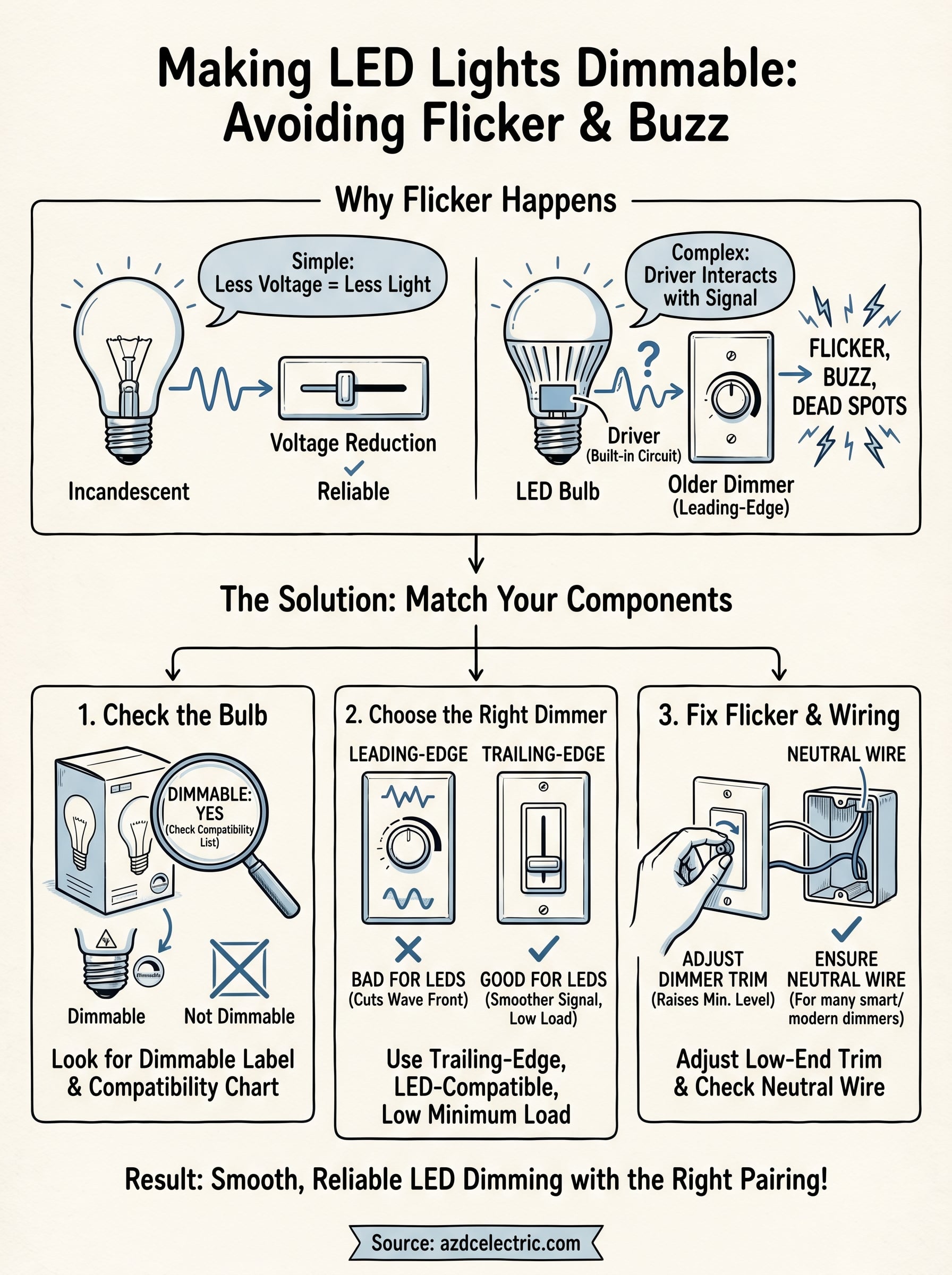
LEDs operate in a fundamentally different way. Every LED bulb contains a built-in driver, a small circuit board that converts incoming AC power into the low-voltage DC current the LED chip actually needs. That driver controls the light output, not the raw voltage coming from the wall. When a dimmer switch reduces the voltage, the driver doesn’t always interpret that signal the way the dimmer expects, which is exactly why so many homeowners run into flicker, buzzing, and dead spots when they install LEDs on an old dimmer.
The driver inside an LED bulb is the real decision-maker, and it needs a compatible dimmer to translate the signal correctly.
How traditional dimmers fall short with LEDs
Most older dimmer switches use a technology called TRIAC dimming, also called leading-edge dimming. This method was built for the high wattage loads that incandescent bulbs draw. A traditional 600-watt dimmer needs a minimum load of around 40 to 60 watts to operate correctly. A single LED bulb might only pull 8 to 10 watts, well below that threshold. When the load is too low, you typically see:
- Flickering that gets worse toward the lower end of the dimmer range
- A buzzing or humming sound from the switch or the bulb
- The light refusing to turn on at all when the dimmer sits below a certain point
What happens inside an LED bulb during dimming
LED drivers use one of two main methods to reduce light output. The first is pulse width modulation (PWM), where the driver rapidly switches the LED on and off at a rate the human eye can’t detect under normal conditions. The second is constant current reduction (CCR), where the driver lowers the actual current feeding the LED chip instead.
PWM dimming at low switching frequencies is the most common source of visible flicker, especially when you view the light through a camera or in your peripheral vision. CCR dimming tends to produce smoother results, but the bulb’s driver still needs to be compatible with the dimmer switch to behave correctly. This compatibility question is exactly what makes people ask "are LED lights dimmable" in the first place, because the answer depends on matching the right components, not just the bulb type.
How to tell if your LED bulbs or fixtures are dimmable
Before you install anything, check the packaging first. Manufacturers are required to state whether a bulb is dimmable, and most print that information clearly on the front or back of the box. If the packaging says "not dimmable" or makes no mention of dimming at all, the bulb won’t work correctly on a dimmer switch, no matter which one you use.
Check the packaging and the bulb itself
Turn the box over and find the compatibility chart, where manufacturers list the specific dimmer brands and model numbers the bulb has been tested against. If you’ve already discarded the box, check the base of the bulb for small printed text or a dimmer symbol.
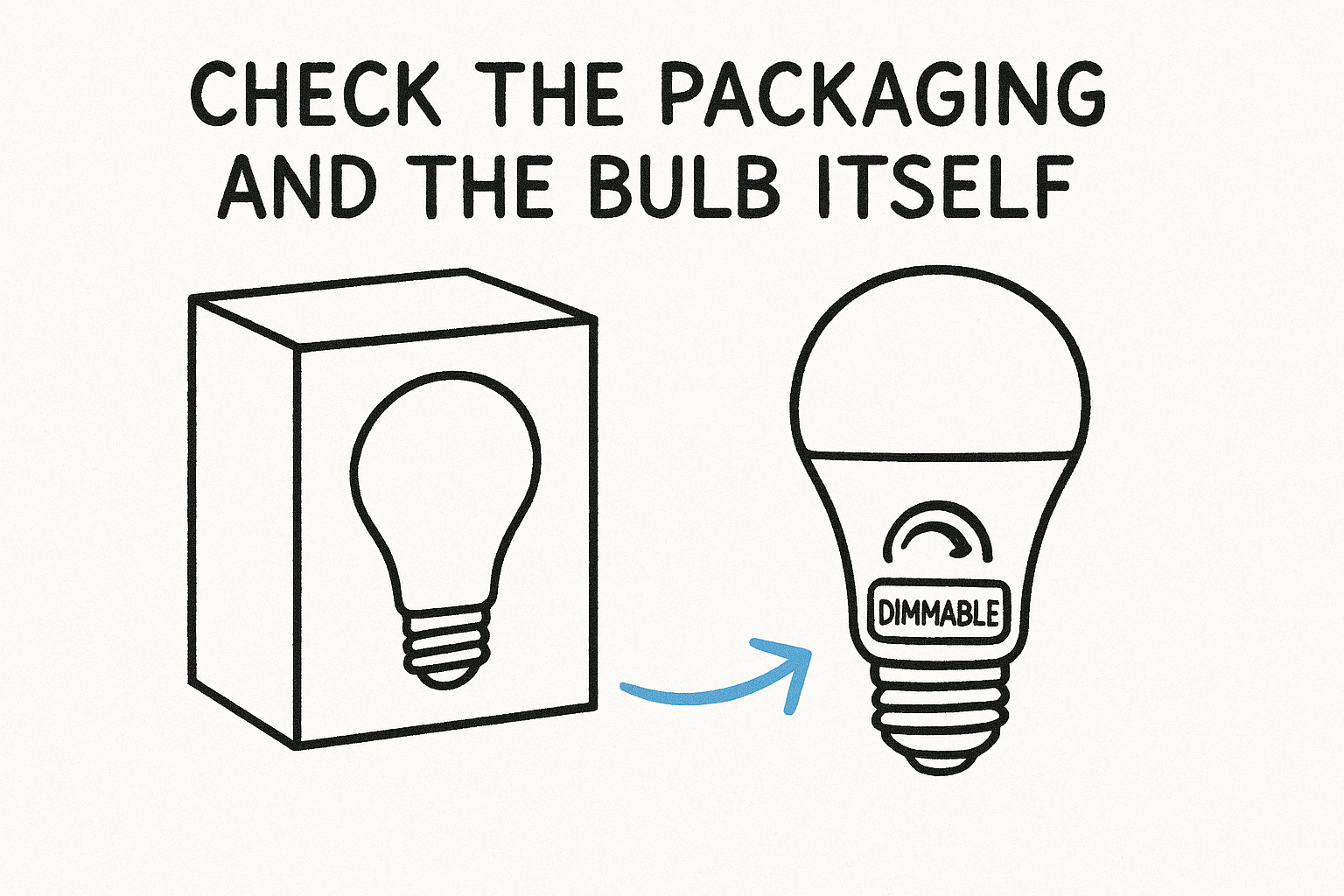
Three places to find dimmability information on a bulb:
- Front or back of the original packaging
- Small text or symbol printed directly on the bulb’s base
- Manufacturer’s spec sheet, searchable by brand and model number
Matching your bulb to a tested and listed dimmer is the single most reliable way to avoid flicker and buzzing before any work starts.
What to look for in built-in fixtures
Hardwired fixtures like recessed cans and flush mounts are harder to evaluate because the driver is built into the housing, not a separate replaceable bulb. Start by looking for a label on the canopy or trim ring that states the fixture’s dimming capability. If there’s no label, locate the model number printed on the housing and look up the spec sheet from the manufacturer’s website. Most fixtures produced in the last five years support dimming, but older models often do not, and assuming compatibility is the fastest way to end up asking are LED lights dimmable again after a frustrating install.
How to choose the right dimmer for LED lights
Picking the wrong dimmer is the number one reason people end up asking are LED lights dimmable after a frustrating install. Most dimmer switches sold at hardware stores today carry an LED-compatible label, but that covers a wide range of performance. The right choice depends on your bulb brand and wiring configuration, along with how many fixtures you plan to control from a single switch.
Look for trailing-edge dimmers
Older leading-edge dimmers work by cutting the front of the AC wave, which works well for incandescent bulbs but creates compatibility problems with LED drivers. Trailing-edge dimmers cut the back of the wave instead, producing a much smoother signal that most LED drivers can handle without flickering or buzzing. Brands like Lutron and Leviton publish compatibility lists that match specific dimmer models to tested LED bulbs, and checking those lists before you buy is a reliable shortcut.
A trailing-edge dimmer paired with a compatible LED bulb eliminates the majority of flicker and dropout issues before they start.
Match the dimmer’s load rating to your fixture count
Every dimmer switch carries a maximum wattage rating and, just as importantly, a minimum load requirement. LED bulbs draw far less wattage than incandescents, so a 600-watt dimmer controlling three 9-watt LED bulbs sits well below its minimum load threshold. Look for dimmers that specify a low minimum load, often labeled at 10 watts or lower, so your system stays stable across the full dimming range without dropout or buzzing at low settings.
How to stop LED flicker, buzzing, and dropouts
Flicker and buzzing are symptoms, not the root problem. Before you start replacing bulbs, you need to identify where the mismatch is happening, because the fix depends entirely on which component is at fault. In most cases, you can trace the issue back to the dimmer switch, the bulb’s driver, or a wiring problem behind the wall.
Fix the dimmer first
Start with your dimmer switch because it’s the most common source of flicker and buzzing. If you’re still running a leading-edge dimmer that was installed when the house had incandescent bulbs, swap it for a trailing-edge LED-compatible model. Once you do that, check whether the adjustment screws on the new dimmer are set correctly. Most dimmers have a small low-end trim screw that lets you raise the minimum dim level so the bulb stops dropping out at the bottom of the range. Tighten that setting until the light holds steady at low output.
Adjusting the low-end trim on your dimmer often resolves flickering without replacing a single bulb.
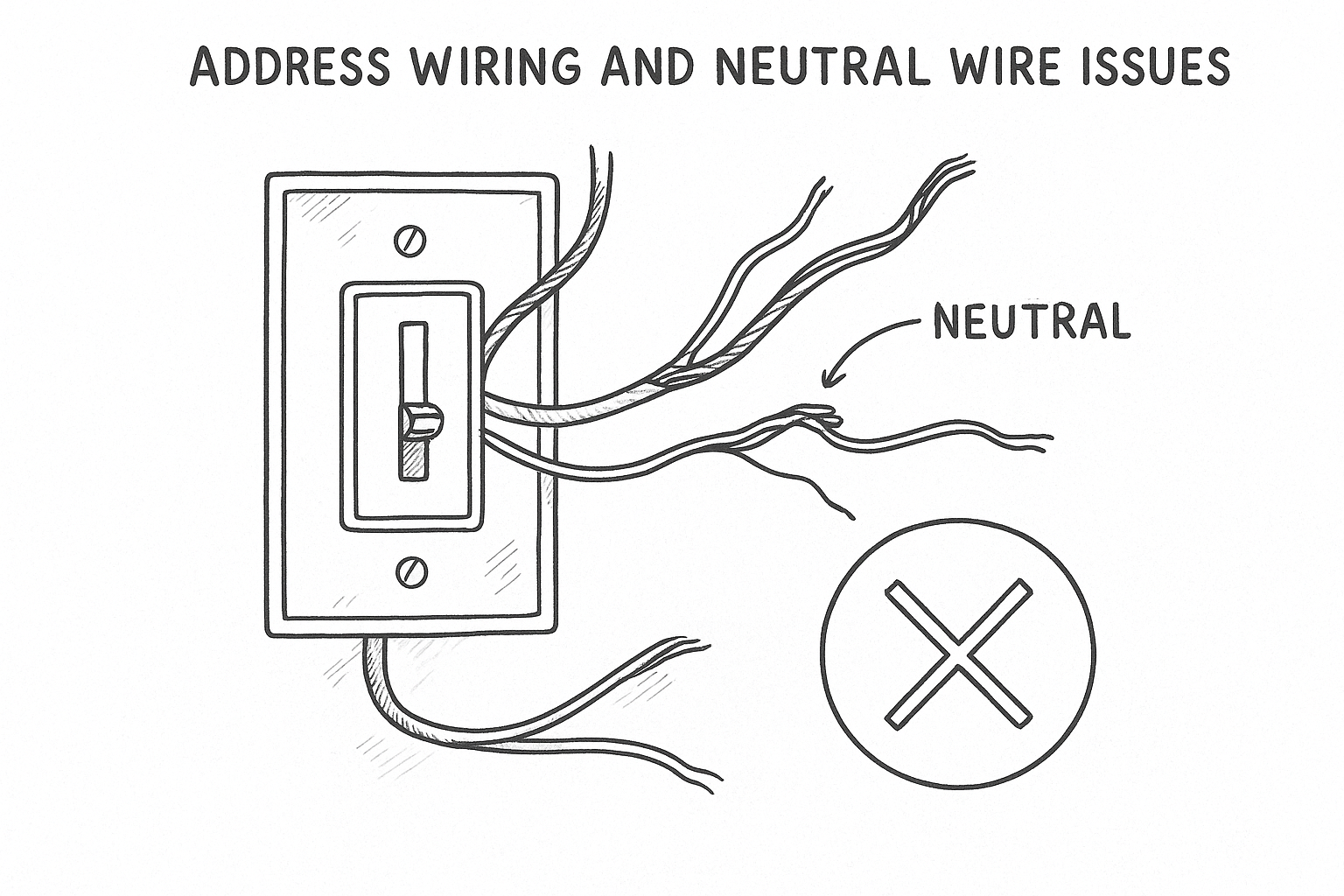
Address wiring and neutral wire issues
Some older homes have switch loops without a neutral wire, and many modern LED-compatible dimmers require that neutral connection to operate properly. If your dimmer doesn’t have a neutral wire available, look for a no-neutral dimmer rated specifically for your bulb count and wattage. Loose wire connections at the switch box can also cause intermittent flickering that looks like a bulb or dimmer problem when it isn’t. If you’re still asking are LED lights dimmable after trying these steps, a licensed electrician can test your wiring and pinpoint what’s actually causing the issue.
LED dimming methods and control options to know
Understanding the different dimming methods helps you pick the right system before you spend money on switches or smart devices. The two most common approaches are standard phase-cut dimming and 0-10V dimming, and each suits a different type of installation depending on your fixture type and control goals.
Standard and smart switch dimming
Phase-cut dimming is what you find in most residential homes using standard wall switches. Smart dimmers from brands like Lutron Caseta use the same underlying method but add Wi-Fi or radio frequency control so you can adjust brightness from an app or a voice assistant. These options answer the practical side of asking are led lights dimmable, because they let you set schedules and control ambiance without rewiring your home’s electrical system. Checking the manufacturer’s tested compatibility list before purchasing gives you the most reliable pairing between bulb and switch.
Smart dimmers give you scene control and scheduling without changing the fundamental wiring setup your home already has.
0-10V dimming for commercial and high-output fixtures
0-10V dimming uses a low-voltage control signal instead of modifying the main AC power, making it the preferred method for commercial settings, high-bay fixtures, and advanced LED panels. A dedicated control wire sends a signal between 0 and 10 volts directly to the fixture’s driver, and the driver adjusts output in proportion to that signal.
This method produces smooth, flicker-free results across the full brightness range. Property owners running office or retail spaces often specify it because it handles high fixture counts and integrates cleanly with building automation systems and occupancy sensors.
Wrap up and what to do next
If you’ve been asking are LED lights dimmable and running into flickering or buzzing, the answer almost always comes down to component compatibility rather than a defective bulb. Dimmable LEDs work reliably when you match them to a trailing-edge dimmer that carries a low minimum load rating and appears on the manufacturer’s tested compatibility list. Check the bulb packaging, verify the dimmer type, adjust the low-end trim screw, and confirm your switch box has a neutral wire. Those four steps resolve most dimming problems without replacing anything else.
When the issue goes deeper, such as outdated wiring, missing neutral conductors, or a full dimmer upgrade across multiple rooms, a licensed electrician will get the job done faster and more safely than troubleshooting blindly. The team at AZ DC Electric serves homeowners throughout the Greater Phoenix Metro Area and can handle dimmer installations, wiring checks, and lighting upgrades with upfront pricing and no call-out fees.