If you live in an older Phoenix-area home, there is a good chance a 100 amp electrical panel is the quiet workhorse behind your walls. It powers your lights, your air conditioner, and everything you plug in each day. But as our homes work harder than ever, many homeowners are asking the same question: is that 100 amp panel still up to the job, or is it time for a change? This guide walks you through what a 100 amp panel can realistically handle, what it costs to replace, and how to know when an upgrade makes sense for your safety and your future plans.
Table of Contents
- What Is a 100 Amp Electrical Panel?
- Is a 100 Amp Panel Enough for Your Home?
- 100 Amp vs. 200 Amp Panel: How to Choose
- How Much Does a 100 Amp Electrical Panel Cost?
- Can You Run 220-Volt Appliances on a 100 Amp Panel?
- Safety Considerations for Older 100 Amp Panels
- DIY vs. Professional Installation: What You Should Know
- Planning for the Future: EV Chargers, Solar, and Home Expansion
- Final Thoughts: Making the Right Call for Your Home
What Is a 100 Amp Electrical Panel?
Your electrical panel is the main distribution point for every circuit in your home. Think of it as the central hub where utility power arrives and gets split into the individual branch circuits that feed your lights, outlets, and appliances. A 100 amp electrical panel is rated to handle up to 100 amps of current flowing through it at any given time. When the total demand exceeds that limit, the main breaker trips to protect the system.
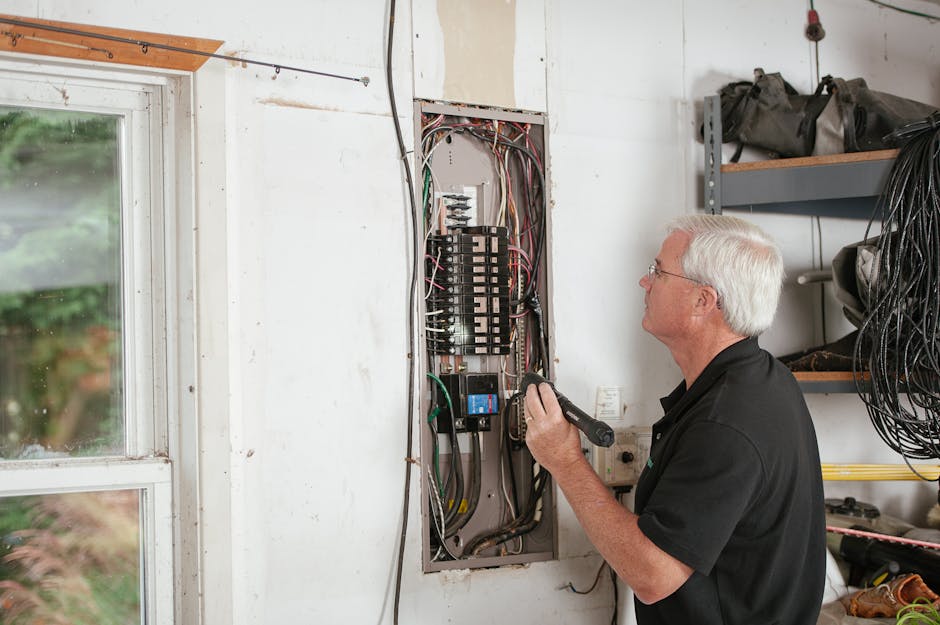
Per the National Electric Code, a standard 100 amp panel supports a minimum of 20 circuits. That number comes from the requirement for at least 20 regular circuit breaker positions. However, the physical breaker spaces you see inside the panel door do not always equal the total circuit count. Many modern panels accept tandem breakers, which fit two independent circuits into a single slot. A 24-space panel, for example, can accommodate up to 48 circuits when tandem breakers are installed.
When shopping for a panel or trying to identify what you already have, you will encounter common configurations like 12-space, 20-space, 24-space, and 30-space options. Brands such as Square D and Leviton dominate the market, with the Square D Homeline 100 Amp 24-space 48-circuit indoor load center being one of the most popular configurations sold today. For homes built between the 1960s and the early 2000s, 100 amp service was the standard, which means millions of houses across the Valley still rely on this setup every day.
Is a 100 Amp Panel Enough for Your Home?
The honest answer depends on your home's size, your appliances, and how you use electricity. The formal way to answer this question is through an electrical load calculation, a method that adds up the wattage of every light fixture, appliance, and system that might run at the same time. An electrician performs this calculation to determine whether your panel has the headroom you need, but you can do a rough self-check by looking at what your panel currently powers.

In a smaller home under 2,000 square feet, a 100 amp electrical panel typically handles the essentials without trouble. That includes standard lighting, a refrigerator, a washing machine, a gas or electric water heater, and a central air conditioning unit. In the Phoenix metro area, where air conditioners run nearly year-round, the AC unit is often the single largest load on the panel. A typical central AC system draws between 30 and 50 amps, leaving enough capacity for everyday use in a modest home.
There are clear warning signs that your panel is maxed out. Flickering lights when the AC kicks on, breakers that trip frequently, a panel cover that feels warm to the touch, or a buzzing sound coming from the panel are all signals that your system is under strain. Homes with electric heating, hot tubs, pool pumps, or multiple high-draw appliances often push past what 100 amps can safely deliver. Older homes built in the 1970s present an additional challenge: many of these houses have 100 amp panels with only 12 breaker spaces, a configuration that leaves almost no room for adding circuits to support modern living.
100 Amp vs. 200 Amp Panel: How to Choose
The two most common residential panel sizes are 100 amp and 200 amp, and the choice between them comes down to current needs and future plans. A 100 amp panel supports typical moderate loads in smaller homes, condos, and apartments. A 200 amp panel doubles the available capacity and is now the standard for new construction, reflecting how much more electricity the average household uses compared to fifty years ago.
A 200 amp panel costs more upfront, both for the equipment and the installation. But it provides room to grow, which matters if you plan to stay in your home for years. If you are considering a panel upgrade today, spending the extra money on a 200 amp service can save you from paying for a second upgrade down the road.
There are still situations where a 100 amp panel makes perfect sense. Smaller homes with gas appliances, condos where the square footage is limited, and detached workshops or guest houses that use a sub-panel fed from the main service are all good candidates for 100 amps. On the other hand, if you are adding an electric vehicle charger, installing solar panels, or planning a major home remodel that includes new appliances or a room addition, upgrading to 200 amps is the smarter long-term move. The surest way to settle the question is to have a licensed electrician run a formal load calculation based on your specific home and equipment.
How Much Does a 100 Amp Electrical Panel Cost?
Understanding the total cost of a panel project means looking at three separate pieces: the panel itself, the labor to install it, and the permit fees required by your local jurisdiction.
The panel cost varies by size, brand, and features. A basic 12-space 100 amp panel can run between $70 and $110. Mid-range 20-space to 24-space panels from brands like Square D, ABB, and GE typically fall between $110 and $160. Premium options, such as Leviton load centers with tin-plated copper bussing and the ability to wire at rough-in without breakers present, sit at the higher end of the spectrum, with 30-space models priced around $150 to $170.
Labor is the larger portion of the total investment. In the Greater Phoenix area, professional installation of a 100 amp electrical panel typically ranges from $800 to $1,500, depending on the complexity of the job. A straightforward panel replacement where the existing wiring and meter socket are in good condition falls on the lower end. If the project requires upgrading the service entrance cable, replacing the meter base, or coordinating with the utility for a service disconnect, the cost moves toward the higher end. Permits are required in most Arizona municipalities and generally add $100 to $300 to the project total. A full service upgrade from the utility side, which may be necessary if you are increasing capacity, can involve additional fees and timeline considerations.
Can You Run 220-Volt Appliances on a 100 Amp Panel?
Yes, a 100 amp panel can absolutely support 220-volt appliances. In fact, most homes with 100 amp service already do. Electric dryers, wall ovens, cooktops, and central air conditioning units all run on 220 volts, and they have been doing so in homes with 100 amp panels for decades.
Each 220-volt appliance uses a double-pole breaker that occupies two slots in your panel and counts toward your total amp load. A typical electric dryer draws about 30 amps. A central AC unit can draw anywhere from 30 to 50 amps depending on its size and efficiency rating. An electric range or oven may pull 40 to 50 amps on its own. The math works fine when these appliances run one or two at a time, but adding multiple large 220-volt loads can quickly push a 100 amp panel to its limit. An EV charger, which often requires a dedicated 40 to 60 amp circuit, combined with an existing AC unit and electric range, can exceed what the panel can safely deliver. Before adding any major new appliance, a load calculation is the only way to know for certain whether your panel has the capacity.
Safety Considerations for Older 100 Amp Panels
If your home was built in the 1960s or 1970s and still has its original 100 amp electrical panel, safety deserves your attention. Panels from this era often contain components that have aged past their reliable service life. Breaker contacts can corrode, bus bars can develop hot spots, and connections that were tight forty years ago may have loosened over time due to thermal expansion and contraction.
There are specific red flags that warrant immediate professional attention. Aluminum wiring, common in homes built during the late 1960s and early 1970s, expands and contracts at a different rate than the steel screws on breakers and outlets, which can lead to loose connections and arcing. Certain panel brands from that era, including Federal Pacific Electric and Zinsco, have documented failure rates where breakers do not trip under overload conditions, creating a serious fire hazard. Double-tapped breakers, where two wires are connected to a single breaker terminal not designed for that purpose, are another common finding in older panels.
Beyond component failures, older panels often lack the physical space needed for modern safety devices. Current code requires GFCI protection in kitchens, bathrooms, laundry areas, and outdoor spaces, along with AFCI protection in living areas and bedrooms. These specialized breakers take up the same space as standard breakers, and a 12-space panel from the 1970s simply cannot accommodate them all. Any panel over 25 years old should be inspected by a licensed electrician, especially before you buy or sell a home or begin a remodel.
DIY vs. Professional Installation: What You Should Know
Replacing or installing an electrical panel is not a DIY project for the vast majority of homeowners, and there are good reasons for that. The service wires feeding the panel from the meter carry live current even when the main breaker is off. Working around these conductors without proper training and protective equipment creates a serious risk of arc flash, severe burns, or electrocution.
Beyond the immediate physical danger, most municipalities require a licensed electrician to pull the permit for panel work. The permitting process exists to ensure the installation meets current code, and the follow-up inspection verifies that the work was done correctly. A homeowner who performs unpermitted panel work may face problems when selling the property, and their insurance company may deny a claim if an electrical fire is traced back to improper work.
The cost comparison between DIY and professional installation is revealing. A homeowner buying a panel and the necessary tools might spend $200 to $400 on materials alone, plus many hours of labor and the stress of coordinating with the utility for a service disconnect. A professional electrician brings the panel, handles the utility coordination, manages the permit and inspection process, and stands behind the work with a warranty. For a job where the stakes include your family's safety and your home's electrical integrity, professional installation is the only prudent path.
Planning for the Future: EV Chargers, Solar, and Home Expansion
The way we use electricity at home is changing faster than at any point in the last fifty years. Electric vehicles, solar panels, and the gradual shift from gas to electric appliances are all pushing residential electrical systems into new territory, and your panel is at the center of that shift.
An EV charger is often the single largest new load a homeowner will add. Most Level 2 home chargers require a dedicated 40 to 60 amp circuit, which can consume nearly half the total capacity of a 100 amp panel on its own. When you combine that with an air conditioner running on a Phoenix summer afternoon, there is little room left for anything else. For many homeowners, the decision to install an EV charger is the tipping point that makes a panel upgrade from 100 to 200 amps the clear choice.
Solar panel installations introduce their own requirements. Most utility companies, including those serving the Phoenix metro area, require a panel that can safely handle bidirectional power flow, and they may mandate a minimum service size before approving the interconnection. Homeowners planning a room addition, a pool installation, or a switch from gas to electric appliances should think about their five-to-ten-year plans before committing to a panel project. Upgrading to 200 amps now is almost always more cost-effective than installing a 100 amp panel today and paying for a second upgrade in a few years when your needs grow.
Final Thoughts: Making the Right Call for Your Home
Your electrical panel is not something most people think about until a problem forces them to. But understanding what your 100 amp electrical panel can and cannot do puts you ahead of the curve. The right decision comes down to a few clear factors: the size of your home, the appliances you run, the condition of your existing equipment, and what you plan to add in the years ahead. A consultation with a licensed electrician who can perform a proper load calculation and inspect your current panel is the most reliable way to get a definitive answer. Safety and code compliance should always lead the conversation, and with the right information, you can make a confident choice that keeps your home running safely for years to come.